
Japanese grammar · ≈ JLPT N3 · Intermediate 3
〜ないことはない・〜ないこともない~nai koto wa nai
qualified yes; not impossible
「〜ないことはない」 gives a qualified yes, showing something is not entirely rejected or impossible.
How it works

The speaker accepts that uniforms are needed and also understands students wanting to choose their own clothes.
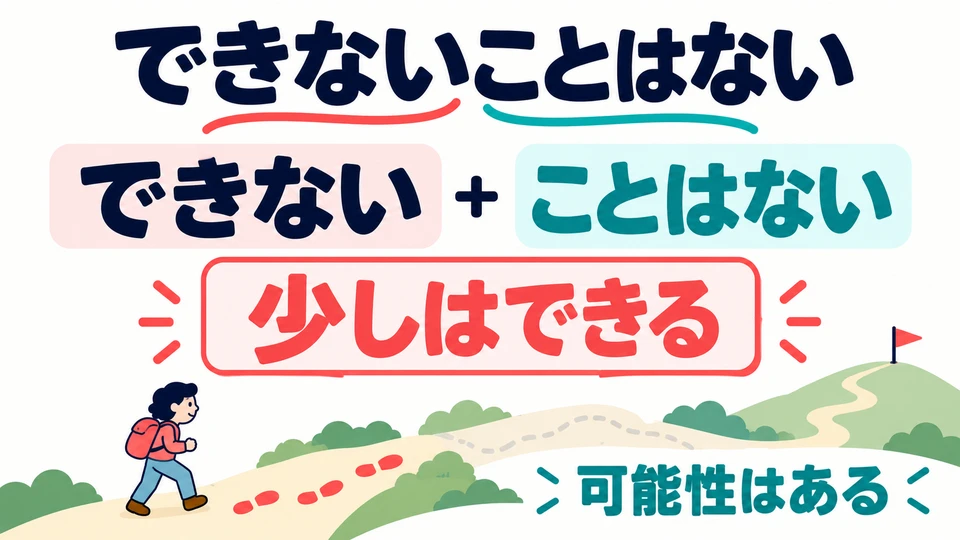
A double negative shows that something is not entirely rejected, or that a possibility does exist.
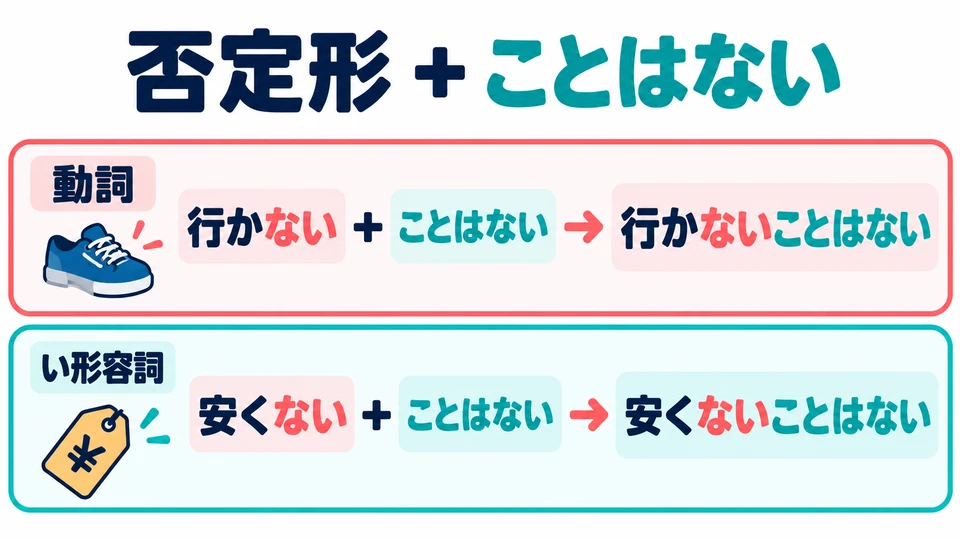
For verbs and い-adjectives, use the negative form: 行かない or 安くない + ことはない.
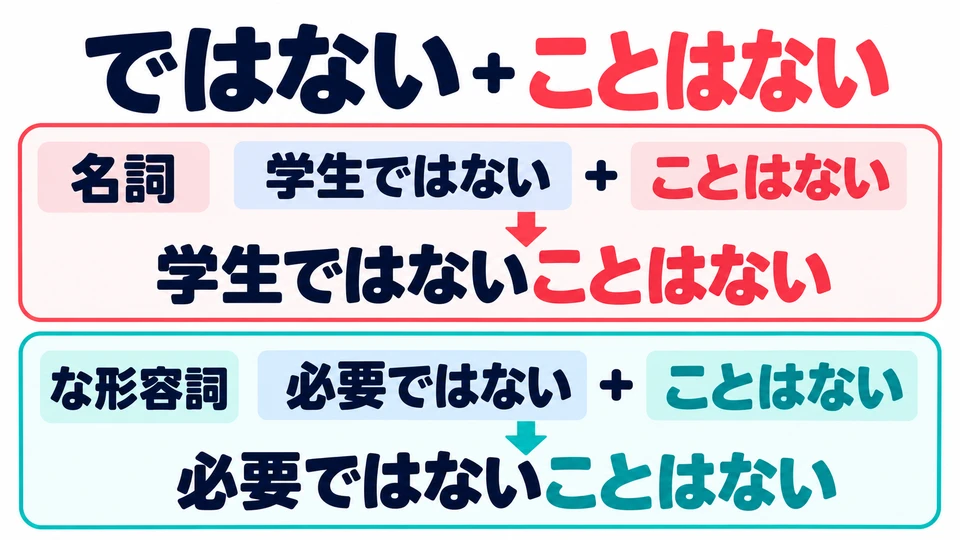
For nouns and な-adjectives, connect with 「ではない」, as in 必要ではないことはない.
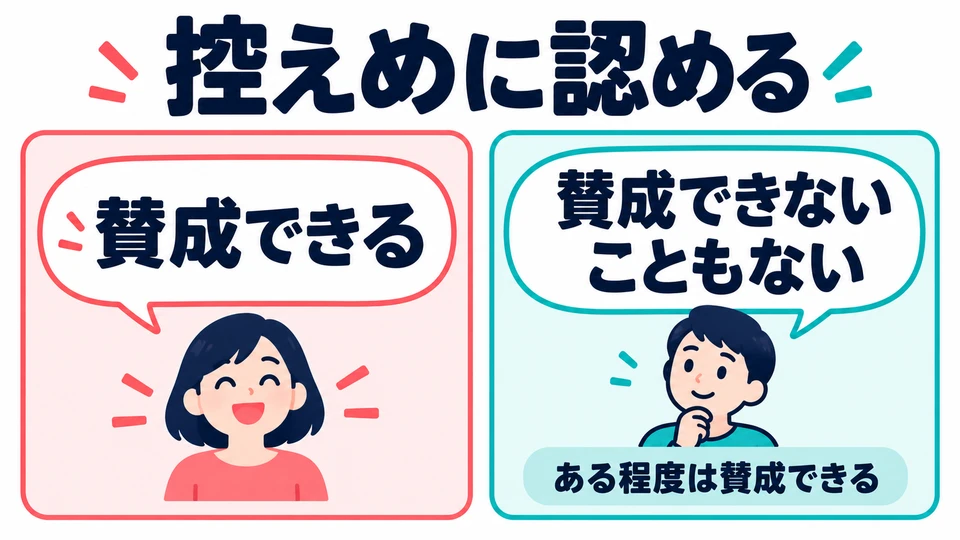
「ないこともない」 also expresses qualified agreement, more gently than a direct affirmation.
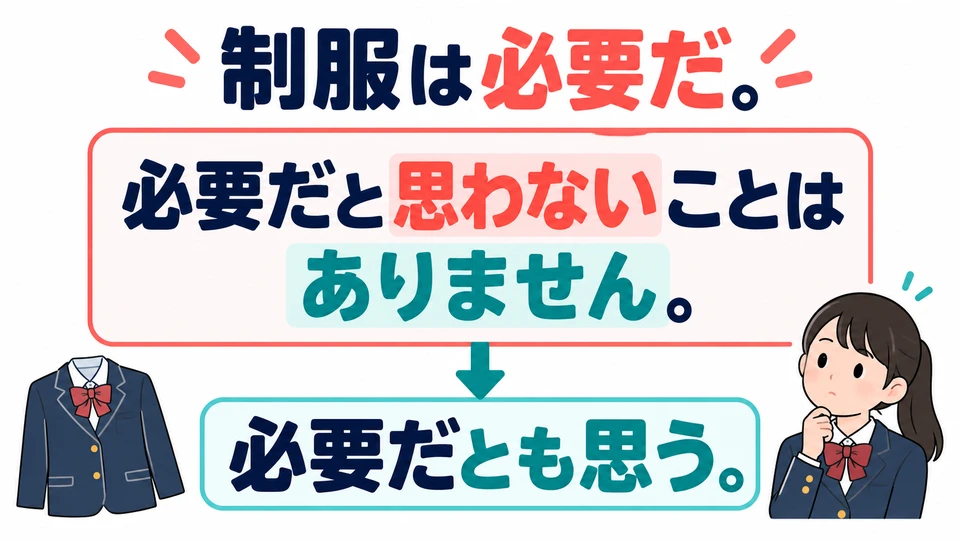
In the uniform example, first read 「思わないことはありません」 as “I do think they are necessary.”
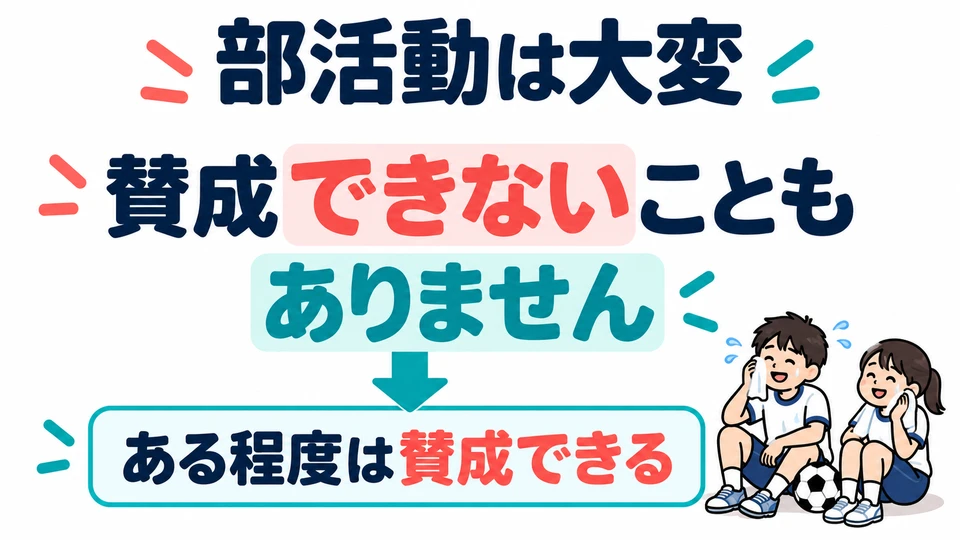
In the club example, first read 「賛成できないこともありません」 as “I can agree to some extent.”
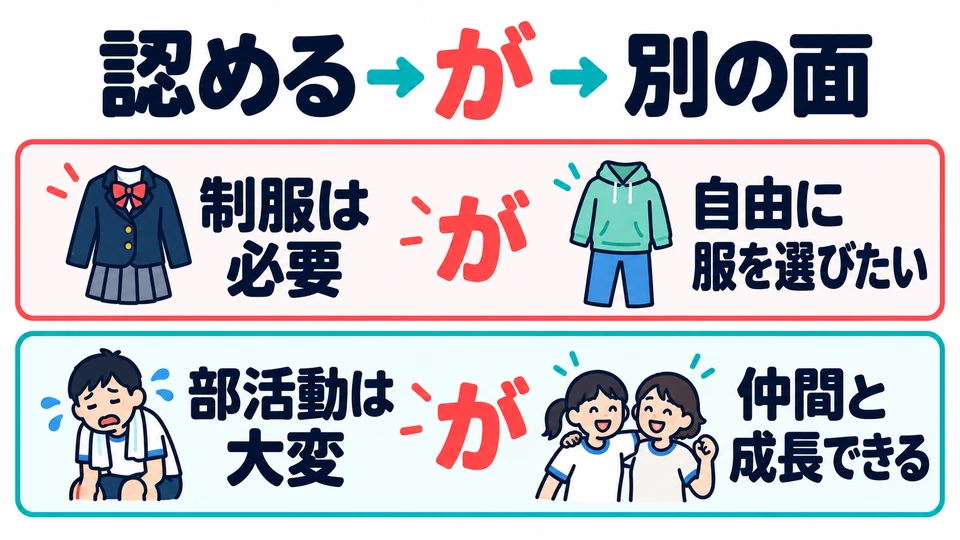
After 「が」, the two examples mention choosing clothes freely and growing together, explaining the reservations about full agreement.
Example sentences
- 制服seifukuはwa必要hitsuyouだdaとto思わないことomowanaikotoはwaありませんarimasenが、ga、自由jiyuuに服nifuku
In a conversation

Check yourself
Level 1 · Recognise
Which sentence is correct?
Level 1 · Recognise
Listen and choose the meaning
Level 2 · Build
Put the words in order
I don't think uniforms are unnecessary, but I also understand the feelings of students who want to choose their clothes freely.
Level 3 · Use
What goes in the blank?
制服は必要だと____、自由に服を選びたい学生の気持ちも分かります。
I don't think uniforms are unnecessary, but I also understand students who want to choose their own clothes.
More grammar in this theme
- 〜ないことはない・〜ないこともないqualified yes; not impossible