JPEDLAB iconJPEDLAB
Save history

Create an account and play

Explore first, then save your progress whenever you are ready. No email address is required.

Start free
Read as articleCards
See the whole course›Intermediate 3›School Systems and Educational Experiences

Japanese grammar · ≈ JLPT N3 · Intermediate 3

〜ないことはない・〜ないこともない~nai koto wa nai

qualified yes; not impossible

「〜ないことはない」 gives a qualified yes, showing something is not entirely rejected or impossible.

Start the interactive lessonIllustrated cards, audio and speaking practice

How it works

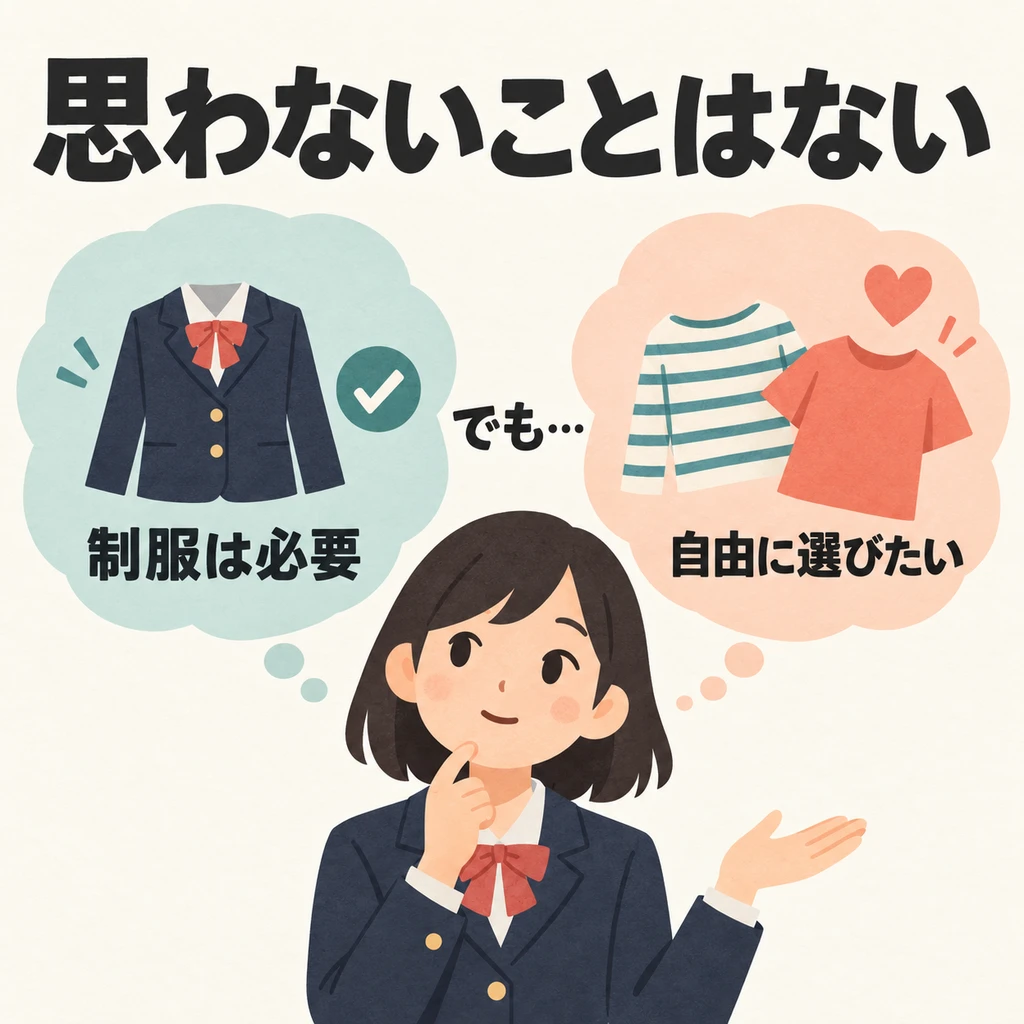
  1. The speaker accepts that uniforms are needed and also understands students wanting to choose their own clothes.
    The speaker accepts that uniforms are needed and also understands students wanting to choose their own clothes.

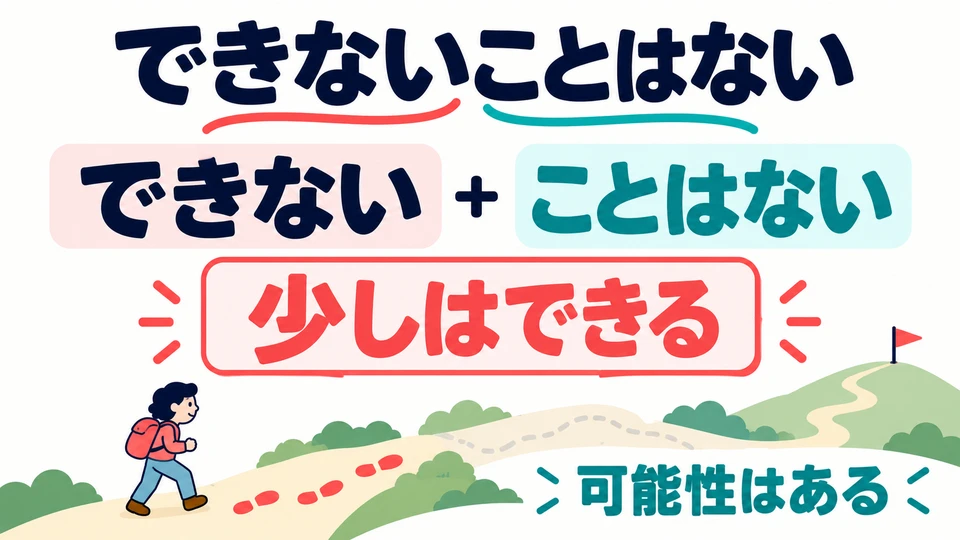
  2. A double negative shows that something is not entirely rejected, or that a possibility does exist.
    A double negative shows that something is not entirely rejected, or that a possibility does exist.

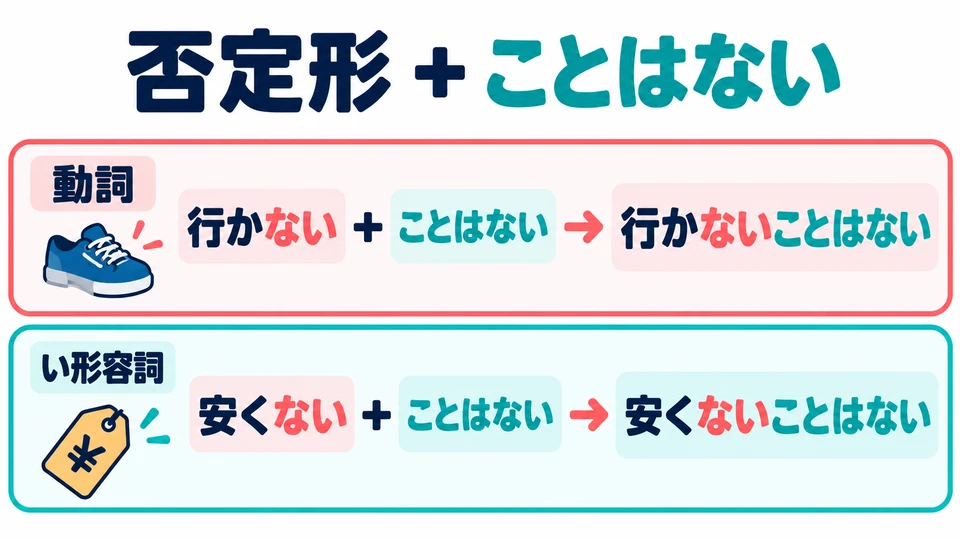
  3. For verbs and い-adjectives, use the negative form: 行かない or 安くない + ことはない.
    For verbs and い-adjectives, use the negative form: 行かない or 安くない + ことはない.

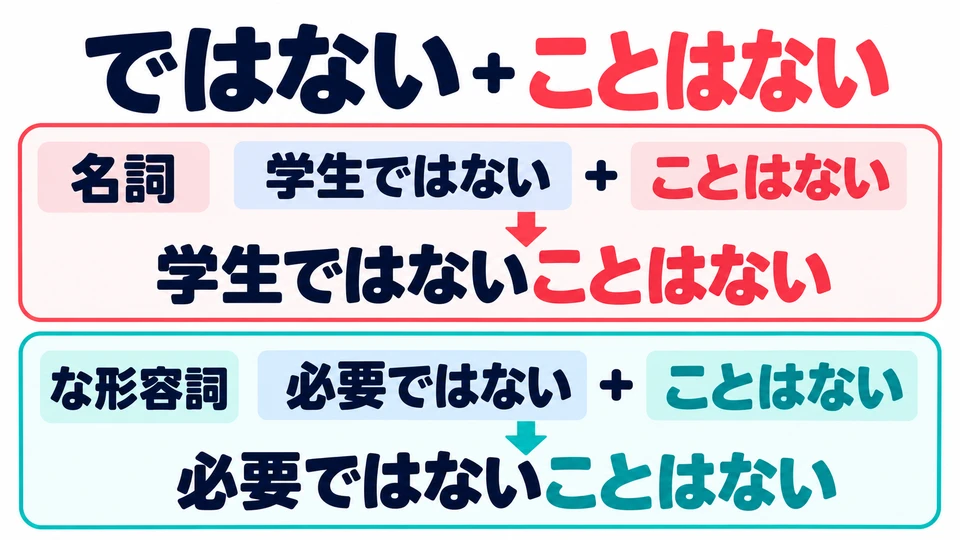
  4. For nouns and な-adjectives, connect with 「ではない」, as in 必要ではないことはない.
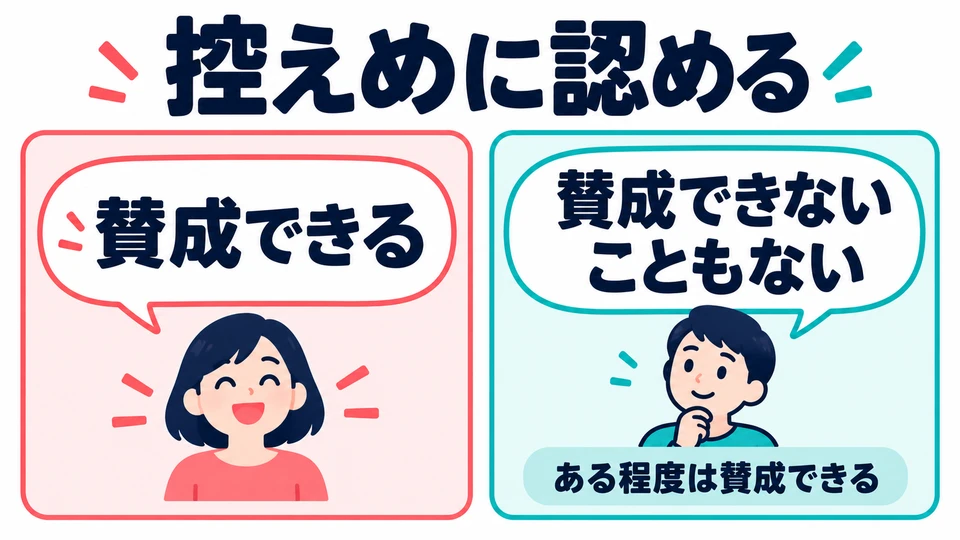
    For nouns and な-adjectives, connect with 「ではない」, as in 必要ではないことはない.

  5. 「ないこともない」 also expresses qualified agreement, more gently than a direct affirmation.
    「ないこともない」 also expresses qualified agreement, more gently than a direct affirmation.

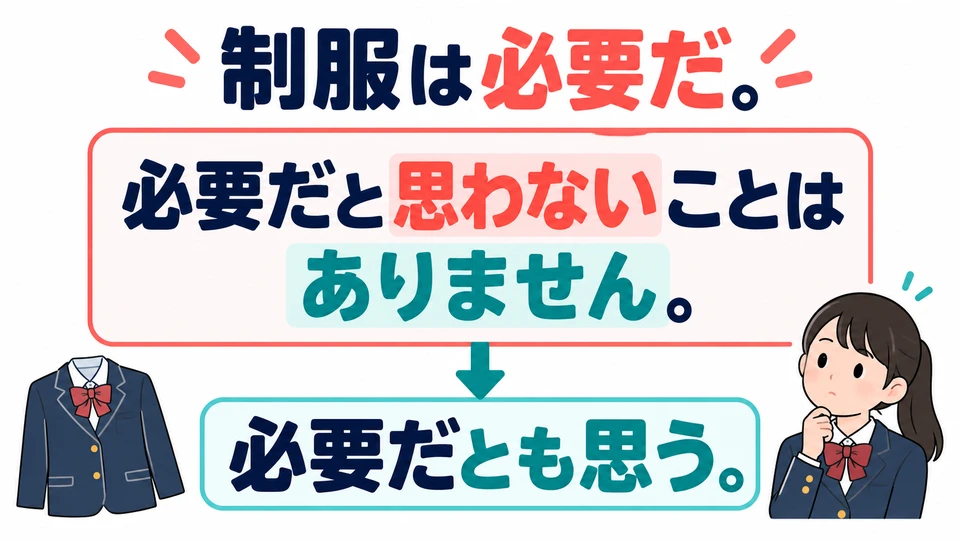
  6. In the uniform example, first read 「思わないことはありません」 as “I do think they are necessary.”
    In the uniform example, first read 「思わないことはありません」 as “I do think they are necessary.”

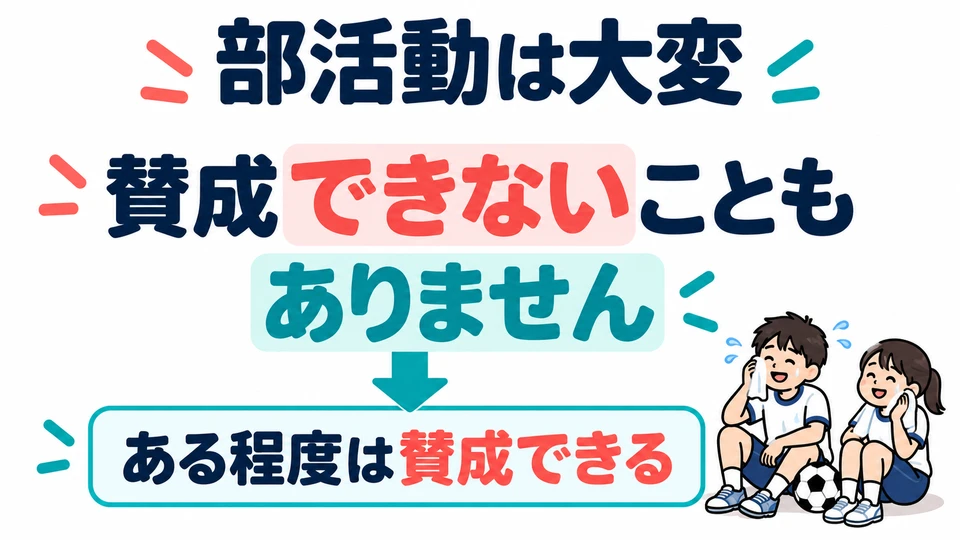
  7. In the club example, first read 「賛成できないこともありません」 as “I can agree to some extent.”
    In the club example, first read 「賛成できないこともありません」 as “I can agree to some extent.”

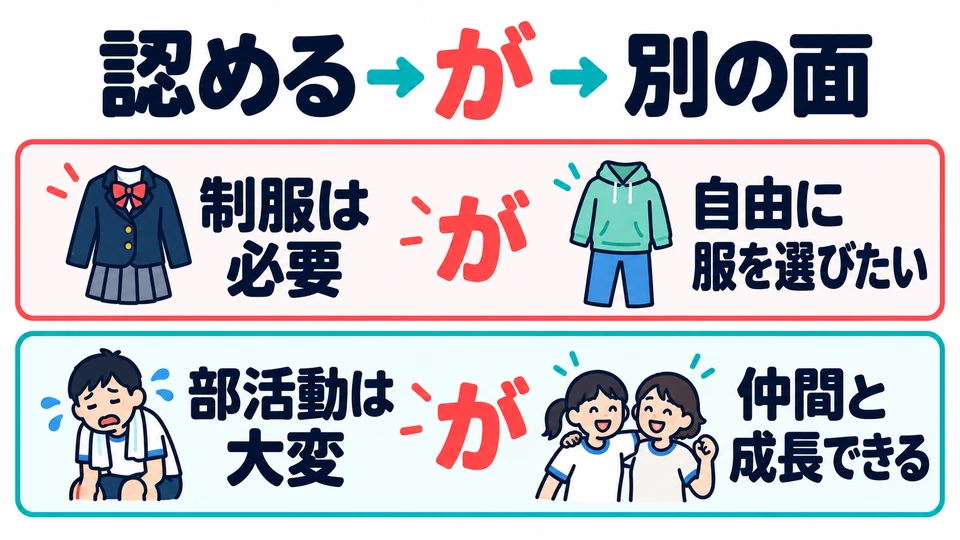
  8. After 「が」, the two examples mention choosing clothes freely and growing together, explaining the reservations about full agreement.

    After 「が」, the two examples mention choosing clothes freely and growing together, explaining the reservations about full agreement.

Example sentences

  • 制服せいふくseifukuはわwa必要ひつようhitsuyouだdaとto思わないことおもわないことomowanaikotoはわwaありませんarimasenが、ga、自由じゆうjiyuuに服にふくnifuku

In a conversation

Check yourself

  1. Level 1 · Recognise

    Which sentence is correct?

  2. Level 1 · Recognise

    Listen and choose the meaning

  3. Level 2 · Build

    Put the words in order

    I don't think uniforms are unnecessary, but I also understand the feelings of students who want to choose their clothes freely.

  4. Level 3 · Use

    What goes in the blank?

    制服は必要だと____、自由に服を選びたい学生の気持ちも分かります。

    I don't think uniforms are unnecessary, but I also understand students who want to choose their own clothes.

More grammar in this theme

  • 〜ないことはない・〜ないこともないqualified yes; not impossible

Keep practising

Test your Japanese vocabulary12 adaptive questions, freeCheck your pronunciationRead aloud and get a scorePractise verb forms10-question conjugation quizSee the whole courseGrammar, vocabulary and quizzes by theme
をo
選びたい学生えらびたいがくせいerabitaigakusei
のno
気持ちきもちkimochi
もmo
分かります。わかります。wakarimasu。

It's not that I don't think uniforms are necessary, but I also understand the feelings of students who want to choose their own clothes freely.

  • A
    新しいあたらしい校則こうそくの改善かいぜん点てんについて、掲示板けいじばんに意見いけんを投稿とうこうしたんですか。

    A: Did you post your opinions about improving the new school rules on the bulletin board?

  • 部ぶbu活動かつどうkatsudouがga大変だたいへんだtaihendaとtoいうiu意見いけんikenにniはわwa賛成さんせいsanseiできないことdekinaikotoもmoありませんarimasenが、ga、仲間なかまnakamaとto成長せいちょうseichouできるdekiru面めんmenもmoあります。arimasu。

    It's not that I can't agree with the opinion that club activities are tough, but there is also an aspect of being able to grow together with peers.

  • B
    はい、実名じつめいでの投稿とうこうはわ緊張きんちょうしないこともありませんでしたが、みんなに考えかんがえてほしくて書きました。かきました。

    B: Yes, it's not that I wasn't nervous about posting under my real name, but I wrote it because I wanted everyone to think about it.

  • A
    あなたの意見いけんはわ冷静れいせいで客観的きゃっかんてきなので、多くおおくの人ひとが納得なっとくすると思いますおもいますよ。

    A: Since your opinion is calm and objective, I think many people will agree with it.

  • 〜ものだ・〜もんだas things usually are
    〜にかけてはwhen it comes to; strong at
    〜はともかくset aside and focus
    〜も〜ば、〜もlisting different situations
    〜にわたって/〜にわたり/〜にわたるspan a period, area, or occasions
    〜きる・〜きれるfinish completely; be able to finish
    〜にもかかわらずdespite; contrary to expectation
    〜からいうと・〜からいって・〜からいえばjudging from; from a perspective
    〜となると・〜となれば・〜となったらwhen facing a situation
    〜次第だ・〜次第でdepends on; depending on
    〜ぬくpersevere to the end
    〜つつwhile doing; simultaneous actions
    Previous〜はともかく
    Next〜も〜ば、〜も