
Japanese grammar · ≈ JLPT N3 · Intermediate 3
〜も〜ば、〜も~mo ~ba, ~mo
listing different situations
「〜も〜ば、〜も」 lists different situations that both exist, without expressing a condition or sequence.
How it works
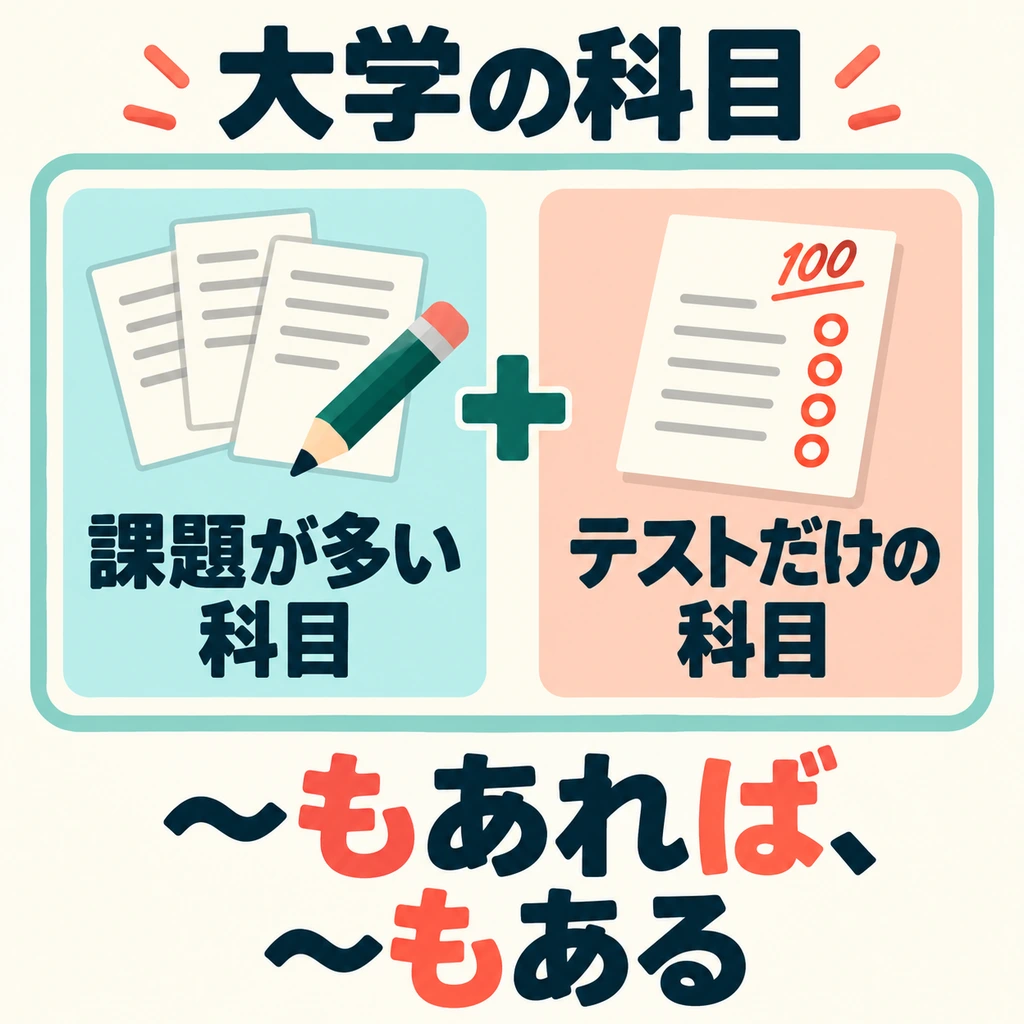
At the same university, some courses have lots of assignments, while others are graded only by exams.
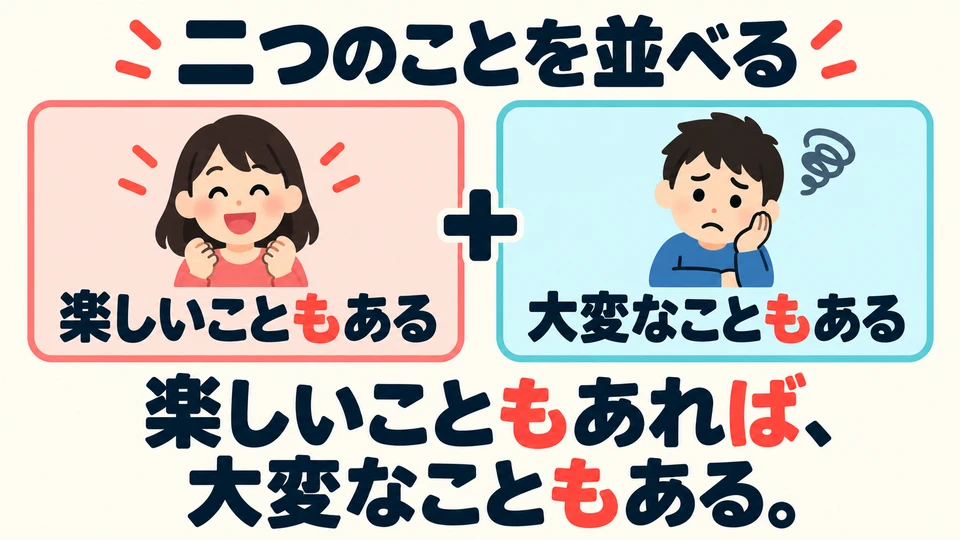
The two 「も」 list different situations side by side: “there are both … and …” or “some …, others ….”
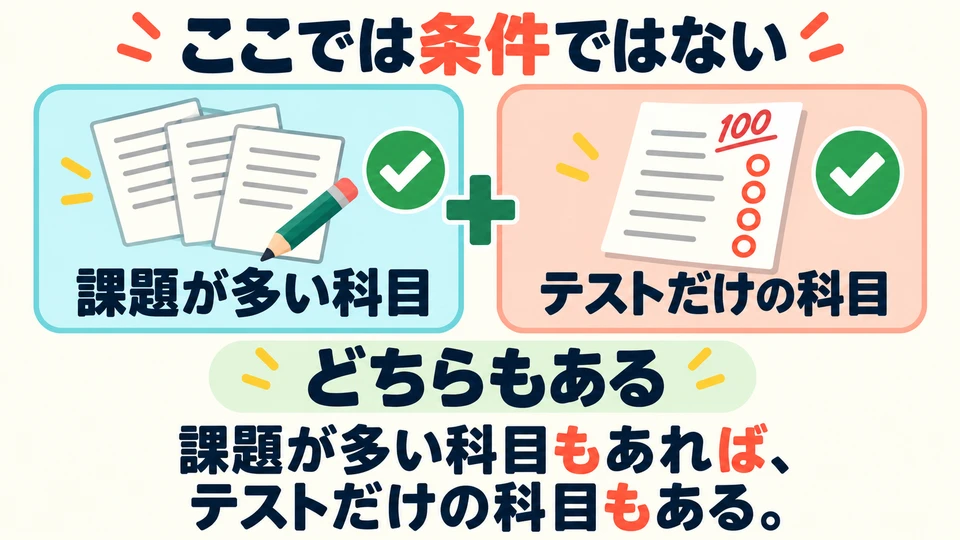
Here, 「ば」 does not express a condition. Both situations exist, with no time sequence or cause-and-effect link.
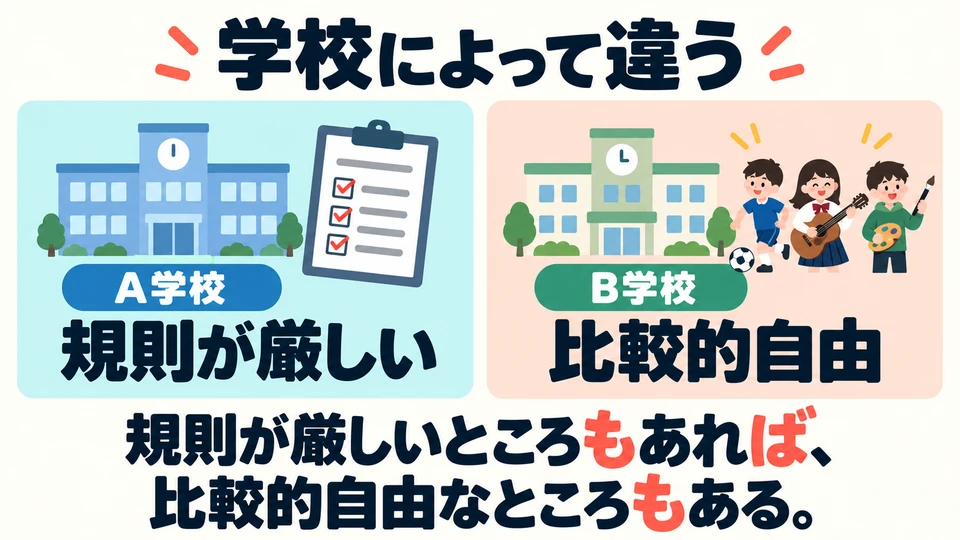
In the school example, the two kinds of rules belong to different schools. It is not one school that is both strict and relaxed.
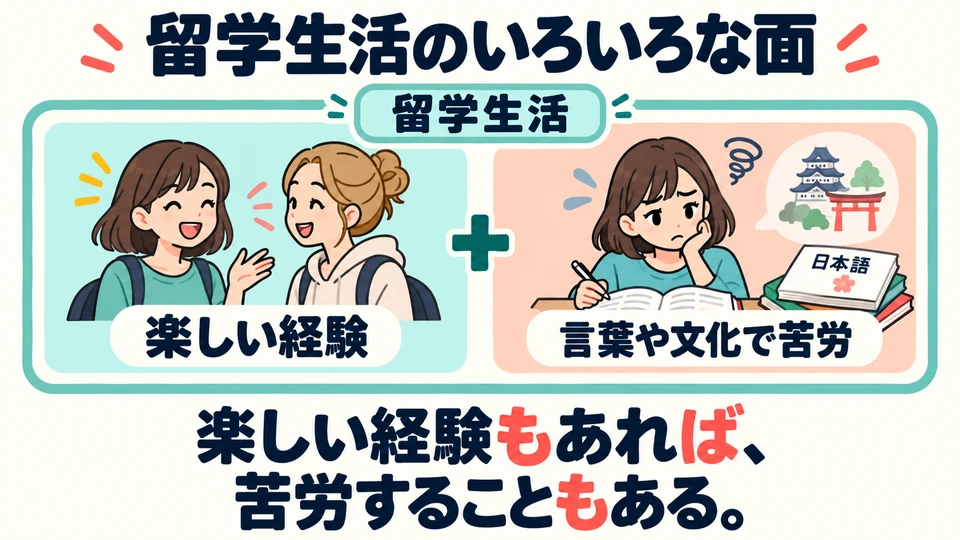
The study-abroad example lists joys and hardships together, showing that the same way of life can have different sides.
Example sentences
- 日本nipponのno学校gakkouにniは、wa、規則kisokuがga厳しいkibishiiところtokoroもmoあれare
In a conversation

Check yourself
Level 1 · Recognise
Which sentence is correct?
Level 1 · Recognise
Listen and choose the meaning
Level 2 · Build
Put the words in order
In Japanese schools, some places have strict rules, while others are relatively free.
Level 3 · Use
What goes in the blank?
日本の学校には、規則が厳しいところもあれば、比較的自由なところも____。
In Japanese schools, some are strict about rules, while others are relatively free.
More grammar in this theme
- 〜も〜ば、〜もlisting different situations