JPEdLab iconJPEdLab
Save history

Create an account and play

Explore first, then save your progress whenever you are ready. No email address is required.

Start free
  1. Japanese grammar
  2. JLPT N2 grammar
  3. 〜にかけては

〜にかけては~ni kakete wa

Ni kakete wa (〜にかけては) means “when it comes to; strong at”.

日本にっぽんnipponのno大学生だいがくせいdaigakuseiは、わ、wa、サークルさーくるsaakuru活動かつどうkatsudouにniかけkakeてteはわwaとてもtotemo積極的せっきょくてきsekkyokutekiだdaとto思います。おもいます。omoimasu。

I think Japanese university students are very active when it comes to club activities.

「〜にかけては」 singles out a field for praise, usually followed by a positive evaluation.

In the course›

How it works

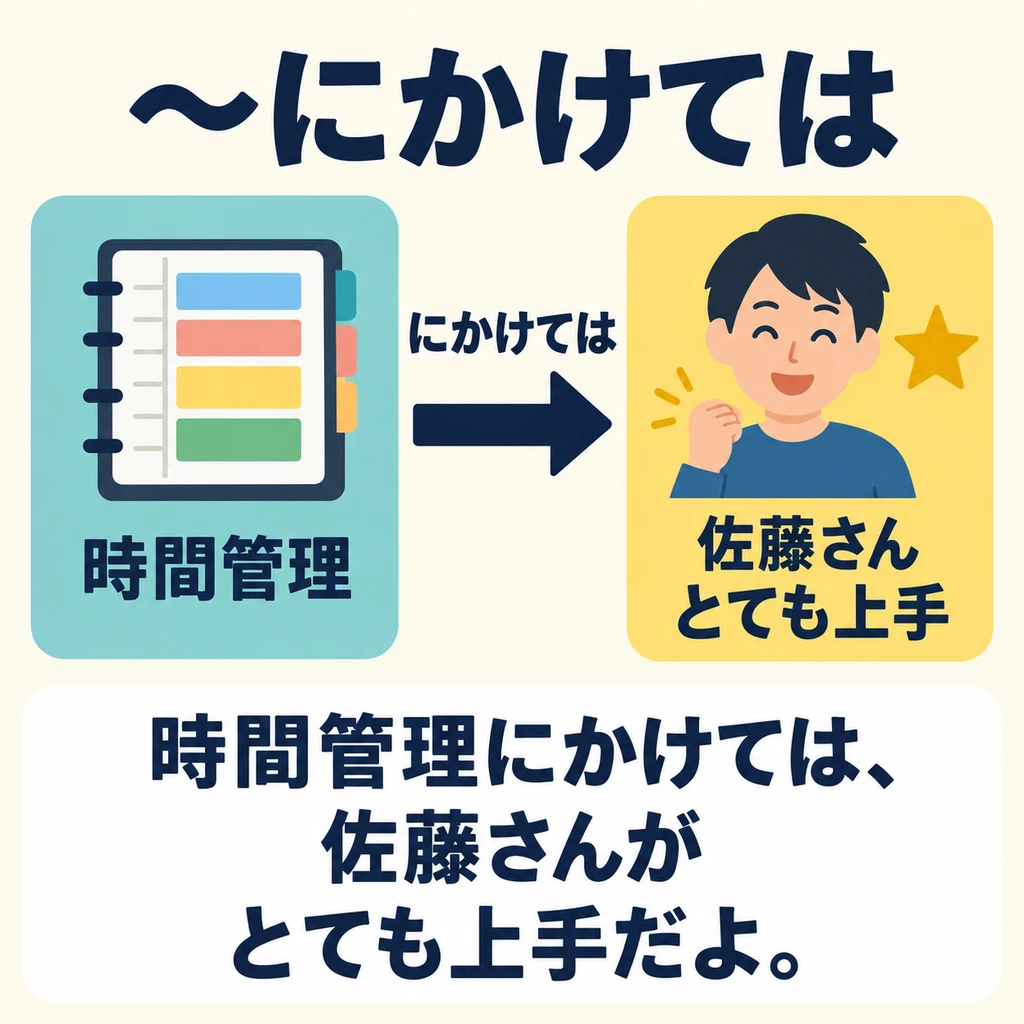
  1. Someone needs help managing their schedule, and Sato is very good at it. The arrow links this field to a positive evaluation.
    Someone needs help managing their schedule, and Sato is very good at it. The arrow links this field to a positive evaluation.

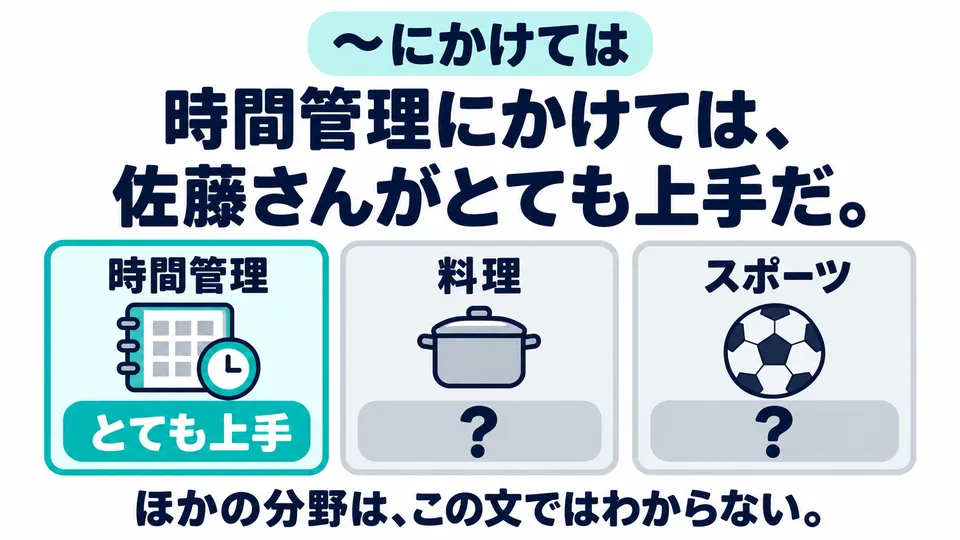
  2. The pattern highlights a strength in time management alone. It says nothing about how good Sato is in other areas.
    The pattern highlights a strength in time management alone. It says nothing about how good Sato is in other areas.

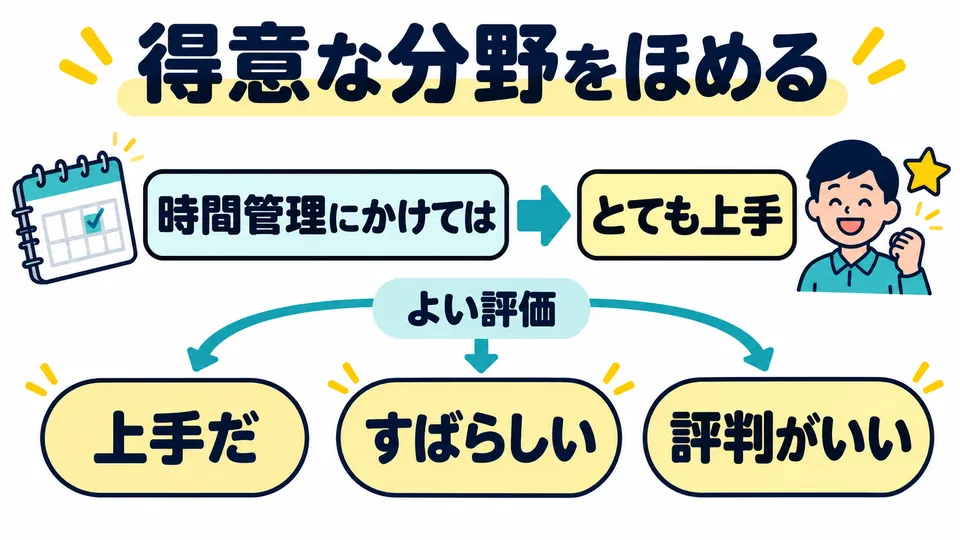
  3. Use it to praise performance in a particular field. It is usually followed by a positive evaluation, rather than saying someone is unskilled or does poorly.
    Use it to praise performance in a particular field. It is usually followed by a positive evaluation, rather than saying someone is unskilled or does poorly.

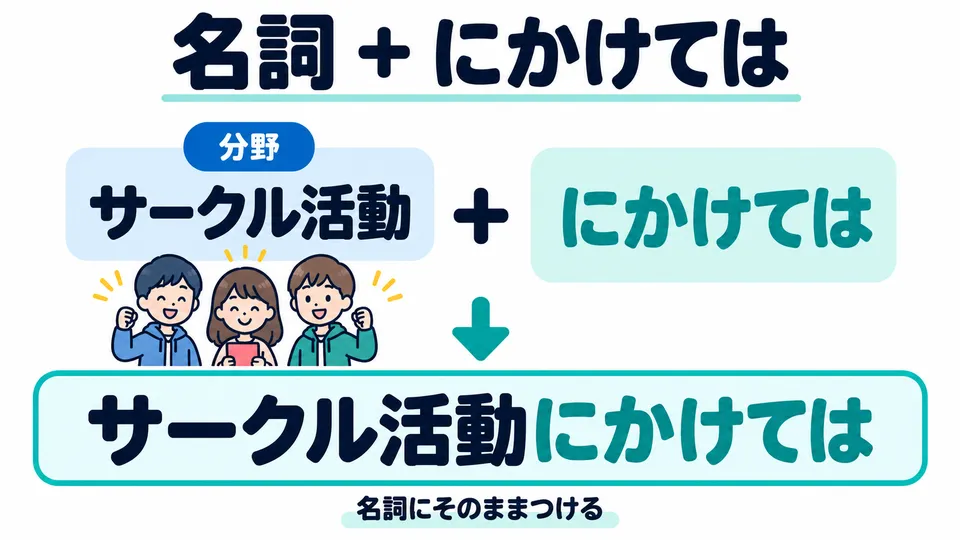
  4. When a noun names the field, add 「にかけては」 directly, as with 「サークル活動」 in the example.
    When a noun names the field, add 「にかけては」 directly, as with 「サークル活動」 in the example.

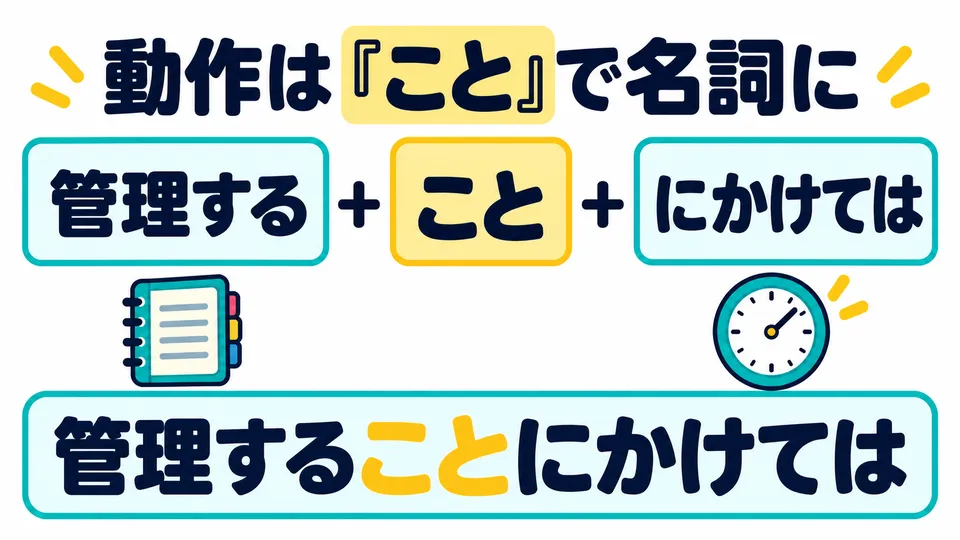
  5. If an action names the field, first add 「こと」 to make it a noun phrase: 管理することにかけては.
    If an action names the field, first add 「こと」 to make it a noun phrase: 管理することにかけては.

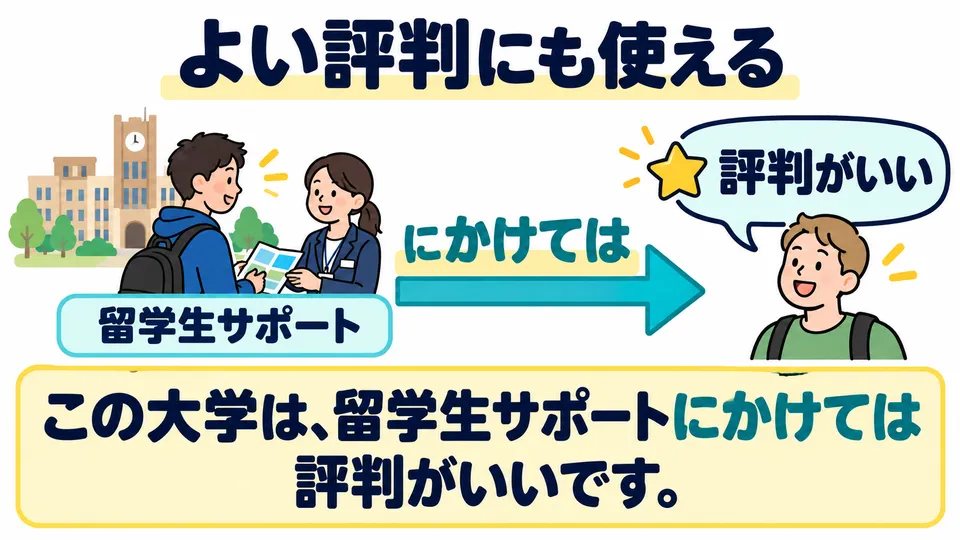
  6. The university example uses 「評判がいい」 to praise its reputation for supporting international students. The pattern can also express a good reputation.

    The university example uses 「評判がいい」 to praise its reputation for supporting international students. The pattern can also express a good reputation.

Example sentences

  • 日本にっぽんnipponのno大学生だいがくせいdaigakuseiは、わ、wa、サークルさーくるsaakuru活動かつどうkatsudouにniかけkakeてteはわwaとてもtotemo積極的

In a conversation

  • A
    就職しゅうしょく活動かつどうのスケジュールすけじゅーる管理かんりで困っこまっているんだけど、誰だれかいい人ひとはわいない?いない

Check yourself

  1. Level 1 · Recognise

    Which sentence is correct?

  2. Level 1 · Recognise

    Listen and choose the meaning

  3. Level 2 · Build

    Put the words in order

    I think Japanese university students are very active when it comes to club activities.

  4. Level 3 · Use

    What goes in the blank?

    日本の大学生は、____とても積極的だと思います。

    I think Japanese university students are very active when it comes to club activities.

More grammar in this theme

  • 〜にかけてはwhen it comes to; strong at

More JLPT N2 grammar

Keep practising

Test your Japanese vocabulary12 adaptive questions, freeCheck your pronunciationRead aloud and get a scorePractise verb forms10-question conjugation quizSee the whole courseGrammar, vocabulary and quizzes by theme
せっきょくてき
sekkyokuteki
だda
とto
思います。おもいます。omoimasu。

I think Japanese university students are very active when it comes to club activities.

  • このkono大学だいがくdaigakuは、わ、wa、留学生りゅうがくせいryuugakuseiサポートさぽーとsapootoにniかけkakeてteはわwa評判ひょうばんhyoubanがgaいいです。iidesu。

    This university has a good reputation when it comes to supporting international students.

  • A: I'm having trouble managing my job-hunting schedule. Is there anyone who could help?

  • B
    それなら、手帳てちょうを使っつかってすき間すきま時間じかんまで管理かんりすることにかけては、わ、佐藤さんさとうさんがとても上手だじょうずだよ。

    B: In that case, Sato is very good at using a planner to manage even the smallest gaps of time.

  • A
    そうなんだね。じゃあ、さっそく佐藤さんさとうさんにコツこつを相談そうだんしてみるよ。

    A: I see. Then, I'll go consult Sato for some tips right away.

  • Intermediate 3
    School Systems and Educational Experiences
    More quizzesOpen this lesson’s quizzes in the course
    〜ものだ・〜もんだas things usually are
    〜はともかくset aside and focus
    〜ないことはない・〜ないこともないqualified yes; not impossible
    〜も〜ば、〜もlisting different situations
    〜にわたって/〜にわたり/〜にわたるspan a period, area, or occasions
    〜きる・〜きれるfinish completely; be able to finish
    〜にもかかわらずdespite; contrary to expectation
    〜からいうと・〜からいって・〜からいえばjudging from; from a perspective
    〜となると・〜となれば・〜となったらwhen facing a situation
    〜次第だ・〜次第でdepends on; depending on
    〜ぬくpersevere to the end
    〜つつwhile doing; simultaneous actions
    Previous〜ものだ・〜もんだ
    Next〜はともかく
    See all 55
    〜のみならずnot only, but also
    〜だけにprecisely because
    〜としてもeven if; supposing that
    〜に先立って・〜に先立ちbefore; prior to an event
    〜(より)ほかない/〜(より)ほかしかたがないhave no other choice
    〜(っ)きり/〜(っ)きりだunchanged since then
    〜ざるを得ないhave no choice but to
    〜を契機にas a trigger for change