JPEDLAB iconJPEDLAB
Save history

Create an account and play

Explore first, then save your progress whenever you are ready. No email address is required.

Start free
Read as articleCards
See the whole course›Intermediate 3›Science, Technology, and Society

Japanese grammar · ≈ JLPT N2 · Intermediate 3

〜(っ)きり/〜(っ)きりだ~ta kiri

unchanged since then

Use 「〜たきり」 for a state that has continued unchanged since an action or event.

Start the interactive lessonIllustrated cards, audio and speaking practice

How it works

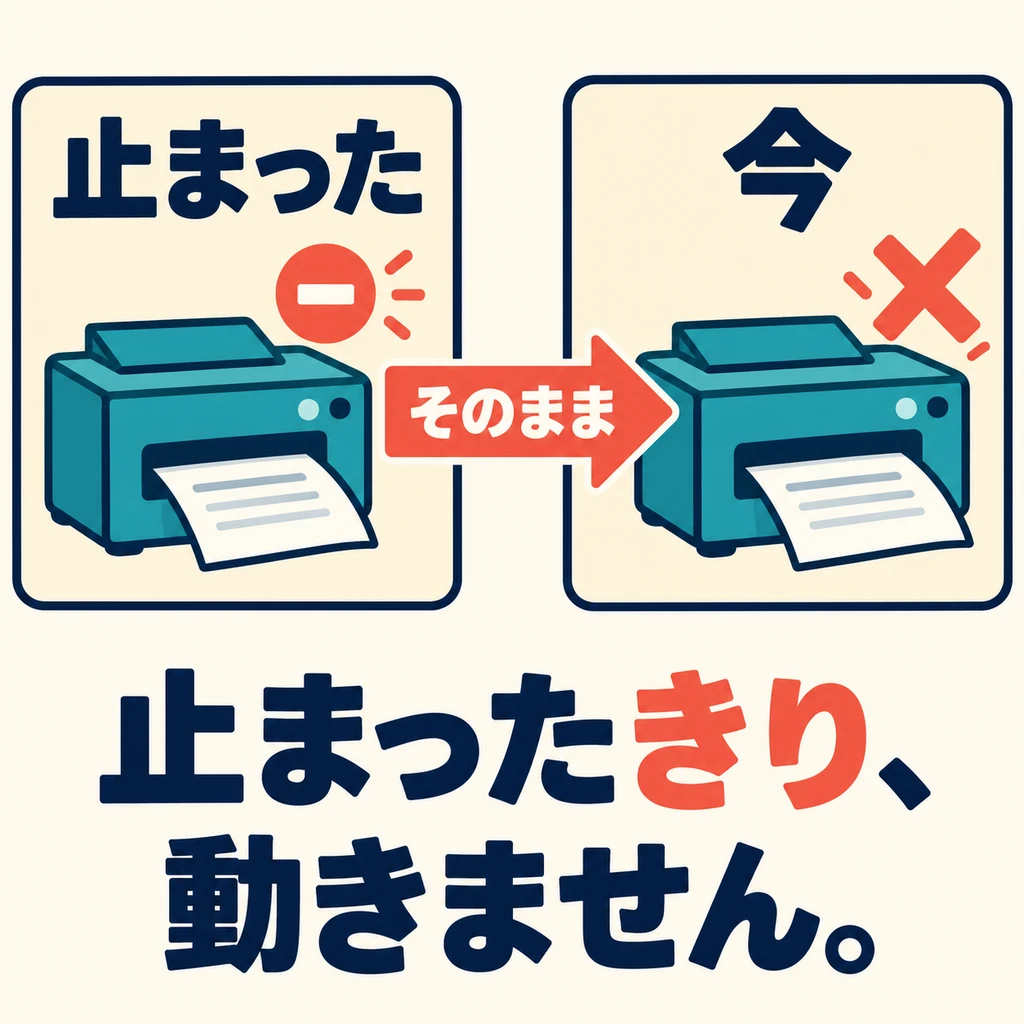
  1. It stopped and still does not work now. 「きり」 shows that the state has stayed unchanged since then.
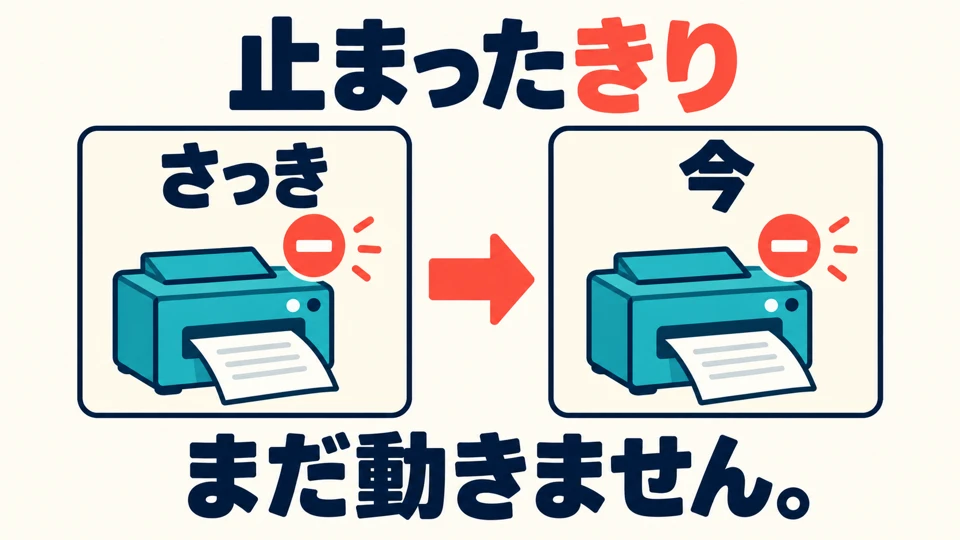
    It stopped and still does not work now. 「きり」 shows that the state has stayed unchanged since then.

  2. Use 「きり」 to stress that a device has stayed out of action since a problem occurred.
    Use 「きり」 to stress that a device has stayed out of action since a problem occurred.

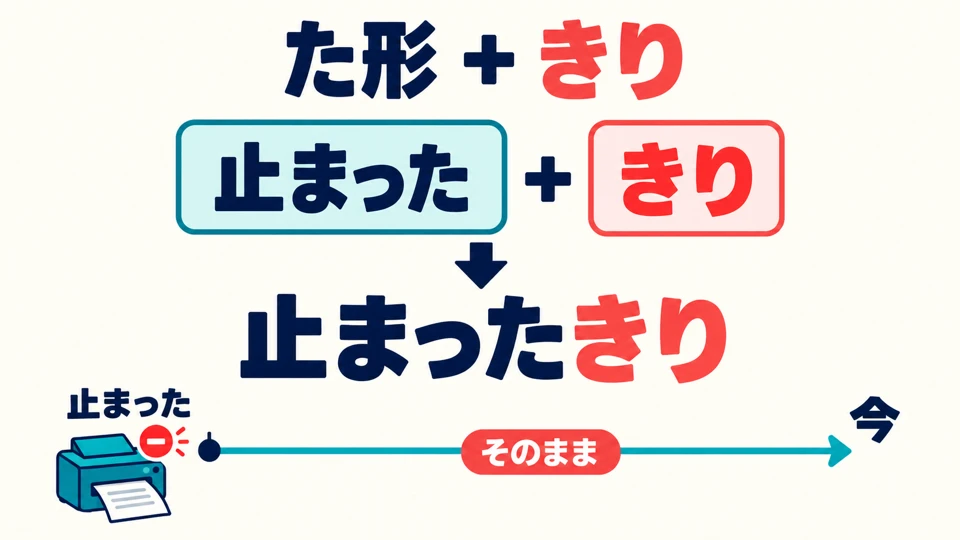
  3. Attach it to the verb’s た form: 止まった+きり. The preceding action marks the start of the continuing state.
    Attach it to the verb’s た form: 止まった+きり. The preceding action marks the start of the continuing state.

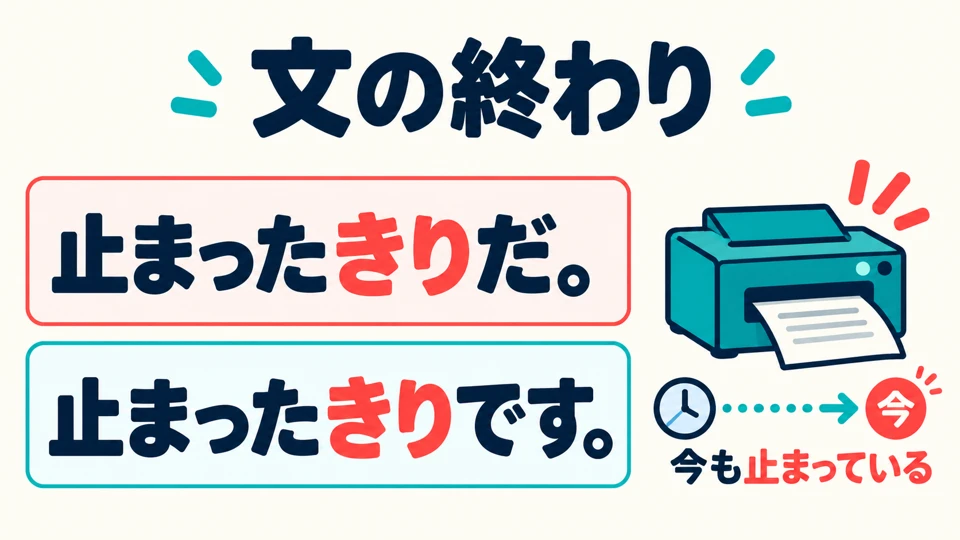
  4. At the end of a sentence, 「止まったきりだ/です」 means it has remained stopped ever since.
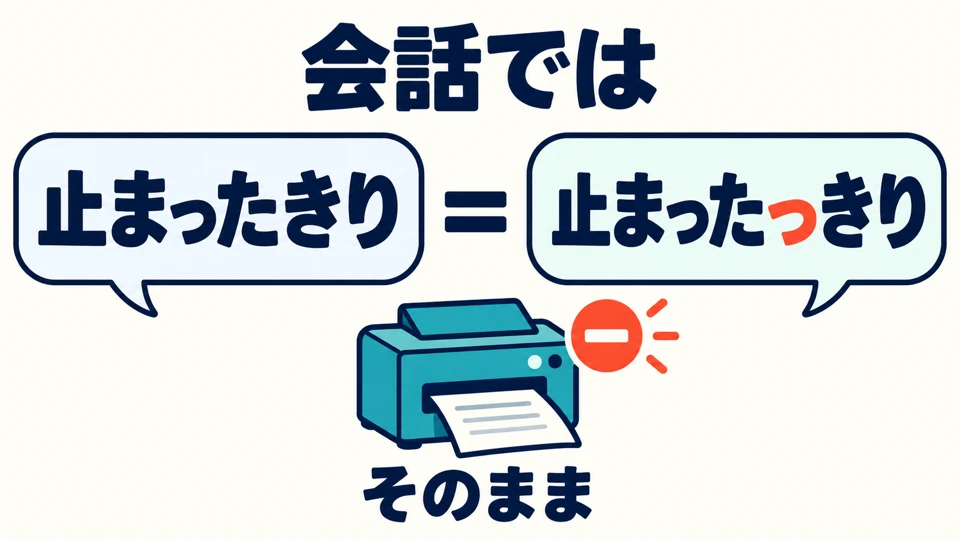
    At the end of a sentence, 「止まったきりだ/です」 means it has remained stopped ever since.

  5. In conversation, people also say 「止まったっきり」. The extra 「っ」 does not change the meaning here.
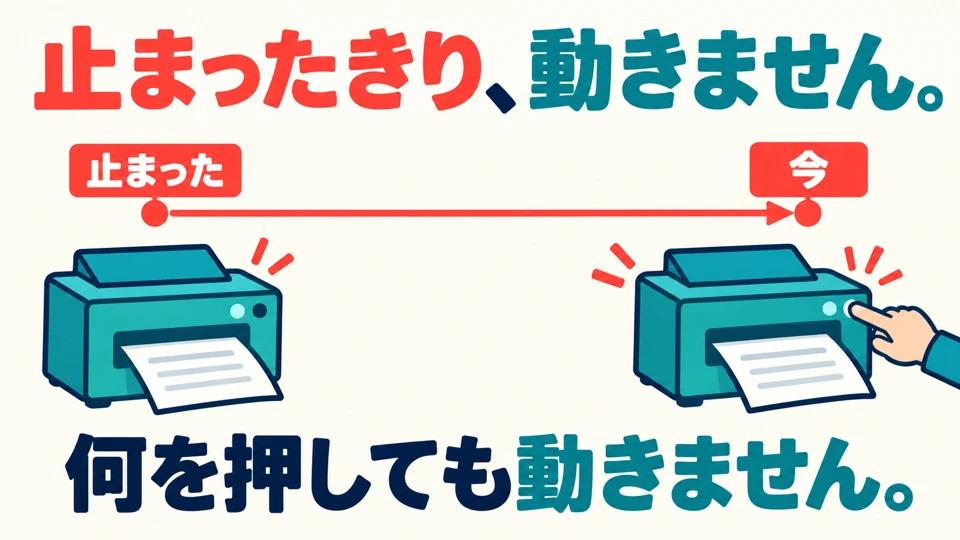
    In conversation, people also say 「止まったっきり」. The extra 「っ」 does not change the meaning here.

  6. In the printer example, the last action was stopping. 「動きません」 explains that it has not resumed working since then.
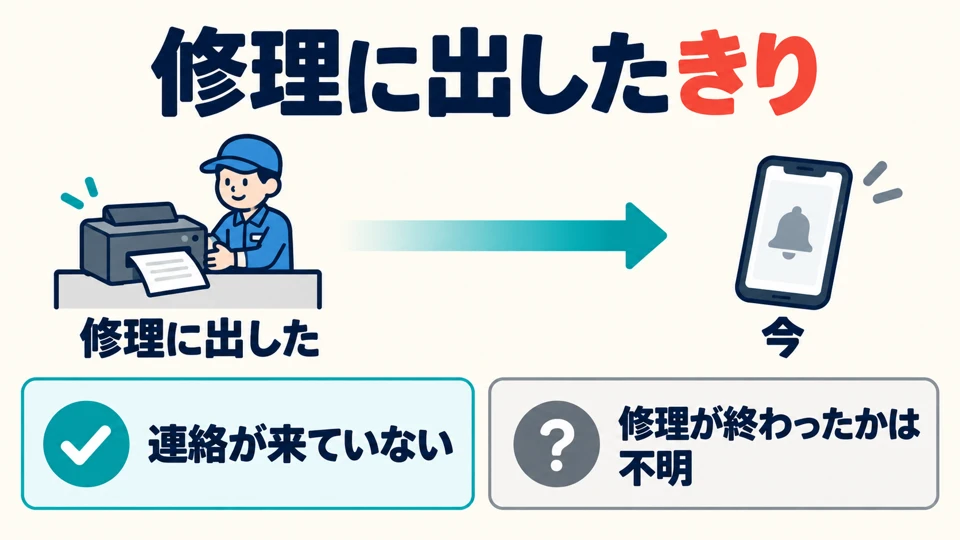
    In the printer example, the last action was stopping. 「動きません」 explains that it has not resumed working since then.

  7. In the repair example, there has been no contact since it was sent for repair. This sentence does not tell us whether the repair is finished.

    In the repair example, there has been no contact since it was sent for repair. This sentence does not tell us whether the repair is finished.

Example sentences

  • プリンターぷりんたーpurintaaがga途中とちゅうtochuuでde止まったとまったtomattaきり、kiri、何なんnanをo押しおしoshiてteもmo

In a conversation

Check yourself

  1. Level 1 · Recognise

    Which sentence is correct?

  2. Level 1 · Recognise

    Listen and choose the meaning

  3. Level 2 · Build

    Put the words in order

    The printer stopped partway through, and no matter what I press, it won't move.

  4. Level 3 · Use

    What goes in the blank?

    プリンターが途中で止まった____、何を押しても動きません。

    The printer stopped halfway and won't move no matter what I press.

More grammar in this theme

  • 〜(っ)きり/〜(っ)きりだunchanged since then

Keep practising

Test your Japanese vocabulary12 adaptive questions, freeCheck your pronunciationRead aloud and get a scorePractise verb forms10-question conjugation quizSee the whole courseGrammar, vocabulary and quizzes by theme
動きませんうごきませんugokimasen

The printer stopped midway and won't move no matter what button I press.

  • A
    パソコンぱそこんの調子ちょうしはわどうですか。画面がめんが固まったかたまったきりですか。

    A: How is the computer doing? Is the screen still frozen?

  • B
    はい、さっき再起動さいきどうしたきり、画面がめんが真っ暗なまままっくらなままで何なにも反応はんのうしません。

    B: Yes, ever since I restarted it a moment ago, the screen has remained completely black and doesn't react at all.

  • 修理しゅうりshuuriにni出しただしたdashitaきり、kiri、まだmada連絡れんらくrenrakuがga来きkiてteいません。imasen。

    I sent it in for repair and haven't heard back yet.

  • A
    それはわ困りましたこまりましたね。すぐに状態じょうたいを確認かくにんして、原因げんいんを調べましょう。しらべましょう。

    A: That's a problem. Let's check the status immediately and investigate the cause.

  • 〜といえばspeaking of; typical association
    〜というとtopic association
    〜べきだ/〜べきではないshould / should not
    〜ほど〜はないnothing is as … as
    〜(より)ほかない/〜(より)ほかしかたがないhave no other choice
    〜最中にright in the middle of
    〜かけだ/〜かけの/〜かけるstarted but unfinished
    〜ざるを得ないhave no choice but to
    〜を契機にas a trigger for change
    〜をめぐってconcerning an issue
    〜上のrelated to an aspect
    〜上from a certain perspective
    Previous〜(より)ほかない/〜(より)ほかしかたがない
    Next〜最中に