
Japanese grammar · ≈ JLPT N2 · Intermediate 3
〜(より)ほかない/〜(より)ほかしかたがない~ (yori) hoka nai / ~ (yori) hoka shikata ga nai
have no other choice
Use 「〜よりほかない」 when circumstances leave no other way to act.
How it works
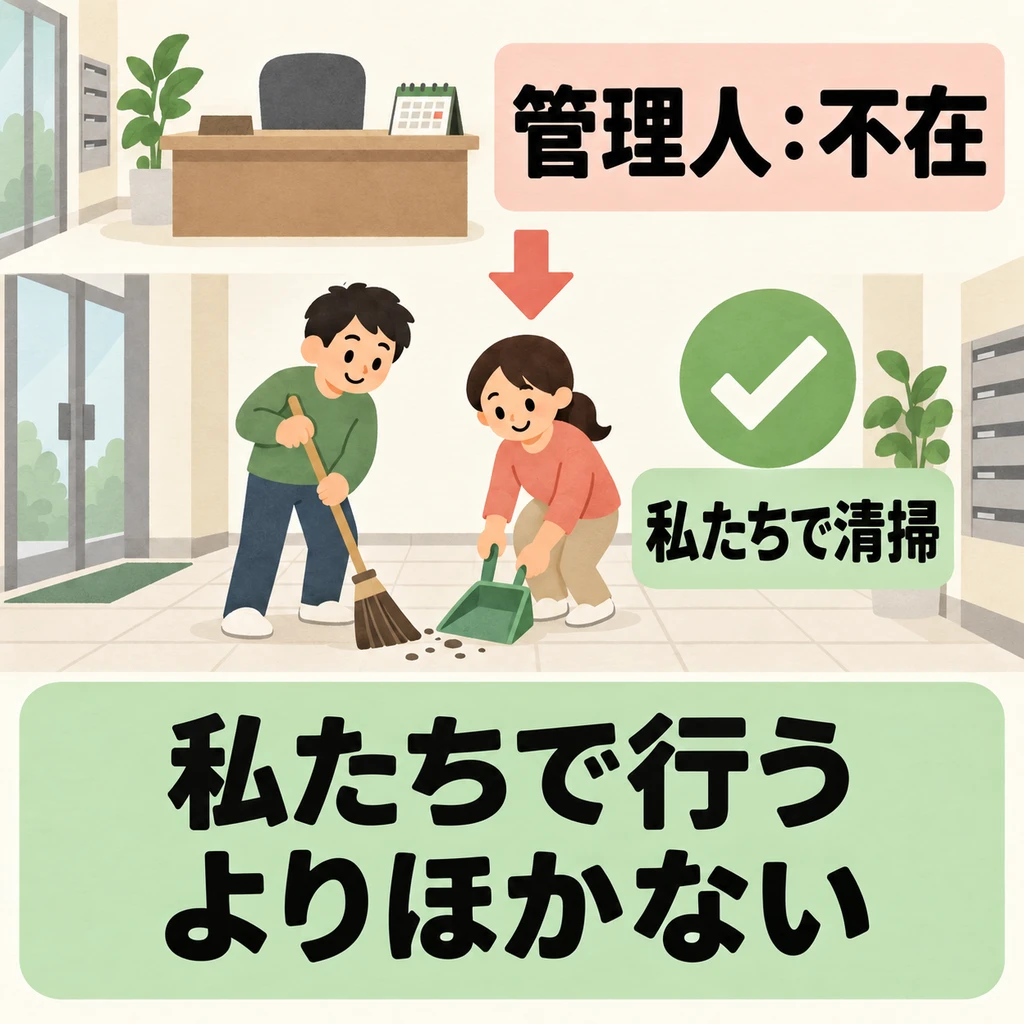
The manager is away, but cleaning must continue, so the residents have to do it. There is no other way.
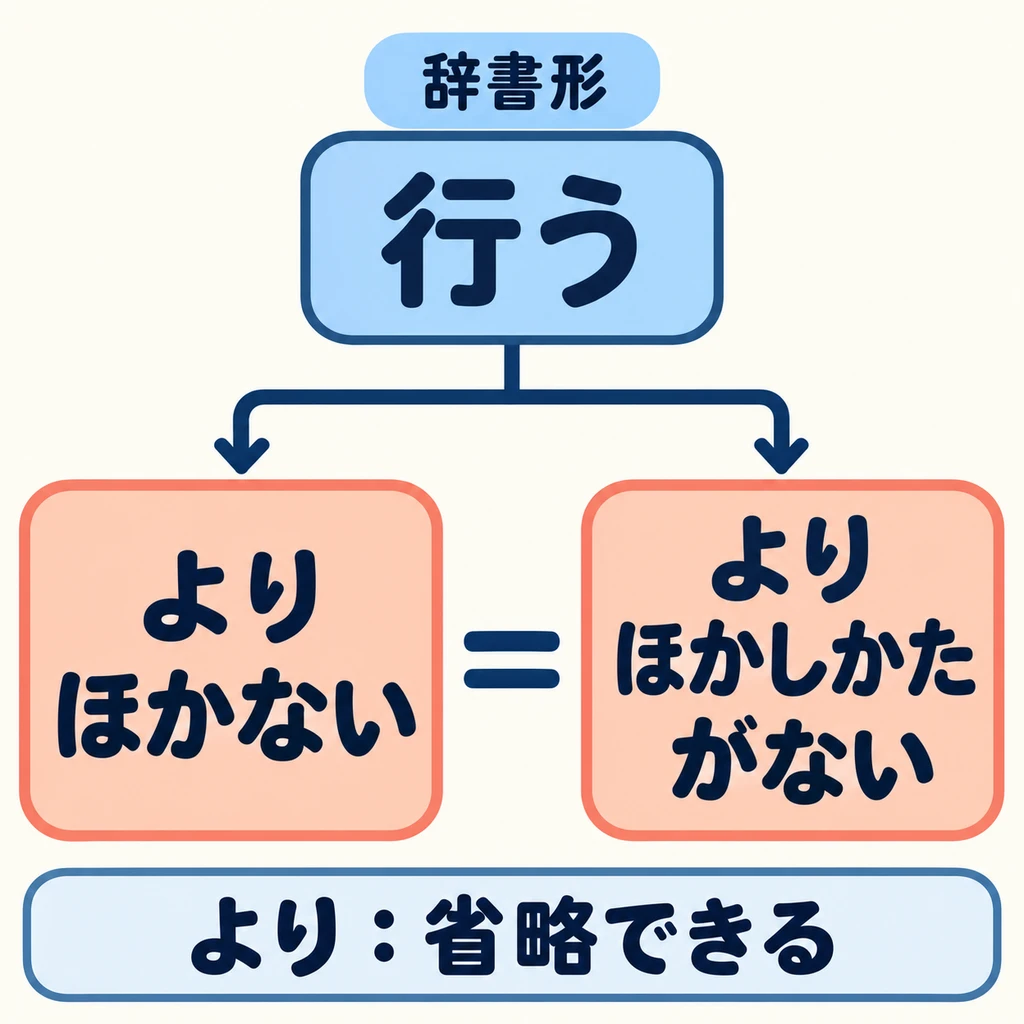
Use the dictionary form of a verb, such as 「行う」, followed by the pattern meaning “have no other choice.”
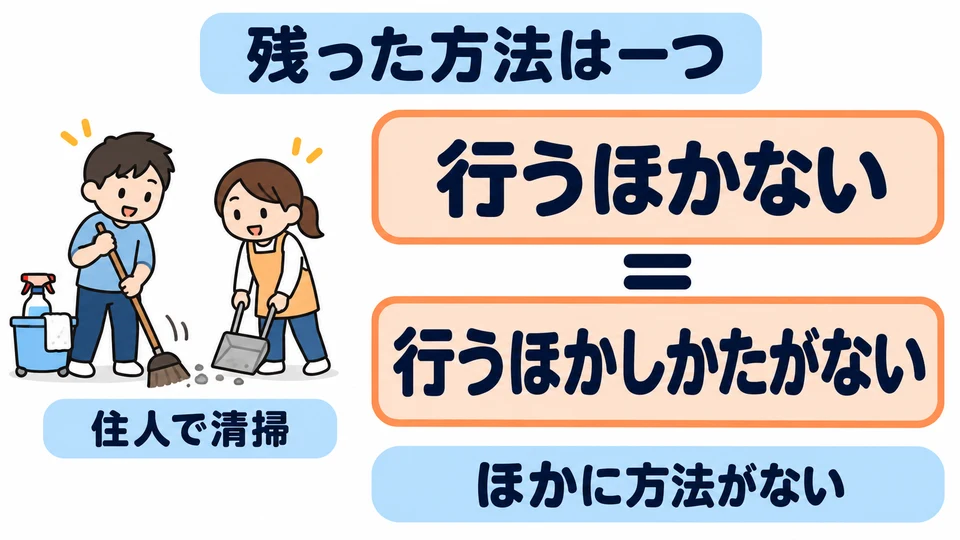
Both 「ほかない」 and 「ほかしかたがない」 mean that this is the only way left.
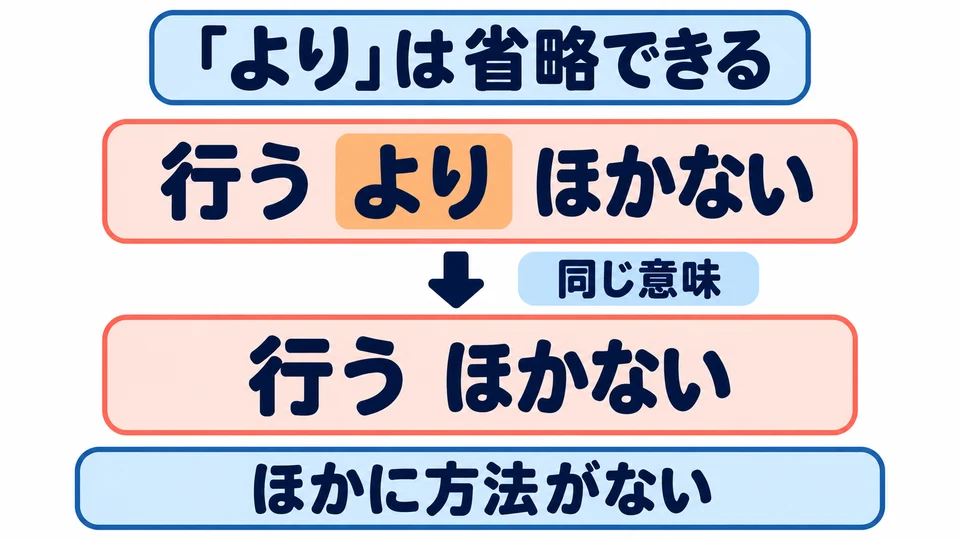
「より」 can be omitted. 「行うほかない」 also means there is no choice but to do it.
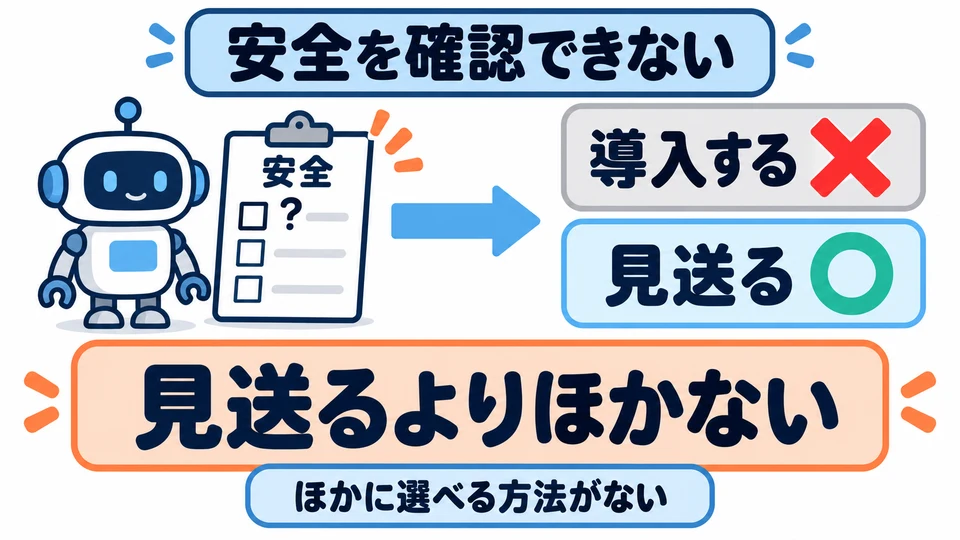
Safety cannot be confirmed, so introducing the robots must be postponed. The focus is on the constraints, not a personal preference.
Example sentences
- 介護kaigoするsuru人hitoがga足りない地域tarinaichiikiでdeは、wa、ロボットrobottoのno力chikaraをo
In a conversation

Check yourself
Level 1 · Recognise
Which sentence is correct?
Level 1 · Recognise
Listen and choose the meaning
Level 2 · Build
Put the words in order
In areas where there are not enough caregivers, there is no choice but to rely on robots.
Level 3 · Use
What goes in the blank?
介護職員の不足が深刻な施設では、介護ロボットを試験的に導入する____。
In facilities facing a severe shortage of caregivers, there is no choice but to introduce care robots on a trial basis.
More grammar in this theme
- 〜(より)ほかない/〜(より)ほかしかたがないhave no other choice