JPEDLAB iconJPEDLAB
Save history

Create an account and play

Explore first, then save your progress whenever you are ready. No email address is required.

Start free
Read as articleCards
See the whole course›Intermediate 3›Science, Technology, and Society

Japanese grammar · ≈ JLPT N2 · Intermediate 3

〜ざるを得ない~zaru o enai

have no choice but to

Use 「〜ざるを得ない」 for having to act because circumstances leave no choice.

Start the interactive lessonIllustrated cards, audio and speaking practiceTake the quiz
Pattern
〜ざるを得ない
Romaji
~zaru o enai
JLPT (approx.)
≈ N2
Course level
Intermediate 3
Theme
Science, Technology, and Society

How it works
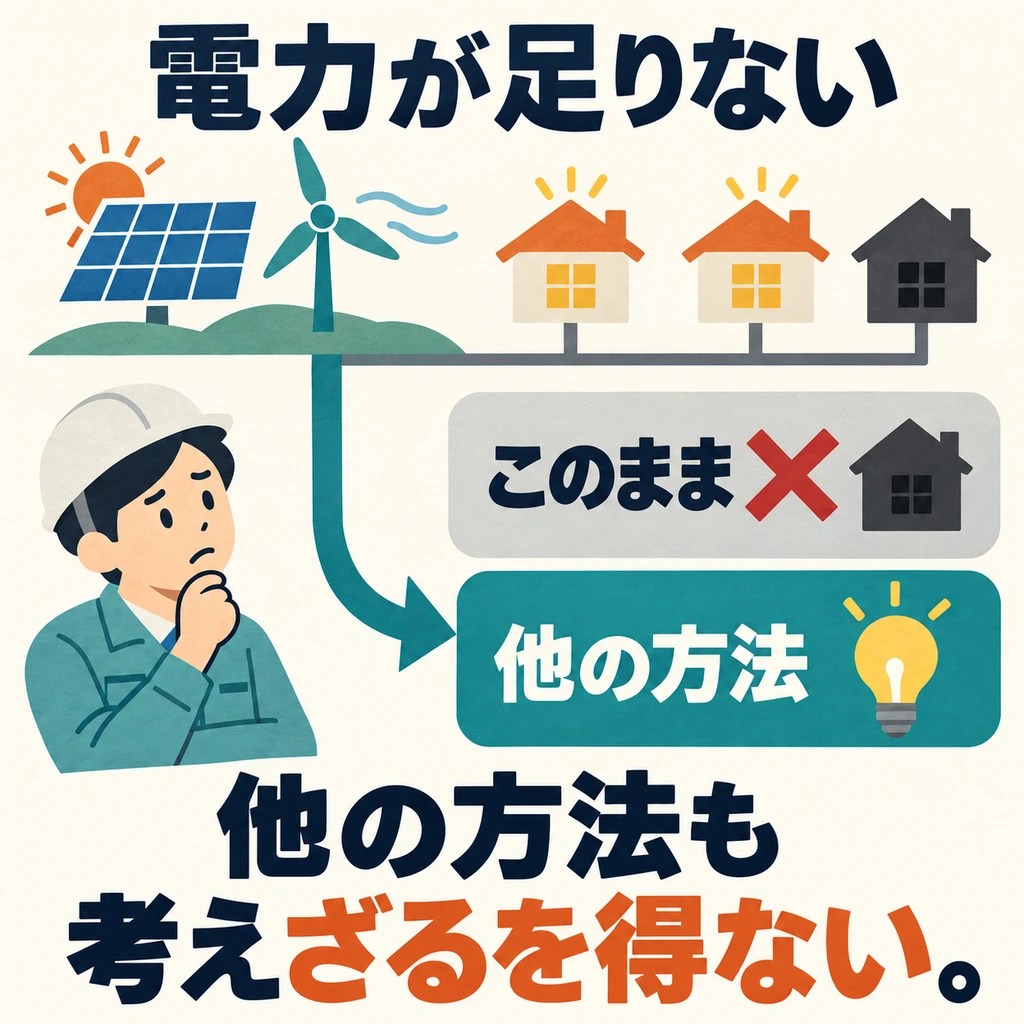
  1. There is not enough electricity to carry on as before. The situation leaves no choice but to consider other options.
    There is not enough electricity to carry on as before. The situation leaves no choice but to consider other options.

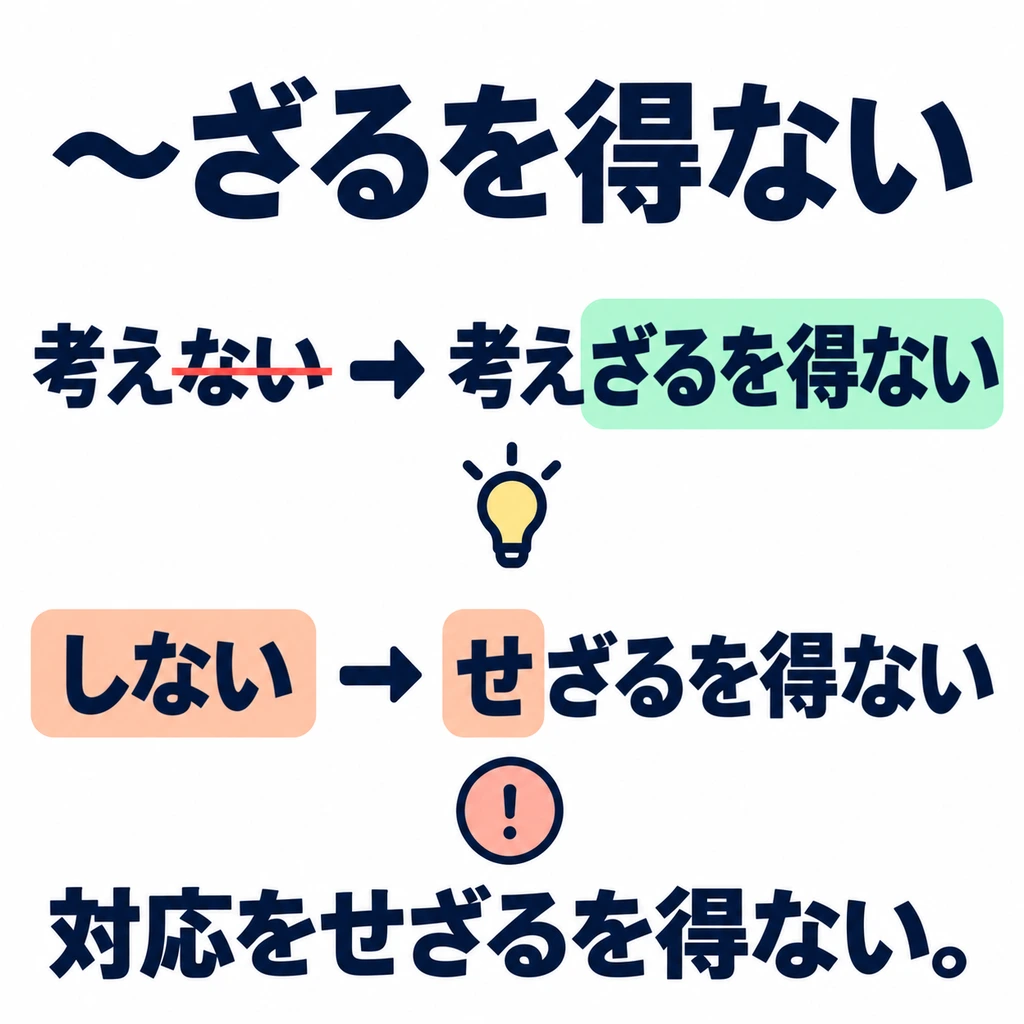
  2. Remove ない from the verb’s ない-form and add ざるを得ない. This means there is no other choice.
    Remove ない from the verb’s ない-form and add ざるを得ない. This means there is no other choice.

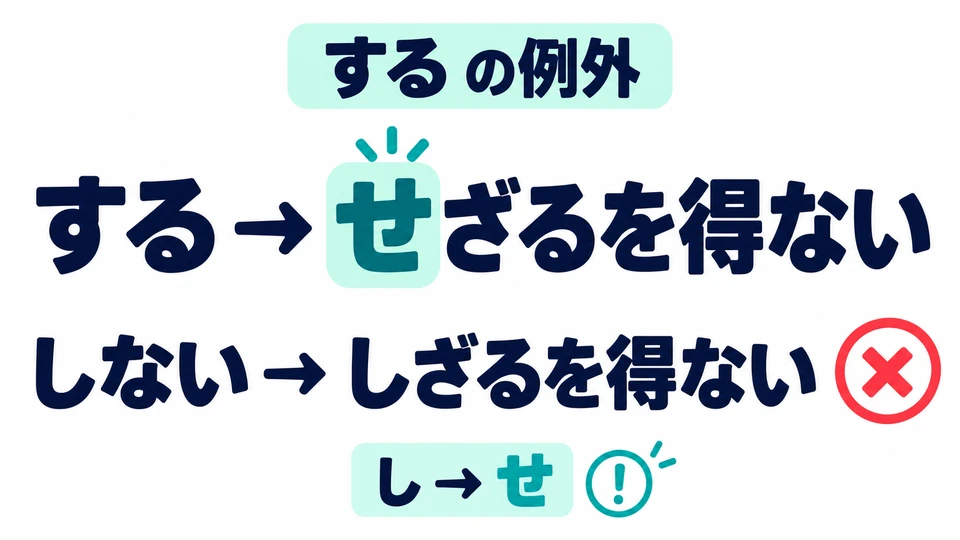
  3. する is an exception: it becomes せざるを得ない. You cannot simply replace ない in しない.
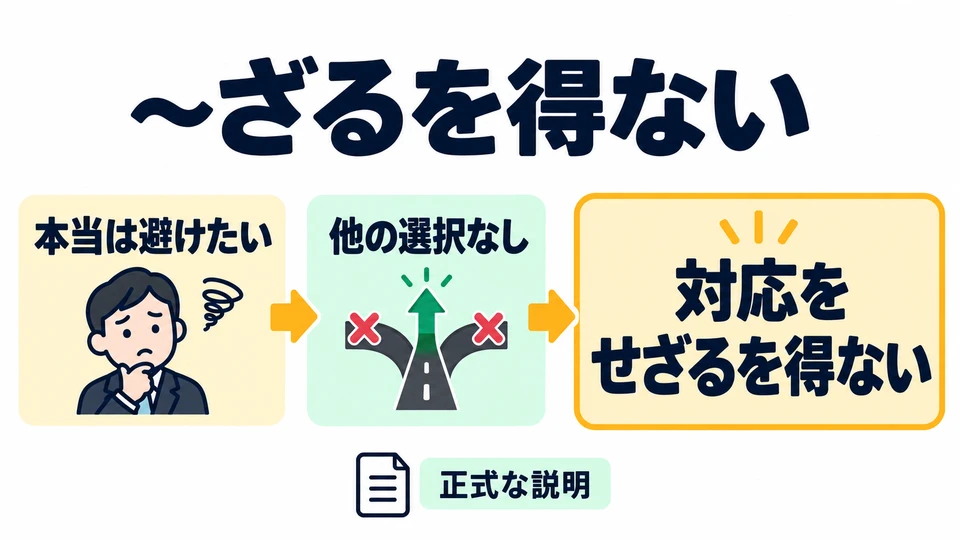
    する is an exception: it becomes せざるを得ない. You cannot simply replace ない in しない.

  4. Often used in more formal explanations, it means having to act because of the circumstances, even unwillingly.
    Often used in more formal explanations, it means having to act because of the circumstances, even unwillingly.

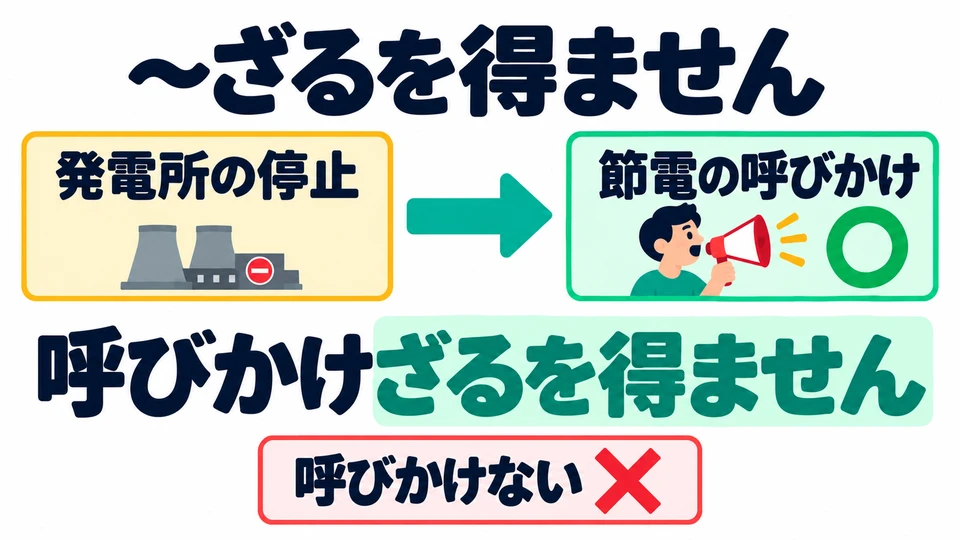
  5. 得ません in the example does not mean “we do not call for power saving.” The power plant shutdown leaves no choice but to call for it.

    得ません in the example does not mean “we do not call for power saving.” The power plant shutdown leaves no choice but to call for it.

Example sentences

  • 再生さいせいsaisei可能かのうkanouエネルギーえねるぎーenerugiiだけdakeでde十分に供給じゅうぶんにきょうきゅうjuubunnikyoukyuuできないなら、dekinainara、他たtaのno方法ほうほうhouhou

In a conversation

  • A
    今年ことしの夏なつはわ電力でんりょく需要じゅようが非常に高くひじょうにたかくなりそうですね。

    A: It seems that electricity demand will be very high this summer, doesn't it?

  • B
    ええ、電力でんりょく

Check yourself

  1. Which sentence is correct?

    1. 地域住民の安全を守るため、古い原子力発電所の安全基準を見直さざるを得ません。
    2. 地域住民の安全を守るため、古い原子力発電所の安全基準を見直さざるをえません。
    3. 地域住民の安全を守るため、古い原子力発電所の安全基準を見直さねばなりません。
    4. 地域住民の安全を守るため、古い原子力発電所の安全基準を見直さざるを得ませんでした。
    Show answer

    Answer: A 地域住民の安全を守るため、古い原子力発電所の安全基準を見直さざるを得ません。

  2. Which sentence is correct?

    1. 介護職員の人手不足が深刻なため、介護施設では新しい見守りセンサーを導入せざるを得ません。
    2. 介護職員の人手不足が深刻なため、介護施設では新しい見守りセンサーを導入せざるをえません。
    3. 介護職員の人手不足が深刻なため、介護施設では新しい見守りセンサーを導入せざるを得ます。
    4. 介護職員の人手不足が深刻なため、介護施設では新しい見守りセンサーを導入せざるを得ませんでした。
    Show answer

    Answer: A 介護職員の人手不足が深刻なため、介護施設では新しい見守りセンサーを導入せざるを得ません。

  3. Which sentence is correct?

    1. 天然ガスの輸入が止まれば、古い火力発電所を動かさざるを得ません。
    2. 天然ガスの輸入が止まれば、古い火力発電所を動かさざるをえません。
    3. 天然ガスの輸入が止まれば、古い火力発電所を動かざるを得ます。
    4. 天然ガスの輸入が止まれば、古い火力発電所を動かさざるを得ませんでした。
    Show answer

    Answer: A 天然ガスの輸入が止まれば、古い火力発電所を動かさざるを得ません。

More grammar in this theme

  • 〜ざるを得ないhave no choice but to

Keep practising

Test your Japanese vocabulary12 adaptive questions, freeCheck your pronunciationRead aloud and get a scorePractise verb forms10-question conjugation quizSee the whole courseGrammar, vocabulary and quizzes by theme
も
mo
考えざるかんがえざるkangaezaru
をo
得ません。えません。emasen。

If we cannot supply enough energy with renewable energy alone, we have no choice but to consider other methods.

  • 災害さいがいsaigaiでde発電所はつでんしょhatsudenshoがga止まった場合、とまったばあい、tomattabaai、節電せつでんsetsudenをo呼びよびyobiかけざるkakezaruをo得ません。えません。emasen。

    If power plants shut down due to a disaster, we will have no choice but to call for power saving.

  • の
    安定あんてい
    供給きょうきゅう
    が
    できない場合できないばあい
    は、わ、
    一部いちぶ
    の
    発電所はつでんしょ
    の
    稼働かどう
    を
    増やすふやす
    など
    の
    対応たいおう
    を
    せざる
    を
    得ません。えません。

    B: Yes, if we cannot supply power stably, we will have no choice but to take measures such as increasing the operation of some power plants.

  • A
    自然しぜん環境かんきょうへえの環境かんきょう負荷ふかも考えるかんがえると、難しいむずかしい問題もんだいですね。

    A: Considering the environmental impact on the natural environment, it is indeed a difficult issue.

  • Take the quiz
    〜といえばspeaking of; typical association
    〜というとtopic association
    〜べきだ/〜べきではないshould / should not
    〜ほど〜はないnothing is as … as
    〜(より)ほかない/〜(より)ほかしかたがないhave no other choice
    〜(っ)きり/〜(っ)きりだunchanged since then
    〜最中にright in the middle of
    〜かけだ/〜かけの/〜かけるstarted but unfinished
    〜を契機にas a trigger for change
    〜をめぐってconcerning an issue
    〜上のrelated to an aspect
    〜上from a certain perspective
    Previous〜かけだ/〜かけの/〜かける
    Next〜を契機に