
Japanese grammar · ≈ JLPT N2 · Intermediate 3
〜を契機に~ o keiki ni
as a trigger for change
Use 「〜を契機に」 to present an event as the starting point for later action or change.
How it works
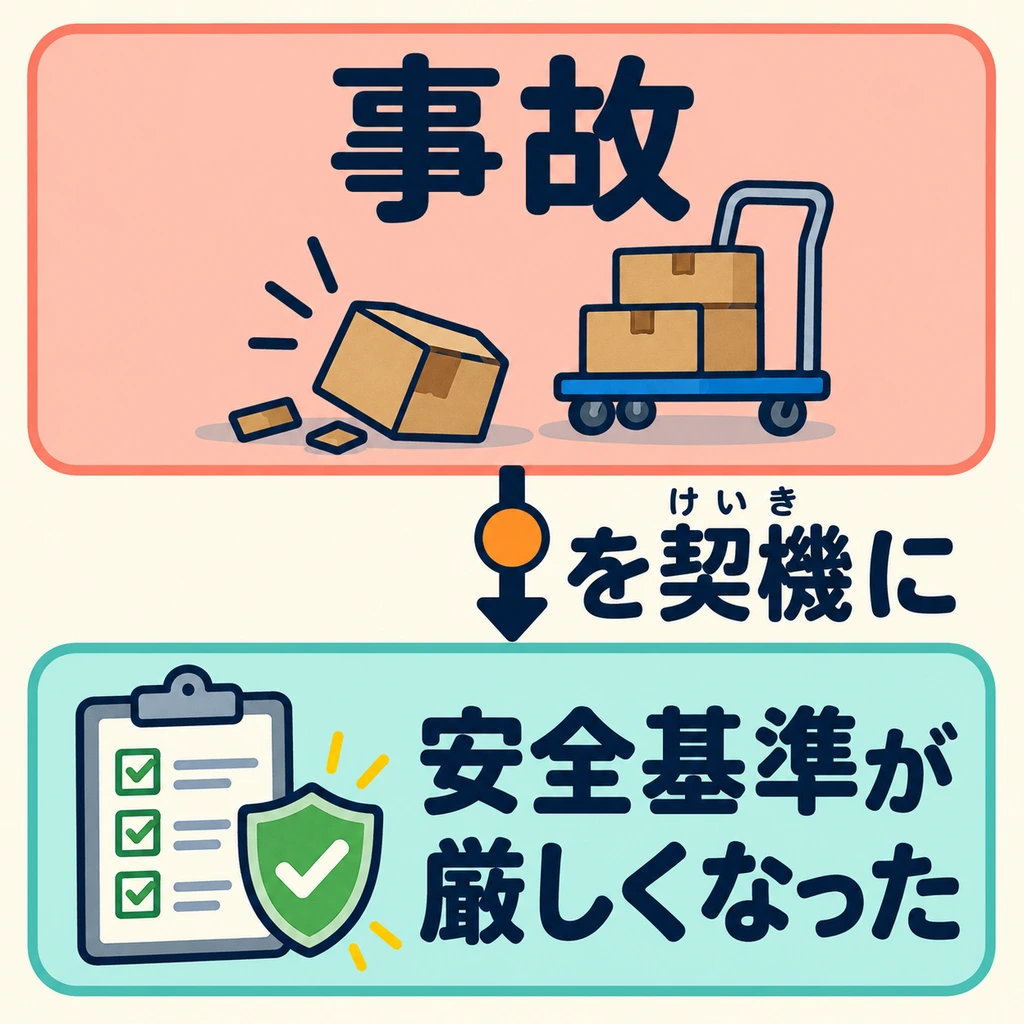
Which event led to the change that followed? 「を契機に」 presents an event as the starting point for new action.
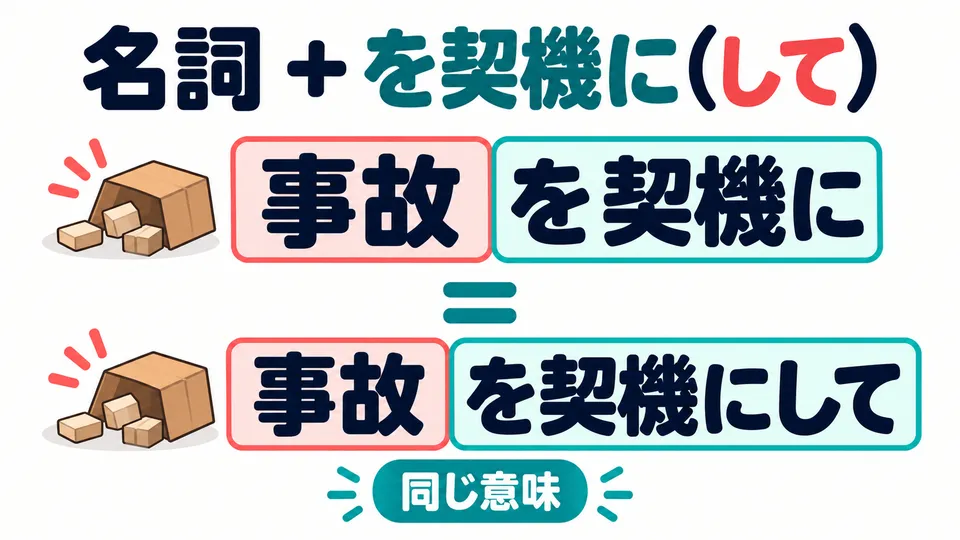
Put a noun naming an event before it: 「事故を契機に」. Adding 「して」 keeps the same meaning.
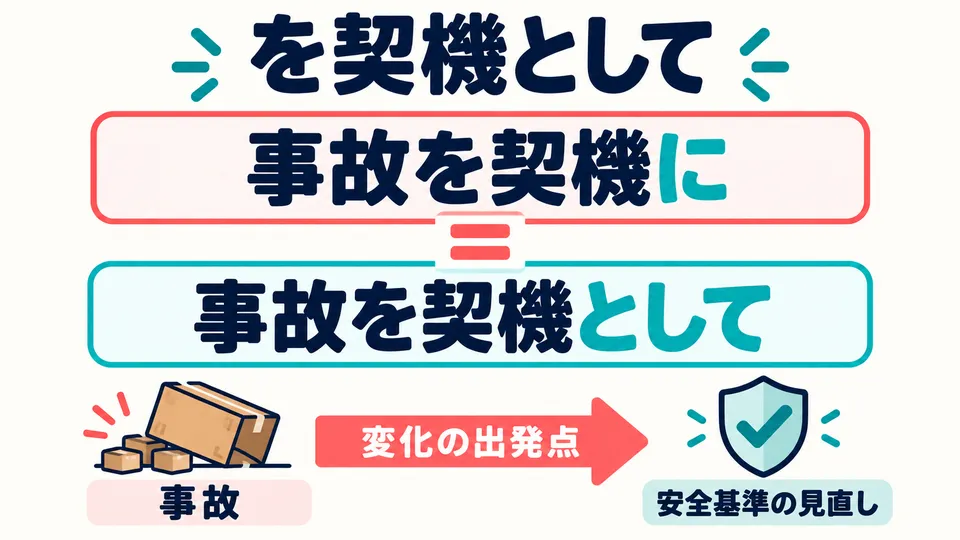
You can also say 「事故を契機として」. This likewise presents the accident as the trigger for change.
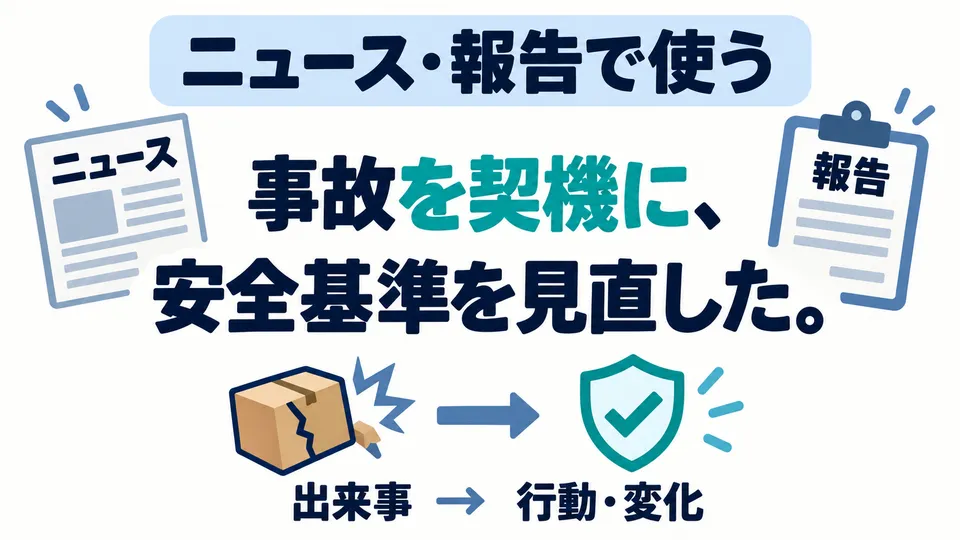
It is common in formal language, such as news and reports, to explain what set an action or change in motion.
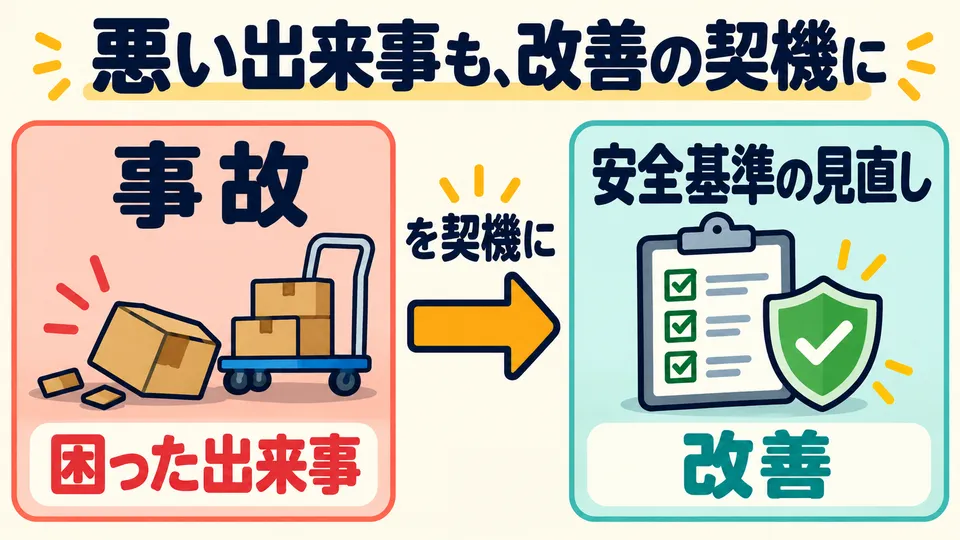
The accidents and disasters in the examples are bad events in themselves, but they can also prompt improvements.
Example sentences
- 大きなookina災害saigaiをo契機keikiにniしshiて、te、エネルギーenerugii政策seisakuのno見直しminaoshi
In a conversation

Check yourself
Level 1 · Recognise
Which sentence is correct?
Level 1 · Recognise
Listen and choose the meaning
Level 2 · Build
Put the words in order
Triggered by a major disaster, a review of energy policy progressed.
Level 3 · Use
What goes in the blank?
大きな災害を____、エネルギー政策の見直しが進みました。
Using a major disaster as a turning point, the review of energy policy moved forward.
More grammar in this theme
- 〜を契機にas a trigger for change