JPEDLAB iconJPEDLAB
Save history

Create an account and play

Explore first, then save your progress whenever you are ready. No email address is required.

Start free
Read as articleCards
See the whole course›Intermediate 3›Science, Technology, and Society

Japanese grammar · ≈ JLPT N2 · Intermediate 3

〜上~jou

from a certain perspective

Use 「〜上」 after an aspect noun to state a judgment from that perspective.

Start the interactive lessonIllustrated cards, audio and speaking practice

How it works

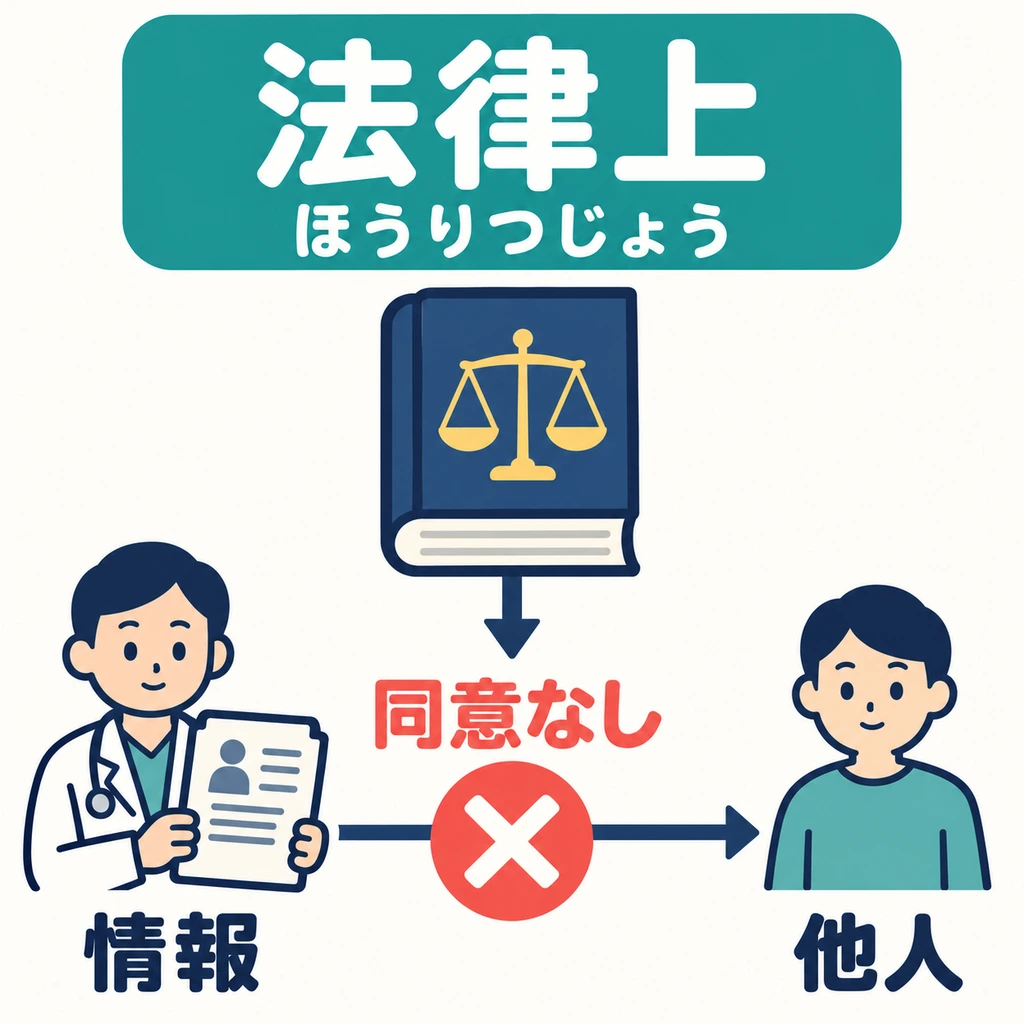
  1. Can the information be shared without the patient’s consent? Here, the decision is made from a legal perspective.
    Can the information be shared without the patient’s consent? Here, the decision is made from a legal perspective.

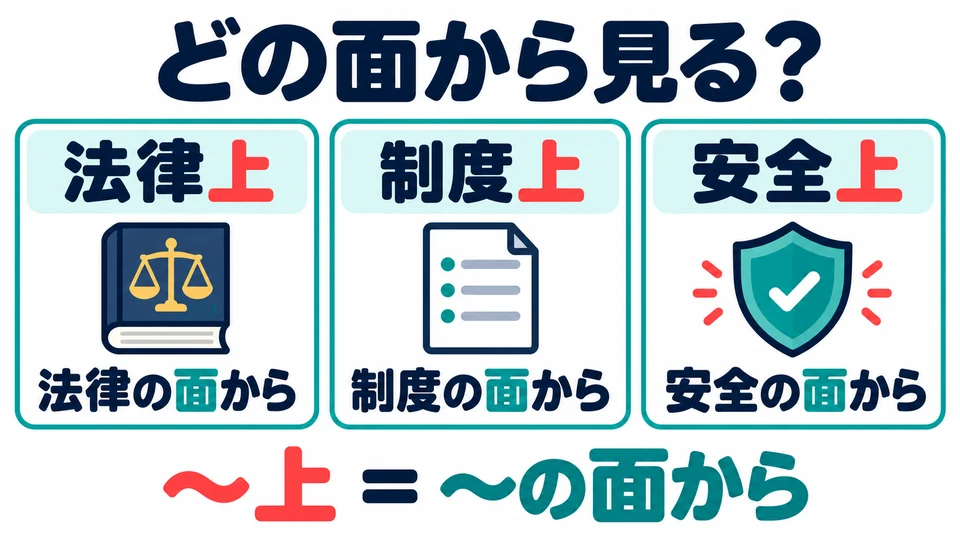
  2. 「~上」 specifies the perspective of a judgment: in terms of a certain aspect, system, or standpoint.
    「~上」 specifies the perspective of a judgment: in terms of a certain aspect, system, or standpoint.

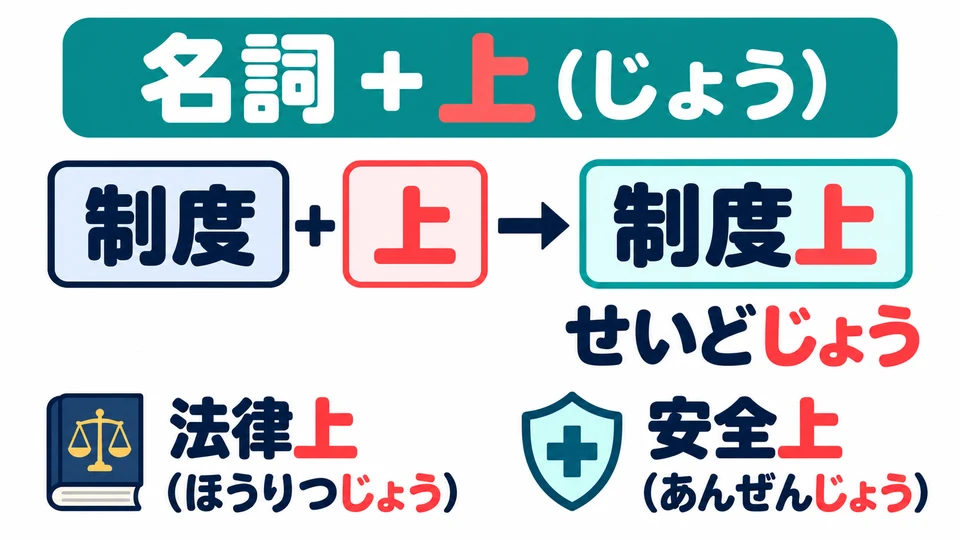
  3. Attach 「上」 to a noun naming an aspect. It is read 「じょう」, as in 「制度上」.
    Attach 「上」 to a noun naming an aspect. It is read 「じょう」, as in 「制度上」.

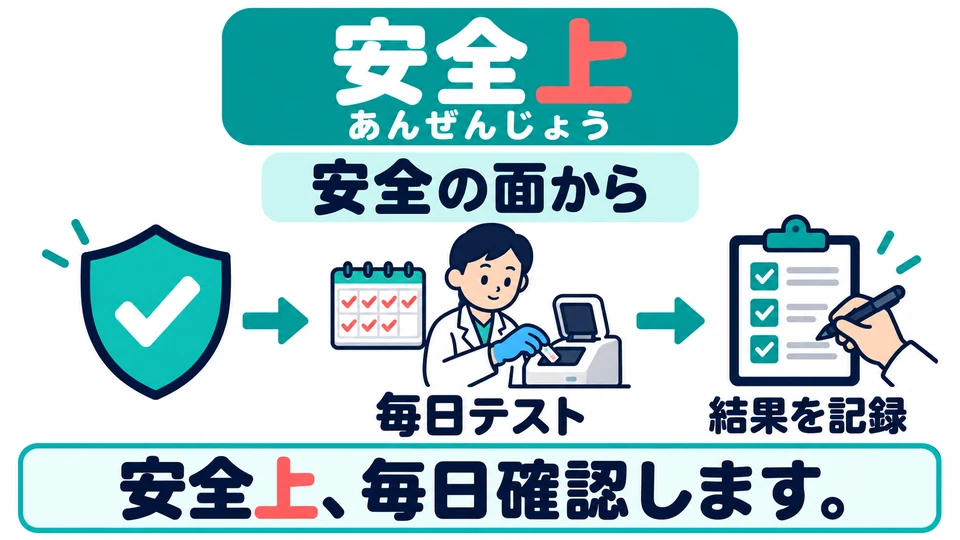
  4. 「安全上」 means “from a safety perspective” and explains why daily checks are necessary.
    「安全上」 means “from a safety perspective” and explains why daily checks are necessary.

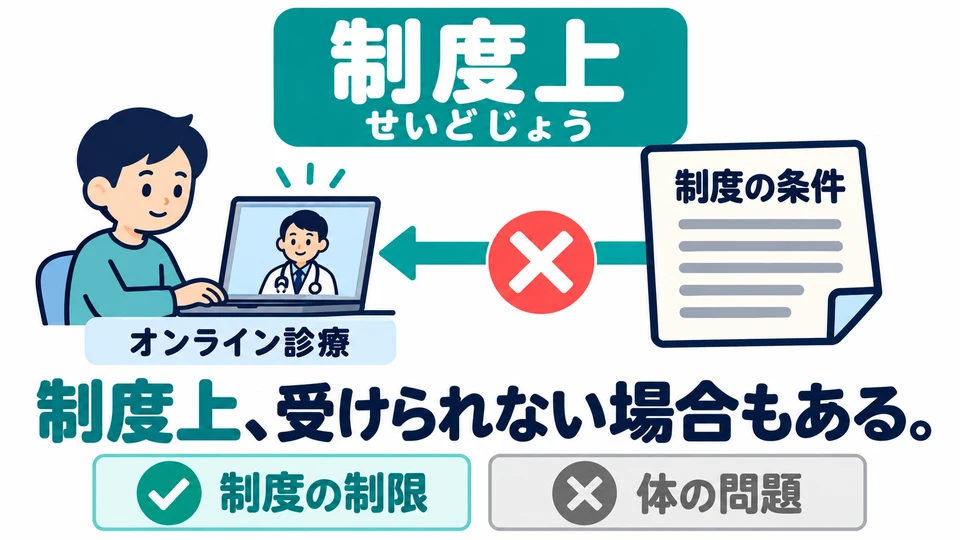
  5. In the example, 「制度上」 refers to restrictions imposed by the system’s conditions, not the patient being physically unable to receive care.

    In the example, 「制度上」 refers to restrictions imposed by the system’s conditions, not the patient being physically unable to receive care.

Example sentences

  • 法律上、ほうりつじょう、houritsujou、患者かんじゃkanja本人ほんにんhonninのno同意どういdouiなしnashiにni情報じょうほうjouhouをo他人たにんtaninにni

In a conversation

Check yourself

  1. Level 1 · Recognise

    Which sentence is correct?

  2. Level 1 · Recognise

    Listen and choose the meaning

  3. Level 2 · Build

    Put the words in order

    Legally, information cannot be conveyed to another person without the patient's own consent.

  4. Level 3 · Use

    What goes in the blank?

    ____、患者本人の同意なしに情報を他人に伝えることはできません。

    Legally, you cannot share information with others without the patient's consent.

More grammar in this theme

  • 〜上from a certain perspective

Keep practising

Test your Japanese vocabulary12 adaptive questions, freeCheck your pronunciationRead aloud and get a scorePractise verb forms10-question conjugation quizSee the whole courseGrammar, vocabulary and quizzes by theme
伝えるつたえるtsutaeru
ことkoto
はわwa
できません。dekimasen。

Legally, information cannot be conveyed to others without the patient's consent.

  • A
    検査けんさ機器ききの誤作動ごさどうによるトラブルとらぶるを防ぐふせぐには、わ、どうすればいいですか。

    A: What should be done to prevent trouble caused by the malfunction of testing equipment?

  • B
    安全上、あんぜんじょう、毎日まいにち必ずかならずテストてすとを行っおこなって結果けっかを記録きろくすることが決められきめられています。

    B: For safety reasons, it is determined that tests must be conducted and results recorded every day.

  • 制度上、せいどじょう、seidojou、オンラインおんらいんonrain診療しんりょうshinryouをo受けられない場合うけられないばあいukerarenaibaaiもmoあります。arimasu。

    Under the system, online medical treatment may not be available in some cases.

  • A
    そうなんですね。確認かくにん不足ふそくがないように、私たちわたしたちも気きをつけましょう。

    A: I see. Let's be careful as well to avoid any lack of confirmation.

  • 〜といえばspeaking of; typical association
    〜というとtopic association
    〜べきだ/〜べきではないshould / should not
    〜ほど〜はないnothing is as … as
    〜(より)ほかない/〜(より)ほかしかたがないhave no other choice
    〜(っ)きり/〜(っ)きりだunchanged since then
    〜最中にright in the middle of
    〜かけだ/〜かけの/〜かけるstarted but unfinished
    〜ざるを得ないhave no choice but to
    〜を契機にas a trigger for change
    〜をめぐってconcerning an issue
    〜上のrelated to an aspect
    Previous〜上の