
Japanese grammar · ≈ JLPT N2 · Intermediate 3
〜ぬく~nuku
persevere to the end
「〜ぬく」 emphasizes persevering through difficulty and seeing an action or thought through to the end.
How it works
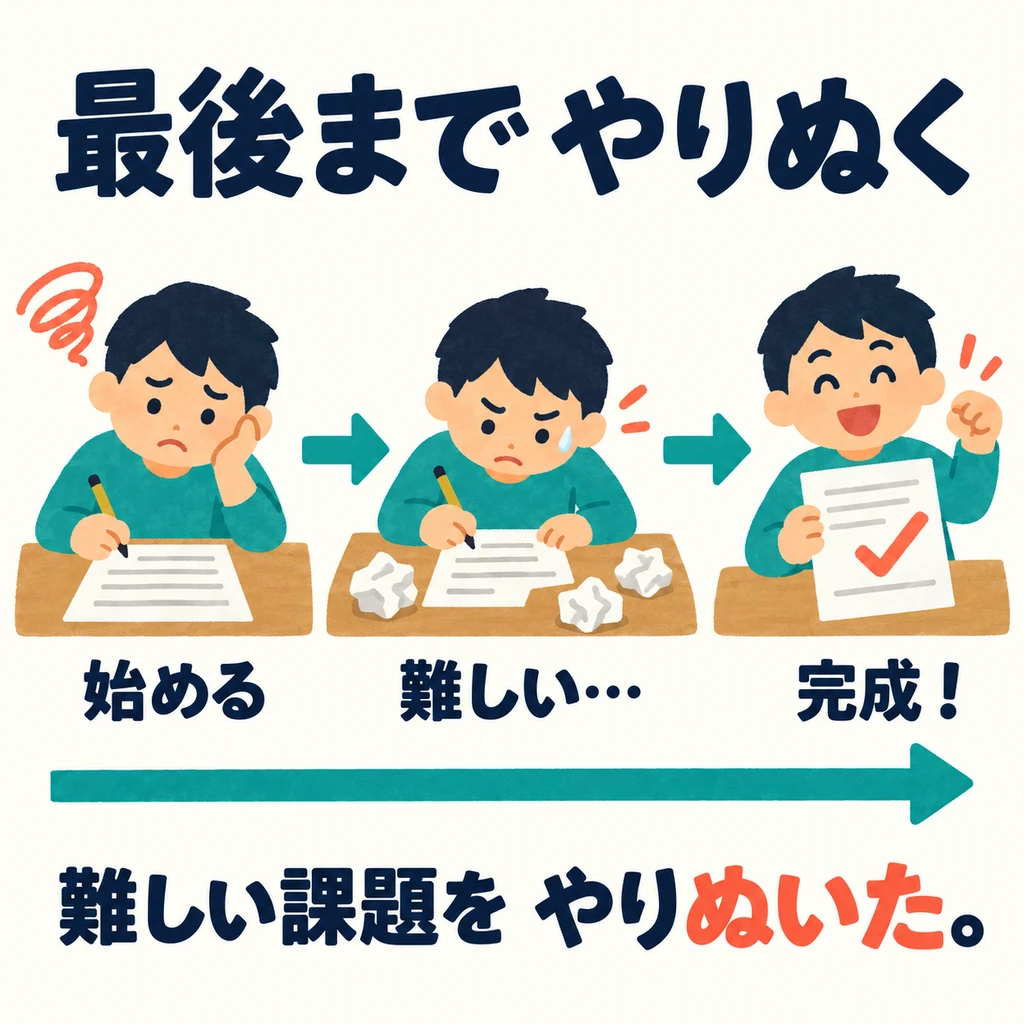
Don’t give up, even when the task is hard: keep going to the end. Follow the process of 「やりぬく」 in the picture.
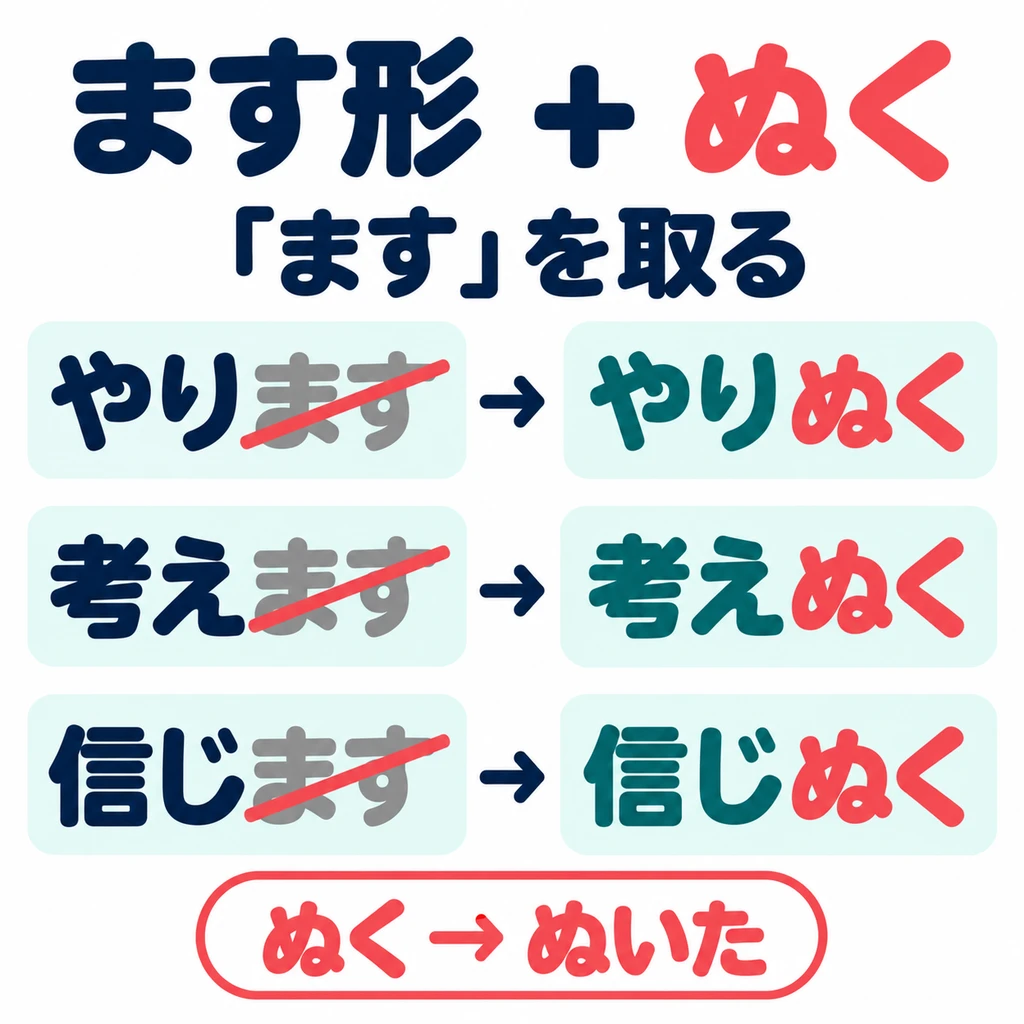
Remove 「ます」 from the verb’s ます form, then add 「ぬく」: やります→やりぬく.
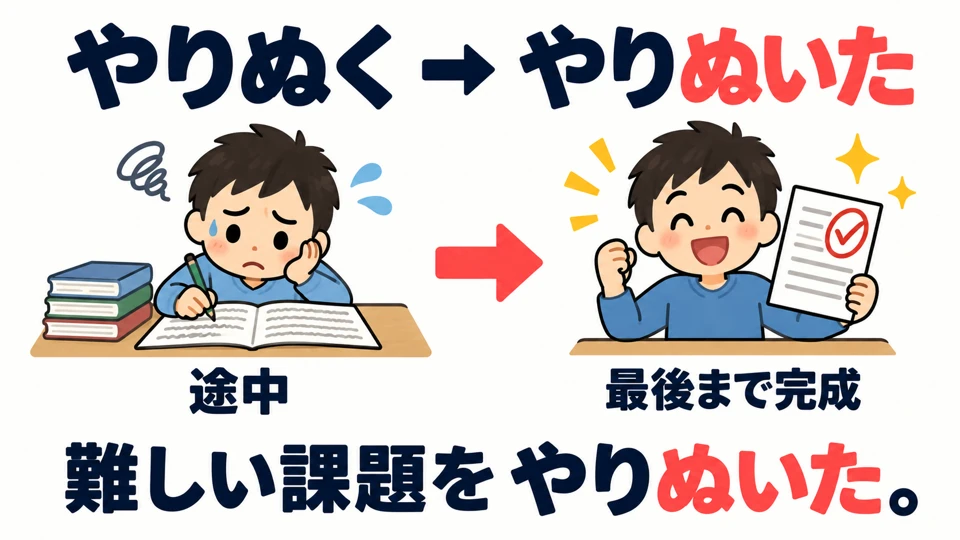
The past form is 「ぬいた」. 「やりぬいた」 means you persevered and saw it through to the end.
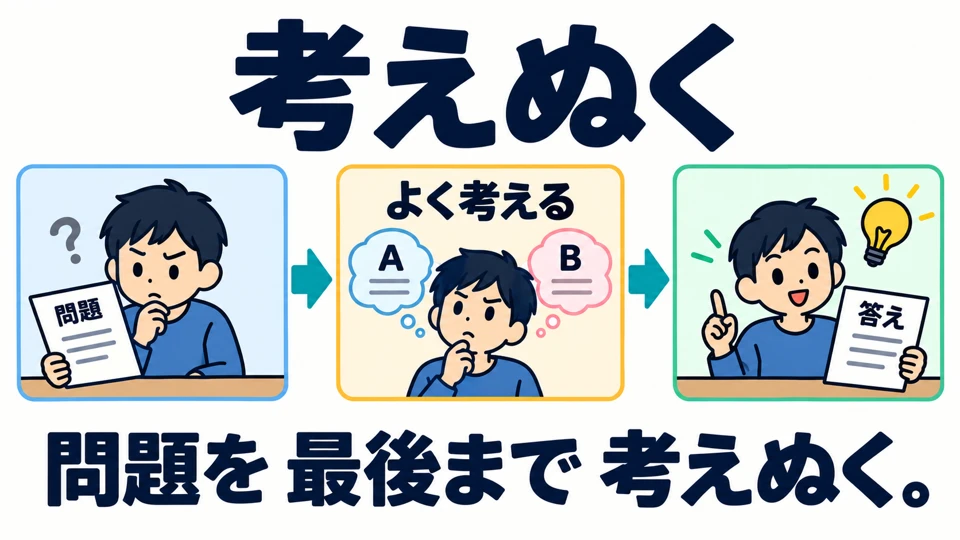
「考えぬく」 emphasizes thinking a problem through thoroughly, rather than just giving it a passing thought.
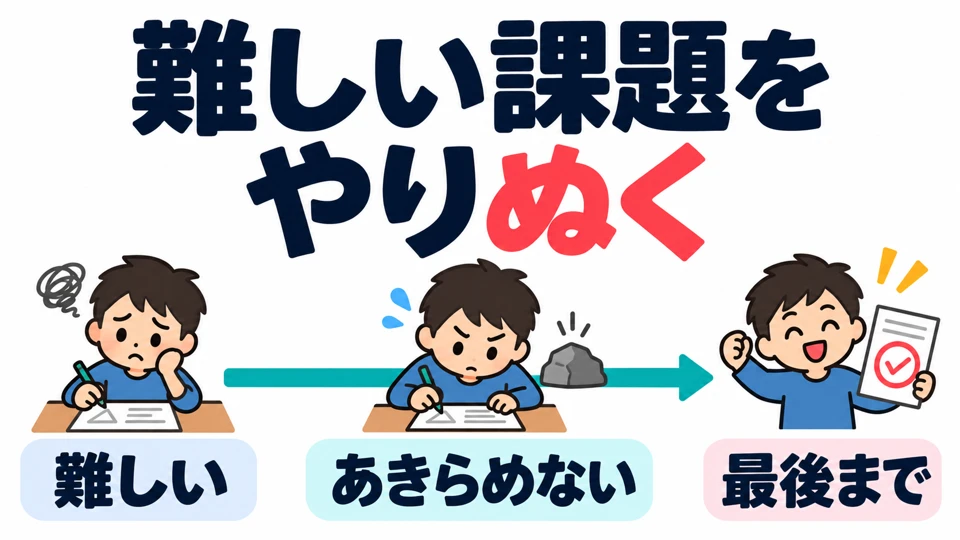
In the example, 「難しい課題」 signals difficulty. 「やりぬく」 highlights overcoming it and persevering to the end.
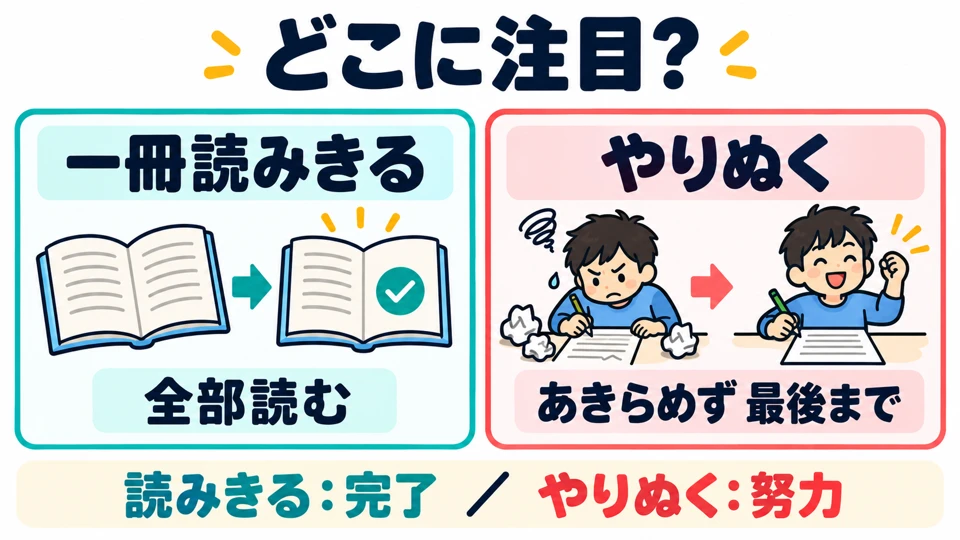
「一冊読みきる」 focuses on finishing a whole book; 「やりぬく」 focuses on perseverance. Their emphasis differs.
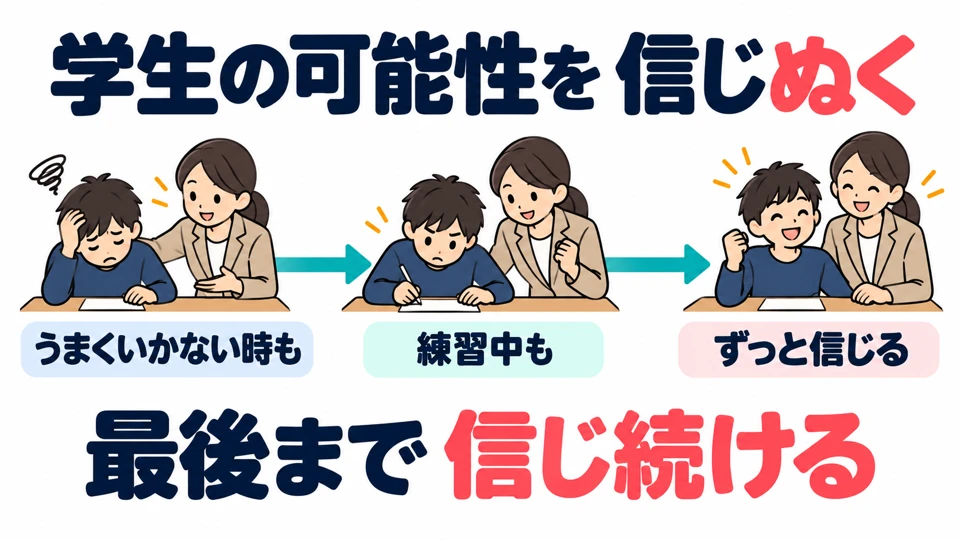
For the teacher, 「信じぬく」 means continuing to believe in the students’ potential. It is not about completing a set quantity.
Example sentences
- 生徒たちseitotachiは、wa、難しいmuzukashii課題kadaiをo最後saigoまでmadeやりyariぬくnuku力chikaraをo
In a conversation

Check yourself
Level 1 · Recognise
Which sentence is correct?
Level 1 · Recognise
Listen and choose the meaning
Level 2 · Build
Put the words in order
The students acquired the ability to see difficult tasks through to the end.
Level 3 · Use
What goes in the blank?
生徒たちは、難しい課題を最後まで____力を身につけました。
The students developed the ability to see difficult tasks through to the end.
More grammar in this theme
- 〜ぬくpersevere to the end