JPEDLAB iconJPEDLAB
Save history

Create an account and play

Explore first, then save your progress whenever you are ready. No email address is required.

Start free
Read as articleCards
1/10

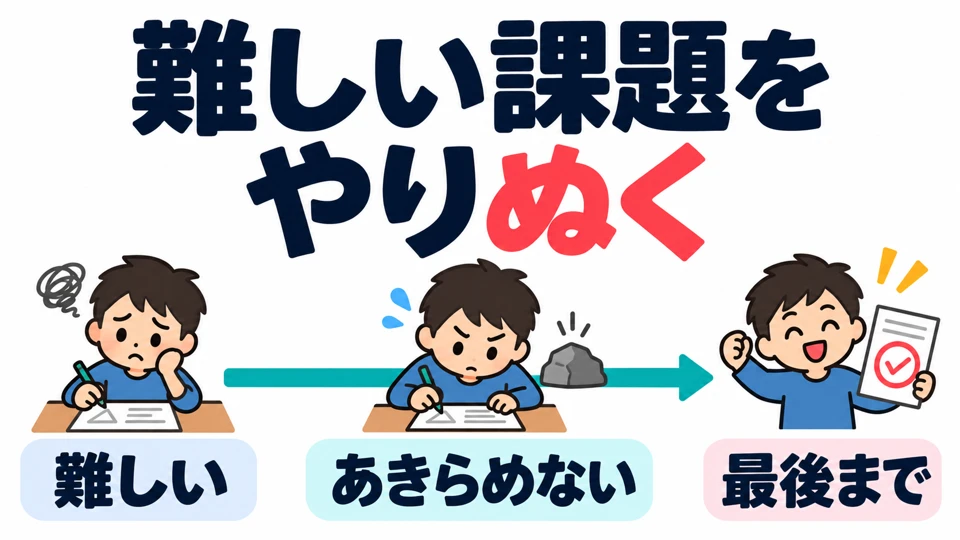
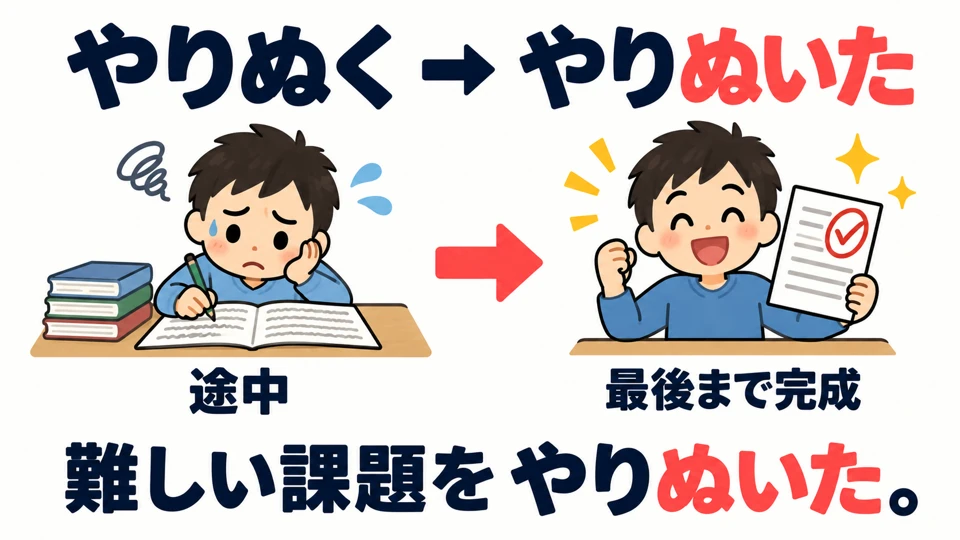
Don’t give up, even when the task is hard: keep going to the end. Follow the process of 「やりぬく」 in the picture.

››

Lesson notes · ≈ JLPT N2 · Intermediate 3

〜ぬく~nuku

persevere to the end

「〜ぬく」 emphasizes persevering through difficulty and seeing an action or thought through to the end.

How it works
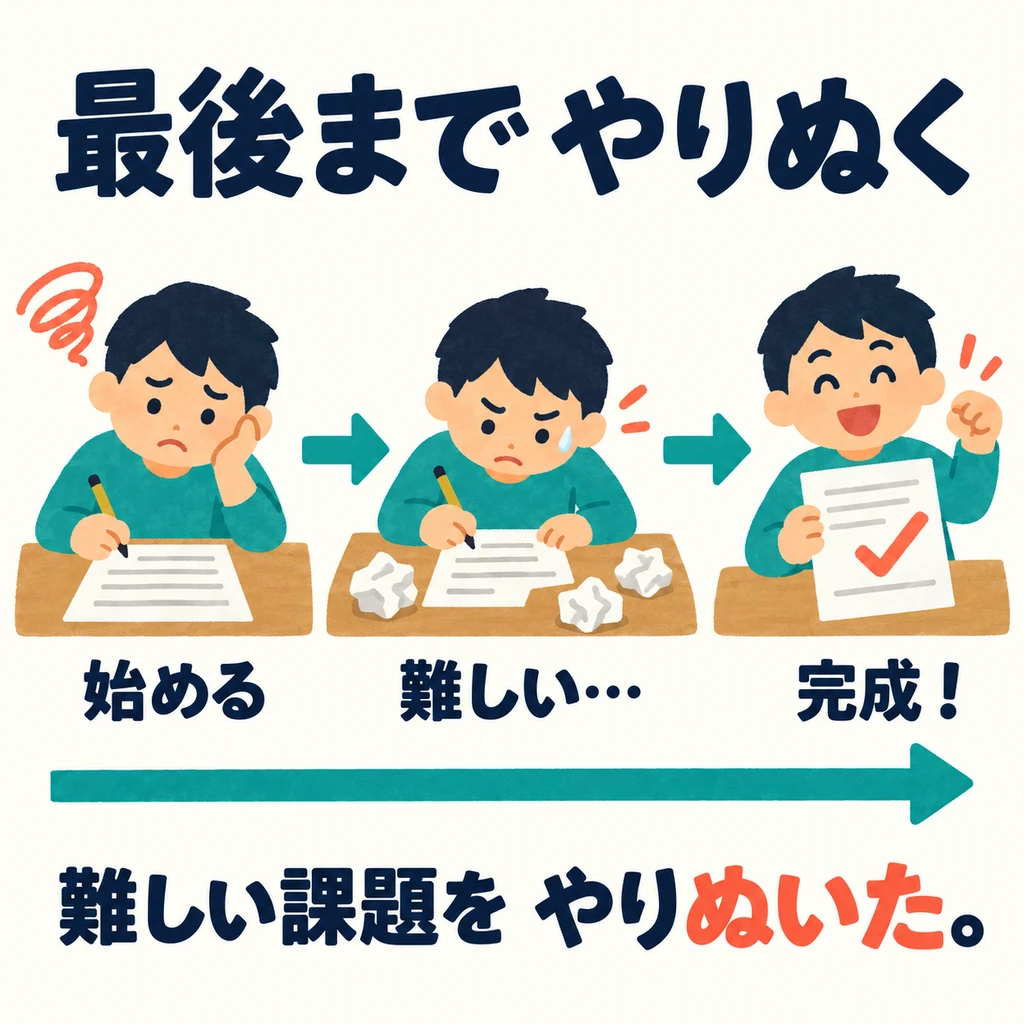
  1. Don’t give up, even when the task is hard: keep going to the end. Follow the process of 「やりぬく」 in the picture.
    Don’t give up, even when the task is hard: keep going to the end. Follow the process of 「やりぬく」 in the picture.

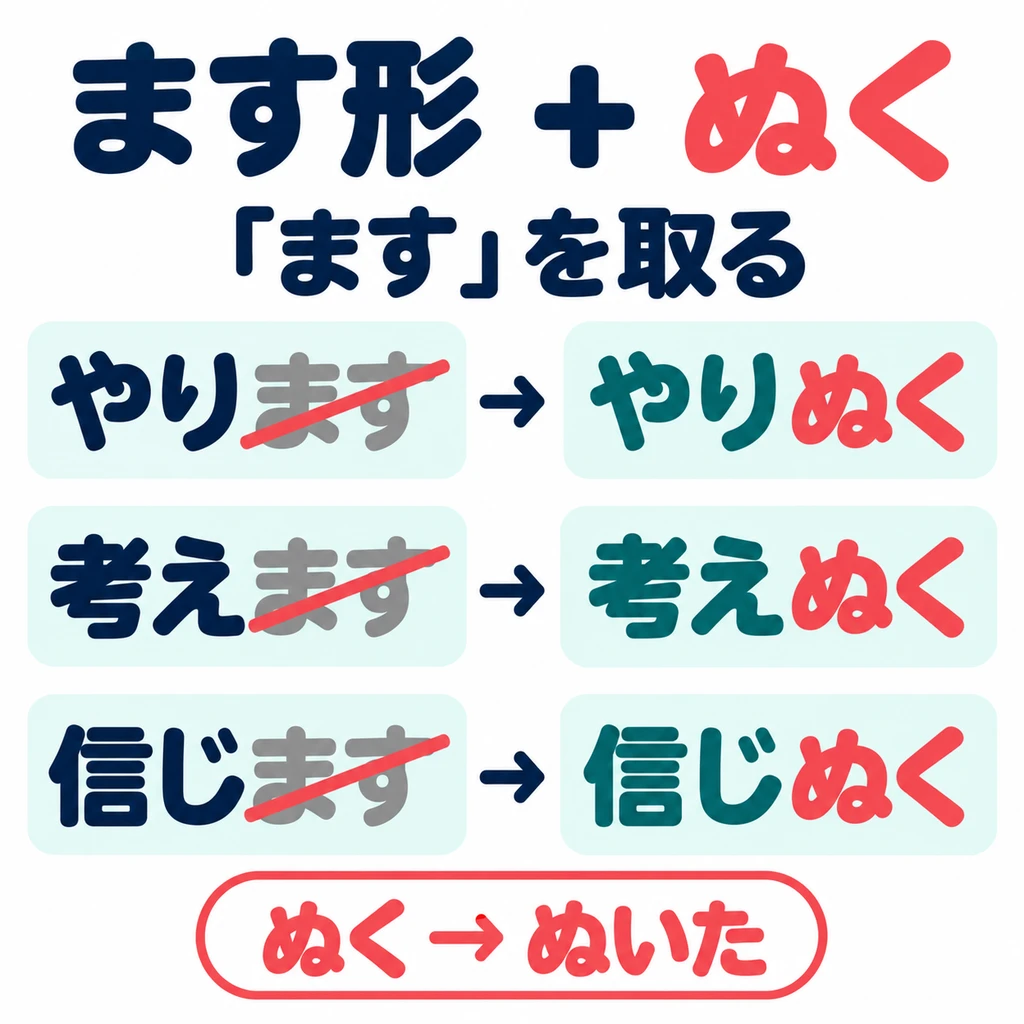
  2. Remove 「ます」 from the verb’s ます form, then add 「ぬく」: やります→やりぬく.
    Remove 「ます」 from the verb’s ます form, then add 「ぬく」: やります→やりぬく.
  • The past form is 「ぬいた」. 「やりぬいた」 means you persevered and saw it through to the end.

    The past form is 「ぬいた」. 「やりぬいた」 means you persevered and saw it through to the end.

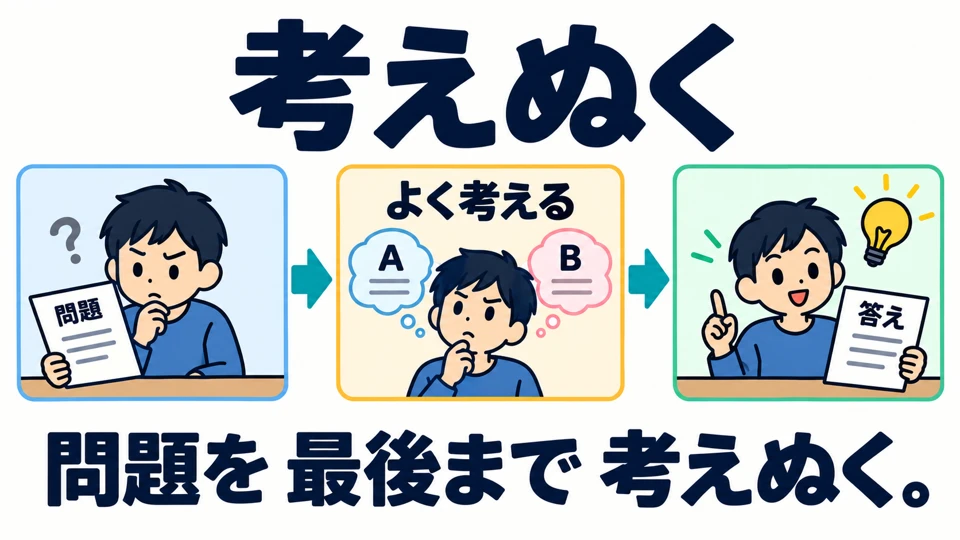
  • 「考えぬく」 emphasizes thinking a problem through thoroughly, rather than just giving it a passing thought.

    「考えぬく」 emphasizes thinking a problem through thoroughly, rather than just giving it a passing thought.

  • In the example, 「難しい課題」 signals difficulty. 「やりぬく」 highlights overcoming it and persevering to the end.

    In the example, 「難しい課題」 signals difficulty. 「やりぬく」 highlights overcoming it and persevering to the end.

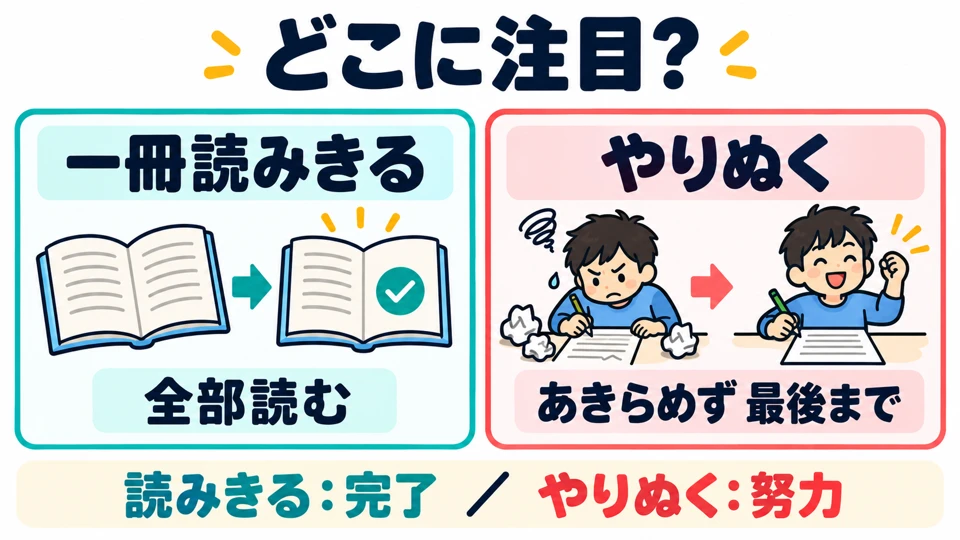
  • 「一冊読みきる」 focuses on finishing a whole book; 「やりぬく」 focuses on perseverance. Their emphasis differs.

    「一冊読みきる」 focuses on finishing a whole book; 「やりぬく」 focuses on perseverance. Their emphasis differs.

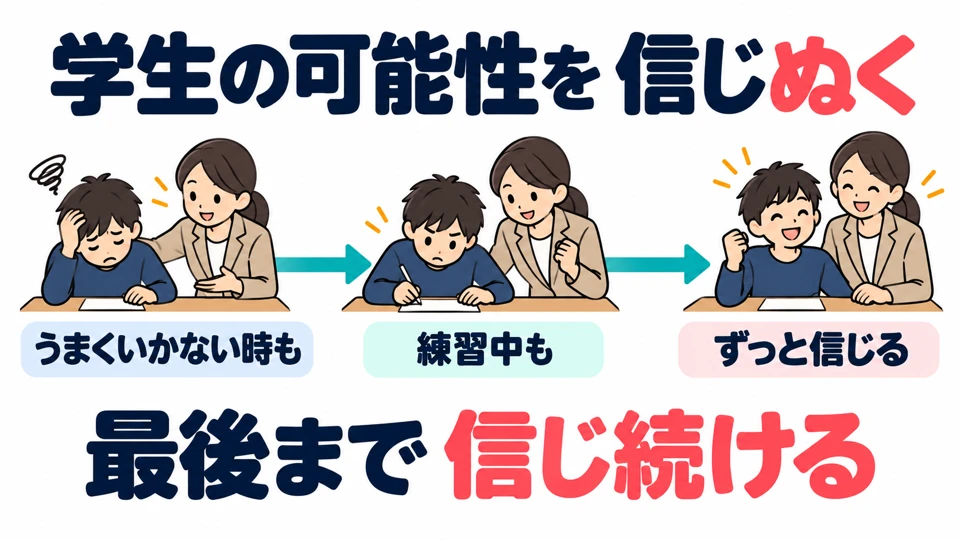
  • For the teacher, 「信じぬく」 means continuing to believe in the students’ potential. It is not about completing a set quantity.

    For the teacher, 「信じぬく」 means continuing to believe in the students’ potential. It is not about completing a set quantity.

  • Example sentences

    • 生徒たちせいとたちseitotachiは、わ、wa、難しいむずかしいmuzukashii課題かだいkadaiをo最後さいごsaigoまでmadeやりyariぬくnuku力ちからchikaraをo身みmiにniつけました。tsukemashita。

      The students have acquired the ability to carry out difficult tasks to the very end.

    • 教師きょうしkyoushiは、わ、wa、一人一人ひとりひとりhitorihitoriのno可能性かのうせいkanouseiをo信じしんじshinjiぬくnukuことkotoがga求められます。もとめられます。motomeraremasu。

      Teachers are required to believe in the potential of each and every student to the end.

    In a conversation

    • A
      「新しいあたらしい端末たんまつの導入どうにゅうについて、先生たちせんせいたちはわ本当ほんとうに考えかんがえぬく毎日まいにちですね。」ね。

      A: "The teachers are really thinking things through every day regarding the introduction of new terminals."

    • B
      「そうそうですね。でも、試行しこう錯誤さくごしぬくことで、良いよい学びまなびの場ばが作れるつくれると信じしんじて
    • A
      「みんなみんなで支えささえ合っあって、この変化へんかに対応たいおうしぬきたいですね。」ね。

      A: "I hope we can all support each other and fully adapt to this change."

    Check yourself

    1. Level 1 · Recognise

      Which sentence is correct?

    2. Level 1 · Recognise

      Listen and choose the meaning

    3. Level 2 · Build

      Put the words in order

      The students acquired the ability to see difficult tasks through to the end.

    4. Level 3 · Use

      What goes in the blank?

      生徒たちは、難しい課題を最後まで____力を身につけました。

      The students developed the ability to see difficult tasks through to the end.

    More grammar in this theme

    • 〜ものだ・〜もんだas things usually are
    • 〜にかけてはwhen it comes to; strong at
    • 〜はともかくset aside and focus
    • 〜ないことはない・〜ないこともないqualified yes; not impossible
    • 〜も〜ば、〜もlisting different situations
    • 〜にわたって/〜にわたり/〜にわたるspan a period, area, or occasions
    • 〜きる・〜きれるfinish completely; be able to finish
    • 〜にもかかわらずdespite; contrary to expectation
    • 〜からいうと・〜からいって・〜からいえばjudging from; from a perspective
    • 〜となると・〜となれば・〜となったらwhen facing a situation
    • 〜次第だ・〜次第でdepends on; depending on
    • 〜ぬくpersevere to the end
    • 〜つつwhile doing; simultaneous actions
    Previous〜次第だ・〜次第でNext〜つつ

    Keep practising

    Test your Japanese vocabulary12 adaptive questions, freeCheck your pronunciationRead aloud and get a scorePractise verb forms10-question conjugation quizSee the whole courseGrammar, vocabulary and quizzes by theme
    See the whole course
    Intermediate 3
    School Systems and Educational Experiences
    います。」います。

    B: "Yes. But I believe that by persevering through trial and error, we can create a good environment for learning."