
Japanese grammar · ≈ JLPT N2 · Intermediate 3
〜次第だ・〜次第で~shidai da / ~shidai de
depends on; depending on
「〜次第だ・〜次第で」 says an outcome depends on the noun named as its key factor.
How it works
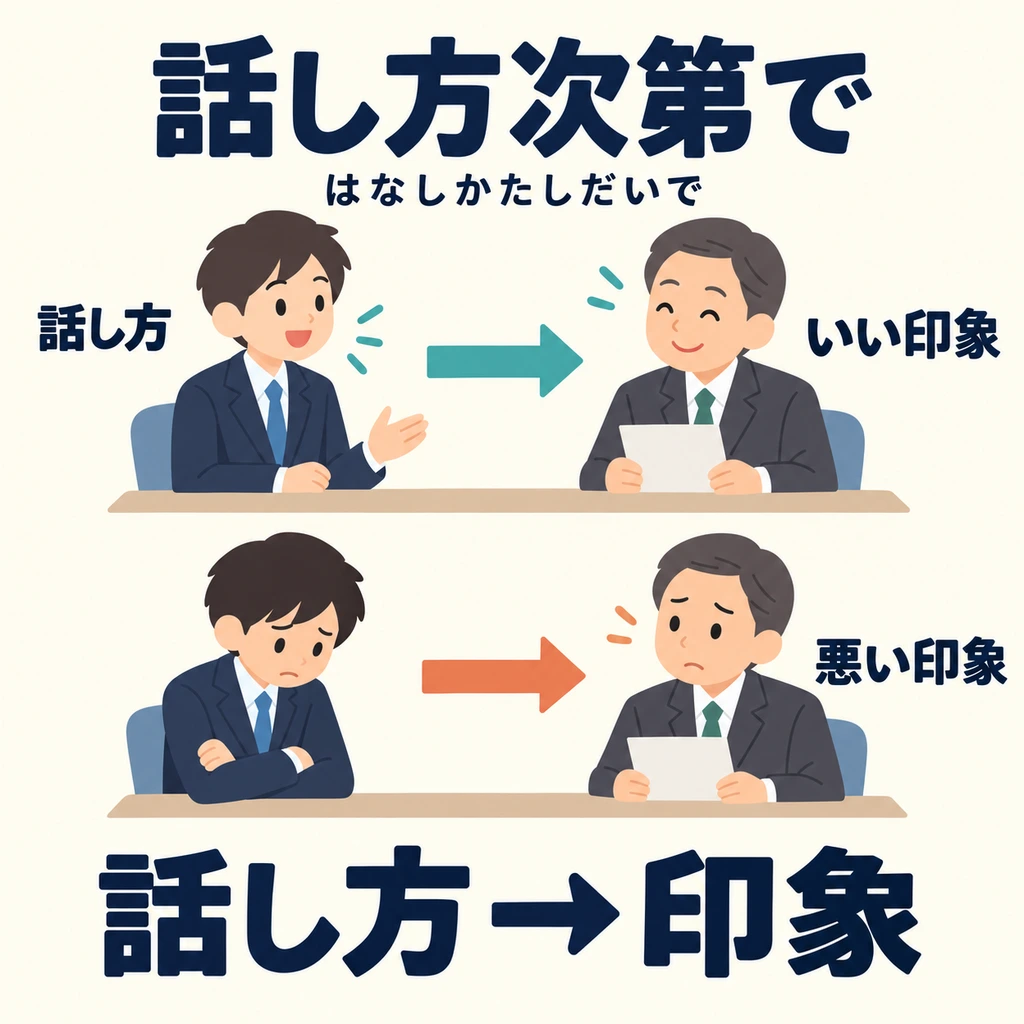
Why does the same person leave different impressions in an interview? Change the way they speak, and the impression changes too.
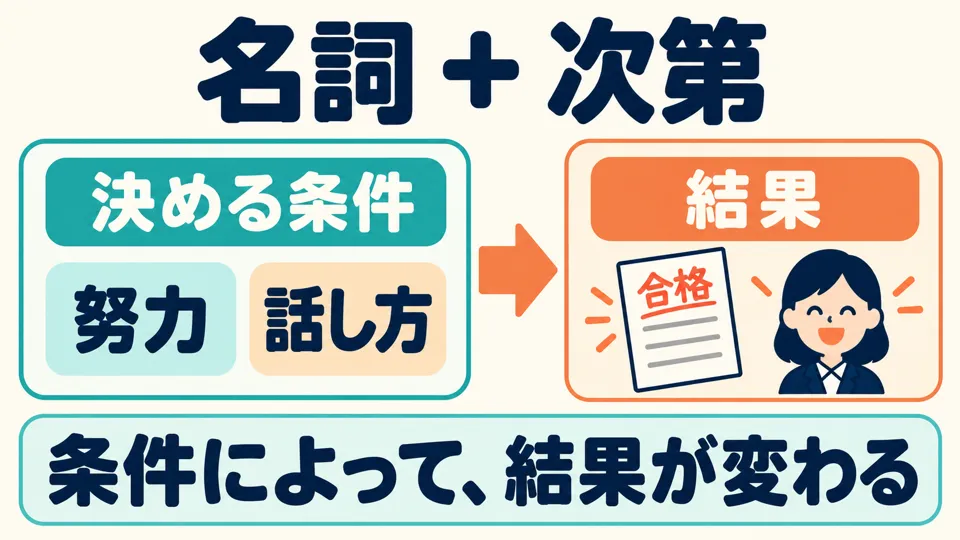
“Noun + 次第” means the outcome depends on that factor. The noun before 次第 names the key condition.
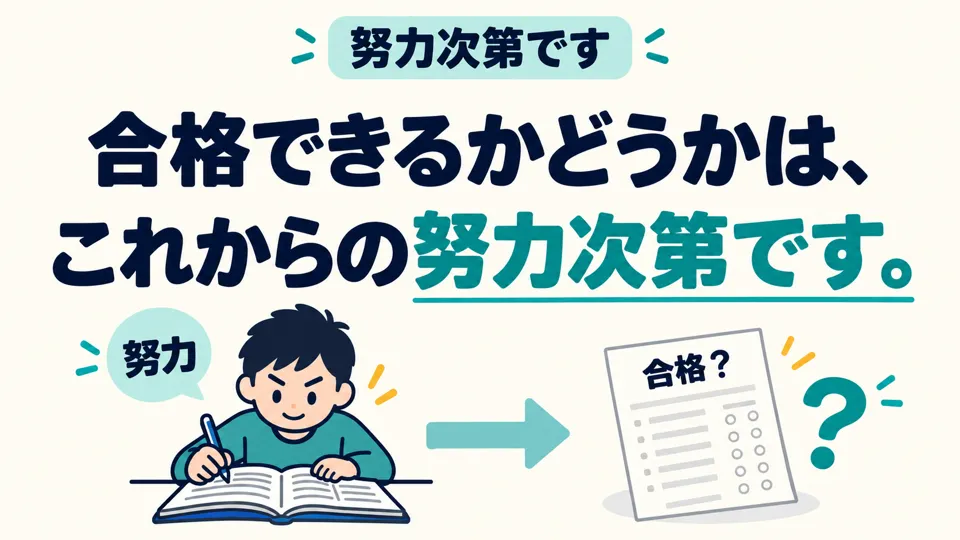
「努力次第です」 comes at the end of the sentence: whether you pass depends on the effort you make from now on.
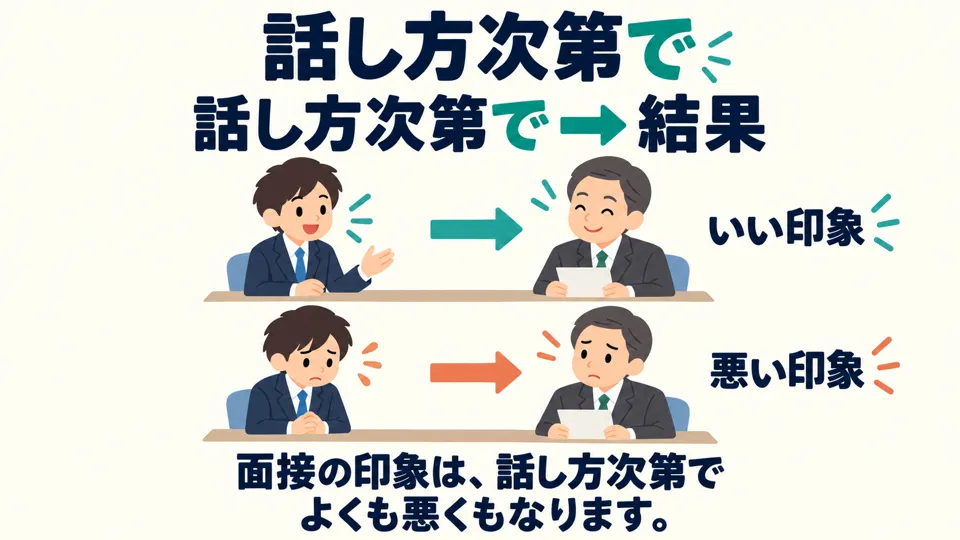
「話し方次第で」 is followed by the outcome. It shows that the impression can be good or bad depending on how you speak.
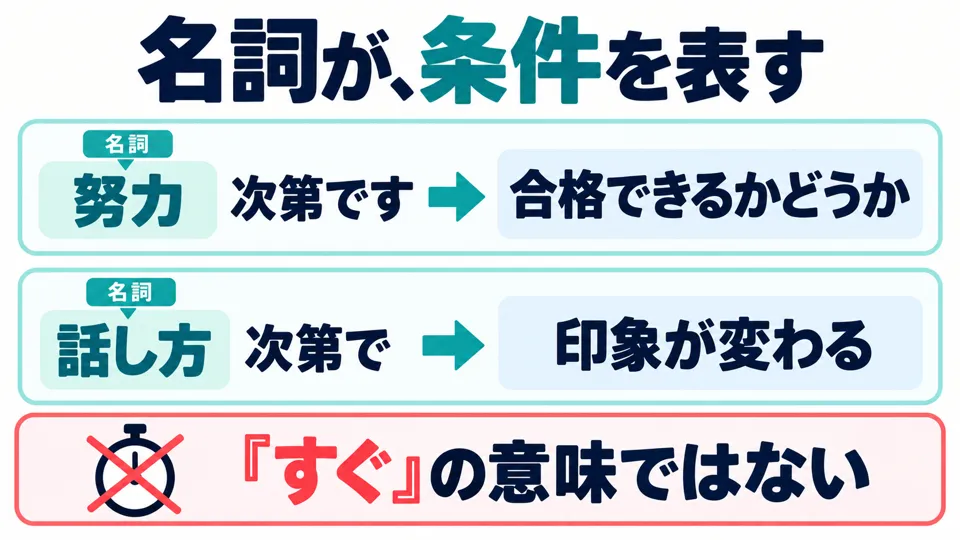
In the examples, 「努力」 and 「話し方」 are nouns naming what determines the outcome. They do not mean something happens immediately.
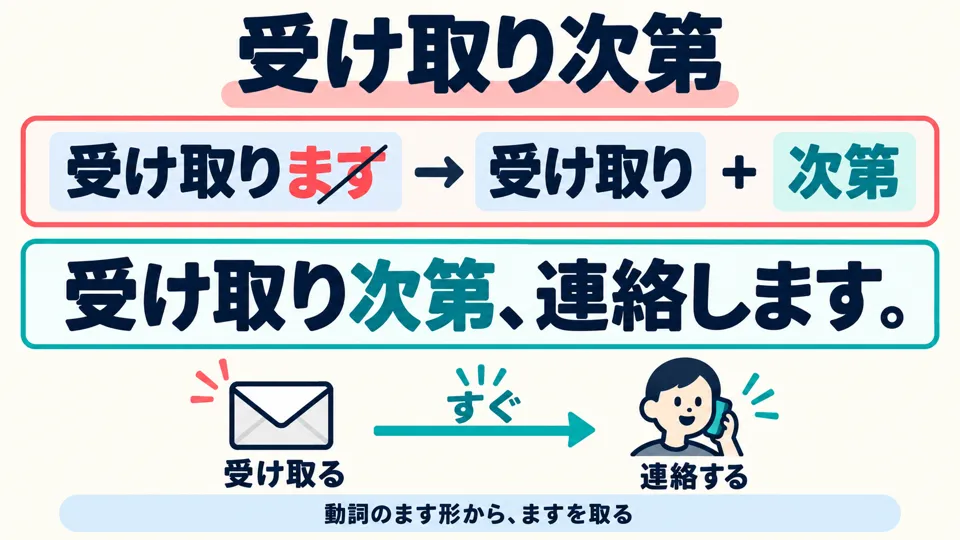
In the earlier pattern 「受け取り次第」, 次第 follows a verb with ます removed. This pattern means “as soon as it is received”.
Example sentences
- 合格goukakuできるdekiruかkaどうdouかkaは、wa、これkoreからkaraのno努力doryoku次第shidaiです。
In a conversation

Check yourself
Level 1 · Recognise
Which sentence is correct?
Level 1 · Recognise
Listen and choose the meaning
Level 2 · Build
Put the words in order
Whether you can pass depends on your future effort.
Level 3 · Use
What goes in the blank?
合格できるかどうかは、これからの____です。
Whether I can pass depends on my effort from here on.
More grammar in this theme
- 〜次第だ・〜次第でdepends on; depending on