JPEDLAB iconJPEDLAB
Save history

Create an account and play

Explore first, then save your progress whenever you are ready. No email address is required.

Start free
Read as articleCards
See the whole course›Intermediate 3›School Systems and Educational Experiences

Japanese grammar · ≈ JLPT N2 · Intermediate 3

〜つつ~tsutsu

while doing; simultaneous actions

「〜つつ」 links two actions done by the same subject at the same time, often in written language.

Start the interactive lessonIllustrated cards, audio and speaking practice

How it works

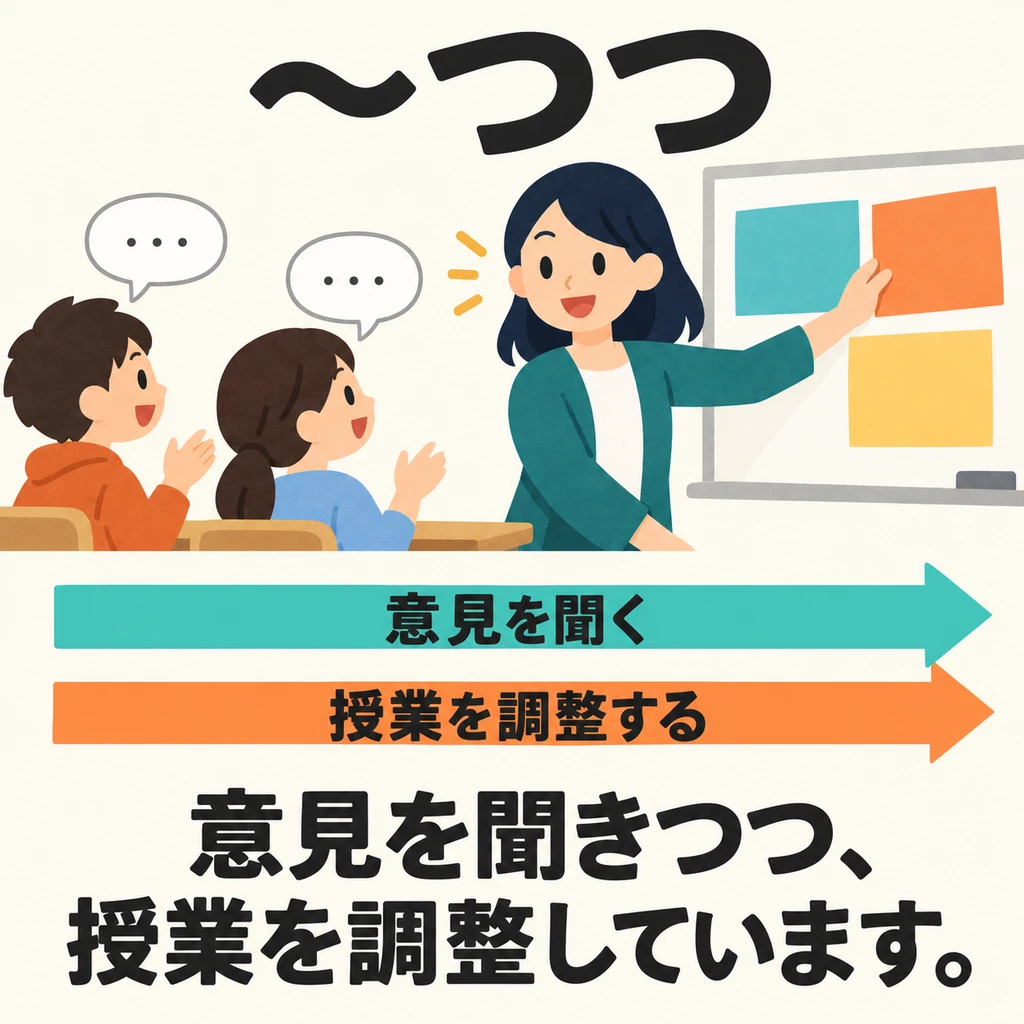
  1. The teacher adjusts lessons while listening to students’ views. Both activities happen at the same time.
    The teacher adjusts lessons while listening to students’ views. Both activities happen at the same time.

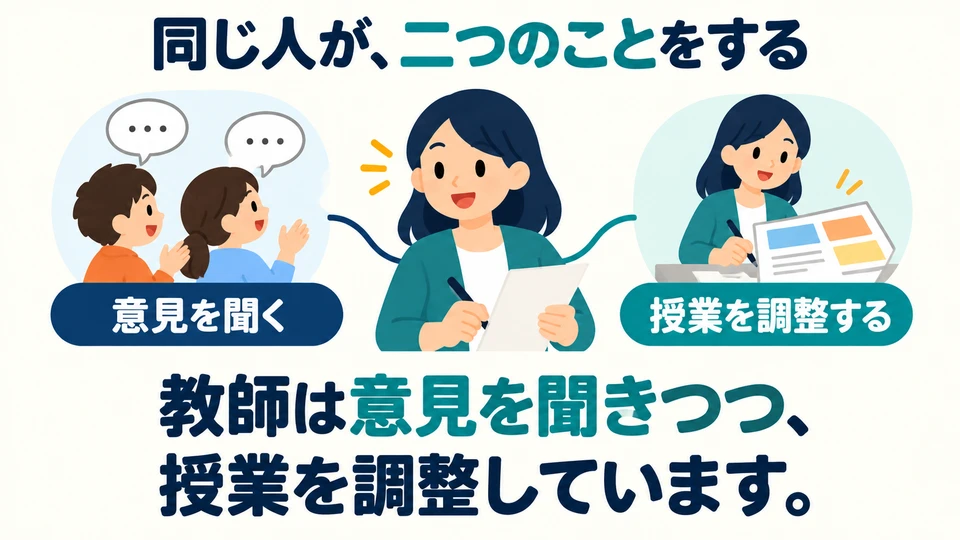
  2. The same subject performs both activities. In the picture, the teacher both listens to views and adjusts lessons.
    The same subject performs both activities. In the picture, the teacher both listens to views and adjusts lessons.

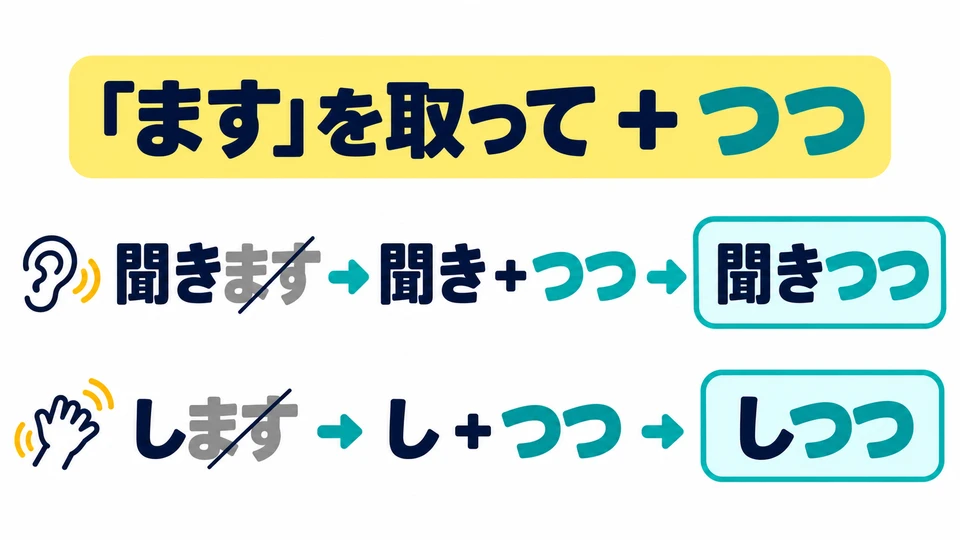
  3. Attach it to the verb form with 「ます」 removed: 聞きます→聞きつつ, します→しつつ.
    Attach it to the verb form with 「ます」 removed: 聞きます→聞きつつ, します→しつつ.

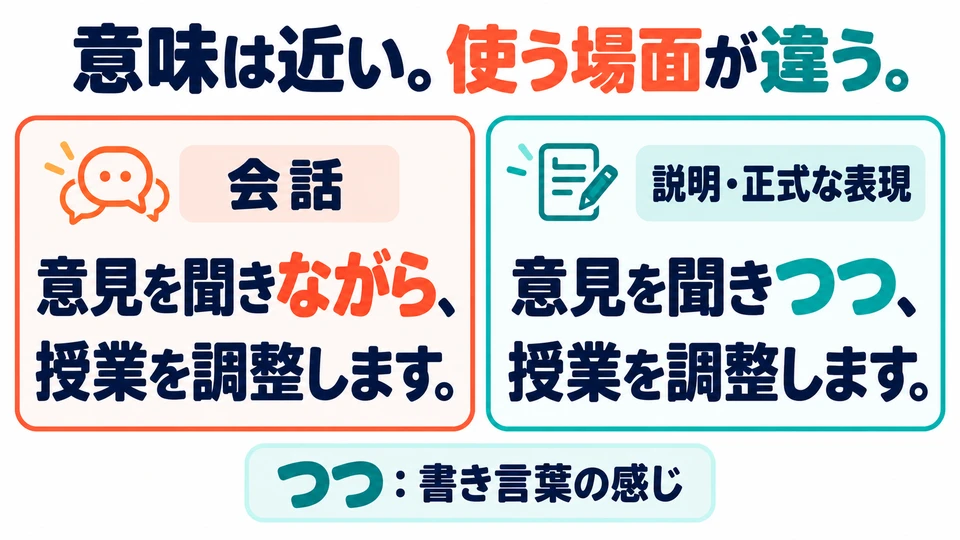
  4. Its meaning is close to 「ながら」, which you have learned, but its tone is more written. It is often used in explanations or formal language.
    Its meaning is close to 「ながら」, which you have learned, but its tone is more written. It is often used in explanations or formal language.

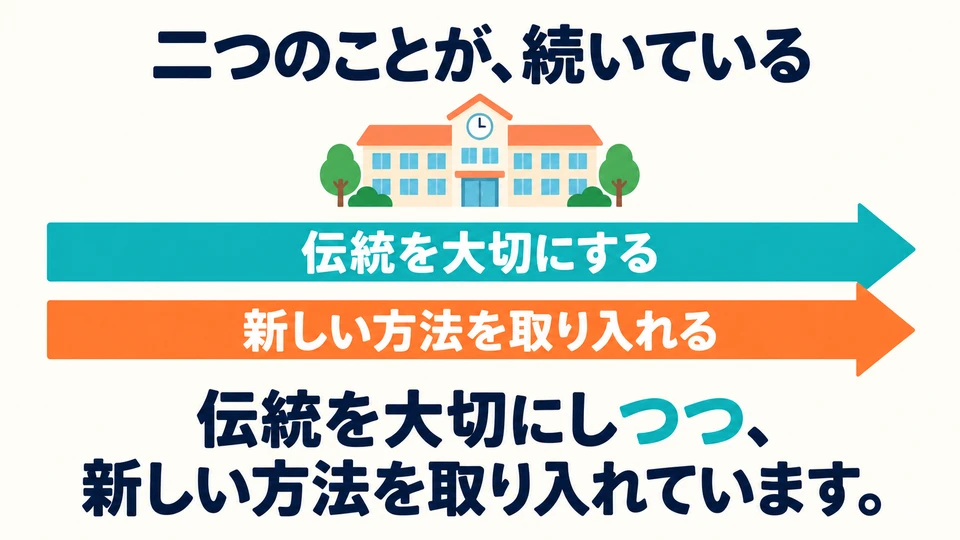
  5. In the school example, both practices continue alongside each other. The school does not first value tradition and then introduce new methods.

    In the school example, both practices continue alongside each other. The school does not first value tradition and then introduce new methods.

Example sentences

  • 学校がっこうgakkouはわwa伝統でんとうdentouをo大切にしたいせつにしtaisetsunishiつつ、tsutsu、新しいあたらしいatarashii教育きょういくkyouiku方法ほうほうhouhouをo取り

In a conversation

Check yourself

  1. Level 1 · Recognise

    Which sentence is correct?

  2. Level 1 · Recognise

    Listen and choose the meaning

  3. Level 2 · Build

    Put the words in order

    While valuing tradition, the school is introducing new teaching methods.

  4. Level 3 · Use

    What goes in the blank?

    学校は伝統を大切に____、新しい教育方法を取り入れています。

    The school is preserving tradition while also adopting new teaching methods.

More grammar in this theme

  • 〜つつwhile doing; simultaneous actions

Keep practising

Test your Japanese vocabulary12 adaptive questions, freeCheck your pronunciationRead aloud and get a scorePractise verb forms10-question conjugation quizSee the whole courseGrammar, vocabulary and quizzes by theme
とり
tori
入れいれire
てte
います。imasu。

The school is introducing new teaching methods while valuing tradition.

  • A
    「対面たいめんの良さよさも残しのこしつつ、遠隔えんかくのオンラインおんらいん授業じゅぎょうを活用かつようするのはわ難しいですむずかしいですね。」ね。

    A: "It's difficult to utilize remote online classes while also retaining the benefits of face-to-face instruction."

  • 教師きょうしkyoushiはわwa生徒せいとseitoのno意見いけんikenをo聞きききkikiつつ、tsutsu、授業じゅぎょうjugyou内容ないようnaiyouをo調整ちょうせいchouseiしshiてteいます。imasu。

    Teachers are adjusting the lesson content while listening to students' opinions.

  • B
    「そうそうですね。でも、双方そうほうの長所ちょうしょを組みくみ合わせあわせつつ、新しいあたらしい授業じゅぎょうの形かたちを模索もさくしています。」います。

    B: "That's true. But we are searching for a new style of class while combining the advantages of both."

  • A
    「学習がくしゅう効果こうかを高めたかめつつ、生徒たちせいとたちの負担ふたんを減らせるへらせる工夫くふうを重ねたいですかさねたいですね。」ね。

    A: "I hope we can continue to make adjustments to reduce the burden on students while enhancing learning effectiveness."

  • 〜ものだ・〜もんだas things usually are
    〜にかけてはwhen it comes to; strong at
    〜はともかくset aside and focus
    〜ないことはない・〜ないこともないqualified yes; not impossible
    〜も〜ば、〜もlisting different situations
    〜にわたって/〜にわたり/〜にわたるspan a period, area, or occasions
    〜きる・〜きれるfinish completely; be able to finish
    〜にもかかわらずdespite; contrary to expectation
    〜からいうと・〜からいって・〜からいえばjudging from; from a perspective
    〜となると・〜となれば・〜となったらwhen facing a situation
    〜次第だ・〜次第でdepends on; depending on
    〜ぬくpersevere to the end
    Previous〜ぬく