
Japanese grammar · ≈ JLPT N2 · Intermediate 3
〜つつ~tsutsu
while doing; simultaneous actions
「〜つつ」 links two actions done by the same subject at the same time, often in written language.
How it works
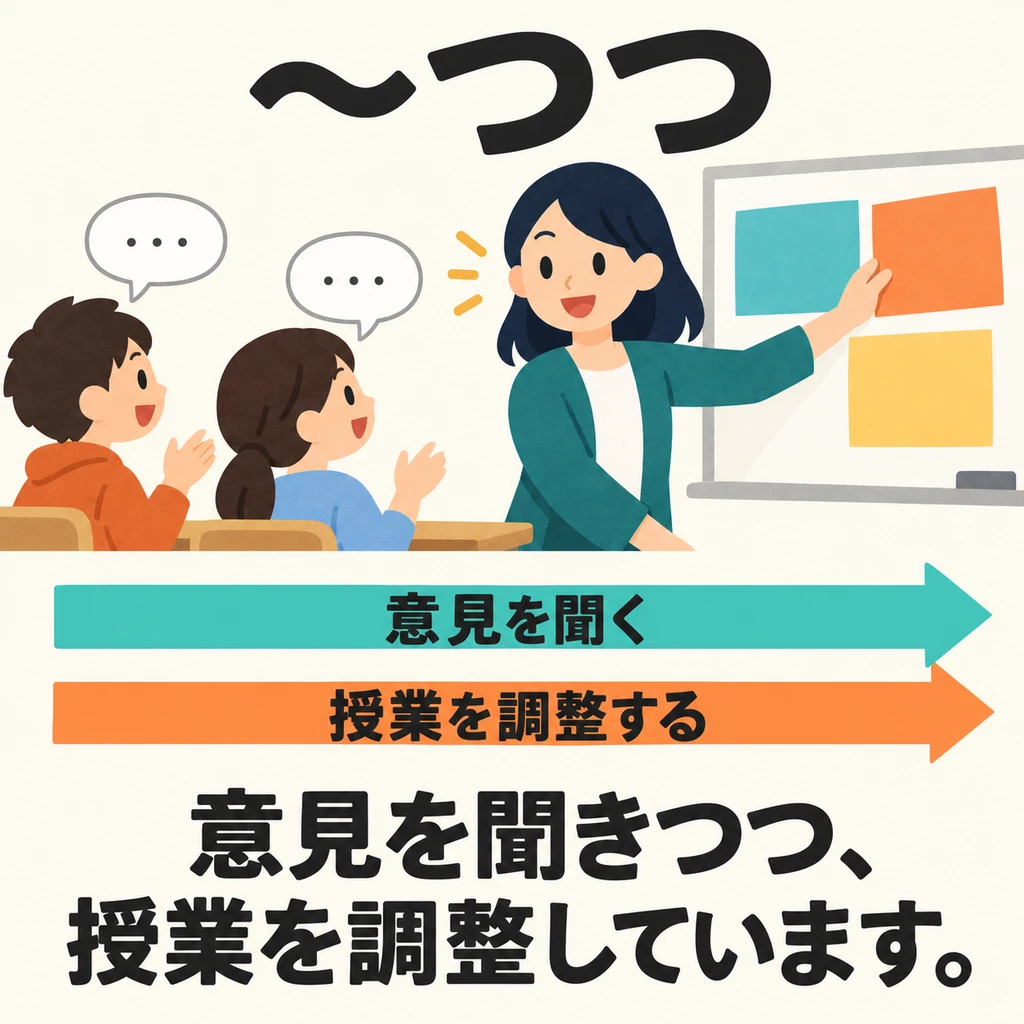
The teacher adjusts lessons while listening to students’ views. Both activities happen at the same time.
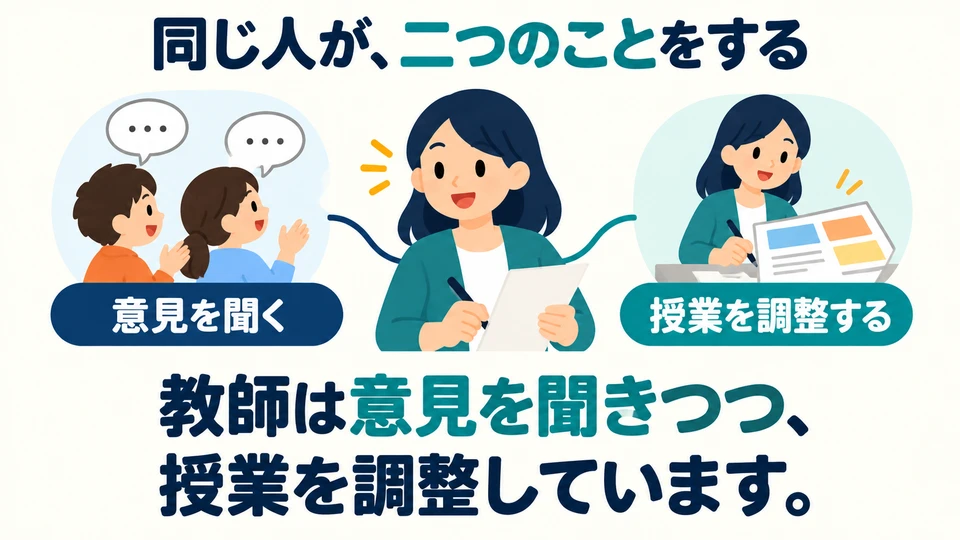
The same subject performs both activities. In the picture, the teacher both listens to views and adjusts lessons.
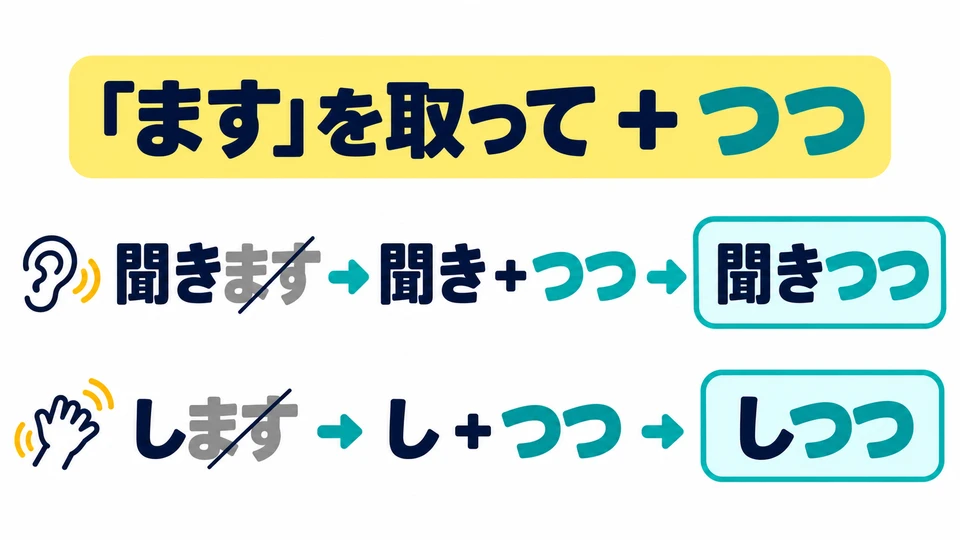
Attach it to the verb form with 「ます」 removed: 聞きます→聞きつつ, します→しつつ.
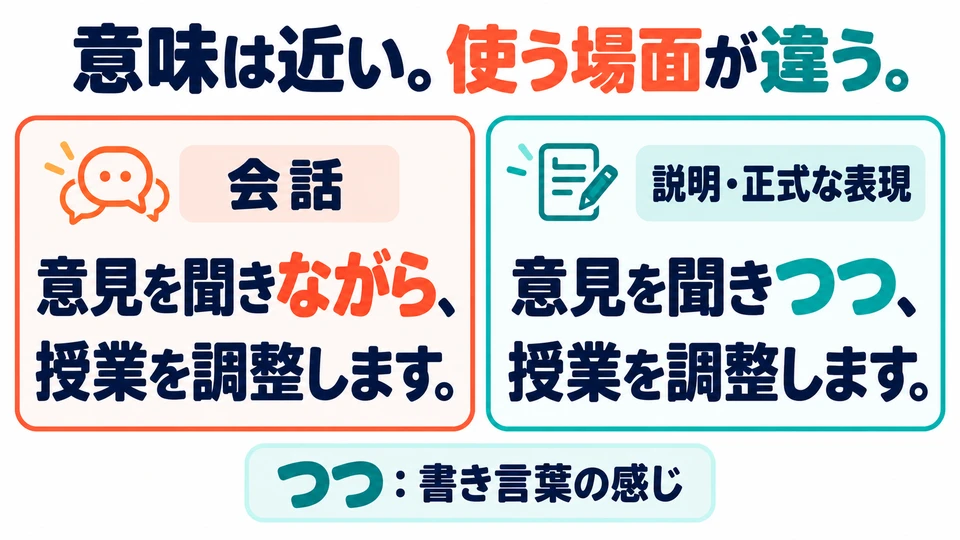
Its meaning is close to 「ながら」, which you have learned, but its tone is more written. It is often used in explanations or formal language.
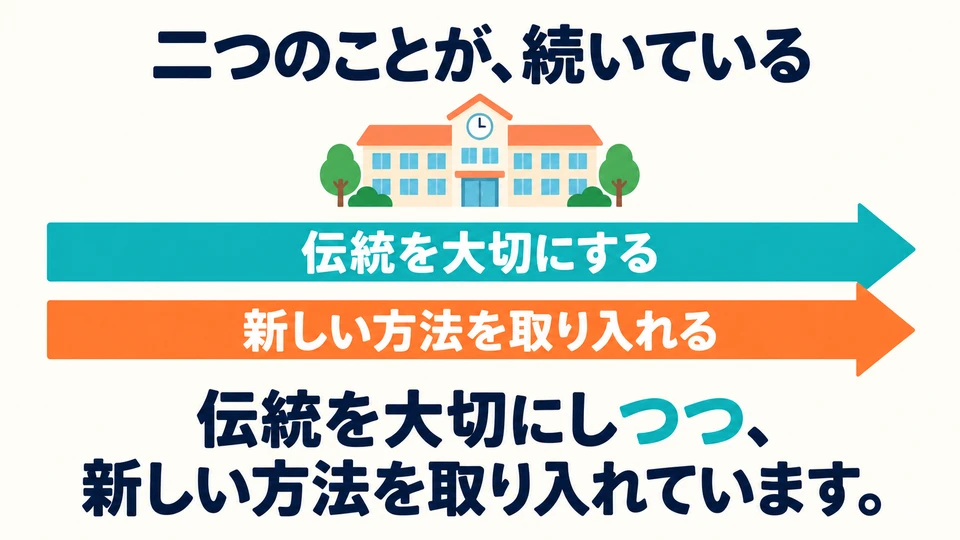
In the school example, both practices continue alongside each other. The school does not first value tradition and then introduce new methods.
Example sentences
- 学校gakkouはwa伝統dentouをo大切にしtaisetsunishiつつ、tsutsu、新しいatarashii教育kyouiku方法houhouをo取り
In a conversation

Check yourself
Level 1 · Recognise
Which sentence is correct?
Level 1 · Recognise
Listen and choose the meaning
Level 2 · Build
Put the words in order
While valuing tradition, the school is introducing new teaching methods.
Level 3 · Use
What goes in the blank?
学校は伝統を大切に____、新しい教育方法を取り入れています。
The school is preserving tradition while also adopting new teaching methods.
More grammar in this theme
- 〜つつwhile doing; simultaneous actions