
Japanese grammar · ≈ JLPT N2 · Intermediate 3
〜にわたって/〜にわたり/〜にわたる~ni watatte / ~ni watari / ~ni wataru
span a period, area, or occasions
「〜にわたって」 shows that an activity spans a period, area, or number of occasions.
How it works
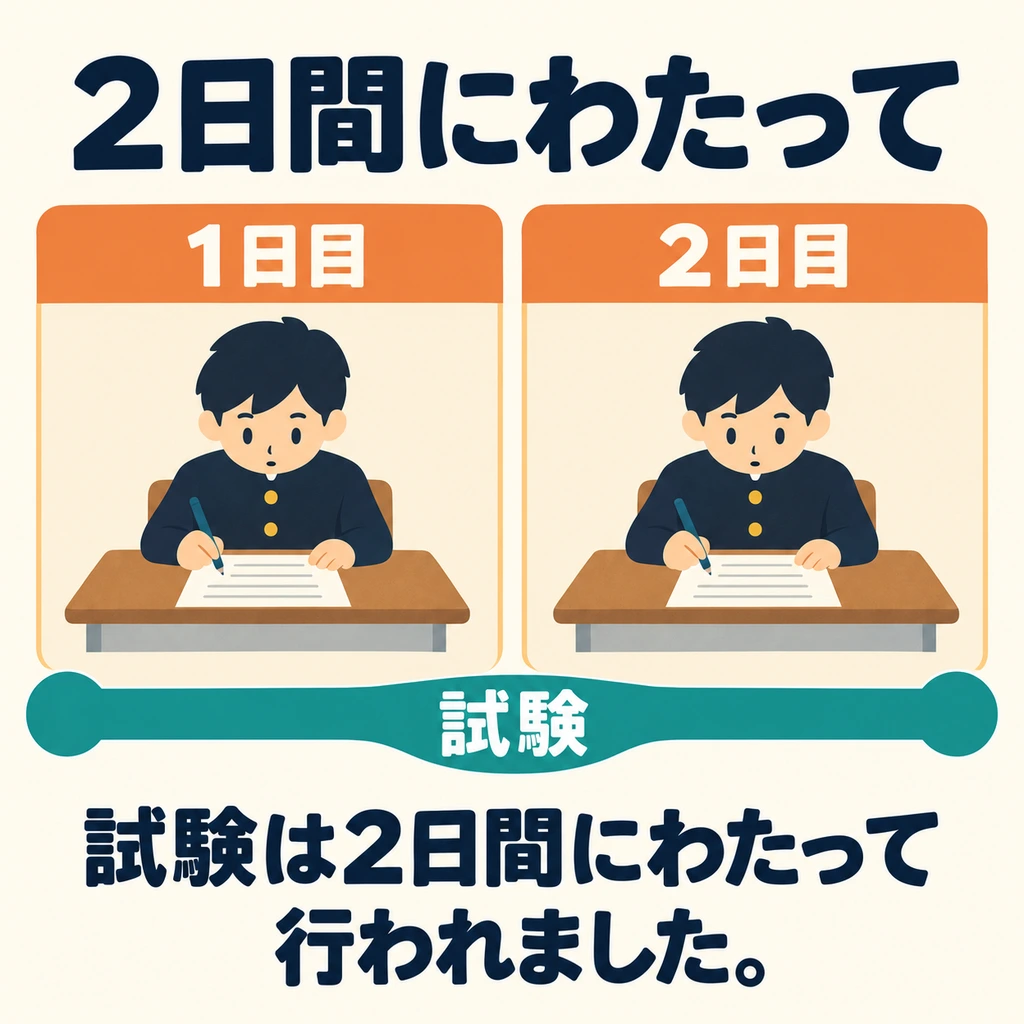
The exam takes place over two days. 「にわたって」 emphasizes that the activity spans the whole period.
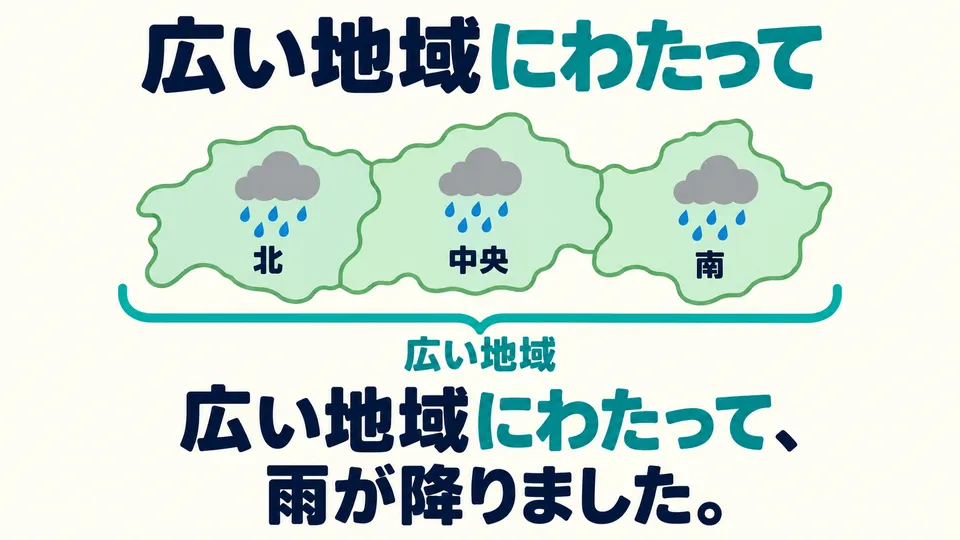
The range can also be spatial: it emphasizes that an activity or state extends across a broad area.

The range can also be a number of occasions: it emphasizes that the same activity takes place over all those occasions.
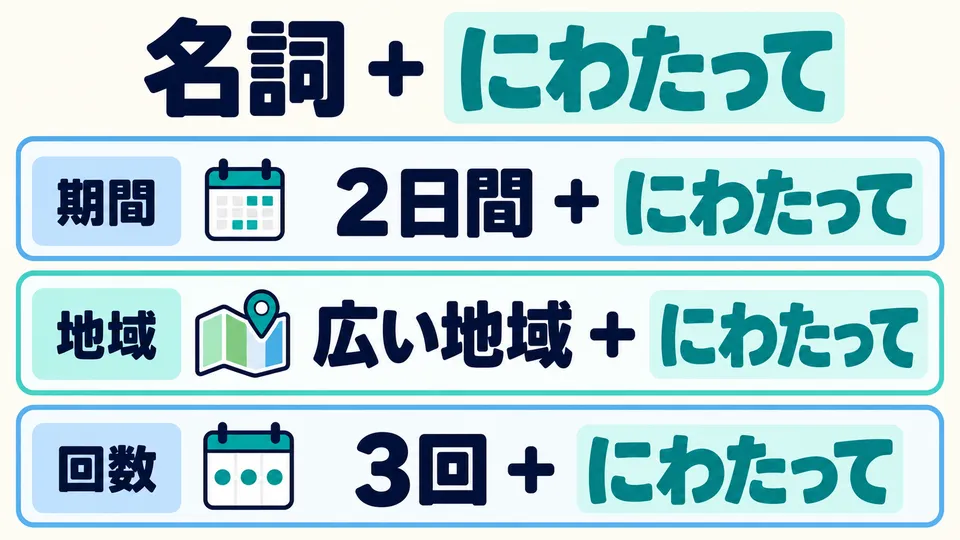
Attach 「にわたって」 to a noun expressing a period, area, or number of occasions to show the range.
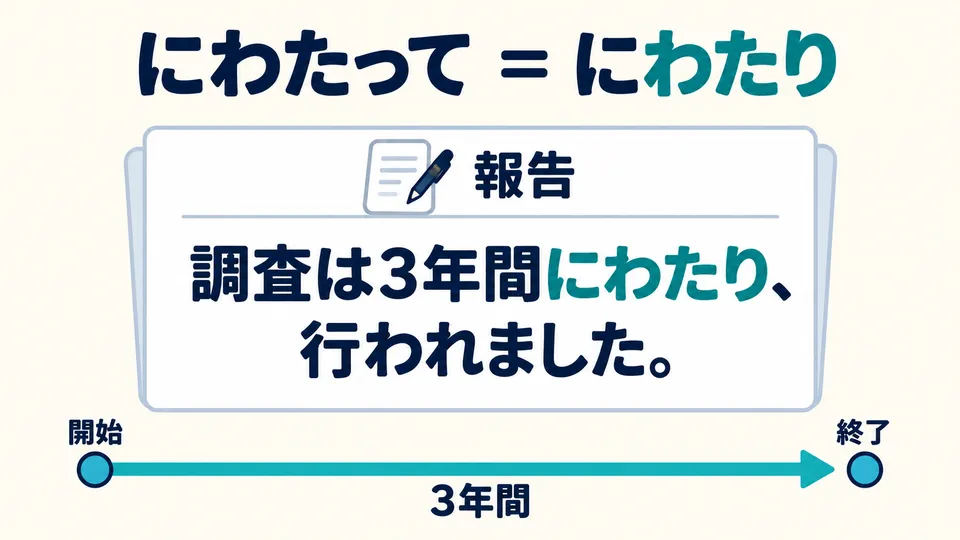
「にわたり」 has the same meaning and is often used in more formal reports or written explanations.

Use 「にわたる」 to modify the noun that follows. The picture shows effort spanning a whole year.
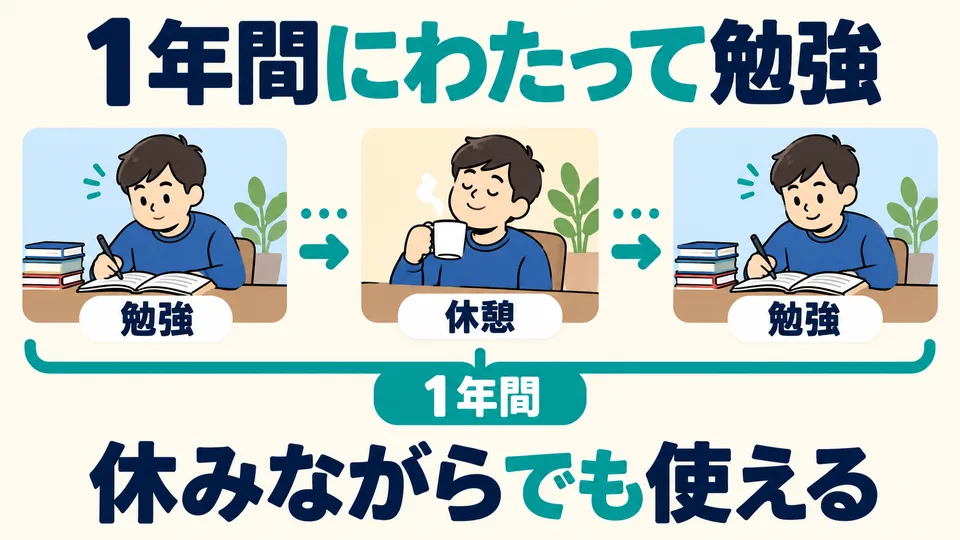
The examples emphasize that the exam or the effort spans the whole period. This does not mean going on day and night without a break.
Example sentences
- 試験shikenはwa2futsu日間kakanにniわたっwatatてte行われました。okonawaremashita。
The exam was conducted over two days.
In a conversation

- A第一志望の大学入試に向けて、どれくらい準備をしてきましたか?
A: How long have you been preparing for the entrance exam of your first-choice university?
Check yourself
Level 1 · Recognise
Which sentence is correct?
Level 1 · Recognise
Listen and choose the meaning
Level 2 · Build
Put the words in order
The exam was conducted over a two-day period.
Level 3 · Use
What goes in the blank?
共通テストの受験対策は、数か月に____続けられました。
Preparations for the Common Test continued over several months.
More grammar in this theme
- 〜にわたって/〜にわたり/〜にわたるspan a period, area, or occasions