
Japanese grammar · ≈ JLPT N3 · Intermediate 3
〜ように思う~ you ni omou
seem; I think
Use 〜ように思う with a plain form to state a vague memory or a softened personal impression.
How it works
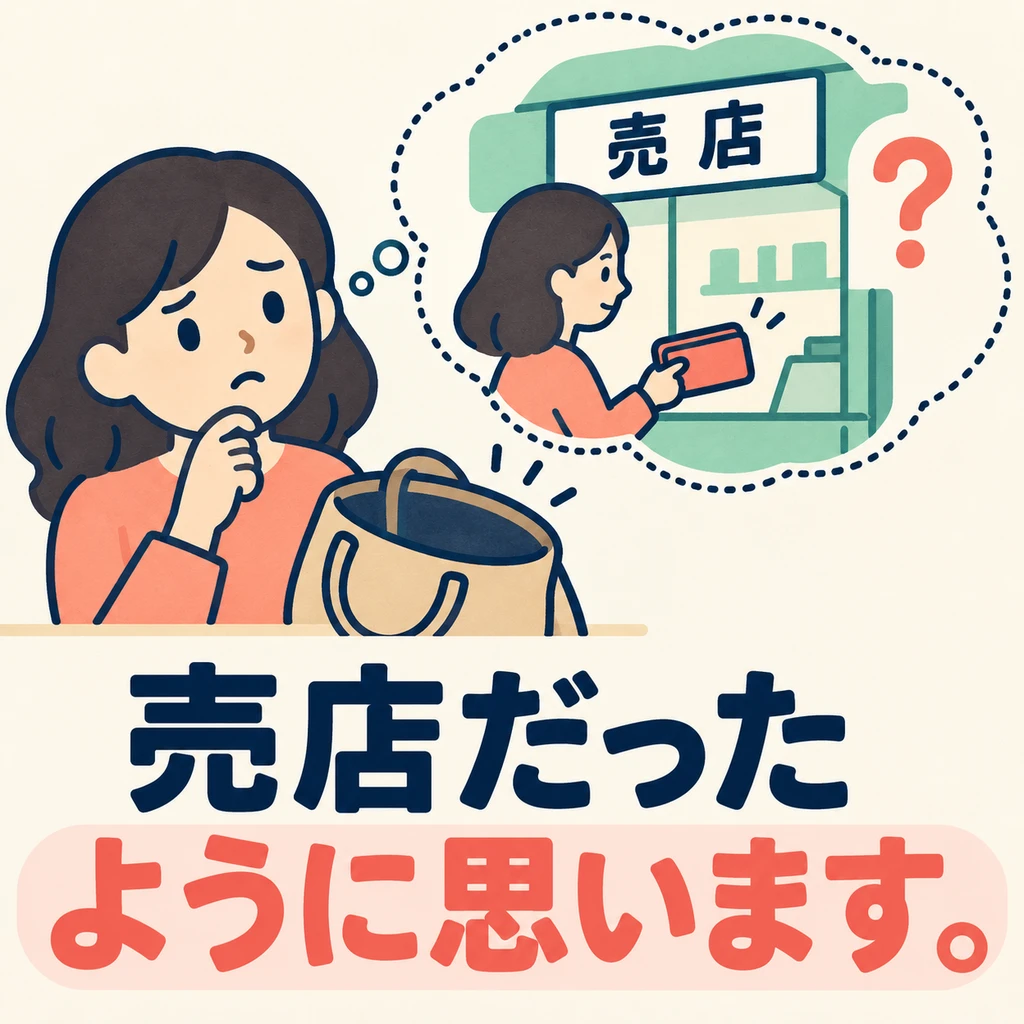
The wallet is missing. You vaguely remember taking it out at the kiosk, but the memory is not very clear.
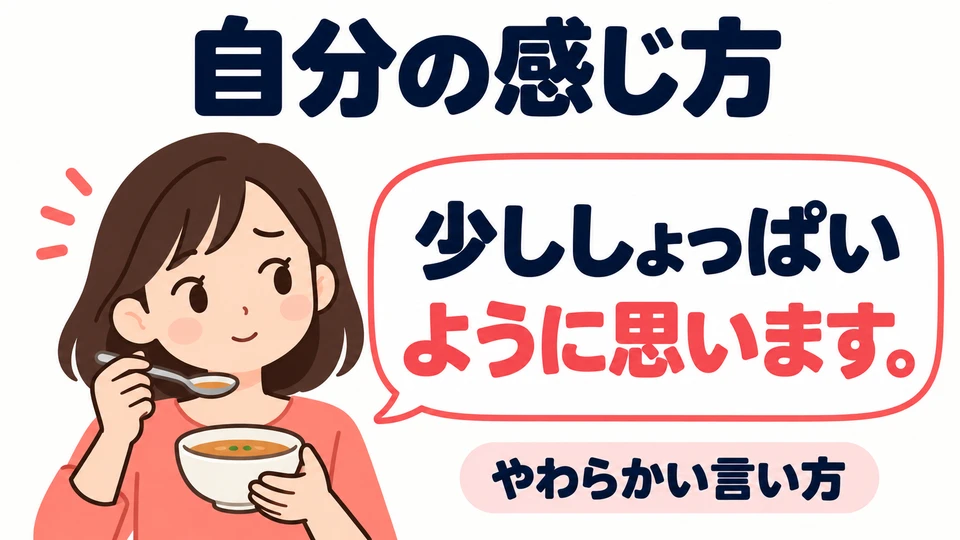
It can also express your own feeling or opinion: “It seems to me that…,” with a softer tone.
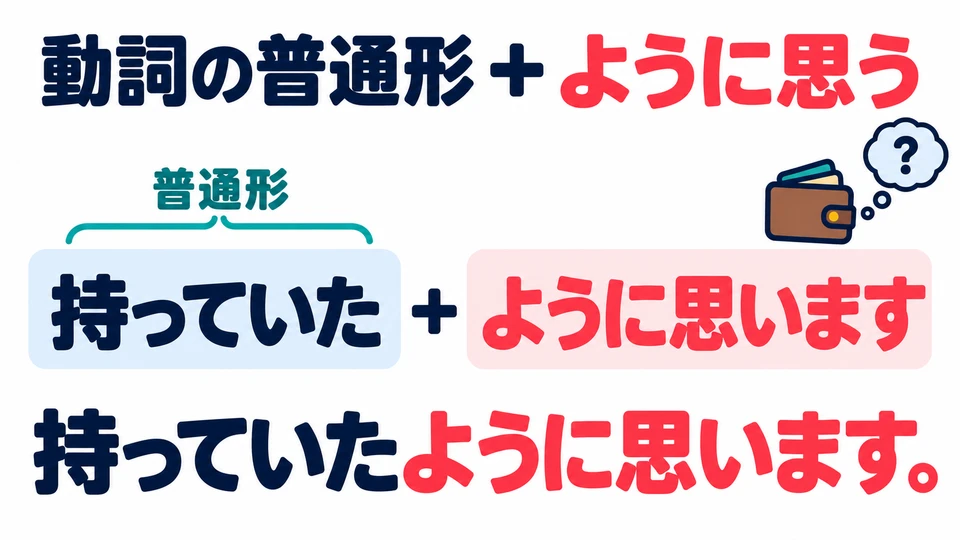
Attach 「ように思う」 to the plain form of a verb, as in 「持っていたように思います」.
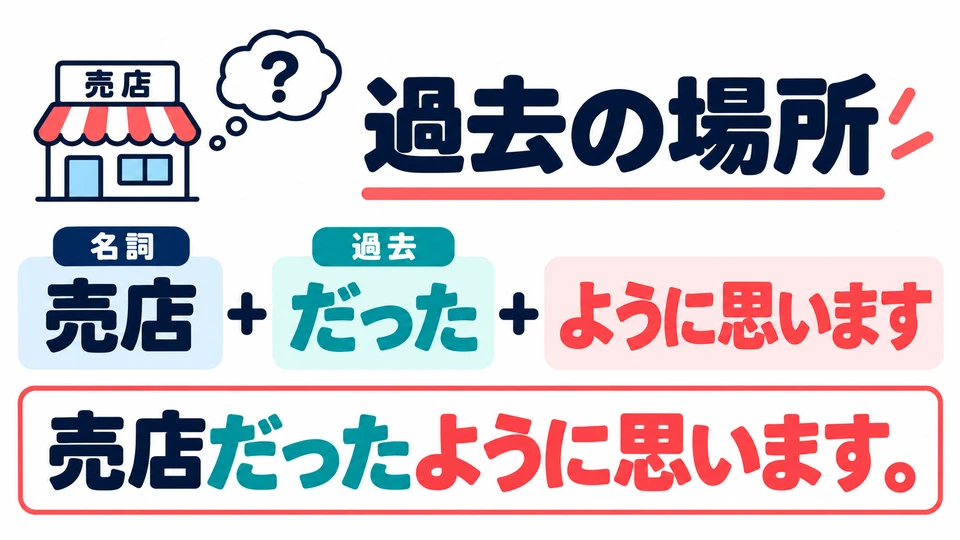
When recalling a place in the past, use 「だった」 after the noun, as in 「売店だったように思います」.
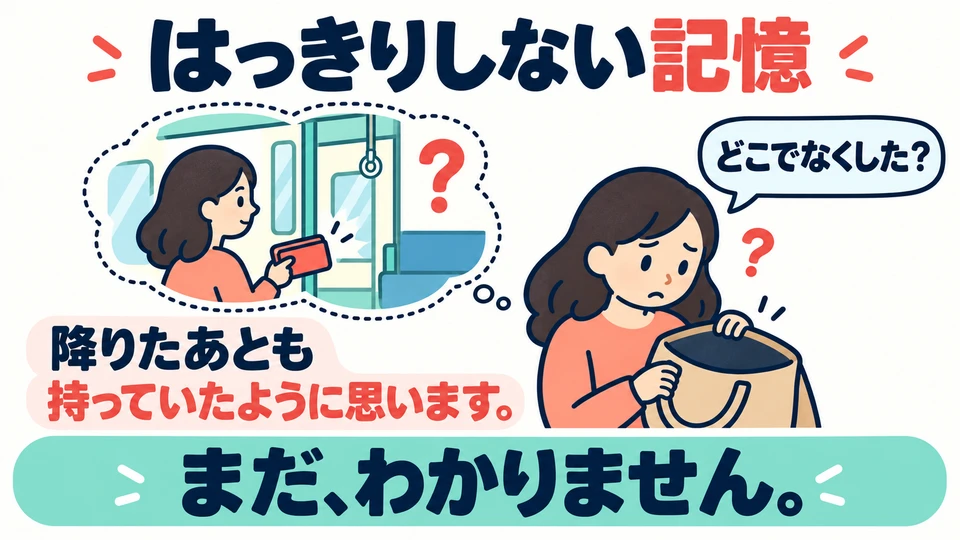
“I still had it after getting off the train” is also a vague memory. It does not establish where the wallet was lost.
Example sentences
- 財布saifuをo出したdashitaのnoは、wa、売店baitenだったように思います。dattayouniomoimasu。
I think that it was at the shop that I took out my wallet.
In a conversation

- A財布をなくしたのはホームですか。
A: Did you lose your wallet on the platform?
- Bホームではなく、売店の
Check yourself
Level 1 · Recognise
Which sentence is correct?
Level 1 · Recognise
Listen and choose the meaning
Level 2 · Build
Put the words in order
I think the place where I took out my wallet was the shop.
Level 3 · Use
What goes in the blank?
財布を出したのは、売店だった____。
I think I took out my wallet at the shop.
More grammar in this theme
- 〜ように思うseem; I think