
Japanese grammar · ≈ JLPT N2 · Intermediate 3
〜ことに(は)~ koto ni (wa)
to one’s surprise; interestingly
Put an emotion or evaluation before 〜ことに, then state the fact that caused that reaction.
How it works

How do you feel when someone shows you around? State the feeling first, then the fact that caused it.
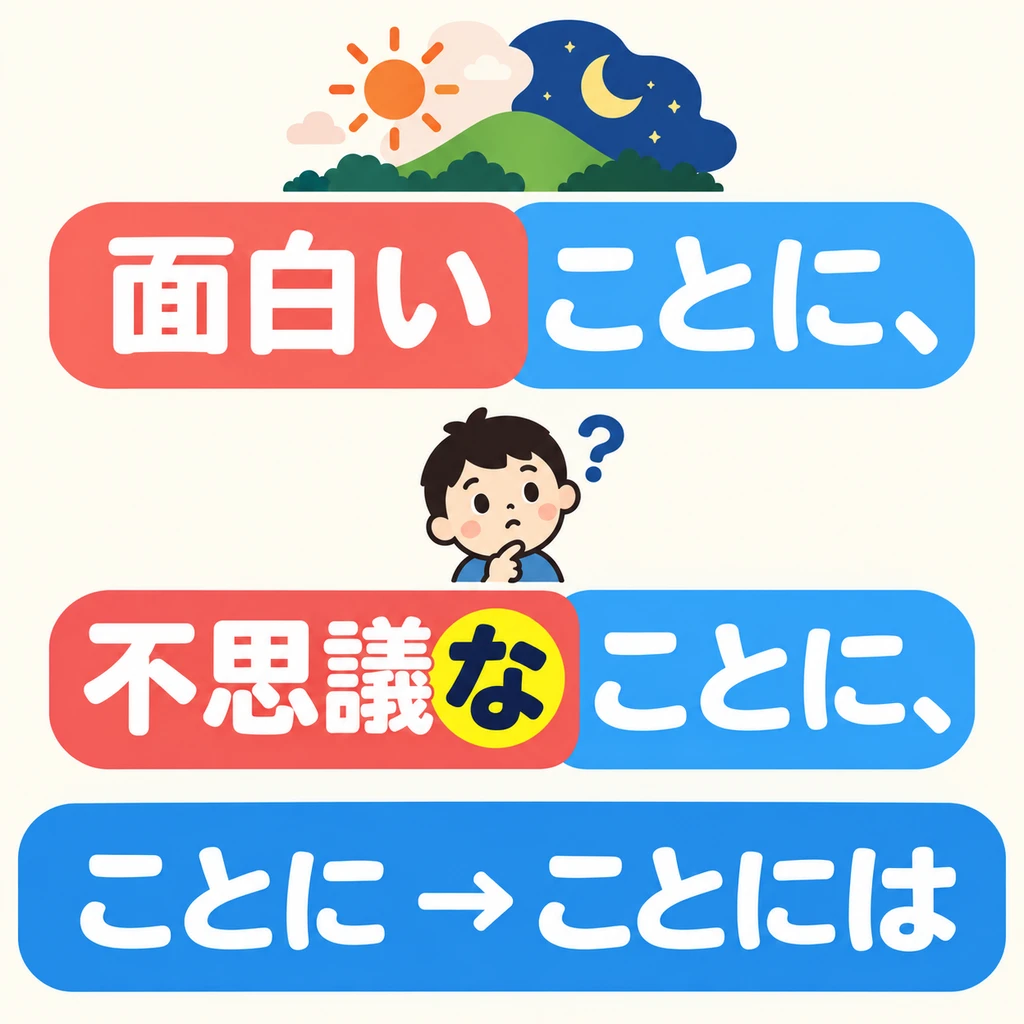
Attach 「ことに」 directly to an い-adjective. With a な-adjective, keep 「な」 before it.
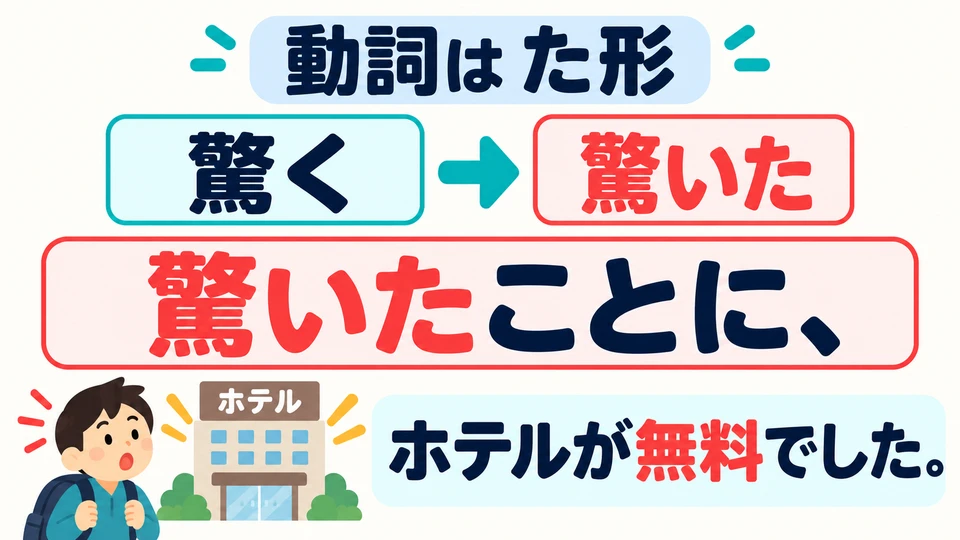
Use verbs in the た-form, as in 「驚いたことに」. Choose words that express feelings or evaluations.

「ことには」 has essentially the same meaning. Adding 「は」 makes the introduction of the feeling more pronounced.
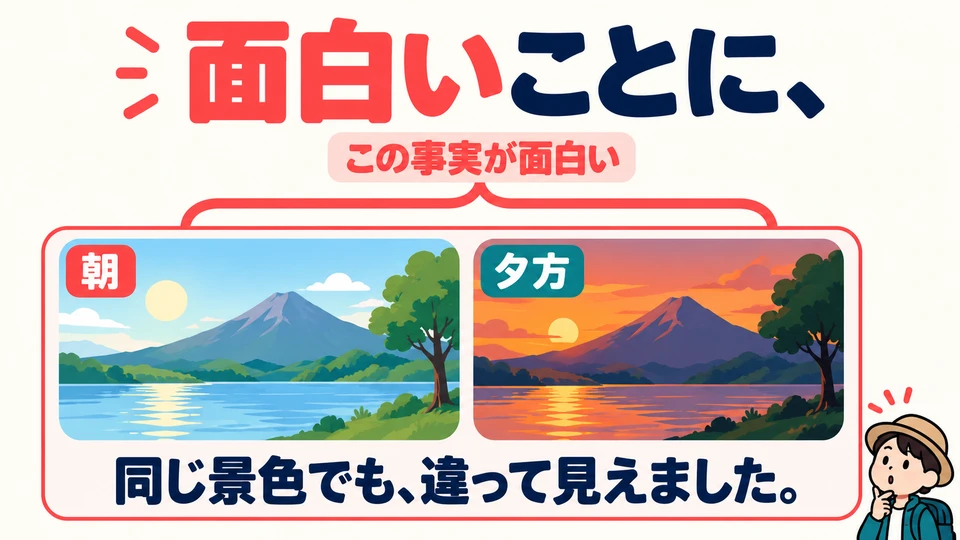
In the example, 「面白い」 evaluates the fact that the view differs in the morning and evening, rather than just describing the view.
Example sentences
- 面白いomoshiroiことkotoに、ni、同じonaji景色keshikiでdeもmo朝asaとto夕方yuugataでde
In a conversation

Check yourself
Level 1 · Recognise
Which sentence is correct?
Level 1 · Recognise
Listen and choose the meaning
Level 2 · Build
Put the words in order
Interestingly, even the same scenery looked completely different in the morning and in the evening.
Level 3 · Use
What goes in the blank?
____、同じ景色でも朝と夕方で全く違って見えました。
Interestingly, the same scenery looked completely different in the morning and in the evening.
More grammar in this theme
- 〜ことに(は)to one’s surprise; interestingly