JPEDLAB iconJPEDLAB
Save history

Create an account and play

Explore first, then save your progress whenever you are ready. No email address is required.

Start free
Read as articleCards
See the whole course›Intermediate 3›Travel Information and Trip Sharing

Japanese grammar · ≈ JLPT N2 · Intermediate 3

〜ことに(は)~ koto ni (wa)

to one’s surprise; interestingly

Put an emotion or evaluation before 〜ことに, then state the fact that caused that reaction.

Start the interactive lessonIllustrated cards, audio and speaking practice

How it works

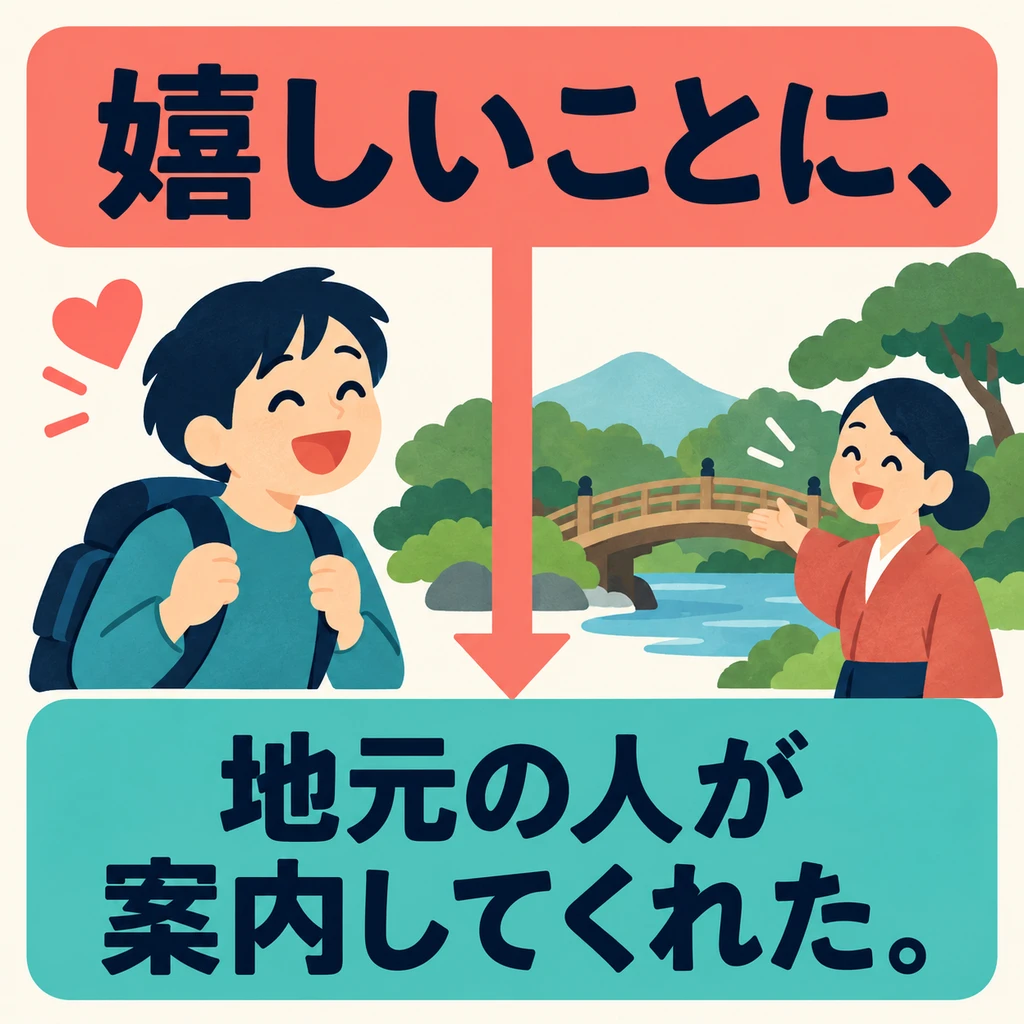
  1. How do you feel when someone shows you around? State the feeling first, then the fact that caused it.
    How do you feel when someone shows you around? State the feeling first, then the fact that caused it.

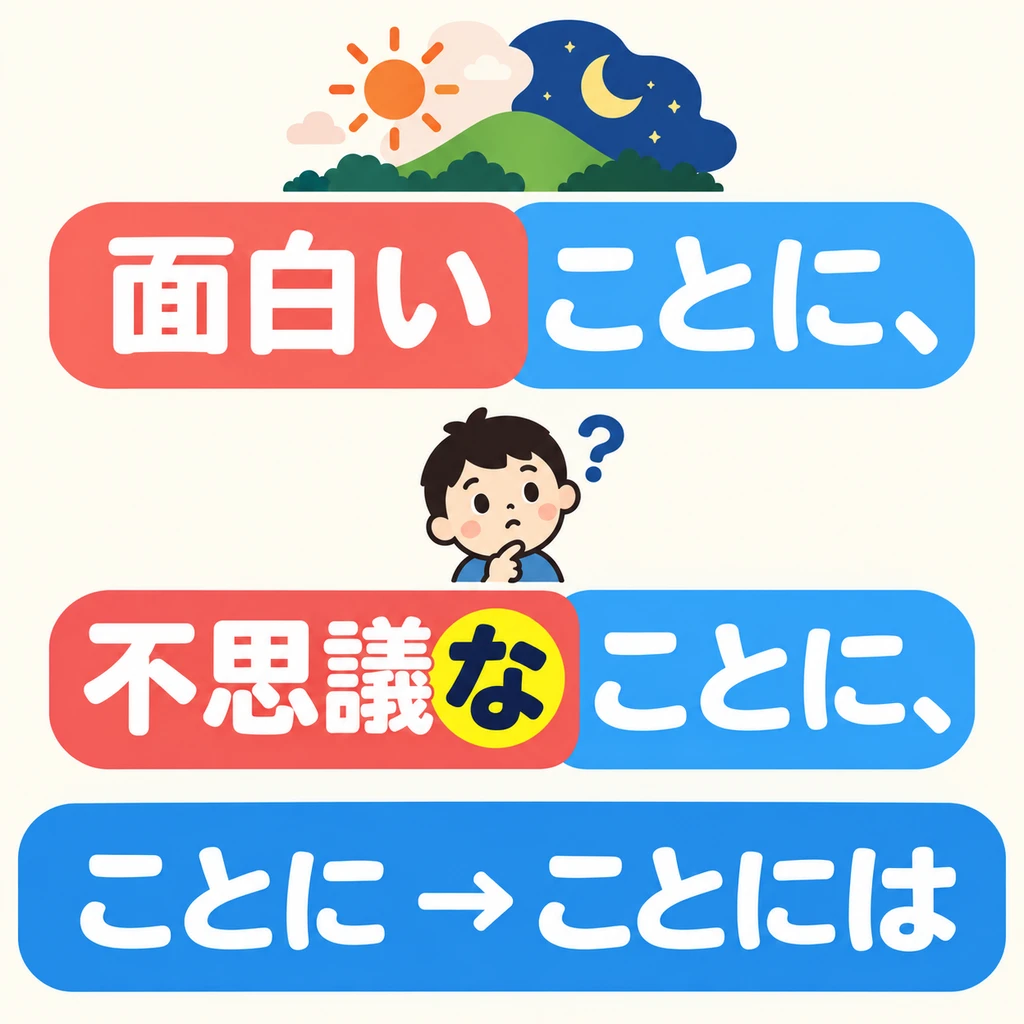
  2. Attach 「ことに」 directly to an い-adjective. With a な-adjective, keep 「な」 before it.
    Attach 「ことに」 directly to an い-adjective. With a な-adjective, keep 「な」 before it.

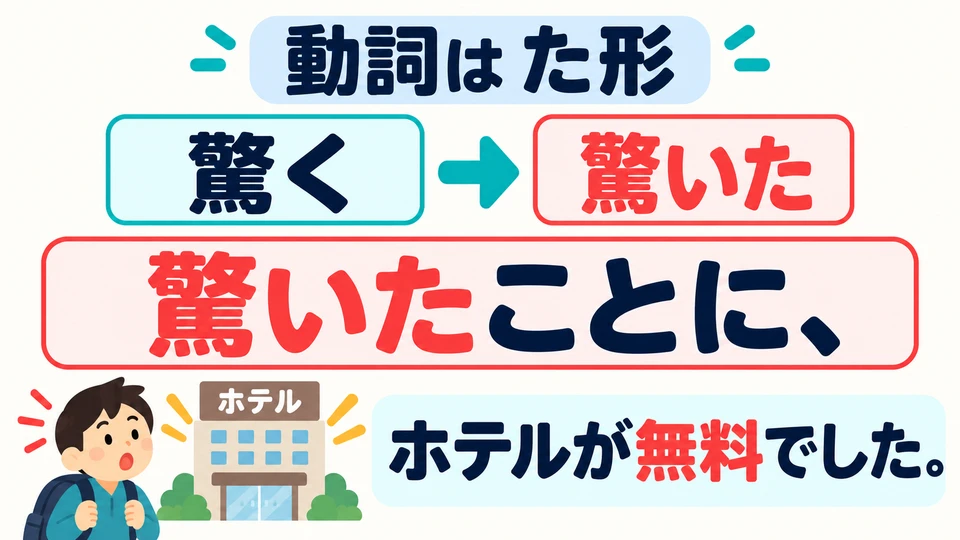
  3. Use verbs in the た-form, as in 「驚いたことに」. Choose words that express feelings or evaluations.
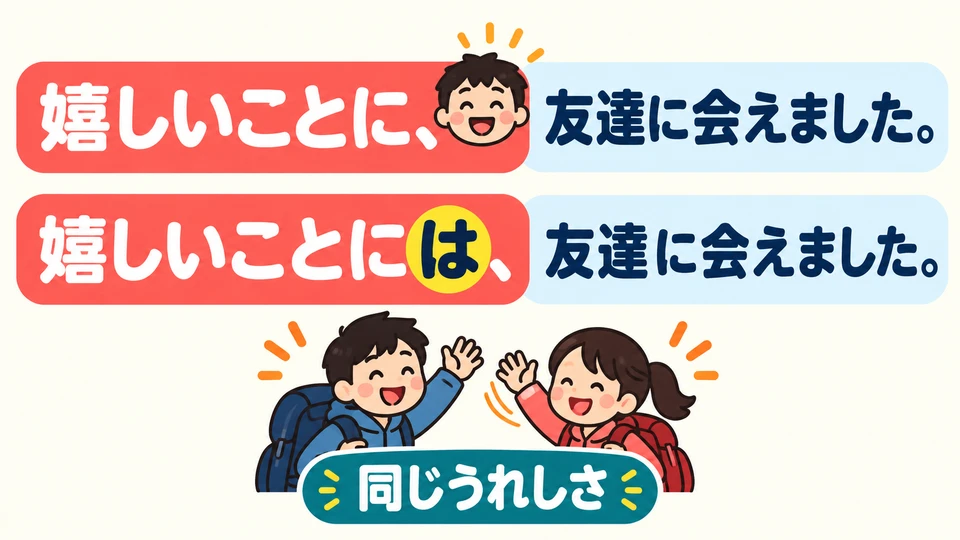
    Use verbs in the た-form, as in 「驚いたことに」. Choose words that express feelings or evaluations.

  4. 「ことには」 has essentially the same meaning. Adding 「は」 makes the introduction of the feeling more pronounced.
    「ことには」 has essentially the same meaning. Adding 「は」 makes the introduction of the feeling more pronounced.

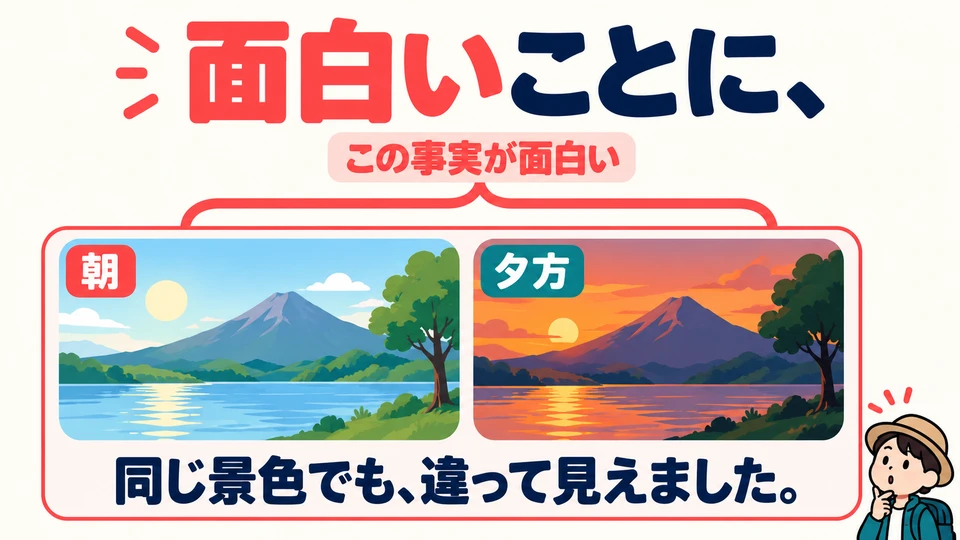
  5. In the example, 「面白い」 evaluates the fact that the view differs in the morning and evening, rather than just describing the view.

    In the example, 「面白い」 evaluates the fact that the view differs in the morning and evening, rather than just describing the view.

Example sentences

  • 面白いおもしろいomoshiroiことkotoに、ni、同じおなじonaji景色けしきkeshikiでdeもmo朝あさasaとto夕方ゆうがたyuugataでde

In a conversation

Check yourself

  1. Level 1 · Recognise

    Which sentence is correct?

  2. Level 1 · Recognise

    Listen and choose the meaning

  3. Level 2 · Build

    Put the words in order

    Interestingly, even the same scenery looked completely different in the morning and in the evening.

  4. Level 3 · Use

    What goes in the blank?

    ____、同じ景色でも朝と夕方で全く違って見えました。

    Interestingly, the same scenery looked completely different in the morning and in the evening.

More grammar in this theme

  • 〜ことに(は)to one’s surprise; interestingly

Keep practising

Test your Japanese vocabulary12 adaptive questions, freeCheck your pronunciationRead aloud and get a scorePractise verb forms10-question conjugation quizSee the whole courseGrammar, vocabulary and quizzes by theme
全くまったく
mattaku
違っちがっchigat
てte
見えました。みえました。miemashita。

Interestingly, even the same scenery looked completely different in the morning and evening.

  • A
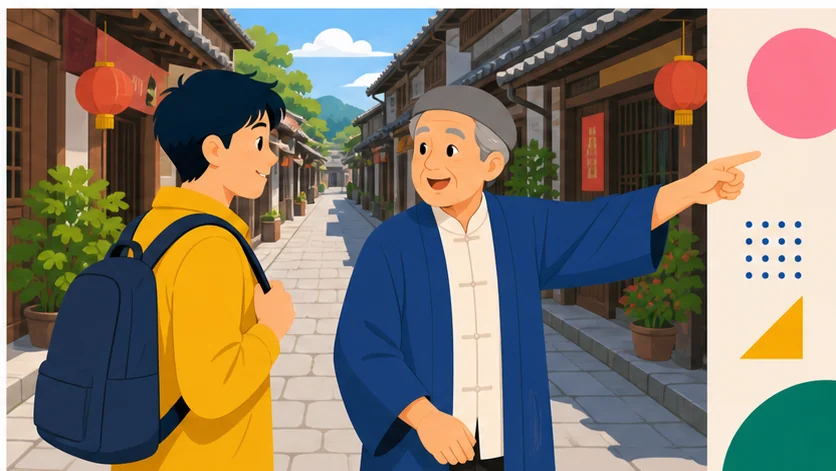
    嬉しいうれしいことに、旅先たびさきで偶然、ぐうぜん、地元じもとの人ひとが案内あんないしてくれたんです。

    A: Happily, a local person happened to guide me around during my trip.

  • B
    それはわよかったですね。どんな場所ばしょに連れつれて行っいってもらいましたか?か

    B: That's great. What kind of places did they take you to?

  • 不思議ふしぎfushigiなことnakotoに、ni、初めてはじめてhajimete行った場所いったばしょittabashoなnaのnoに、ni、どこdokoかka懐かしくなつかしくnatsukashiku感じました。かんじました。kanjimashita。

    Strangely enough, even though it was my first time visiting that place, I felt a sense of nostalgia.

  • A
    隠れた名所かくれためいしょで、普通ふつうの観光かんこう客きゃくはわ行かない穴場いかないあなばの場所ばしょでした。とても風情ふぜいがありましたよ。

    A: It was a hidden gem, a lesser-known spot where ordinary tourists don't go. It had a very nice atmosphere.

  • 〜といったらtypical association with a topic
    とても〜ないcannot possibly do
    〜はもちろん・〜はもとよりnot only; but also
    〜させていただきますhumbly do with permission
    ご〜いたします・お〜いたしますhumbly provide a service
    〜つもりだintend to; believe one did
    〜ように思うseem; I think
    〜ておりますformal humble action or state
    〜かねますcannot accommodate a request
    〜だけあって・〜だけのことはあるas expected; worth it
    〜ついでにwhile at it; taking the opportunity
    Previous〜かねます
    Next〜だけあって・〜だけのことはある