
Japanese grammar · ≈ JLPT N2 · Intermediate 3
〜だけあって・〜だけのことはある~ dake atte / ~ dake no koto wa aru
as expected; worth it
Use 〜だけあって when a result matches a reputation or trait; 〜だけのことはある affirms that something was worthwhile.
How it works
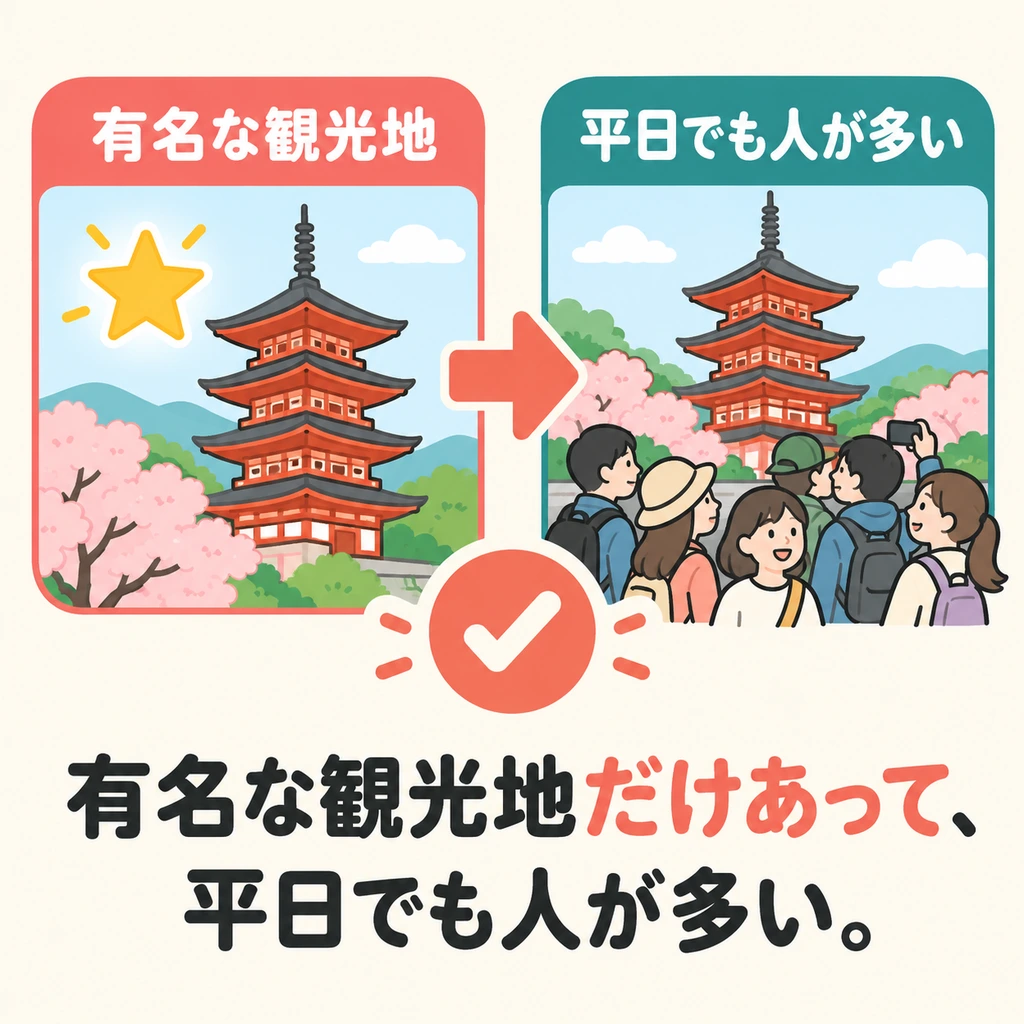
When reality matches a reputation or characteristic, use 「だけあって」 to say “as expected.”

After seeing the beautiful view for yourself, use 「だけのことはある」 to affirm that the trip was worth it.
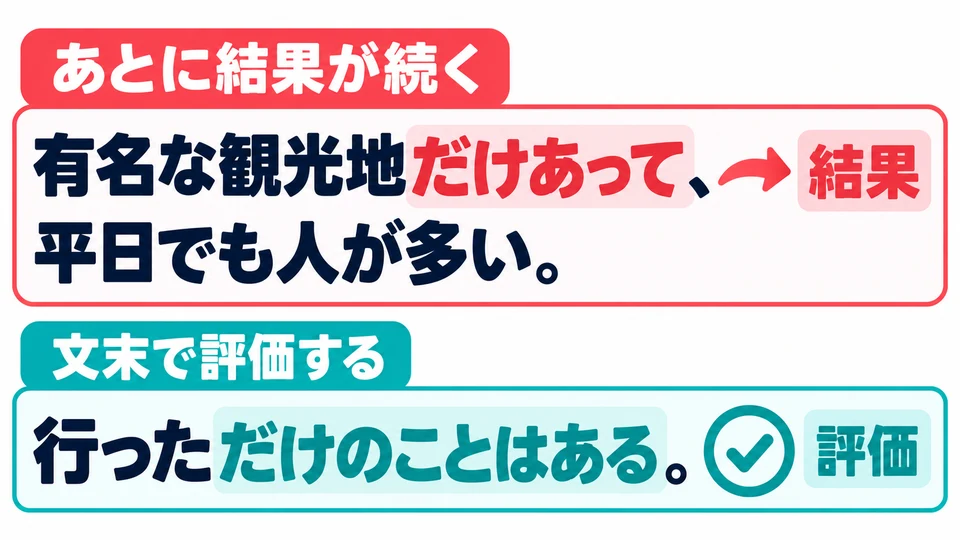
「だけあって」 is followed by a matching result; 「だけのことはある」 can give an evaluation at the end of a sentence.
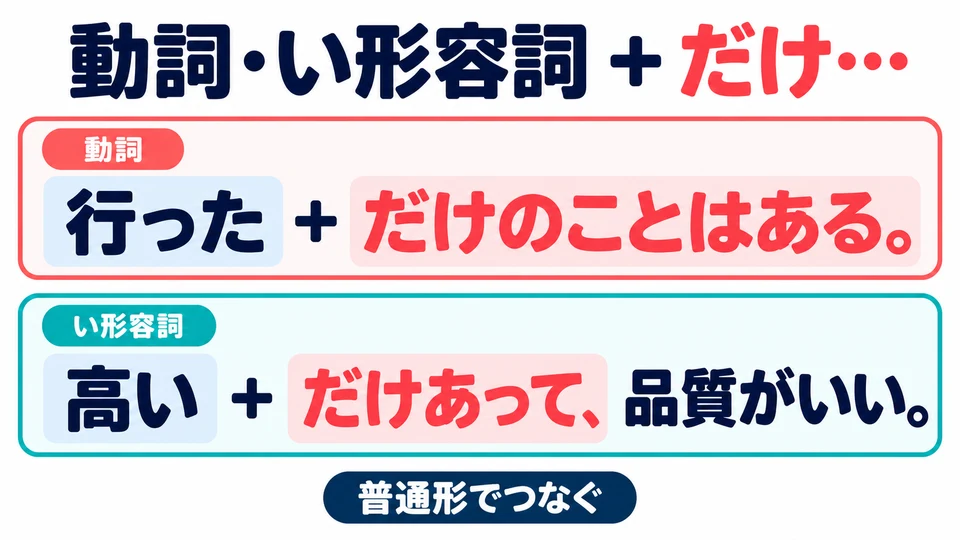
Use the plain form of verbs and い-adjectives, as in 「行っただけのことはある」.
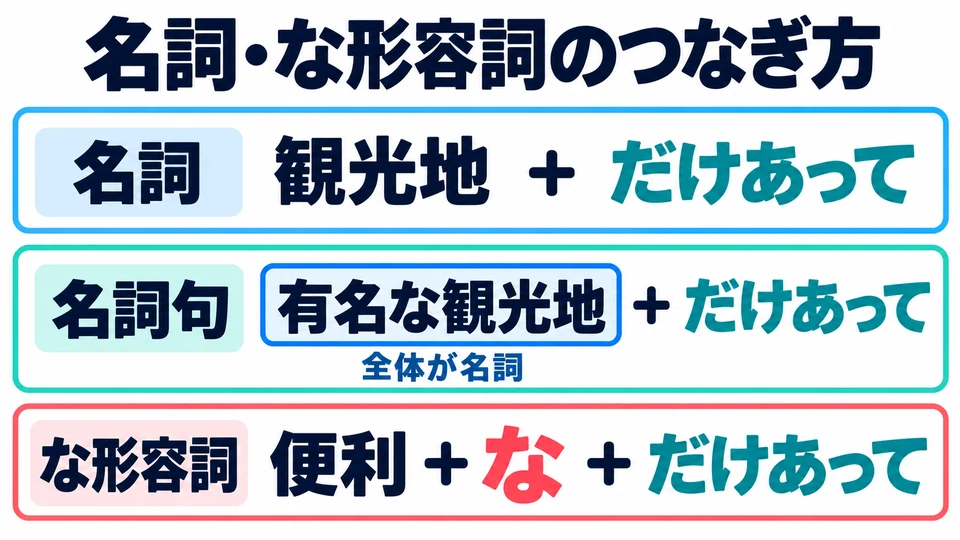
Nouns attach directly; な-adjectives take 「な」. In the example, 「有名な観光地」 is a noun phrase as a whole.
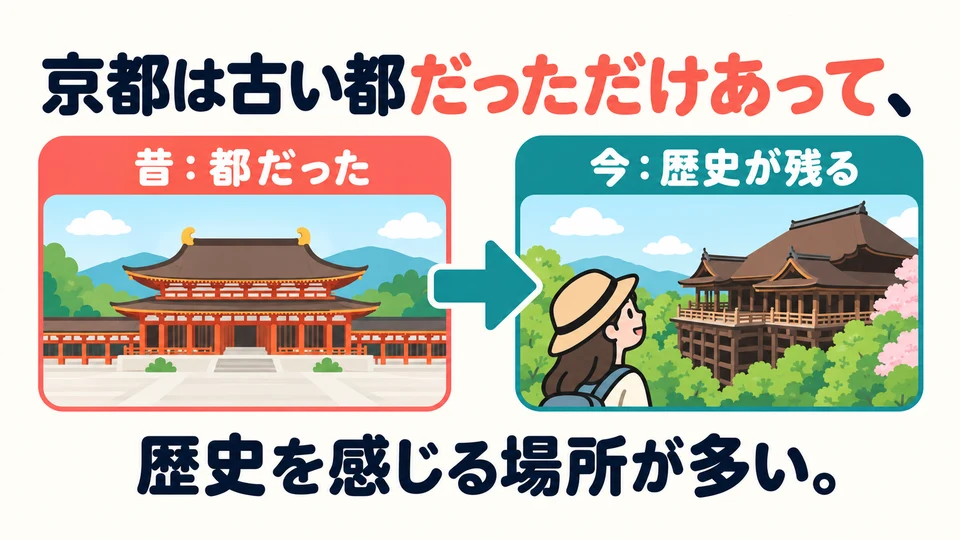
「古い都だった」 refers to Kyoto’s past status; the sights in Kyoto today still reflect that history.
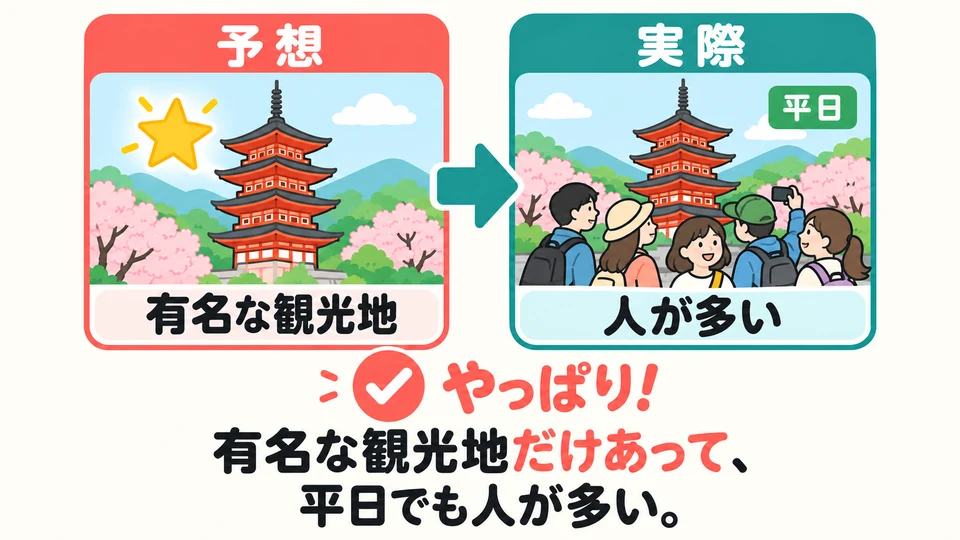
In the example, “crowded even on weekdays” confirms the spot’s fame: reality matches what was expected.
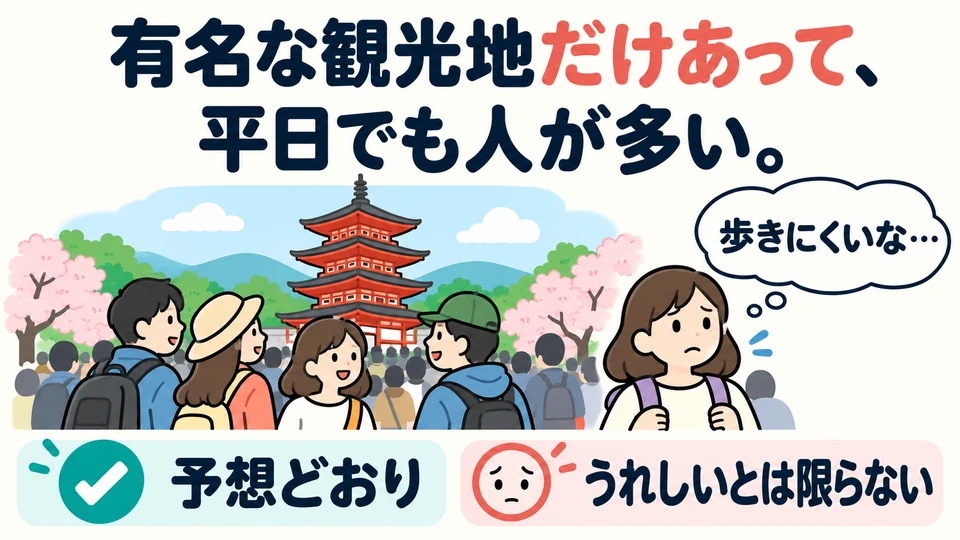
Crowds can also bother visitors; 「だけあって」 does not mean the result is necessarily pleasing.
Example sentences
- 京都kyoutoはwa古いfurui都miyakoだったdattaだけdakeあっaて、tte、歴史rekishiをo感じるkanjiru
In a conversation

Check yourself
Level 1 · Recognise
Which sentence is correct?
Level 1 · Recognise
Listen and choose the meaning
Level 2 · Build
Put the words in order
As expected of a famous sightseeing spot, it was crowded even on a weekday.
Level 3 · Use
What goes in the blank?
京都は古い都だった____、歴史を感じる場所が多かったです。
As expected of Kyoto, once a former capital, there were many places that felt historical.
More grammar in this theme
- 〜だけあって・〜だけのことはあるas expected; worth it