
JPEDLAB iconJPEDLAB
Save history

Create an account and play

Explore first, then save your progress whenever you are ready. No email address is required.

Start free
Read as articleCards
1/11

When reality matches a reputation or characteristic, use 「だけあって」 to say “as expected.”

››

Lesson notes · ≈ JLPT N2 · Intermediate 3

〜だけあって・〜だけのことはある~ dake atte / ~ dake no koto wa aru

as expected; worth it

Use 〜だけあって when a result matches a reputation or trait; 〜だけのことはある affirms that something was worthwhile.

How it works
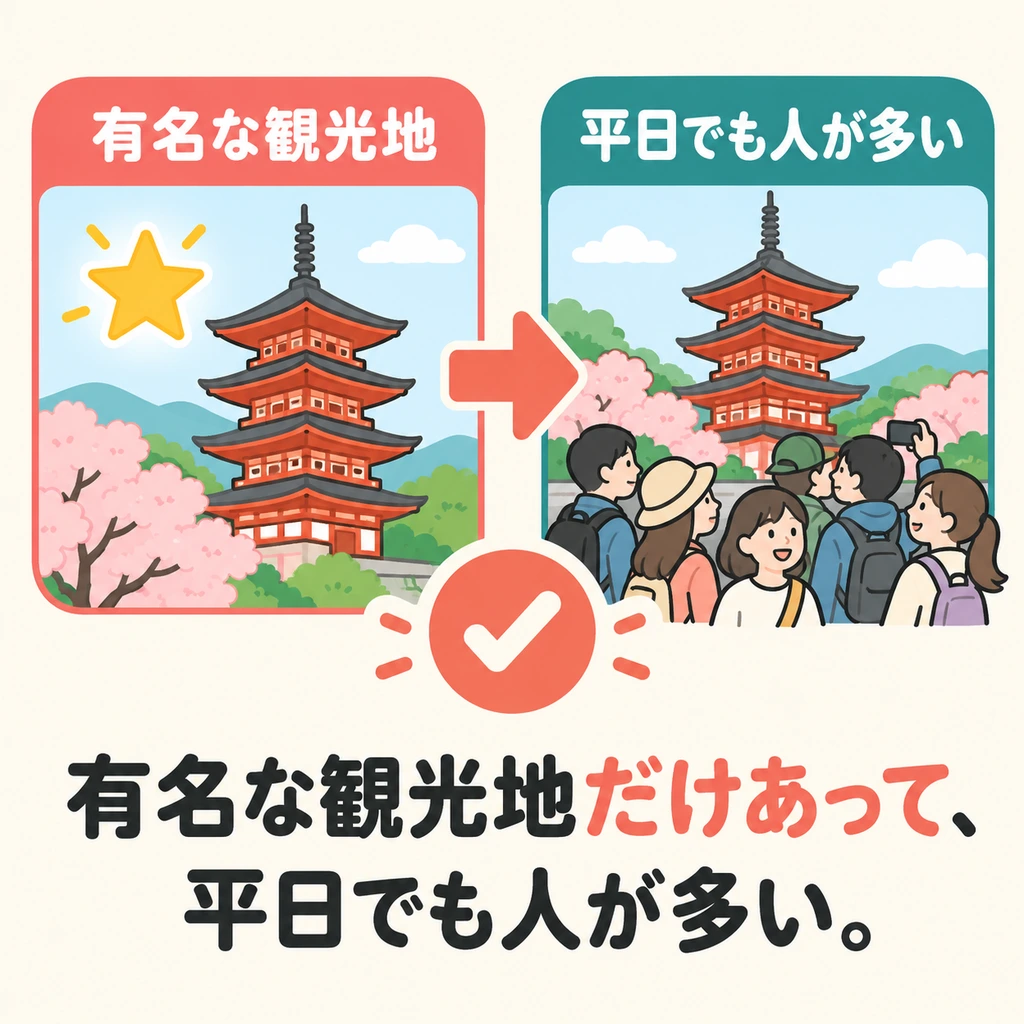
  1. When reality matches a reputation or characteristic, use 「だけあって」 to say “as expected.”

    When reality matches a reputation or characteristic, use 「だけあって」 to say “as expected.”

  2. After seeing the beautiful view for yourself, use 「だけのことはある」 to affirm that the trip was worth it.
    After seeing the beautiful view for yourself, use 「だけのことはある」 to affirm that the trip was worth it.

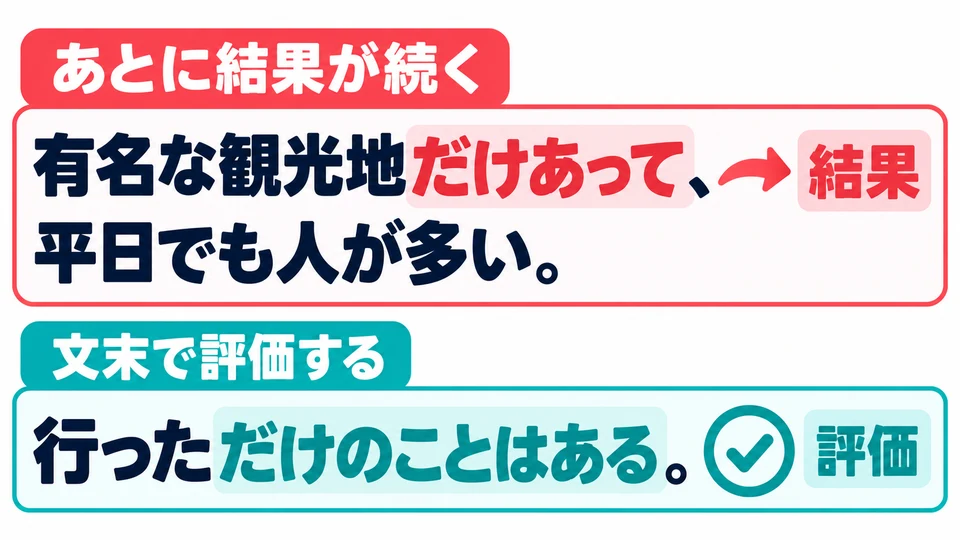
  3. 「だけあって」 is followed by a matching result; 「だけのことはある」 can give an evaluation at the end of a sentence.
    「だけあって」 is followed by a matching result; 「だけのことはある」 can give an evaluation at the end of a sentence.

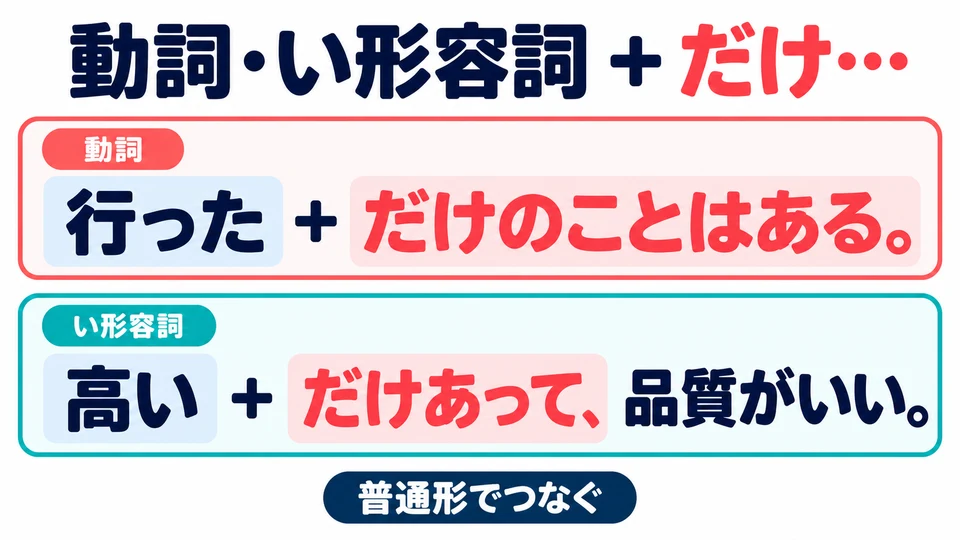
  4. Use the plain form of verbs and い-adjectives, as in 「行っただけのことはある」.
    Use the plain form of verbs and い-adjectives, as in 「行っただけのことはある」.

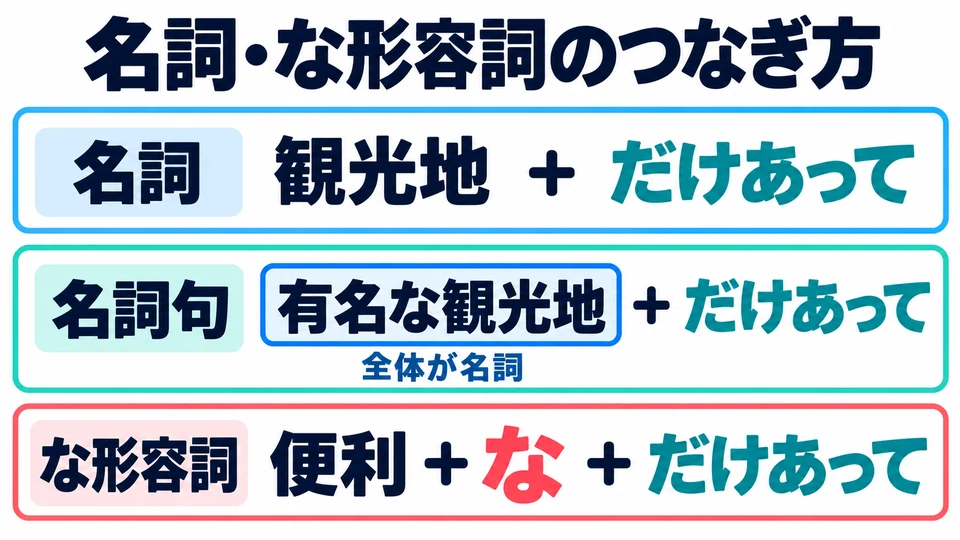
  5. Nouns attach directly; な-adjectives take 「な」. In the example, 「有名な観光地」 is a noun phrase as a whole.
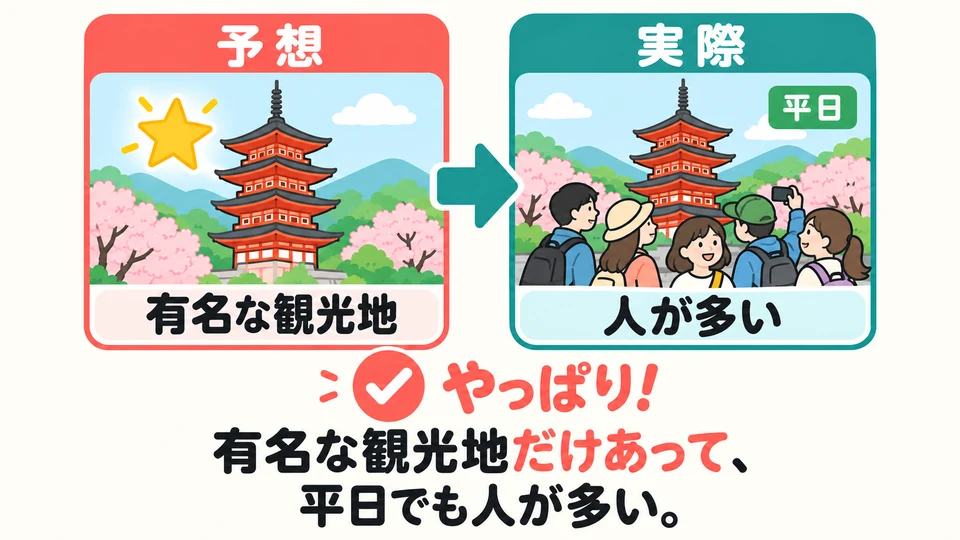
    Nouns attach directly; な-adjectives take 「な」. In the example, 「有名な観光地」 is a noun phrase as a whole.
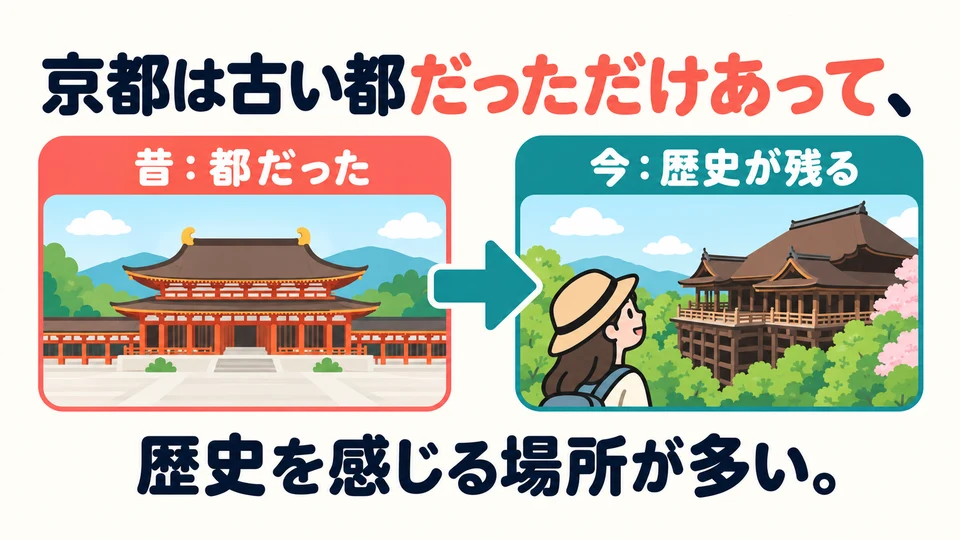
  6. 「古い都だった」 refers to Kyoto’s past status; the sights in Kyoto today still reflect that history.

「古い都だった」 refers to Kyoto’s past status; the sights in Kyoto today still reflect that history.

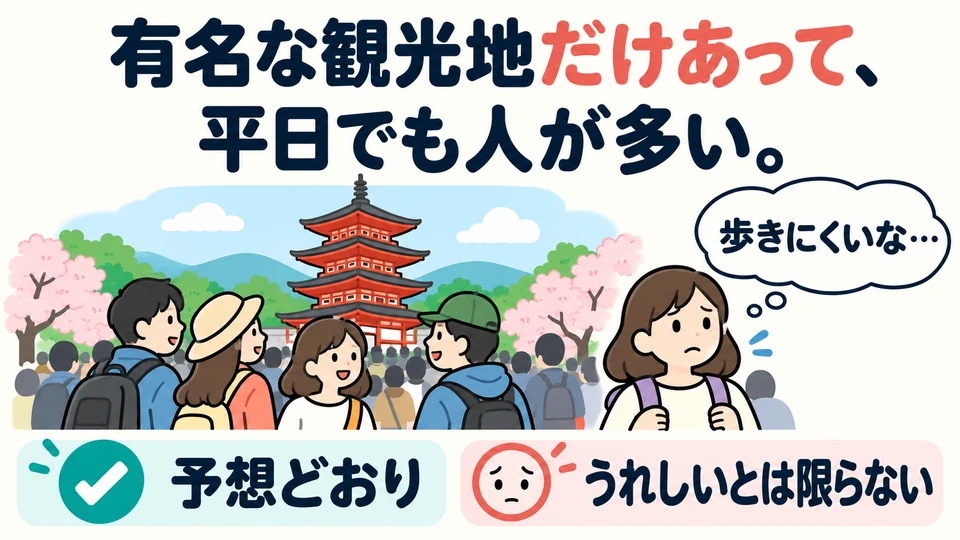
  • In the example, “crowded even on weekdays” confirms the spot’s fame: reality matches what was expected.

    In the example, “crowded even on weekdays” confirms the spot’s fame: reality matches what was expected.

  • Crowds can also bother visitors; 「だけあって」 does not mean the result is necessarily pleasing.

    Crowds can also bother visitors; 「だけあって」 does not mean the result is necessarily pleasing.

  • Example sentences

    • 京都きょうとkyoutoはわwa古いふるいfurui都みやこmiyakoだったdattaだけdakeあっaて、tte、歴史れきしrekishiをo感じるかんじるkanjiru場所ばしょbashoがga多かったです。おおかったです。ookattadesu。

      Kyoto is indeed an ancient capital, so there were many places where one could feel its history.

    • 有名な観光ゆうめいなかんこうyuumeinakankou地ちchiだけdakeあっaて、tte、平日へいじつheijitsuでdeもmo人ひとhitoがga多かったです。おおかったです。ookattadesu。

      As expected of a famous tourist spot, it was crowded even on weekdays.

    In a conversation

    • A
      あの展望てんぼう台、だい、行くいく価値かちがあるって聞いきいていたけど、どうでしたか?か

      A: I heard that observation deck is worth visiting, but how was it?

    • B
      行くいく価値かちがあるだけのことはわありましたよ。見応えみごたえのある景色けしきが広がっひろがっていました。

      B: It was certainly worth going. A spectacular view stretched out before my eyes.

    • A
      それはわ良かったです。よかったです。私わたしも次つぎの旅先たびさきに入れいれてみます。

      A: That's great. I'll add it to my list of destinations for my next trip too.

    Check yourself

    1. Level 1 · Recognise

      Which sentence is correct?

    2. Level 1 · Recognise

      Listen and choose the meaning

    3. Level 2 · Build

      Put the words in order

      As expected of a famous sightseeing spot, it was crowded even on a weekday.

    4. Level 3 · Use

      What goes in the blank?

      京都は古い都だった____、歴史を感じる場所が多かったです。

      As expected of Kyoto, once a former capital, there were many places that felt historical.

    More grammar in this theme

    • 〜といったらtypical association with a topic
    • とても〜ないcannot possibly do
    • 〜はもちろん・〜はもとよりnot only; but also
    • 〜させていただきますhumbly do with permission
    • ご〜いたします・お〜いたしますhumbly provide a service
    • 〜つもりだintend to; believe one did
    • 〜ように思うseem; I think
    • 〜ておりますformal humble action or state
    • 〜かねますcannot accommodate a request
    • 〜ことに(は)to one’s surprise; interestingly
    • 〜だけあって・〜だけのことはあるas expected; worth it
    • 〜ついでにwhile at it; taking the opportunity
    Previous〜ことに(は)Next〜ついでに

    Keep practising

    Test your Japanese vocabulary12 adaptive questions, freeCheck your pronunciationRead aloud and get a scorePractise verb forms10-question conjugation quizSee the whole courseGrammar, vocabulary and quizzes by theme
    See the whole course
    Intermediate 3
    Travel Information and Trip Sharing