
Japanese grammar · ≈ JLPT N3 · Intermediate 3
〜きる・〜きれる~kiru / ~kireru
finish completely; be able to finish
「〜きる」 emphasizes completing an entire action, while 「〜きれる」 asks whether you can finish it all.
How it works
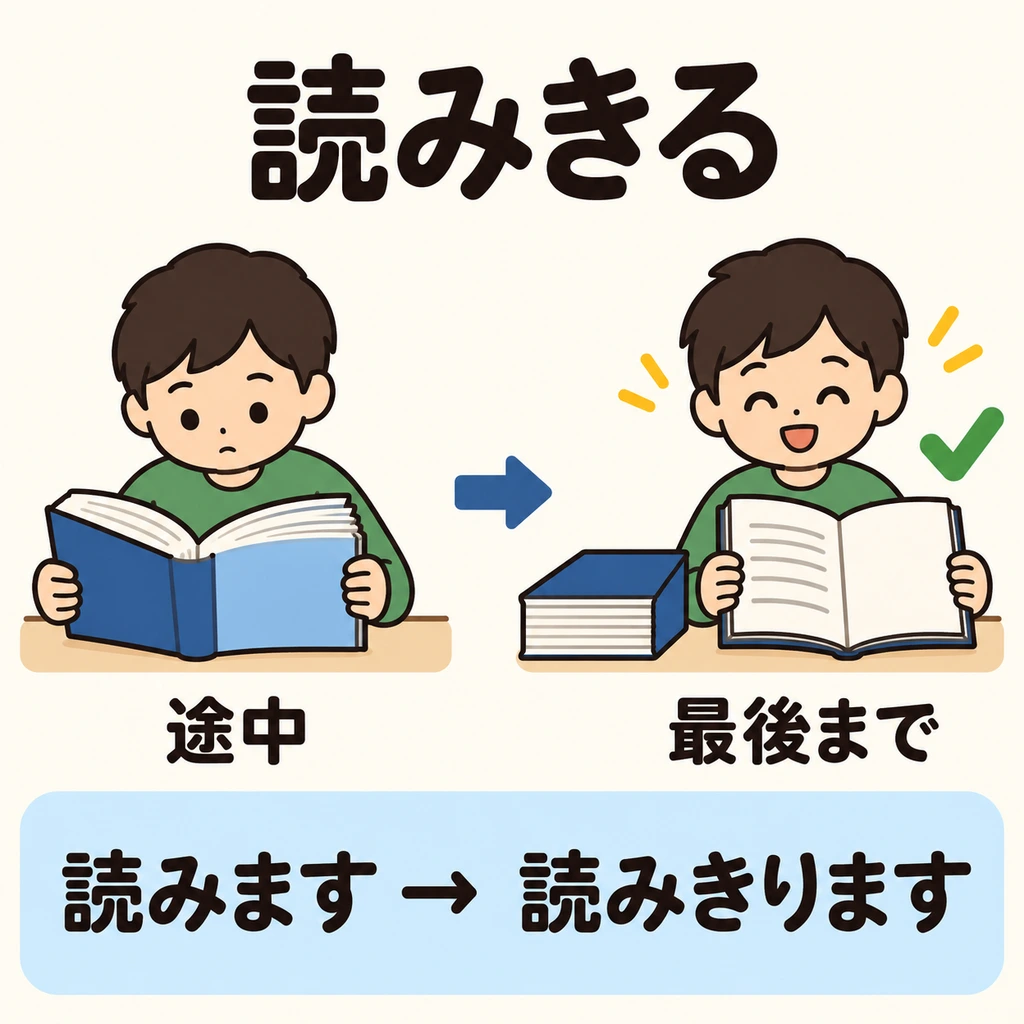
Reading a reference book to the last page: 「読みきる」 emphasizes completing the whole action.
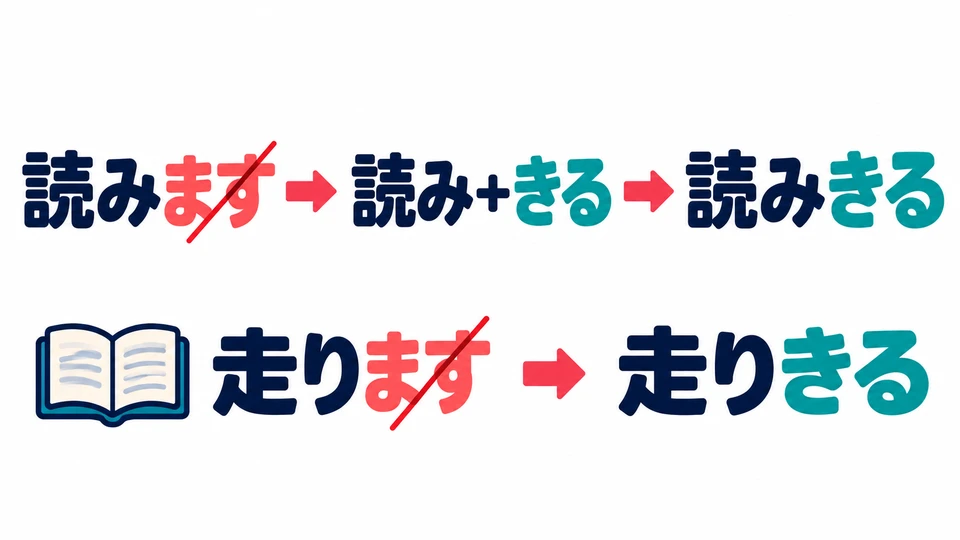
Remove 「ます」 from the verb and add 「きる」: 読みます→読みきる.
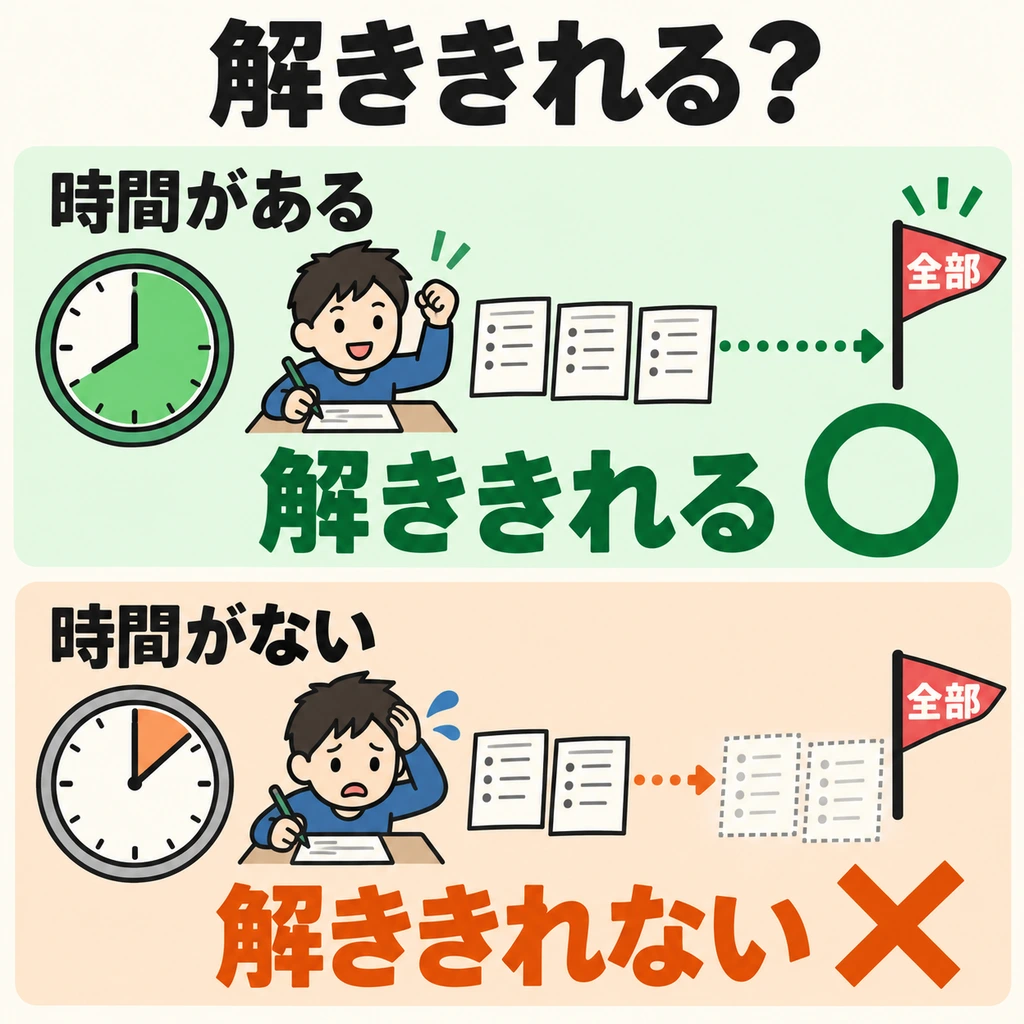
「きれる」 is the potential form. It focuses on whether you can finish everything, given conditions such as time.
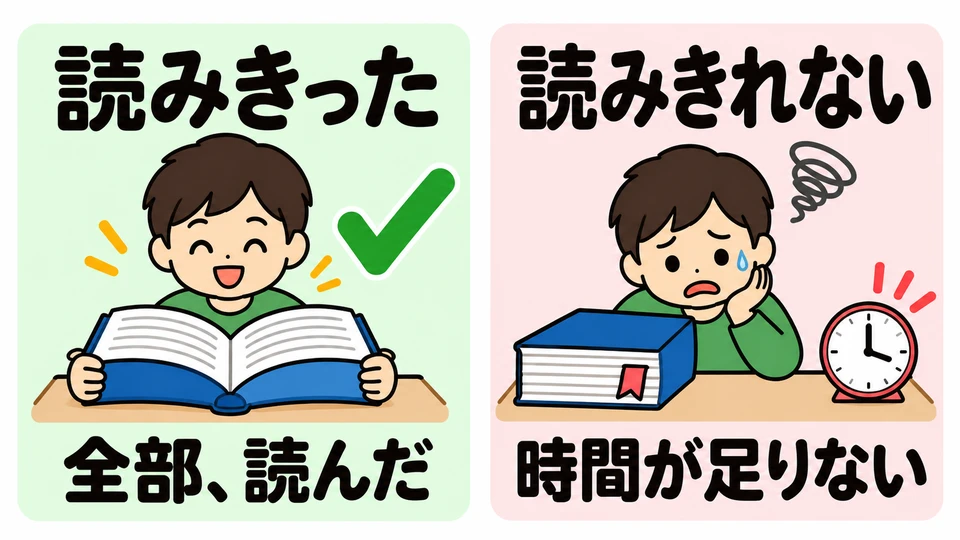
「きった」 means it has all been completed; 「きれない」 means you cannot complete it all.
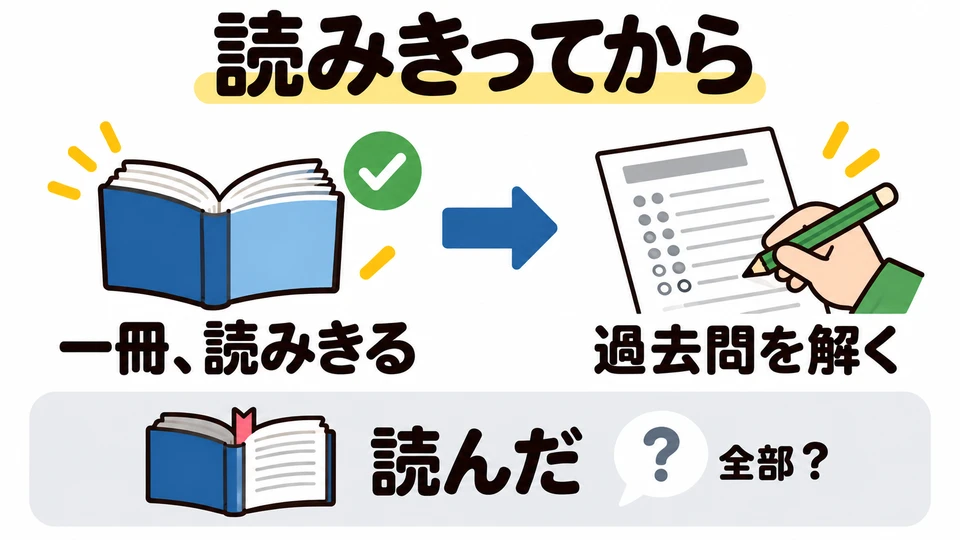
In the example, he finishes the entire book before starting past exam questions. 「読んだ」 alone does not necessarily mean he read the whole book.
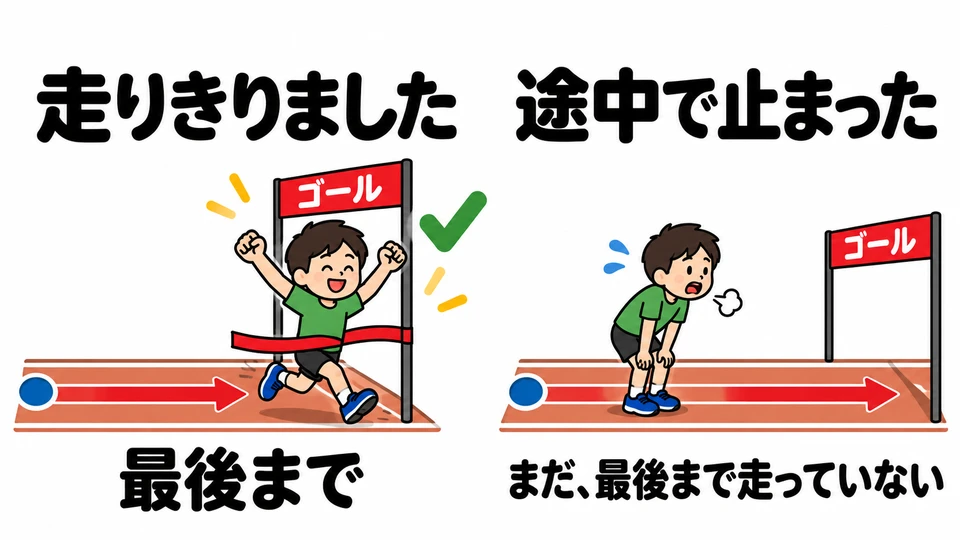
「走りきりました」 also emphasizes reaching the finish. Stopping halfway does not count as completing the run.
Example sentences
- 受験生jukenseiは、wa、最後saigoまでmadeあきらめずakiramezuにni走りhashiriきりました。kirimashita。
The examinee ran to the very end without giving up.
In a conversation

- A模擬試験の過去問は、もう全部解ききりましたか?
A: Have you already solved all the past mock exam questions?
- Bいいえ、苦手分野
Check yourself
Level 1 · Recognise
Which sentence is correct?
Level 1 · Recognise
Listen and choose the meaning
Level 2 · Build
Put the words in order
The examinee made it to the end without giving up.
Level 3 · Use
What goes in the blank?
受験生は、最後まであきらめずに____。
The examinee kept going without giving up and ran to the very end.
More grammar in this theme
- 〜きる・〜きれるfinish completely; be able to finish