
Japanese grammar · ≈ JLPT N3 · Intermediate 3
〜くらい・〜ぐらい~kurai / ~gurai
degree shown by a situation
Use 「〜くらい/〜ぐらい」 after a concrete situation to show the degree of an action or state.
How it works

Hearing 「すみません」 many times a day shows how often this phrase is used.
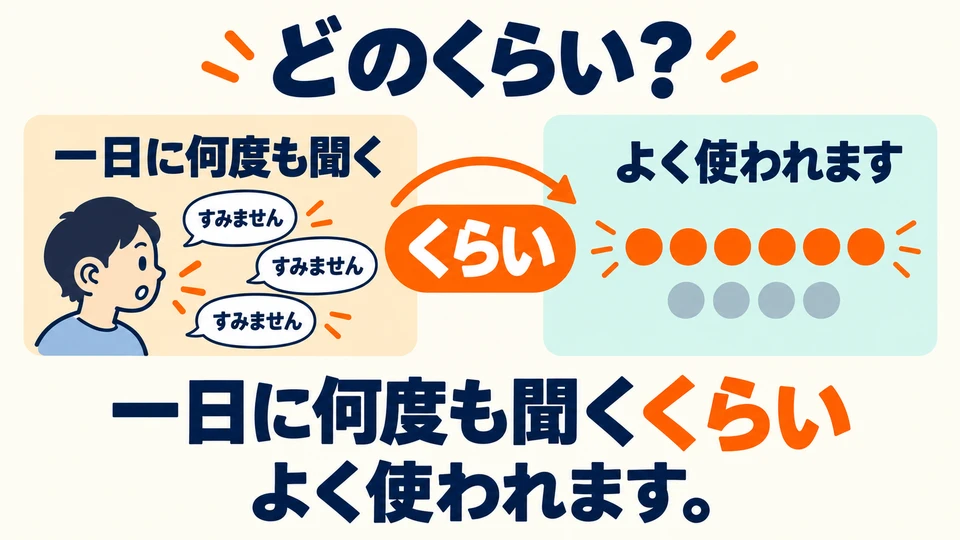
The concrete situation before 「くらい」 shows the degree of the action or state that follows.
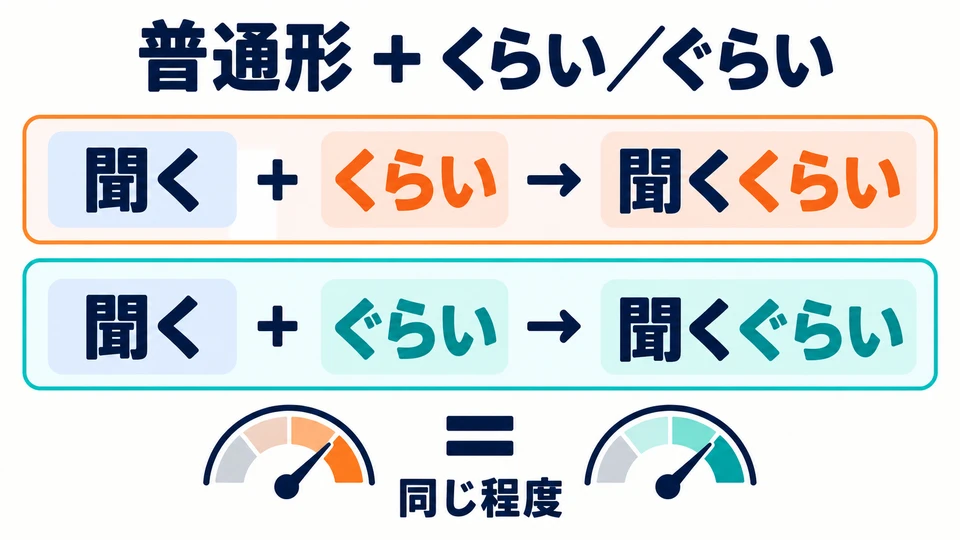
「聞く」 in the example is in the plain form. Changing it to 「聞くぐらい」 keeps the same meaning of degree.

「少し硬く感じる」 (“it feels a little stiff”) gauges how polite it is. Your own impression can also serve as a measure.
Example sentences
- 「すみません」sumimasenは、wa、一ichi日nichiにni何nan度doもmo聞くkikuくらいkuraiよくyoku
In a conversation

Check yourself
Level 1 · Recognise
Which sentence is correct?
Level 1 · Recognise
Listen and choose the meaning
Level 2 · Build
Put the words in order
"Sumimasen" is used so often that you can hear it many times in a single day.
Level 3 · Use
What goes in the blank?
「すみません」は、一日に何度も聞く____よく使われます。
"Sumimasen" is used so often that you can hear it many times a day.
More grammar in this theme
- 〜くらい・〜ぐらいdegree shown by a situation