JPEDLAB iconJPEDLAB
Save history

Create an account and play

Explore first, then save your progress whenever you are ready. No email address is required.

Start free
Read as articleCards
See the whole course›Intermediate 3›Richness and Beauty of Japanese Expression

Japanese grammar · ≈ JLPT N3 · Intermediate 3

〜くらい・〜ぐらい~kurai / ~gurai

degree shown by a situation

Use 「〜くらい/〜ぐらい」 after a concrete situation to show the degree of an action or state.

Start the interactive lessonIllustrated cards, audio and speaking practice

How it works

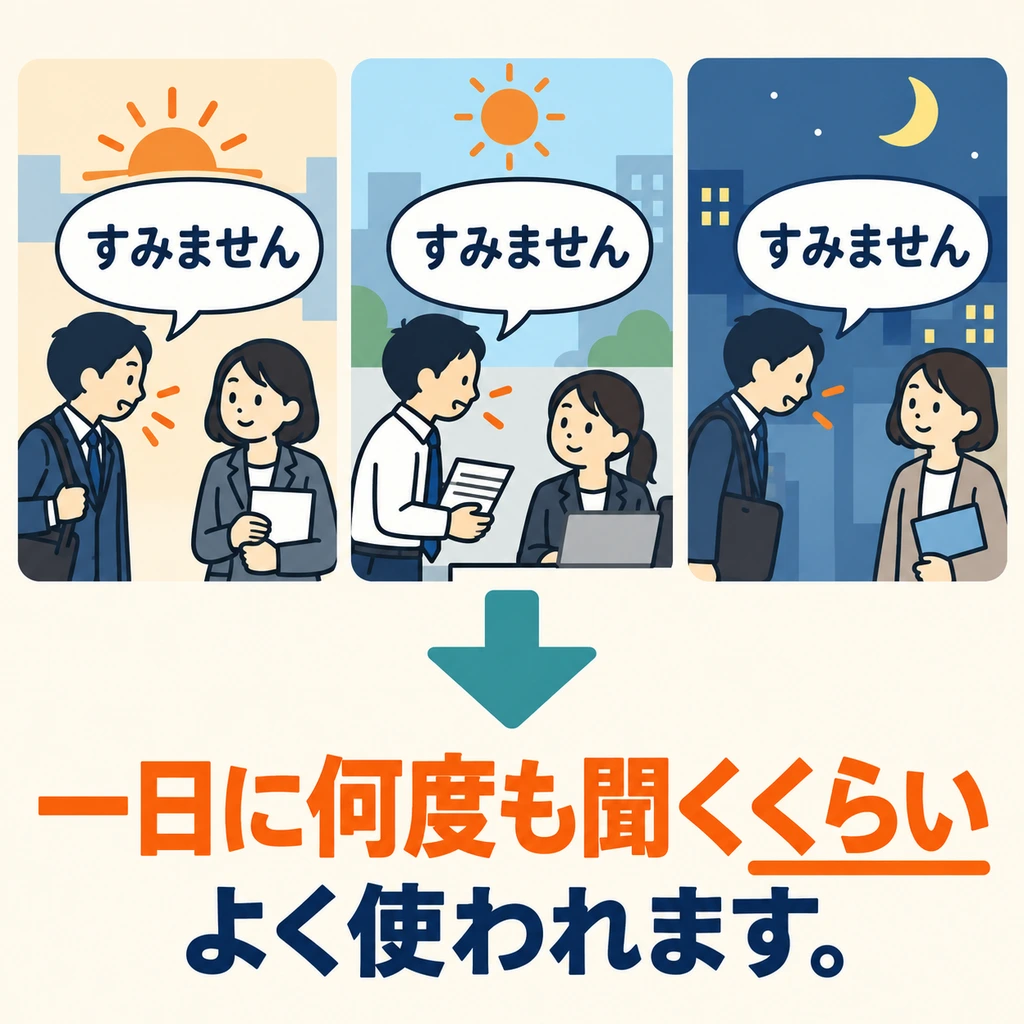
  1. Hearing 「すみません」 many times a day shows how often this phrase is used.
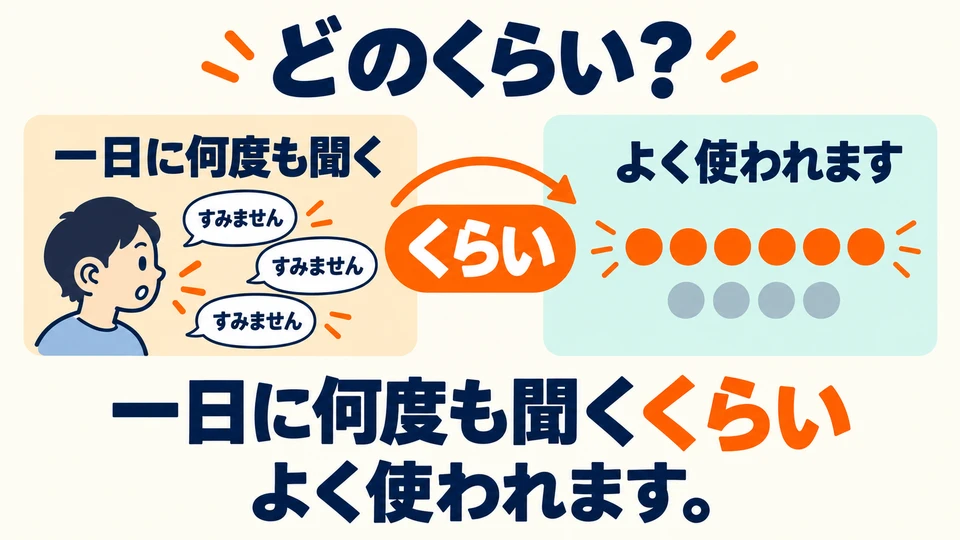
    Hearing 「すみません」 many times a day shows how often this phrase is used.

  2. The concrete situation before 「くらい」 shows the degree of the action or state that follows.
    The concrete situation before 「くらい」 shows the degree of the action or state that follows.

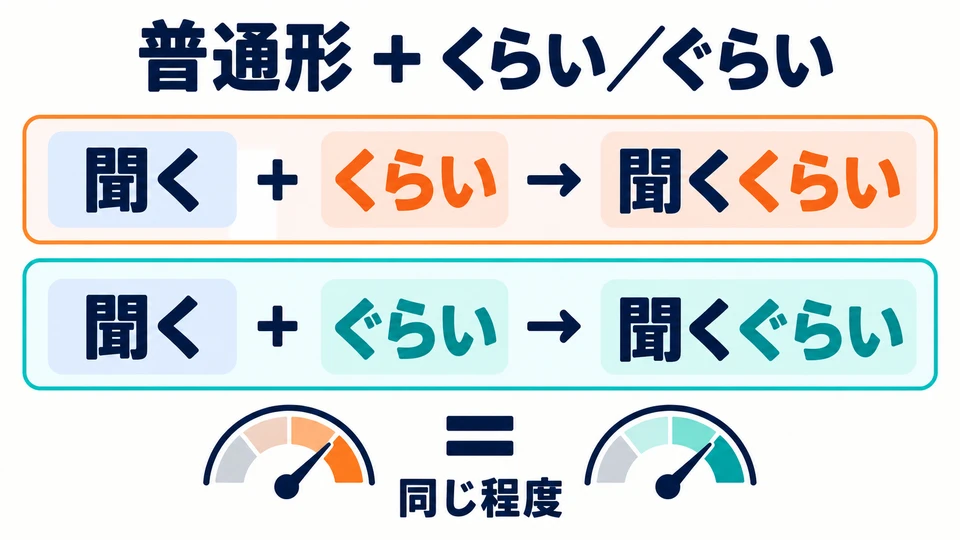
  3. 「聞く」 in the example is in the plain form. Changing it to 「聞くぐらい」 keeps the same meaning of degree.
    「聞く」 in the example is in the plain form. Changing it to 「聞くぐらい」 keeps the same meaning of degree.

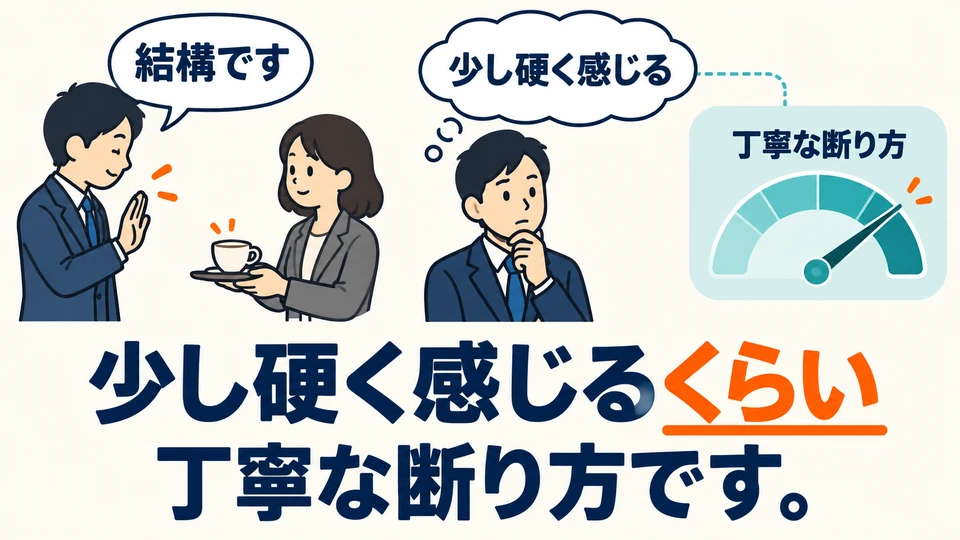
  4. 「少し硬く感じる」 (“it feels a little stiff”) gauges how polite it is. Your own impression can also serve as a measure.

    「少し硬く感じる」 (“it feels a little stiff”) gauges how polite it is. Your own impression can also serve as a measure.

Example sentences

  • 「すみません」すみませんsumimasenは、わ、wa、一いちichi日にちnichiにni何なんnan度どdoもmo聞くきくkikuくらいkuraiよくyoku

In a conversation

Check yourself

  1. Level 1 · Recognise

    Which sentence is correct?

  2. Level 1 · Recognise

    Listen and choose the meaning

  3. Level 2 · Build

    Put the words in order

    "Sumimasen" is used so often that you can hear it many times in a single day.

  4. Level 3 · Use

    What goes in the blank?

    「すみません」は、一日に何度も聞く____よく使われます。

    "Sumimasen" is used so often that you can hear it many times a day.

More grammar in this theme

  • 〜くらい・〜ぐらいdegree shown by a situation

Keep practising

Test your Japanese vocabulary12 adaptive questions, freeCheck your pronunciationRead aloud and get a scorePractise verb forms10-question conjugation quizSee the whole courseGrammar, vocabulary and quizzes by theme
使われます。つかわれます。tsukawaremasu。

'Sumimasen' is used so often that you hear it many times a day.

  • A
    最近、さいきん、職場しょくばでよく「よくお疲れ様おつかれさまです」ですって言いますいいますよね。

    A: People often say 'otsukaresama desu' at work lately, don't they?

  • B
    そうですね、一いち日にちに何十なんじゅう回かいも言ういうくらいよく使いますつかいますよ。

    B: That's true, it's used so much that we say it dozens of times a day.

  • 「結構です」けっこうですkekkoudesuは、わ、wa、少しすこしsukoshi硬くかたくkataku感じるかんじるkanjiruくらいkurai丁寧な断り方ていねいなことわりかたteineinakotowarikataです。desu。

    'Kekkou desu' is a polite way of declining, to the extent that it sounds a bit stiff.

  • A
    そんなに使うそんなにつかうんですね。決まりきまり文句もんくって大切だたいせつだと改めてあらためて感じました。かんじました。

    A: They use it that much? It made me realize once again how important set phrases are.

  • 〜がたいsubjectively hard to do
    〜のようにlike; in the manner of
    〜とともにalong with; as … changes
    〜をもとに(して)・〜をもとにしたbased on; using as a basis
    〜でしょう?seeking agreement
    〜っけrecalling and checking
    〜というわけだthat explains why
    〜っこないabsolutely impossible
    〜もん・〜んだもんemotional reason or plea
    〜ほど・〜くらい・〜ぐらいdegree shown by an example
    〜ところだったsomething almost happened
    〜てたまらないoverwhelmingly intense feeling
    〜というわけではないthat does not mean
    Previous〜というわけではない