
Japanese grammar · ≈ JLPT N2 · Intermediate 3
〜てたまらない~te tamaranai
overwhelmingly intense feeling
Use 「〜てたまらない」 for a personal feeling or physical sensation so intense it is hard to contain or bear.
How it works
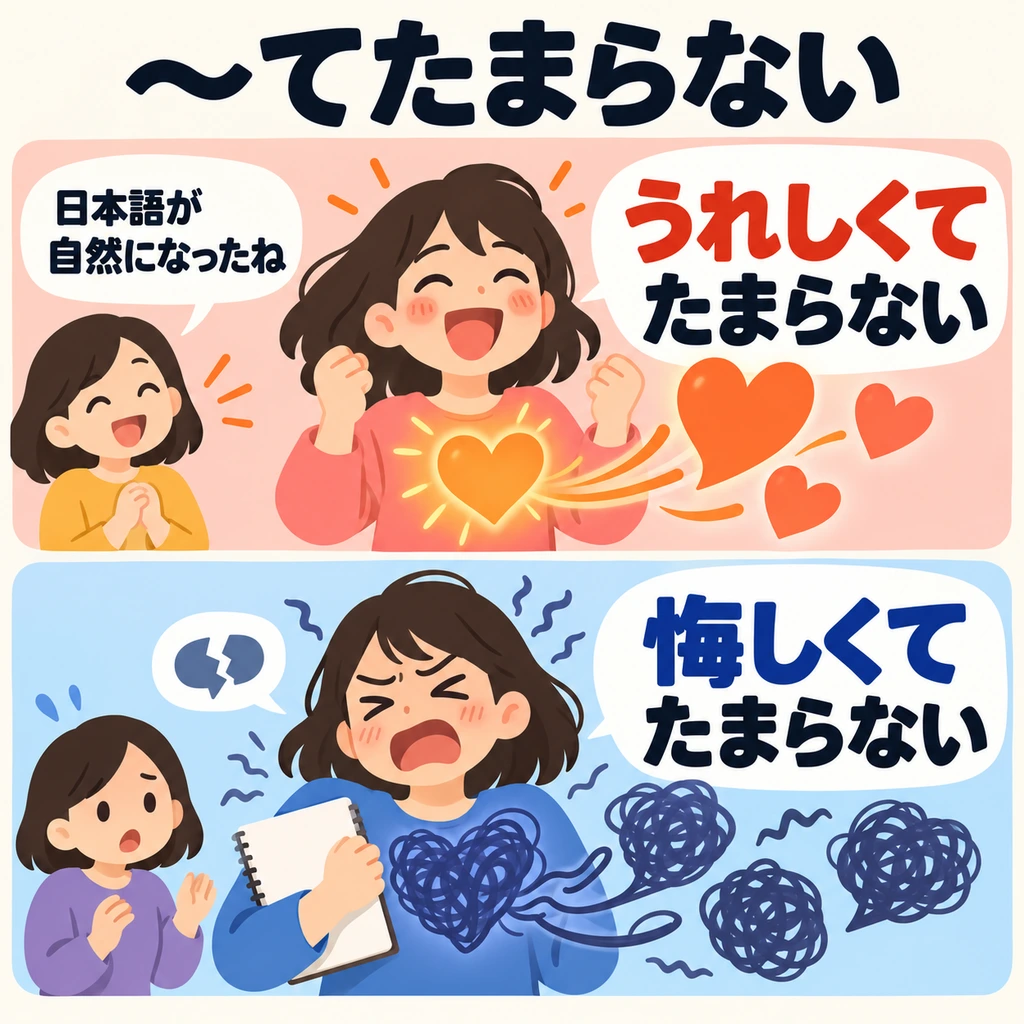
The feelings in the picture are overflowing: this expresses a feeling so intense you can hardly contain it.
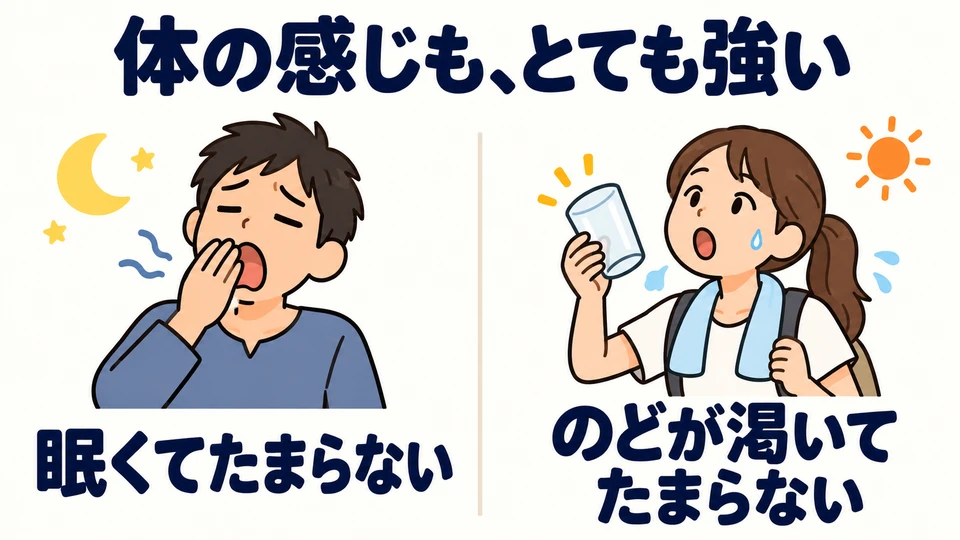
It also expresses physical sensations, such as thirst or tiredness, that are so strong they are hard to bear.
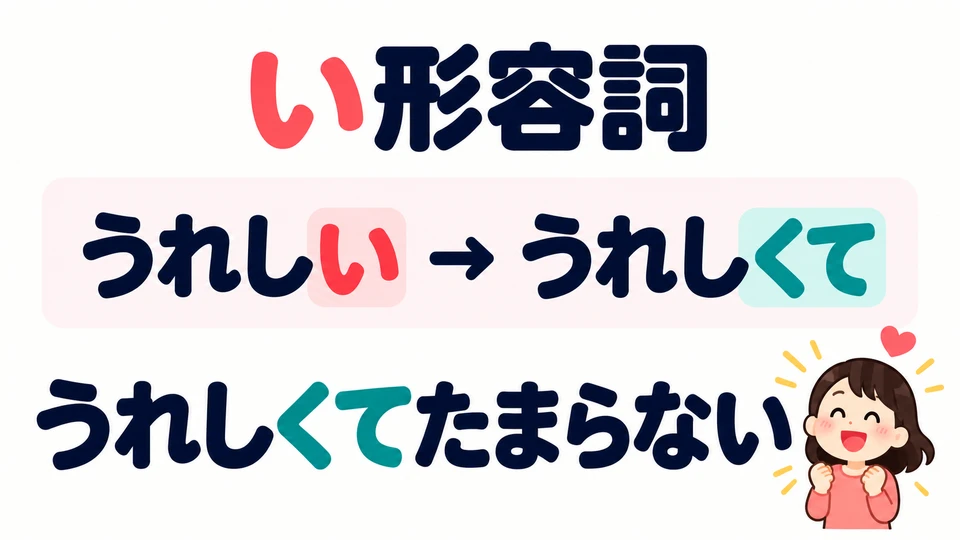
For い-adjectives, change 「い」 to 「くて」, as in 「うれしくてたまらない」.
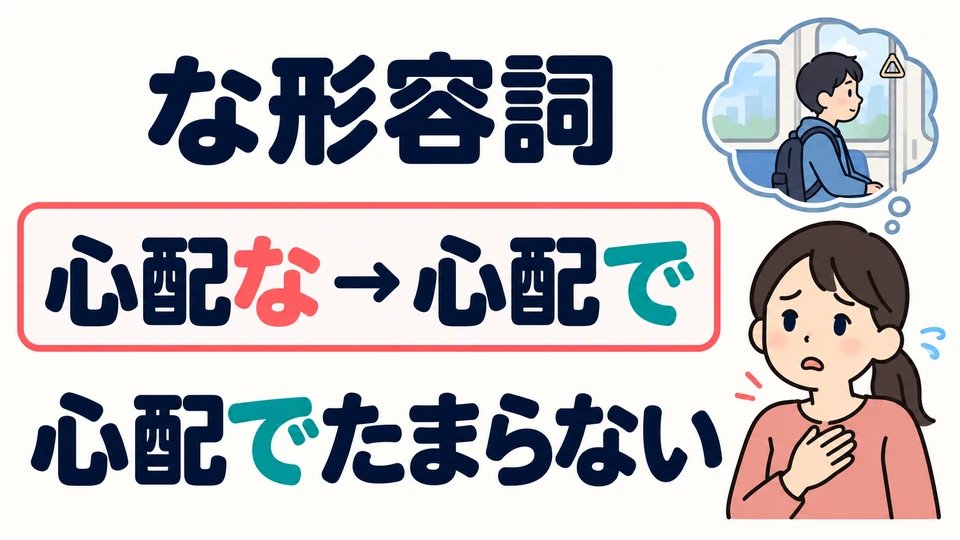
For な-adjectives, remove 「な」 and add 「でたまらない」 to express an intense feeling.

It mainly expresses how intensely you personally feel something, rather than giving an objective judgment about it.
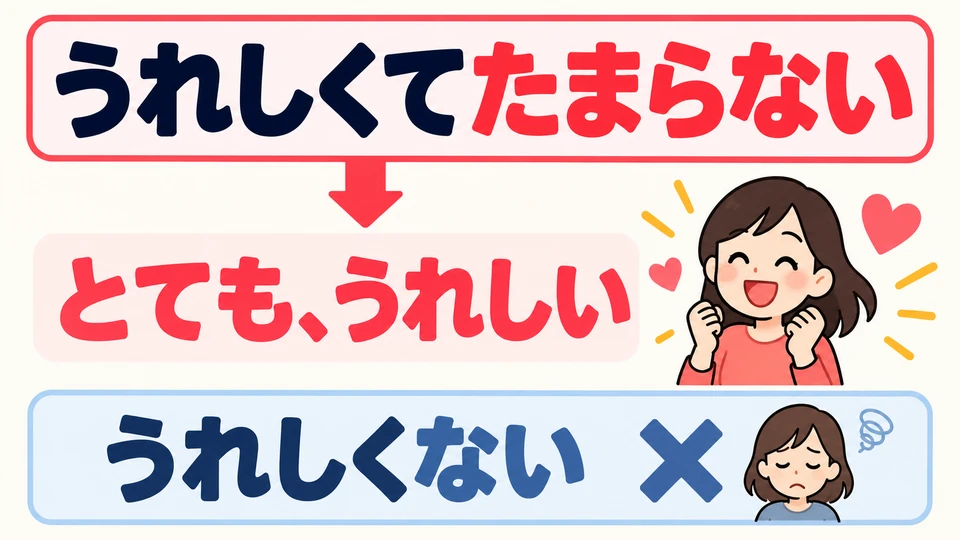
In the example, 「ない」 does not negate the happiness; the whole expression means being extremely happy.
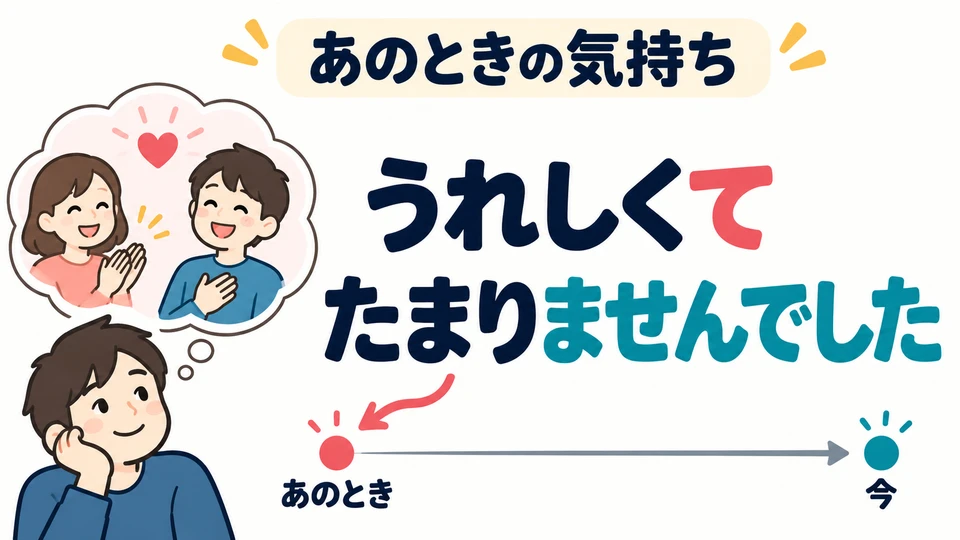
The examples use 「たまりませんでした」 to look back politely on the intense feelings at that time.
Example sentences
- 言いたいことiitaikotoがgaうまくumaku言えなくienakuて、te、もどかしくmodokashikuてteたまりませんでした。tamarimasendeshita。
I couldn't express what I wanted to say well, which was incredibly frustrating.
In a conversation

- A最近、日本語の勉強はどう?
A: How is your Japanese study going lately?
- B通じない場面が続いて、悔しく
Check yourself
Level 1 · Recognise
Which sentence is correct?
Level 1 · Recognise
Listen and choose the meaning
Level 2 · Build
Put the words in order
I couldn't say what I wanted to say well, and it was frustrating beyond words.
Level 3 · Use
What goes in the blank?
言いたいことがうまく言えなくて、もどかしくて____。
I can't say what I want to say well, and it's unbearably frustrating.
More grammar in this theme
- 〜てたまらないoverwhelmingly intense feeling