
JPEDLAB iconJPEDLAB
Save history

Create an account and play

Explore first, then save your progress whenever you are ready. No email address is required.

Start free
Read as articleCards
1/10

The feelings in the picture are overflowing: this expresses a feeling so intense you can hardly contain it.

››

Lesson notes · ≈ JLPT N2 · Intermediate 3

〜てたまらない~te tamaranai

overwhelmingly intense feeling

Use 「〜てたまらない」 for a personal feeling or physical sensation so intense it is hard to contain or bear.

How it works
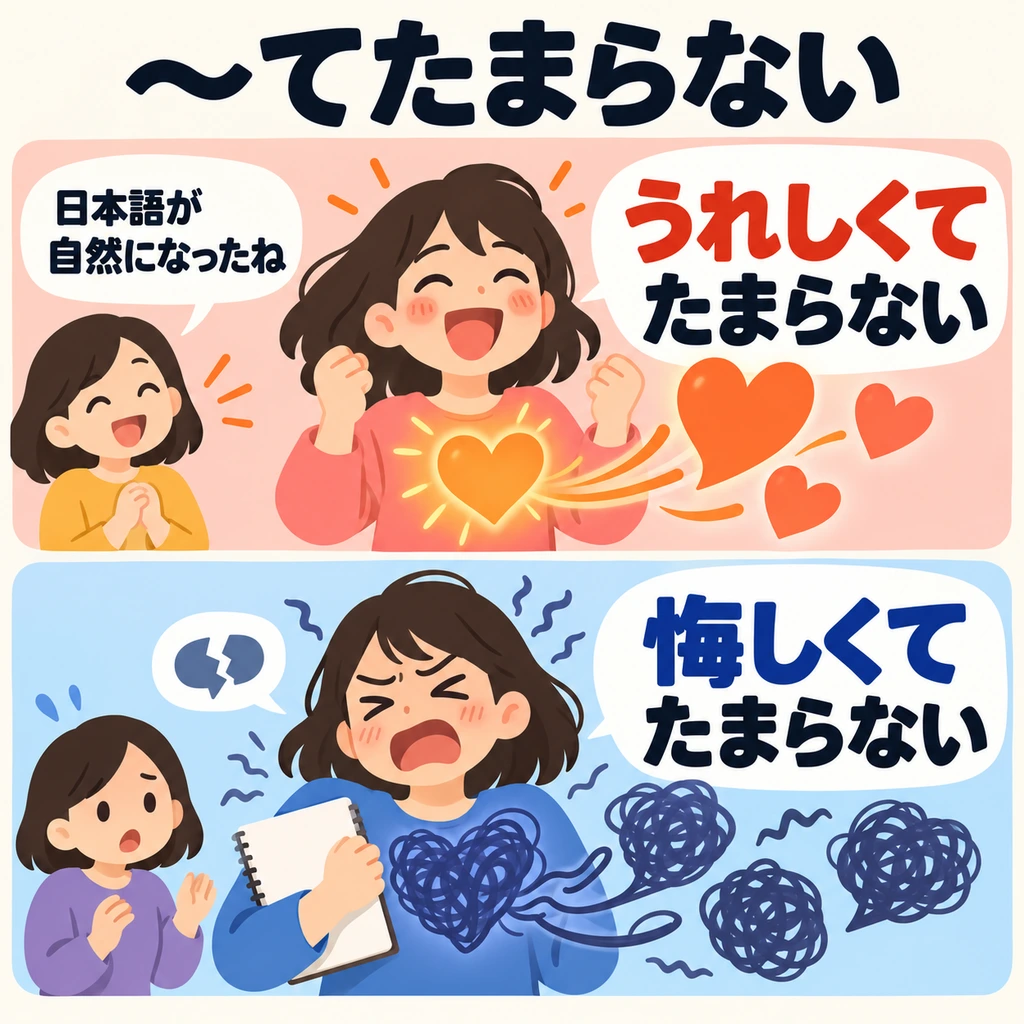
  1. The feelings in the picture are overflowing: this expresses a feeling so intense you can hardly contain it.
    The feelings in the picture are overflowing: this expresses a feeling so intense you can hardly contain it.

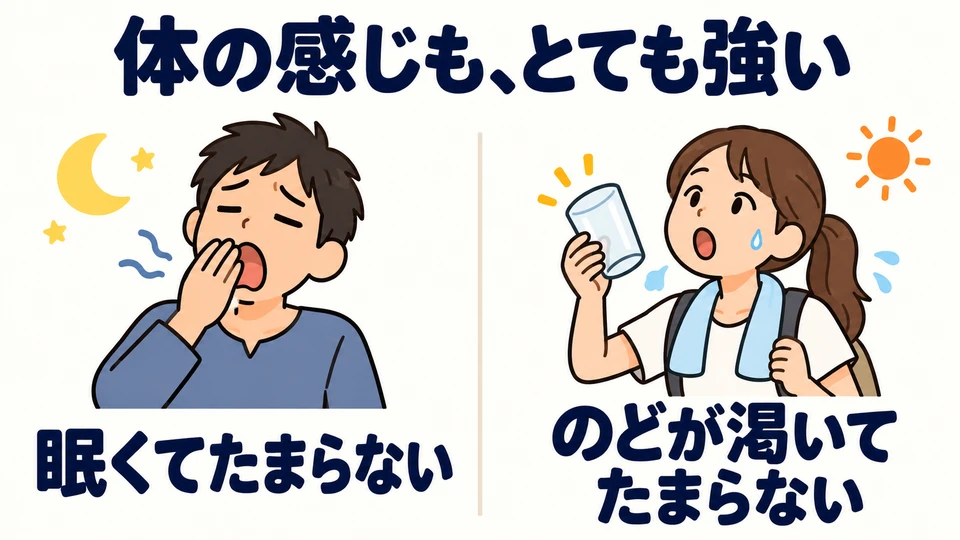
  2. It also expresses physical sensations, such as thirst or tiredness, that are so strong they are hard to bear.
    It also expresses physical sensations, such as thirst or tiredness, that are so strong they are hard to bear.

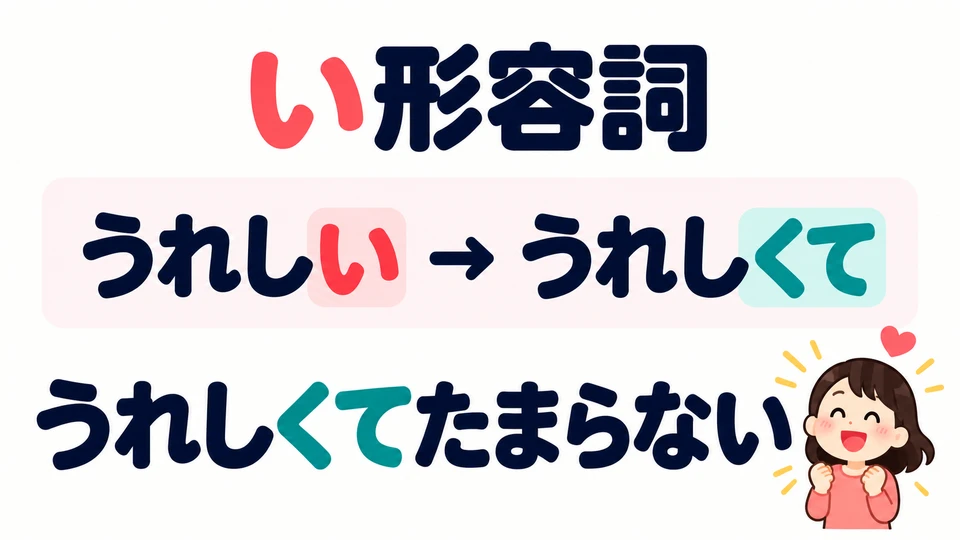
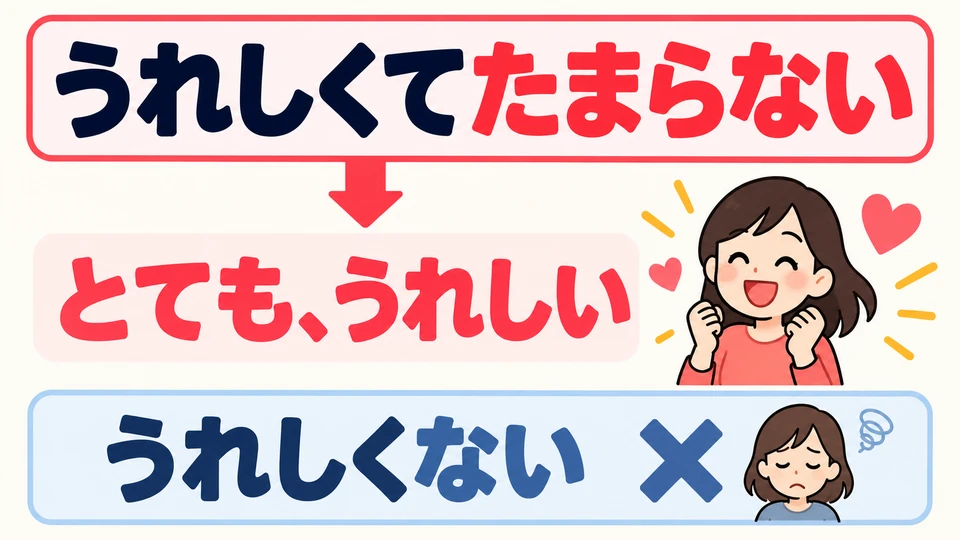
  3. For い-adjectives, change 「い」 to 「くて」, as in 「うれしくてたまらない」.
    For い-adjectives, change 「い」 to 「くて」, as in 「うれしくてたまらない」.

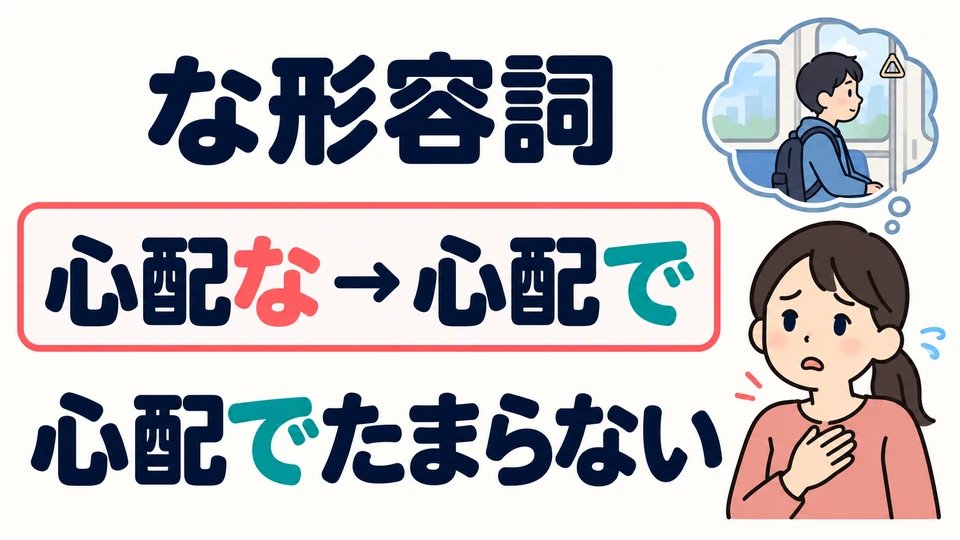
  4. For な-adjectives, remove 「な」 and add 「でたまらない」 to express an intense feeling.

    For な-adjectives, remove 「な」 and add 「でたまらない」 to express an intense feeling.

  5. It mainly expresses how intensely you personally feel something, rather than giving an objective judgment about it.
    It mainly expresses how intensely you personally feel something, rather than giving an objective judgment about it.

  6. In the example, 「ない」 does not negate the happiness; the whole expression means being extremely happy.

In the example, 「ない」 does not negate the happiness; the whole expression means being extremely happy.

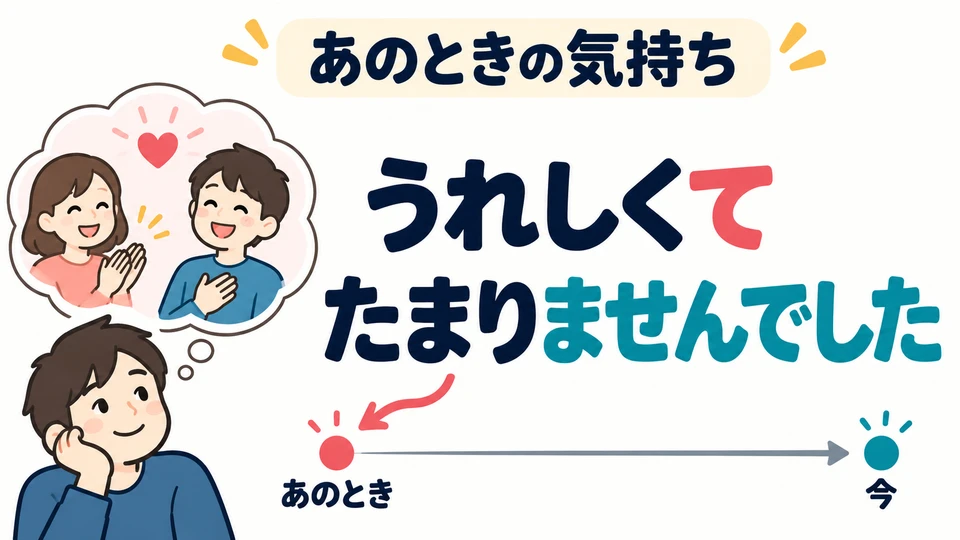
  • The examples use 「たまりませんでした」 to look back politely on the intense feelings at that time.

    The examples use 「たまりませんでした」 to look back politely on the intense feelings at that time.

  • Example sentences

    • 言いたいこといいたいことiitaikotoがgaうまくumaku言えなくいえなくienakuて、te、もどかしくmodokashikuてteたまりませんでした。tamarimasendeshita。

      I couldn't express what I wanted to say well, which was incredibly frustrating.

    • 友だちともだちtomodachiに「にni日本にほんnihon語ごgoがga自然になったしぜんになったshizenninattaね」ねneとto言われいわれiwareて、te、うれしくureshikuてteたまりませんでした。tamarimasendeshita。

      When my friend told me, "Your Japanese has become natural," I was so happy I couldn't help it.

    In a conversation

    • A
      最近、さいきん、日本にほん語ごの勉強べんきょうはわどう?どう

      A: How is your Japanese study going lately?

    • B
      通じない場面つうじないばめんが続いつづいて、悔しくくやしくてたまらないよ。でも諦めたくない。あきらめたくない。

      B: I keep having situations where I'm not understood, and it's so frustrating. But I don't want to give up.

    • A
      その気持ちきもちがあれば絶対ぜったいに伸びるのびるよ。一緒いっしょに練習れんしゅうしよう。

      A: With that attitude, you'll definitely improve. Let's practice together.

    Check yourself

    1. Level 1 · Recognise

      Which sentence is correct?

    2. Level 1 · Recognise

      Listen and choose the meaning

    3. Level 2 · Build

      Put the words in order

      I couldn't say what I wanted to say well, and it was frustrating beyond words.

    4. Level 3 · Use

      What goes in the blank?

      言いたいことがうまく言えなくて、もどかしくて____。

      I can't say what I want to say well, and it's unbearably frustrating.

    More grammar in this theme

    • 〜がたいsubjectively hard to do
    • 〜のようにlike; in the manner of
    • 〜とともにalong with; as … changes
    • 〜をもとに(して)・〜をもとにしたbased on; using as a basis
    • 〜でしょう?seeking agreement
    • 〜っけrecalling and checking
    • 〜というわけだthat explains why
    • 〜っこないabsolutely impossible
    • 〜もん・〜んだもんemotional reason or plea
    • 〜ほど・〜くらい・〜ぐらいdegree shown by an example
    • 〜ところだったsomething almost happened
    • 〜てたまらないoverwhelmingly intense feeling
    • 〜というわけではないthat does not mean
    • 〜くらい・〜ぐらいdegree shown by a situation
    Previous〜ところだったNext〜というわけではない

    Keep practising

    Test your Japanese vocabulary12 adaptive questions, freeCheck your pronunciationRead aloud and get a scorePractise verb forms10-question conjugation quizSee the whole courseGrammar, vocabulary and quizzes by theme
    See the whole course
    Intermediate 3
    Richness and Beauty of Japanese Expression