
Japanese grammar · ≈ JLPT N2 · Intermediate 3
〜というわけだ~to iu wake da
that explains why
Use 「〜というわけだ」 to draw a conclusion or show you understand why something follows from the explanation.
How it works
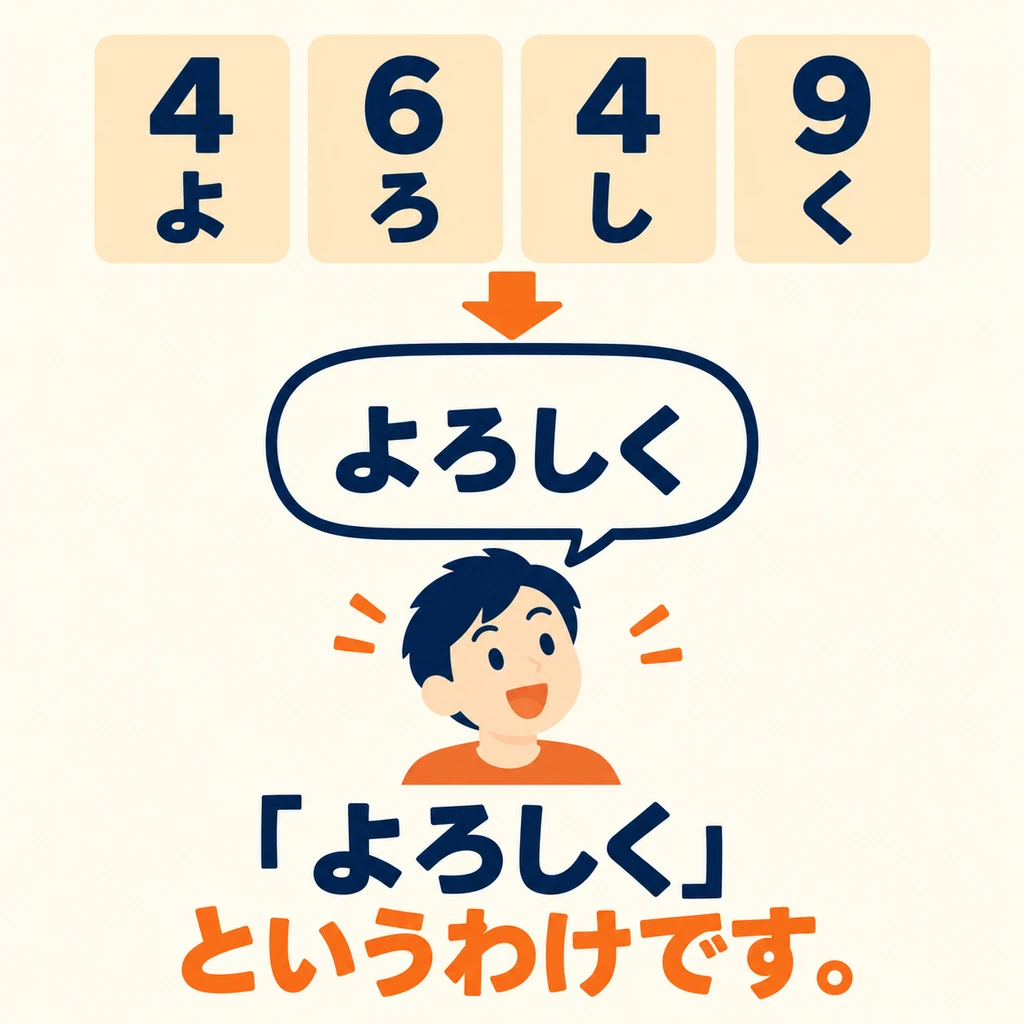
Join the number readings to form “よろしく”, then use this pattern to sum up the explanation.
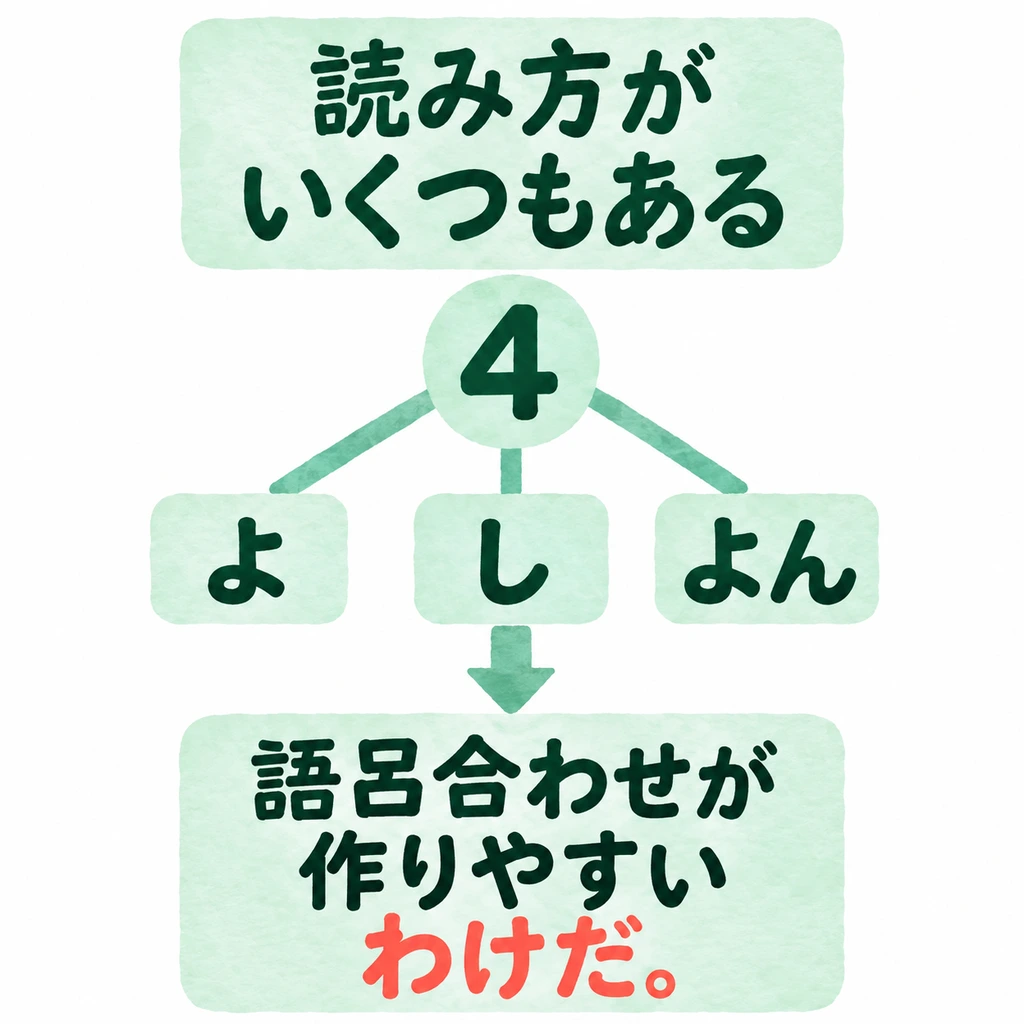
First learn that numbers have several readings, then naturally conclude that this makes sound-based wordplay easy.
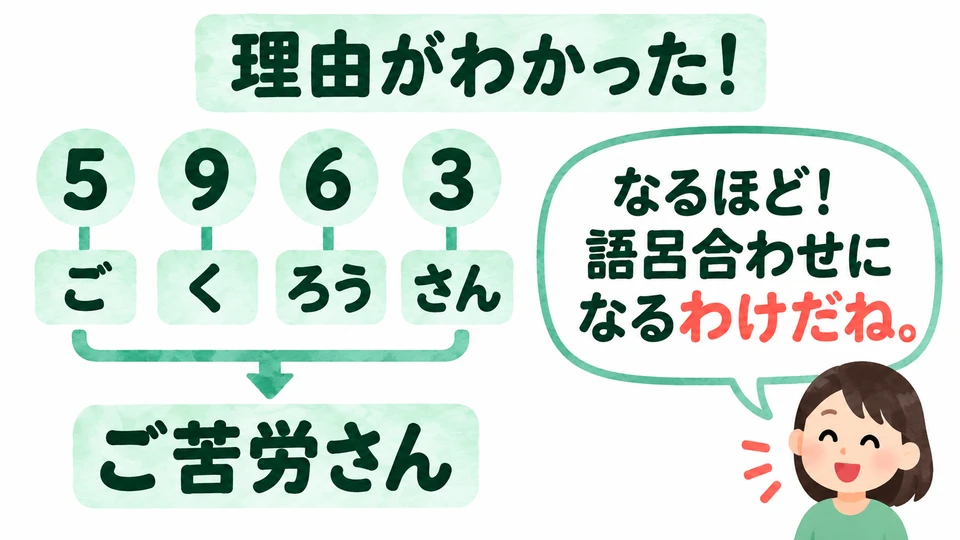
In the conversation, “わけだね” shows understanding after learning how different number readings form words.
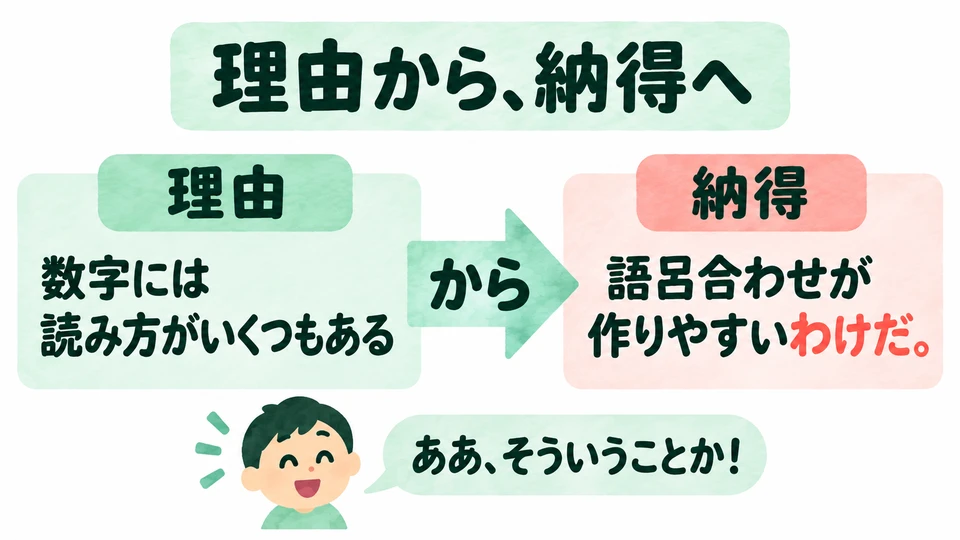
In the example, the reason comes before “から”; “わけだ” afterward expresses “Ah, that explains it.”
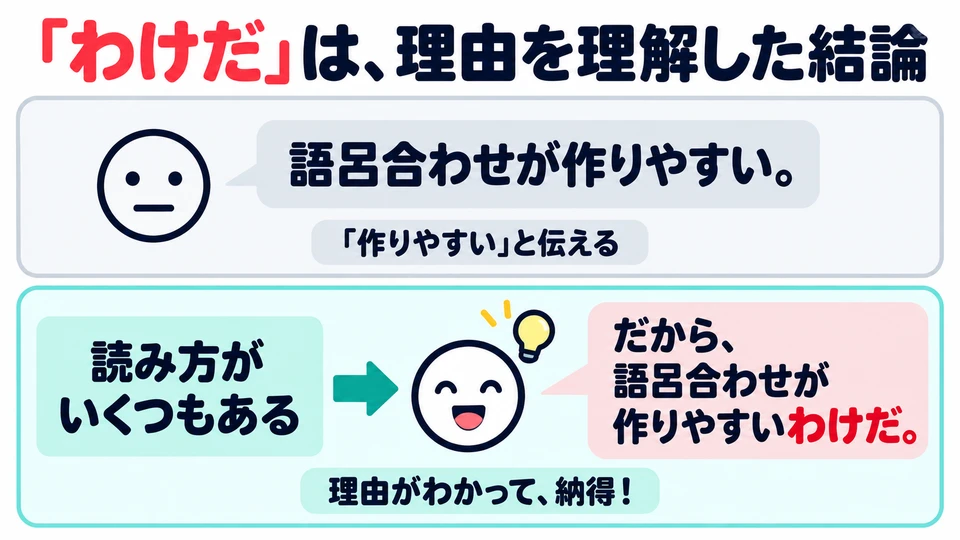
Here, the multiple readings explain why sound-based wordplay is easy to create; it is more than just a feeling that it is easy.
Example sentences
- 「4」yonは「waよ」、「yo、6」rokuは「waろ」、「ro、4」yonは「waし」、「shi、9」kyuu
In a conversation

Check yourself
Level 1 · Recognise
Which sentence is correct?
Level 1 · Recognise
Listen and choose the meaning
Level 2 · Build
Put the words in order
In Japanese, a single kanji or number can have multiple readings, which makes it easier to create mnemonic wordplay.
Level 3 · Use
What goes in the blank?
日本語では、一つの漢字や数字に複数の読み方があるから、語呂合わせが作りやすい____。
In Japanese, a single kanji or number can have multiple readings, so mnemonics are easy to make.
More grammar in this theme
- 〜というわけだthat explains why