
Japanese grammar · ≈ JLPT N3 · Intermediate 3
〜っけ~kke
recalling and checking
Use 「〜っけ」 casually to check something you knew before but cannot clearly remember now.
How it works
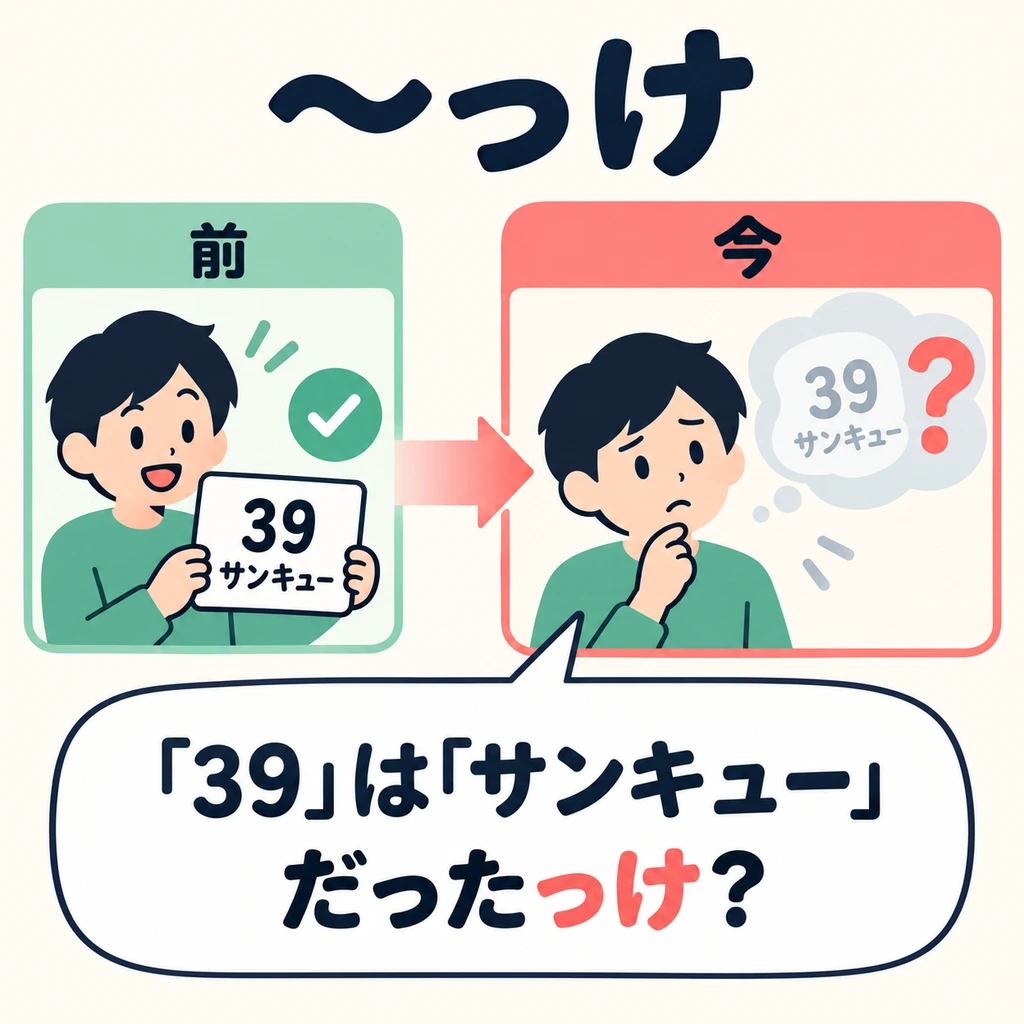
He knew it before, but now his memory is hazy. What is he trying to check?
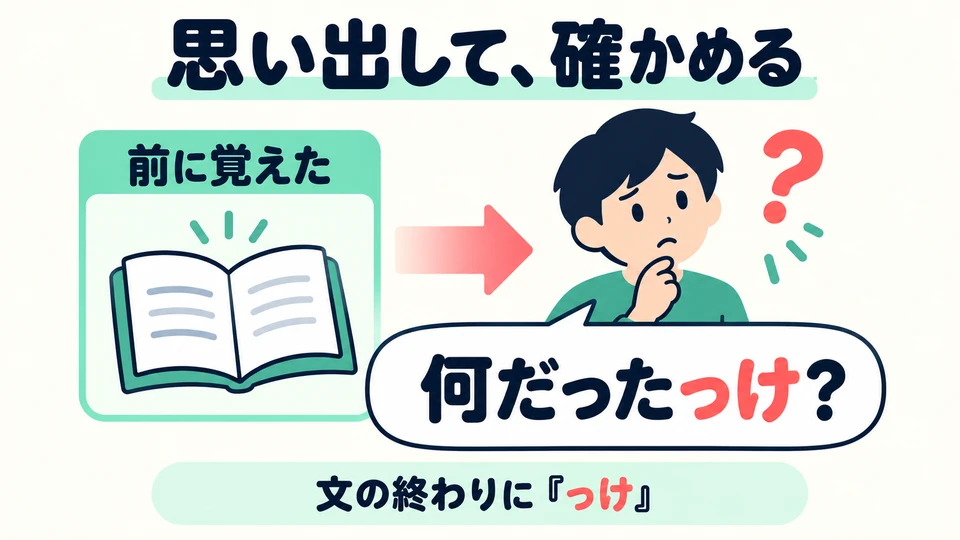
Use 「っけ」 at the end of a sentence to recall and check something you have forgotten or cannot remember clearly.
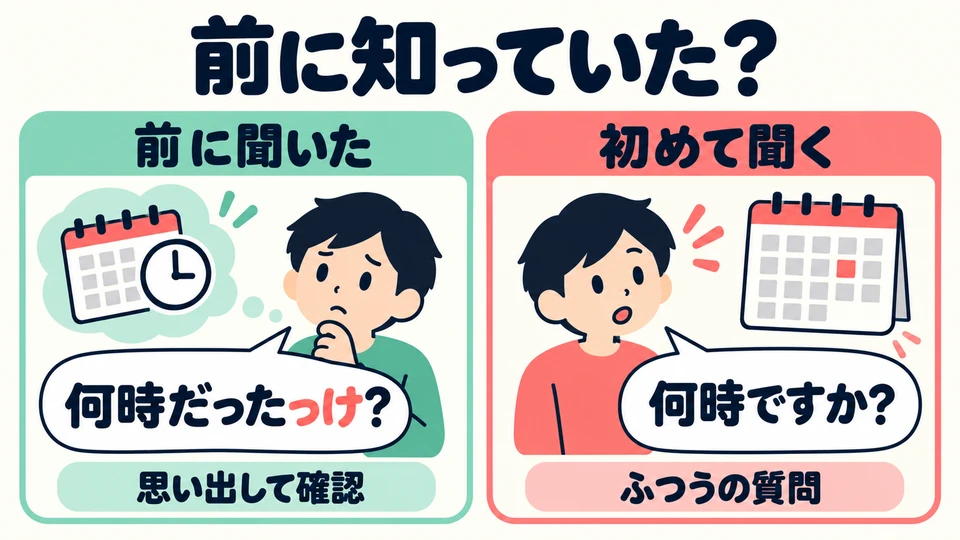
The key is that you knew it before. If you have no idea and are asking for the first time, use a regular question.
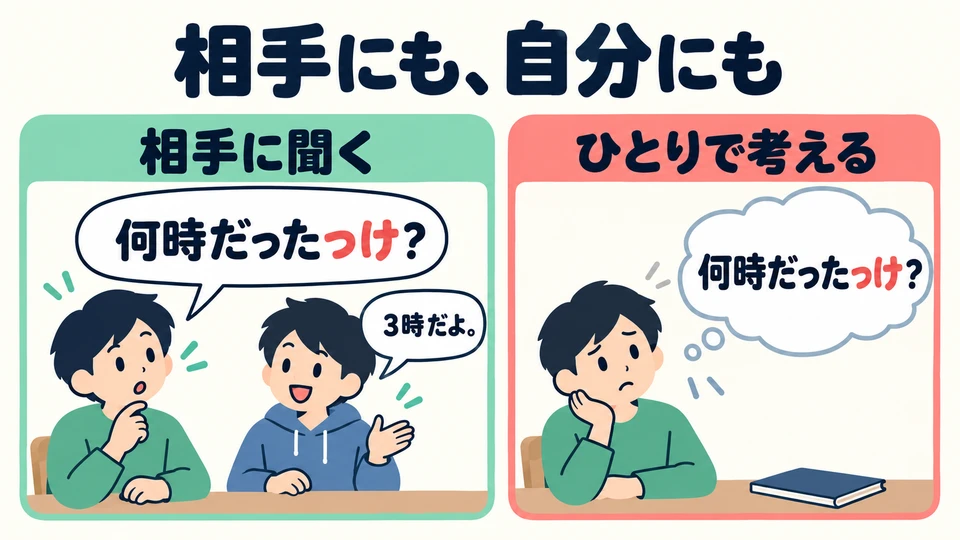
You can ask someone to help you check, or say it to yourself while trying to recall the answer.
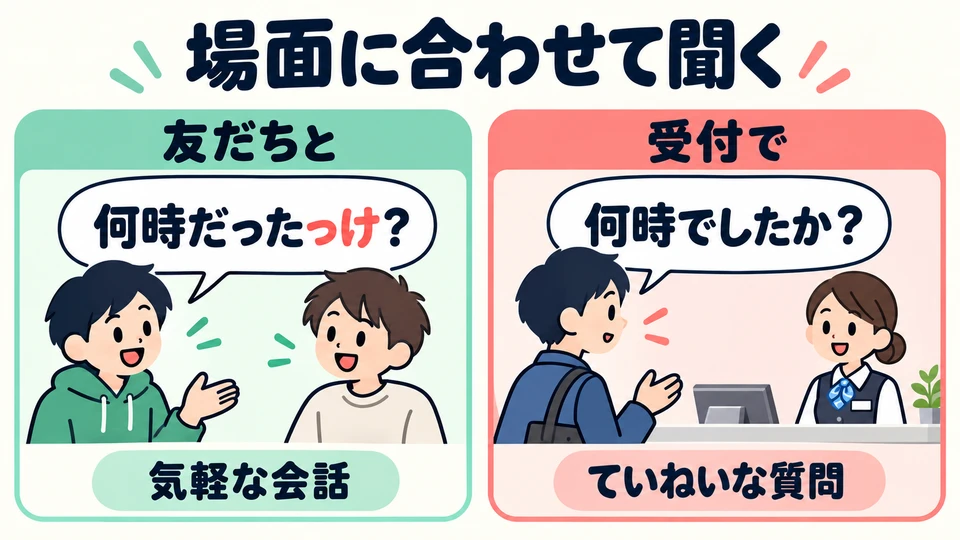
「っけ」 is common in casual speech. In formal situations, use a polite way of asking instead.
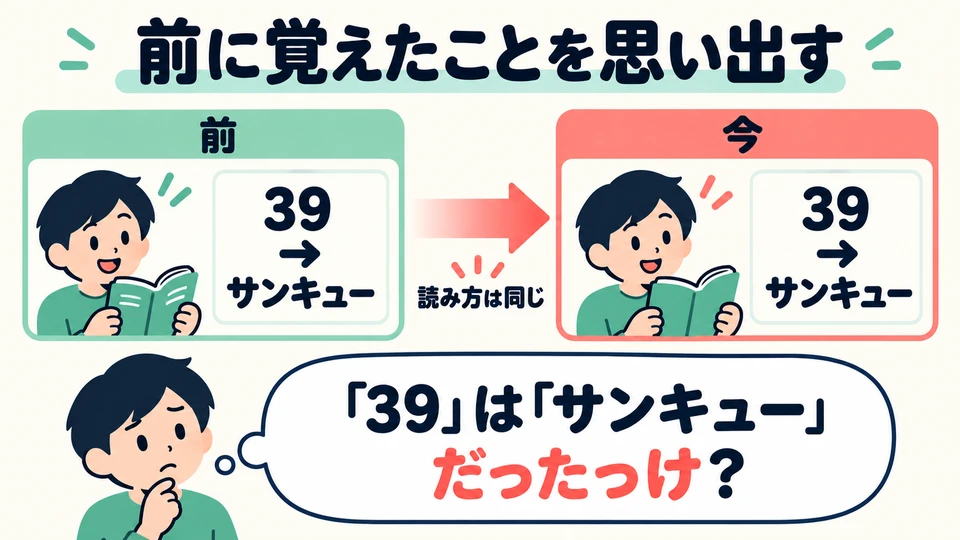
The past tense in these two sentences shows you are recalling something you learned before. It does not mean the readings have changed since then.
Example sentences
- 「39」sanjuukyuuは「waサンキュー」sankyuuだったdattaっけ。kke。
Was "39" read as "thank you"?
- 「1122」senhyakunijuuniは「
In a conversation

- A「4」と「9」を避ける理由、何だったっけ?
A: What was the reason for avoiding "4" and "9" again?
- B「し」と「く」
Check yourself
Level 1 · Recognise
Which sentence is correct?
Level 1 · Recognise
Listen and choose the meaning
Level 2 · Build
Put the words in order
"39" was read as "thank you," right?
Level 3 · Use
What goes in the blank?
「39」は「サンキュー」だった____。
"39" was read as "thank you," right?
More grammar in this theme
- 〜っけrecalling and checking