
JPEDLAB iconJPEDLAB
Save history

Create an account and play

Explore first, then save your progress whenever you are ready. No email address is required.

Start free
Read as articleCards
1/9

He knew it before, but now his memory is hazy. What is he trying to check?

››

Lesson notes · ≈ JLPT N3 · Intermediate 3

〜っけ~kke

recalling and checking

Use 「〜っけ」 casually to check something you knew before but cannot clearly remember now.

How it works
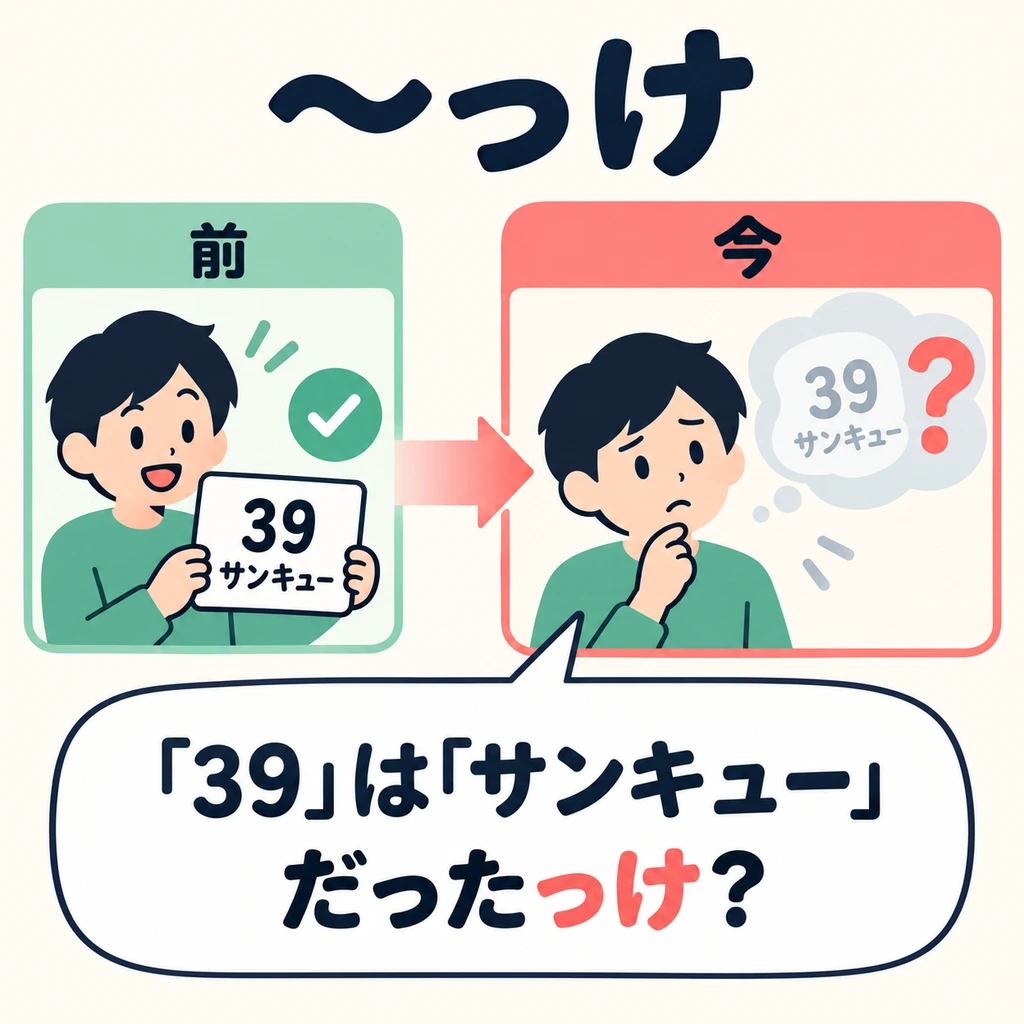
  1. He knew it before, but now his memory is hazy. What is he trying to check?
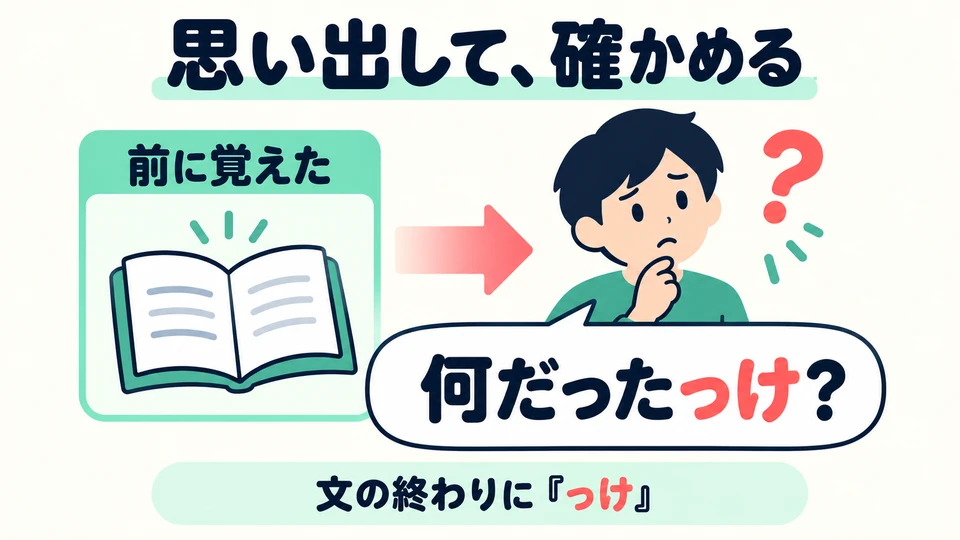
    He knew it before, but now his memory is hazy. What is he trying to check?

  2. Use 「っけ」 at the end of a sentence to recall and check something you have forgotten or cannot remember clearly.
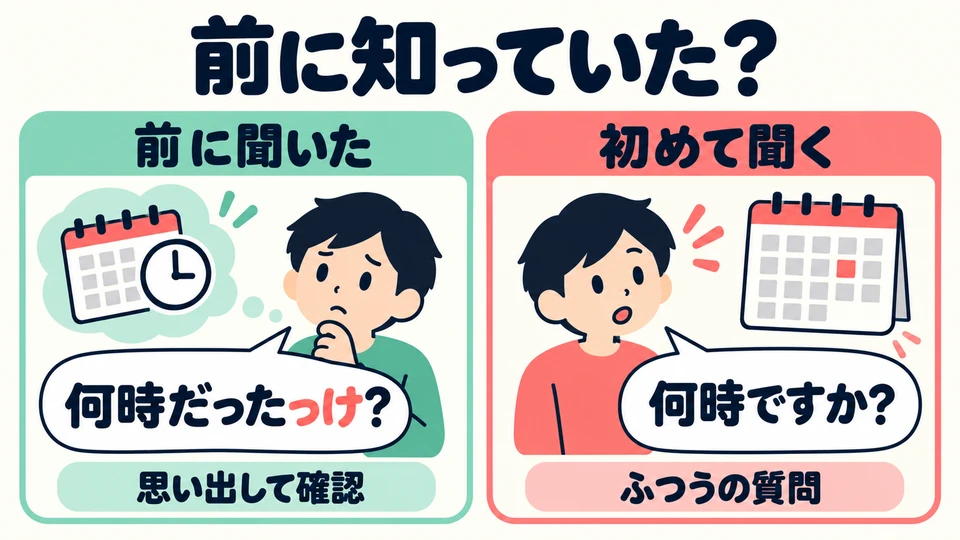
    Use 「っけ」 at the end of a sentence to recall and check something you have forgotten or cannot remember clearly.

  3. The key is that you knew it before. If you have no idea and are asking for the first time, use a regular question.
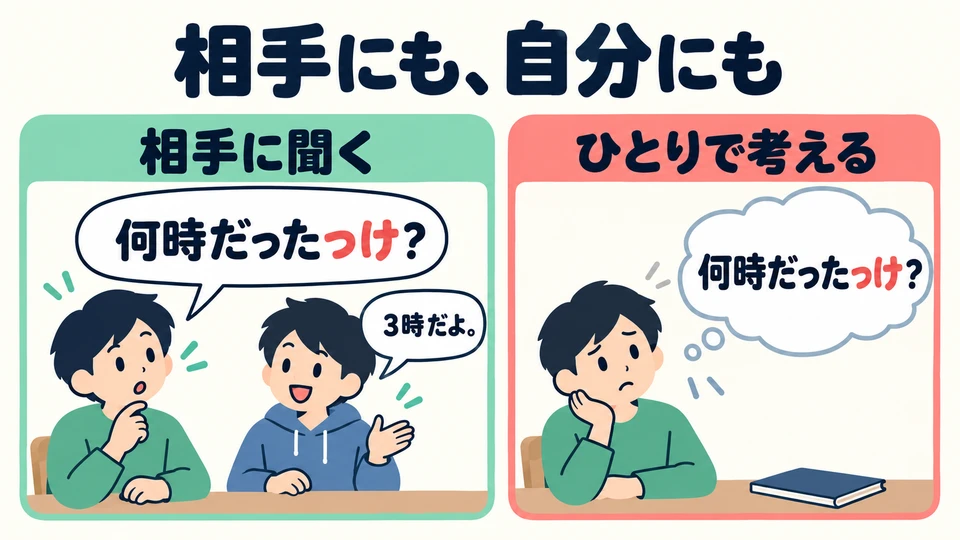
    The key is that you knew it before. If you have no idea and are asking for the first time, use a regular question.

  4. You can ask someone to help you check, or say it to yourself while trying to recall the answer.
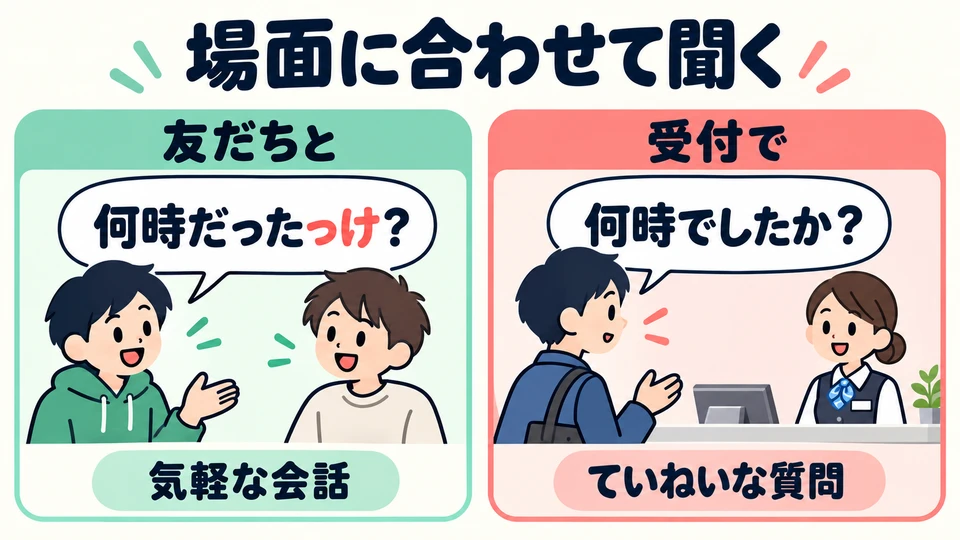
    You can ask someone to help you check, or say it to yourself while trying to recall the answer.

  5. 「っけ」 is common in casual speech. In formal situations, use a polite way of asking instead.
    「っけ」 is common in casual speech. In formal situations, use a polite way of asking instead.

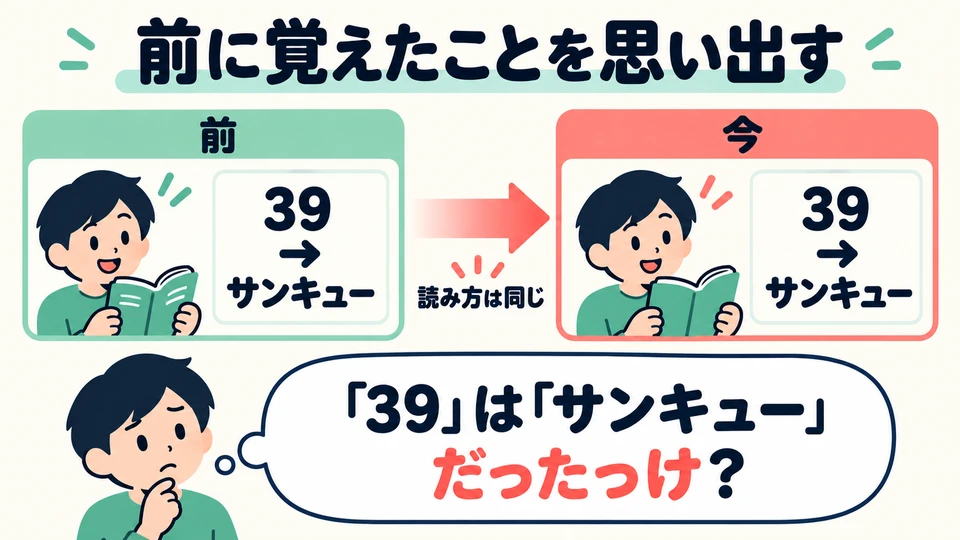
  6. The past tense in these two sentences shows you are recalling something you learned before. It does not mean the readings have changed since then.

The past tense in these two sentences shows you are recalling something you learned before. It does not mean the readings have changed since then.

Example sentences

  • 「39」さんじゅうきゅうsanjuukyuuは「わwaサンキュー」さんきゅーsankyuuだったdattaっけ。kke。

    Was "39" read as "thank you"?

  • 「1122」せんひゃくにじゅうにsenhyakunijuuniは「わwaいいiiふうふ」ふうふfuufuとto読むよむyomuんnだったdattaっけ。kke。

    Was "1122" read as "ii-fuufu" (good couple)?

In a conversation

  • A
    「4」よんと「と9」きゅうを避けるさける理由、りゆう、何なんだったっけ?っけ

    A: What was the reason for avoiding "4" and "9" again?

  • B
    「し」しと「とく」くで「で死苦」しくに聞こえるきこえるから縁起えんぎが悪いわるいんだよ。

    B: Because "shi" and "ku" sound like "death" and "suffering," so it's unlucky.

  • A
    そうか、音おとの響きひびきが不吉ふきつなわけか。なぜか忘れにくいわすれにくい話はなしだね。

    A: I see, so the pronunciation itself is unlucky. For some reason, it's hard to forget.

Check yourself

  1. Level 1 · Recognise

    Which sentence is correct?

  2. Level 1 · Recognise

    Listen and choose the meaning

  3. Level 2 · Build

    Put the words in order

    "39" was read as "thank you," right?

  4. Level 3 · Use

    What goes in the blank?

    「39」は「サンキュー」だった____。

    "39" was read as "thank you," right?

More grammar in this theme

  • 〜がたいsubjectively hard to do
  • 〜のようにlike; in the manner of
  • 〜とともにalong with; as … changes
  • 〜をもとに(して)・〜をもとにしたbased on; using as a basis
  • 〜でしょう?seeking agreement
  • 〜っけrecalling and checking
  • 〜というわけだthat explains why
  • 〜っこないabsolutely impossible
  • 〜もん・〜んだもんemotional reason or plea
  • 〜ほど・〜くらい・〜ぐらいdegree shown by an example
  • 〜ところだったsomething almost happened
  • 〜てたまらないoverwhelmingly intense feeling
  • 〜というわけではないthat does not mean
  • 〜くらい・〜ぐらいdegree shown by a situation
Previous〜でしょう?Next〜というわけだ

Keep practising

Test your Japanese vocabulary12 adaptive questions, freeCheck your pronunciationRead aloud and get a scorePractise verb forms10-question conjugation quizSee the whole courseGrammar, vocabulary and quizzes by theme
See the whole course
Intermediate 3
Richness and Beauty of Japanese Expression