
Japanese grammar · ≈ JLPT N2 · Intermediate 3
〜っこない~kkonai
absolutely impossible
Use 「〜っこない」 in everyday speech to firmly say that something is impossible, based on your judgment.
How it works
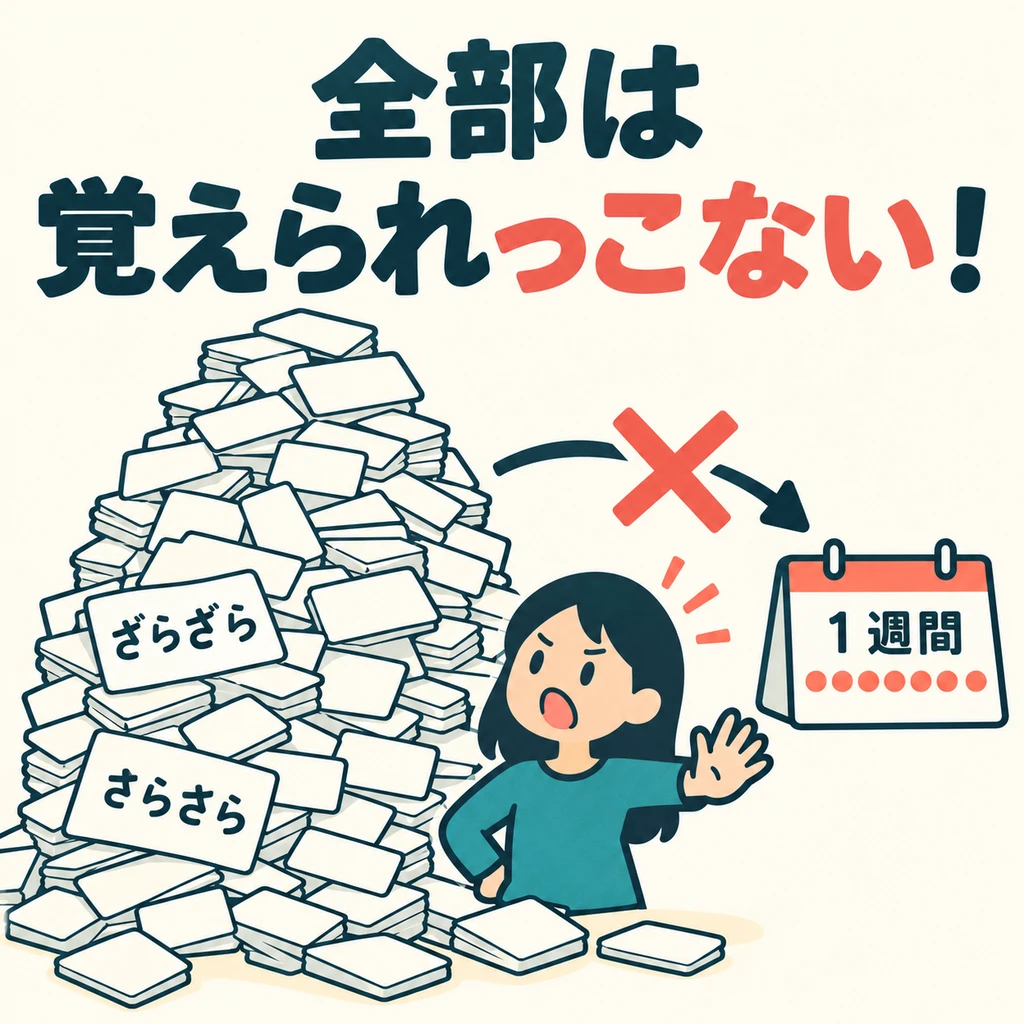
Can you memorize this many words in one week? Look at the picture and think about why the speaker is certain it cannot be done.
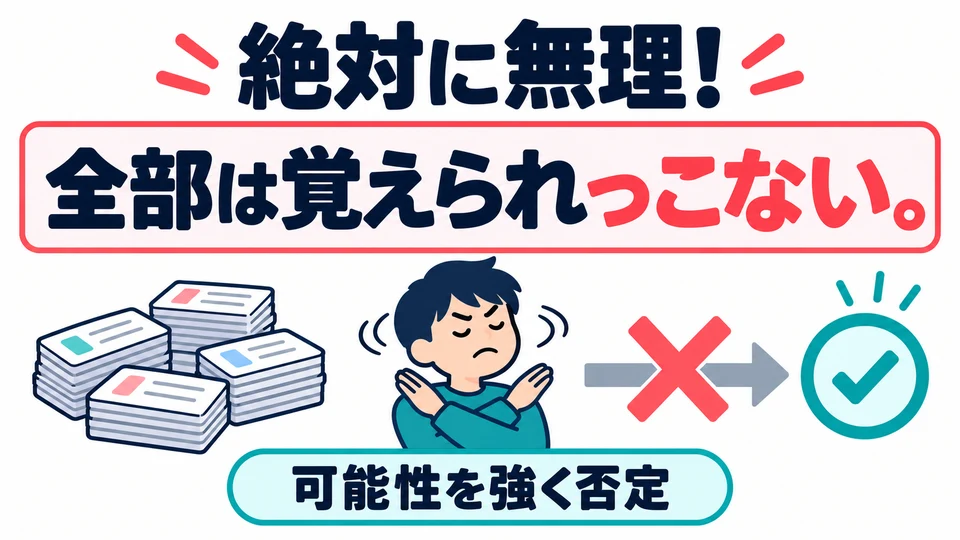
「っこない」 strongly rules out a possibility. It means “there is absolutely no way,” with a very firm tone.
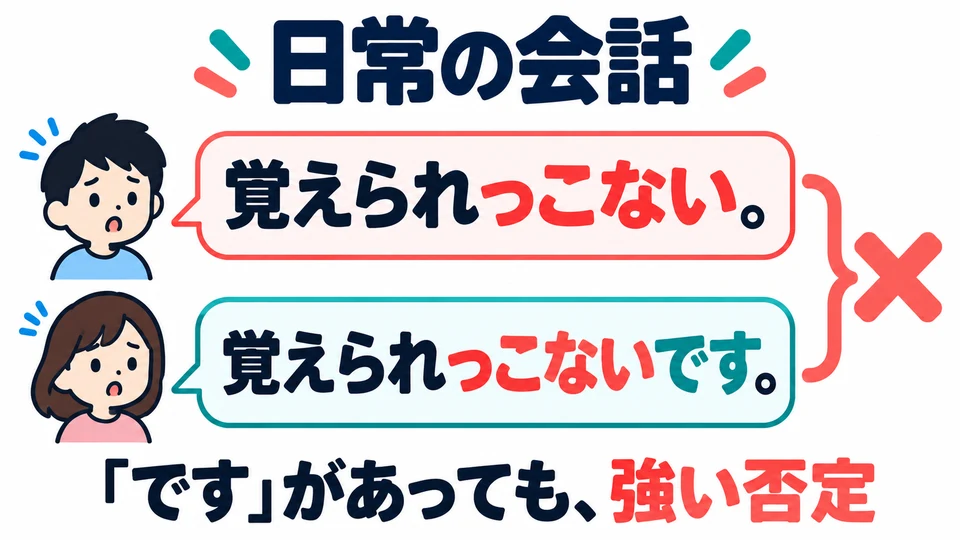
This is an everyday spoken expression. Even with 「です」 at the end, the strong negative tone remains.
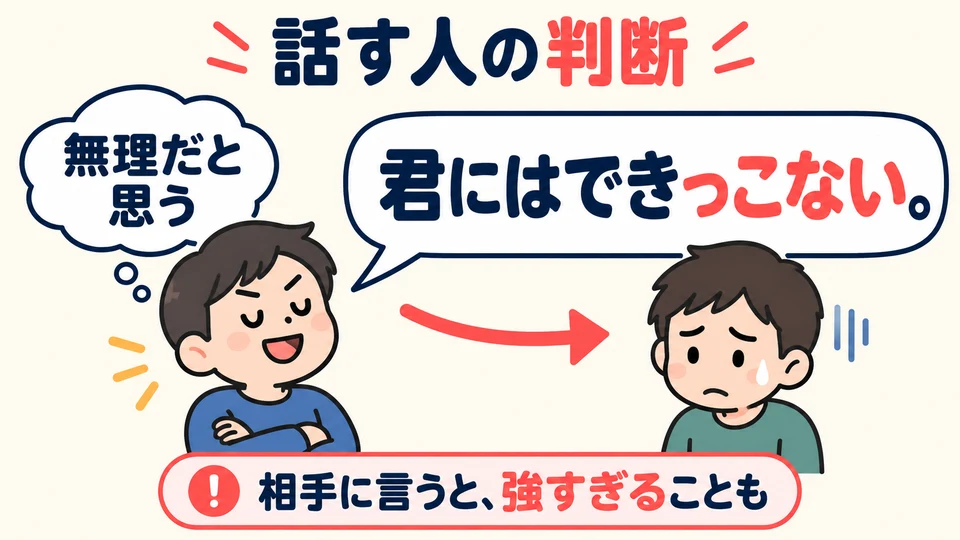
It expresses the speaker’s judgment. Telling someone “you could never do that” can sound presumptuous.
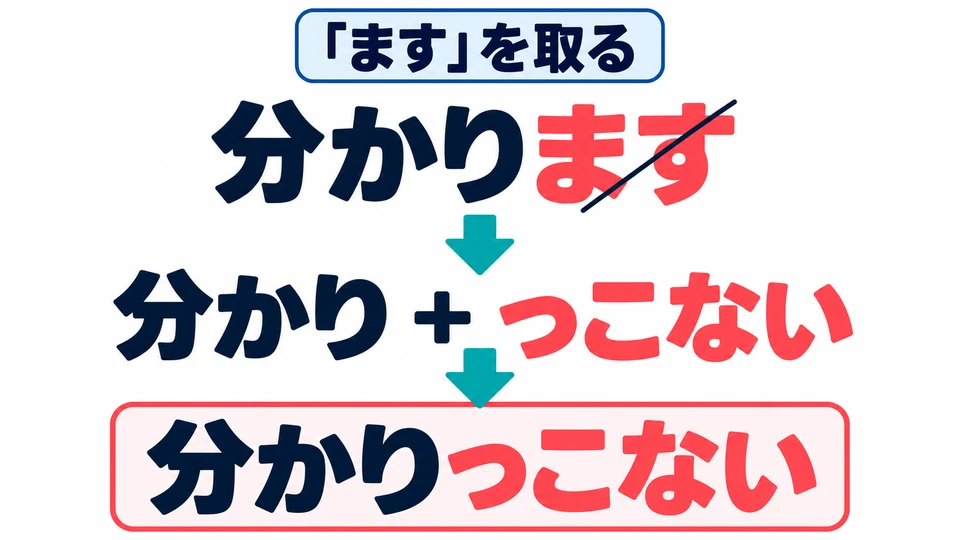
In the example, the pattern is 分かります→分かり+っこない. Remove 「ます」.
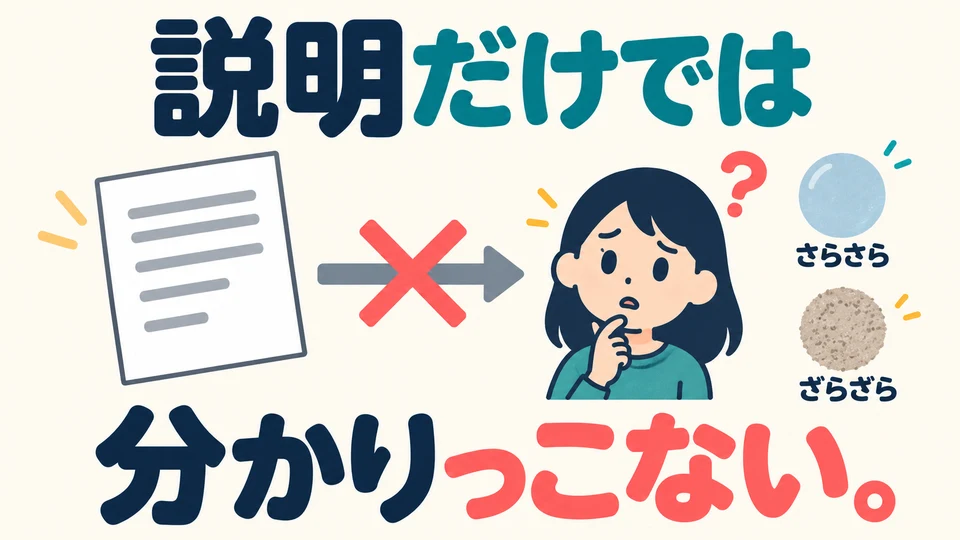
「説明だけでは」 sets a condition: the speaker believes an explanation alone cannot possibly make the difference clear.
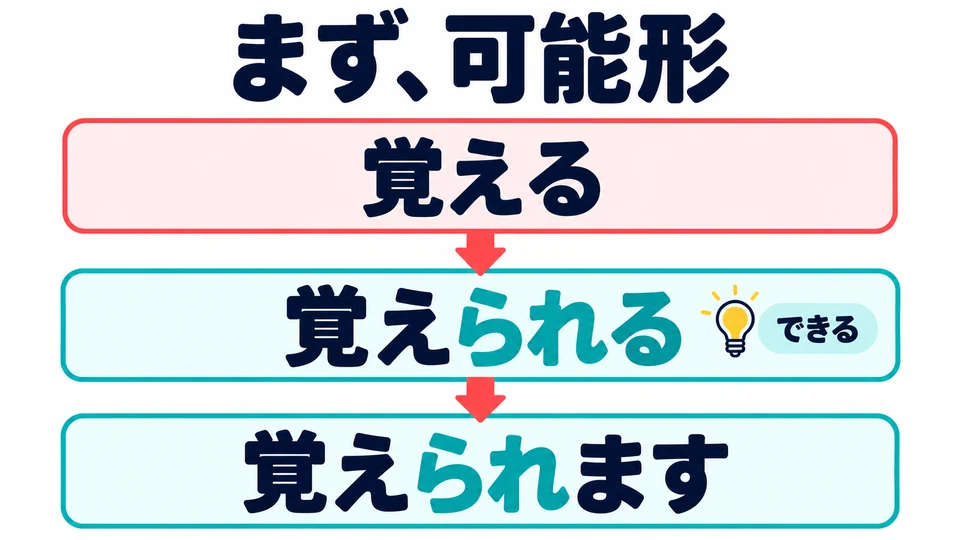
「覚えられっこない」 uses the potential form: 覚えられる→覚えられます.
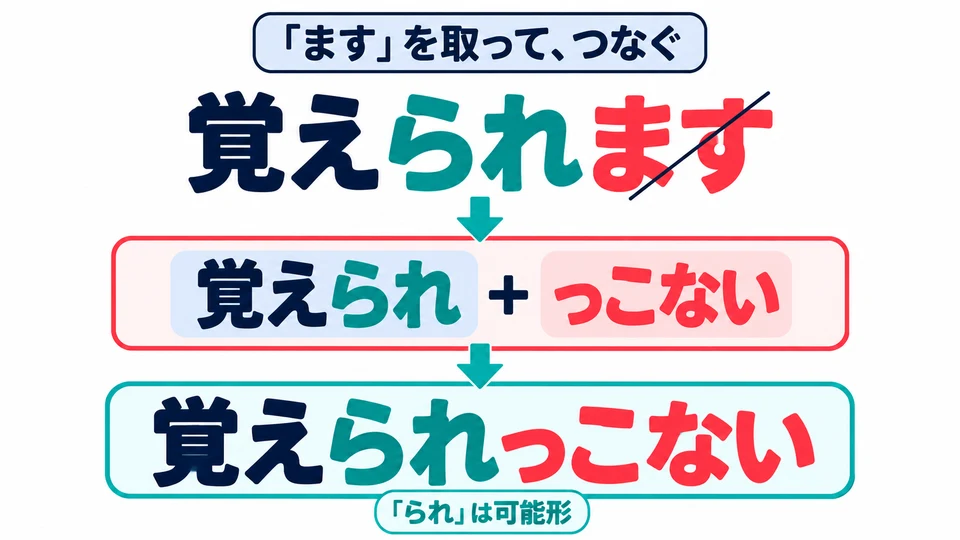
Then remove 「ます」: 覚えられ+っこない. 「られ」 comes from the potential form.
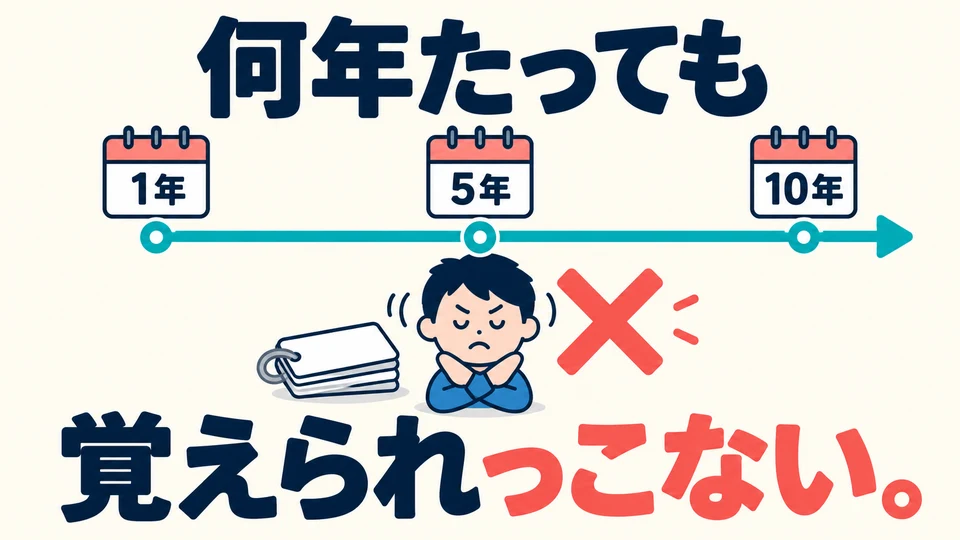
Saying 「何年たっても覚えられっこない」 firmly asserts that you could never memorize them, no matter how many years pass.
Example sentences
- 擬音gion語goをo一日ichinichiでde全部zenbu覚えられっこないですoboerarekkonaidesu
There is no way you can memorize all the onomatopoeia in a single day.
In a conversation

- A「擬音語と擬態語って、全部覚えられる?」
A: "Can you memorize all the onomatopoeia and mimetic words?"
- B「一週間で全部
Check yourself
Level 1 · Recognise
Which sentence is correct?
Level 1 · Recognise
Listen and choose the meaning
Level 2 · Build
Put the words in order
There's no way I could memorize all the onomatopoeia in one day.
Level 3 · Use
What goes in the blank?
擬音語を一日で全部覚えられ____です。
There's no way you can memorize all onomatopoeia in one day.
More grammar in this theme
- 〜っこないabsolutely impossible