JPEDLAB iconJPEDLAB
Save history

Create an account and play

Explore first, then save your progress whenever you are ready. No email address is required.

Start free
Read as articleCards
1/12

Can you memorize this many words in one week? Look at the picture and think about why the speaker is certain it cannot be done.

››

Lesson notes · ≈ JLPT N2 · Intermediate 3

〜っこない~kkonai

absolutely impossible

Use 「〜っこない」 in everyday speech to firmly say that something is impossible, based on your judgment.

How it works
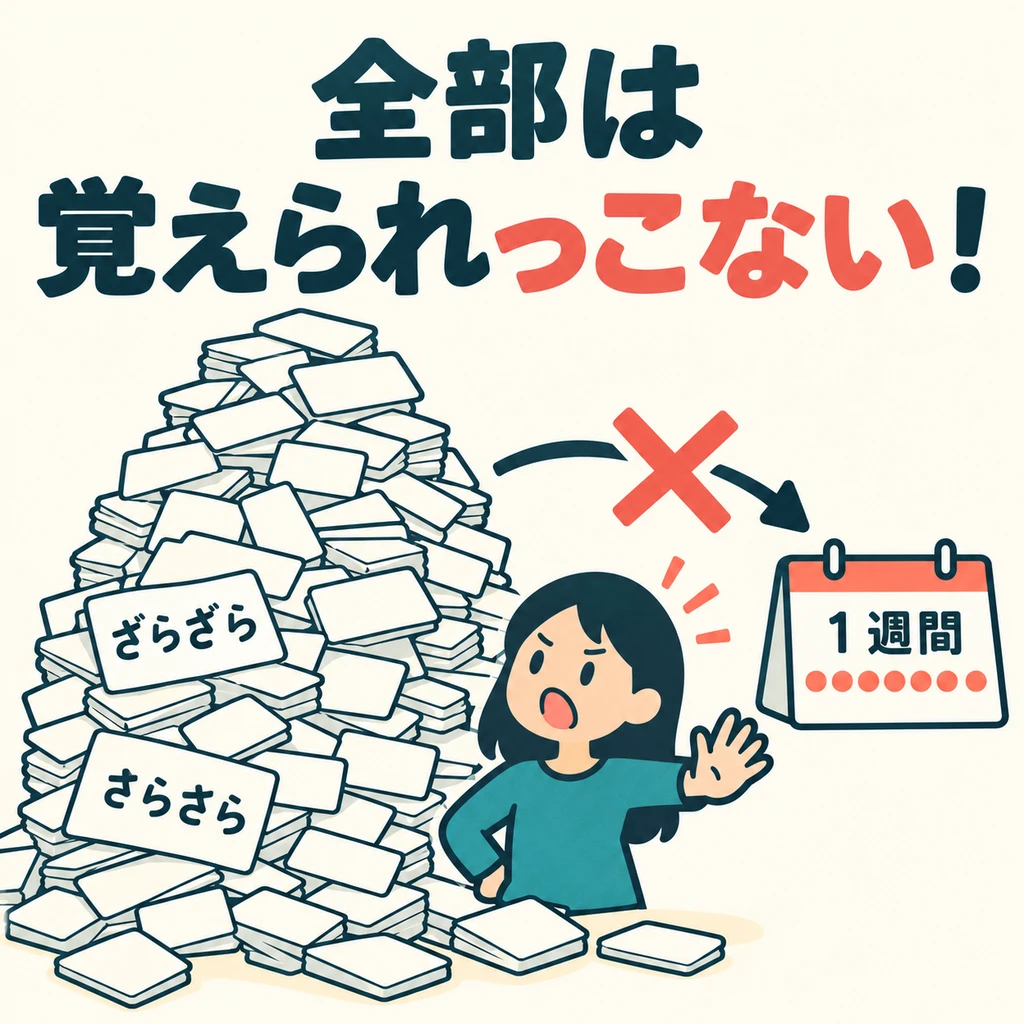
  1. Can you memorize this many words in one week? Look at the picture and think about why the speaker is certain it cannot be done.
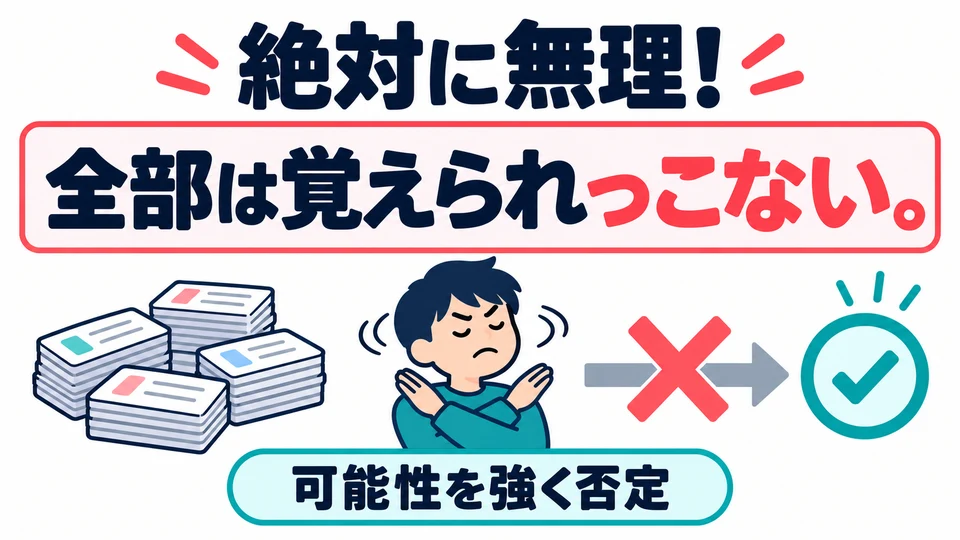
    Can you memorize this many words in one week? Look at the picture and think about why the speaker is certain it cannot be done.

  2. 「っこない」 strongly rules out a possibility. It means “there is absolutely no way,” with a very firm tone.
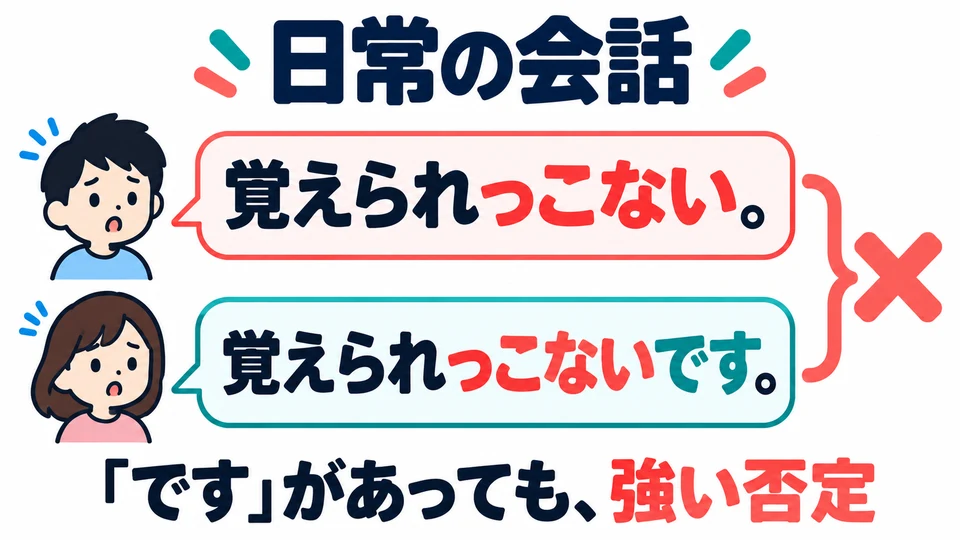
    「っこない」 strongly rules out a possibility. It means “there is absolutely no way,” with a very firm tone.

  3. This is an everyday spoken expression. Even with 「です」 at the end, the strong negative tone remains.
    This is an everyday spoken expression. Even with 「です」 at the end, the strong negative tone remains.

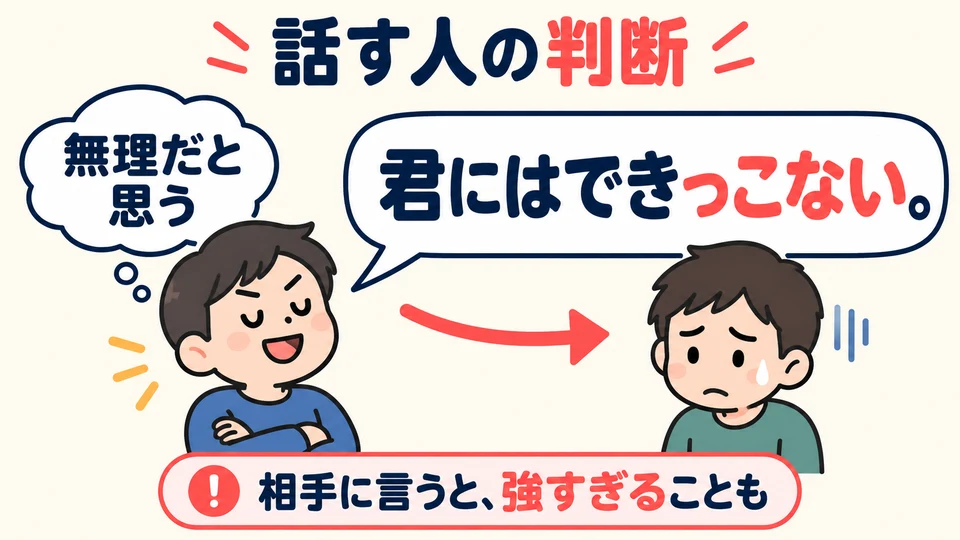
  4. It expresses the speaker’s judgment. Telling someone “you could never do that” can sound presumptuous.
    It expresses the speaker’s judgment. Telling someone “you could never do that” can sound presumptuous.

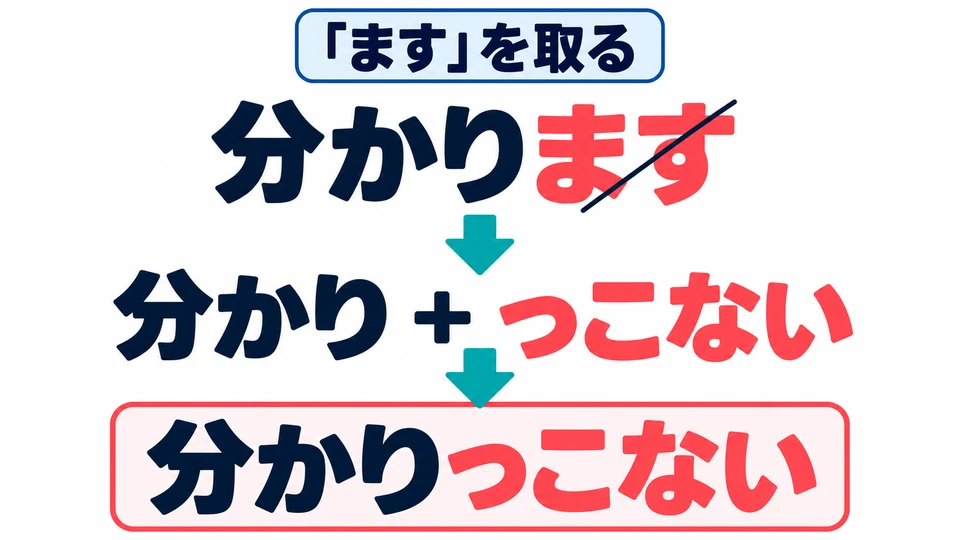
  5. In the example, the pattern is 分かります→分かり+っこない. Remove 「ます」.
    In the example, the pattern is 分かります→分かり+っこない. Remove 「ます」.
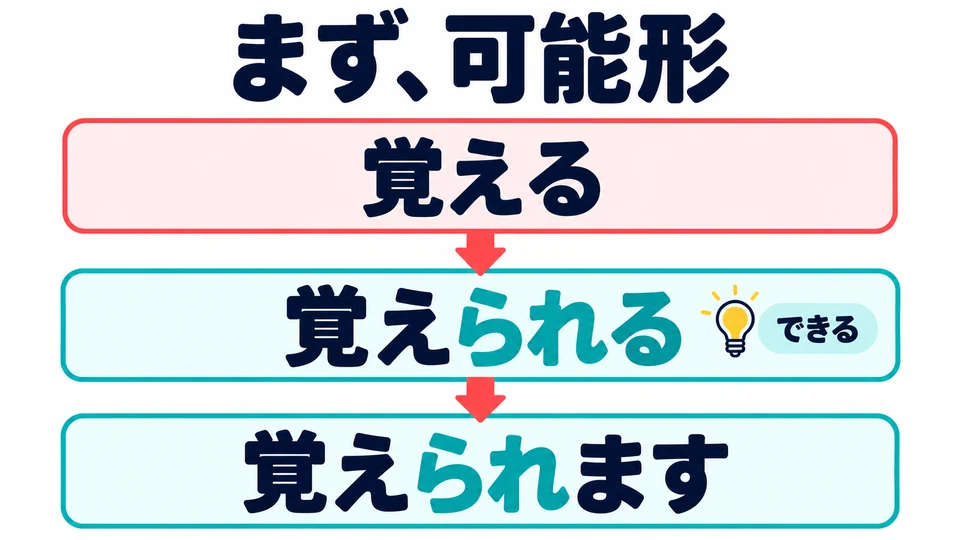
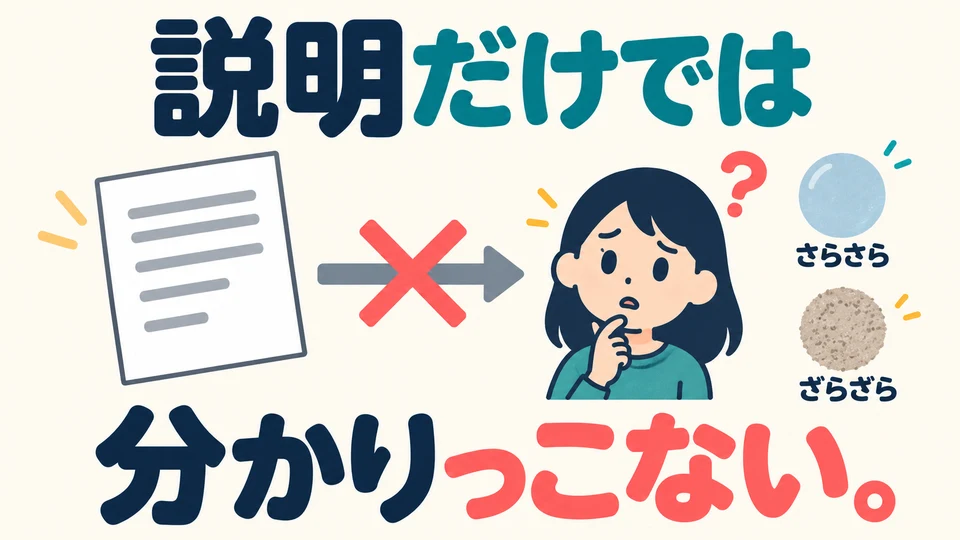
  6. 「説明だけでは」 sets a condition: the speaker believes an explanation alone cannot possibly make the difference clear.

「説明だけでは」 sets a condition: the speaker believes an explanation alone cannot possibly make the difference clear.

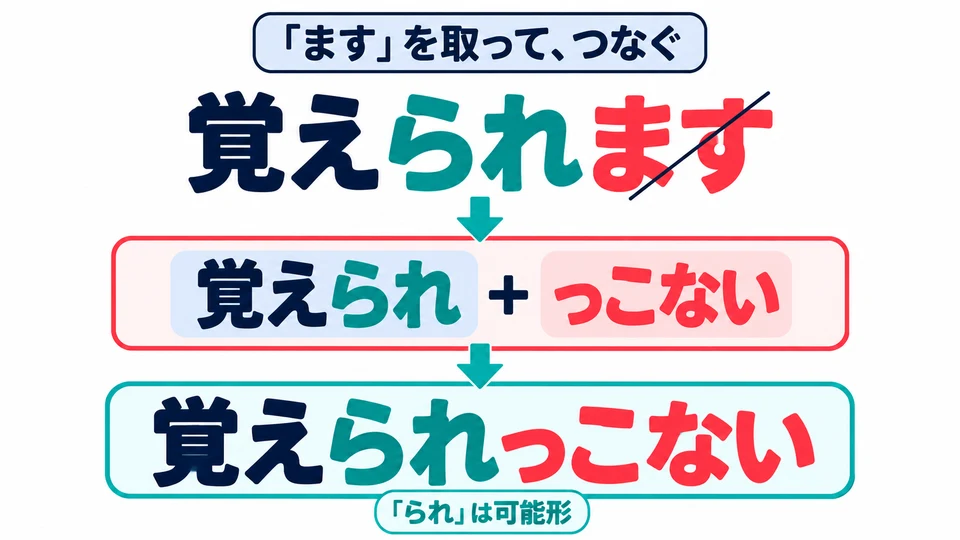
  • 「覚えられっこない」 uses the potential form: 覚えられる→覚えられます.

    「覚えられっこない」 uses the potential form: 覚えられる→覚えられます.

  • Then remove 「ます」: 覚えられ+っこない. 「られ」 comes from the potential form.

    Then remove 「ます」: 覚えられ+っこない. 「られ」 comes from the potential form.

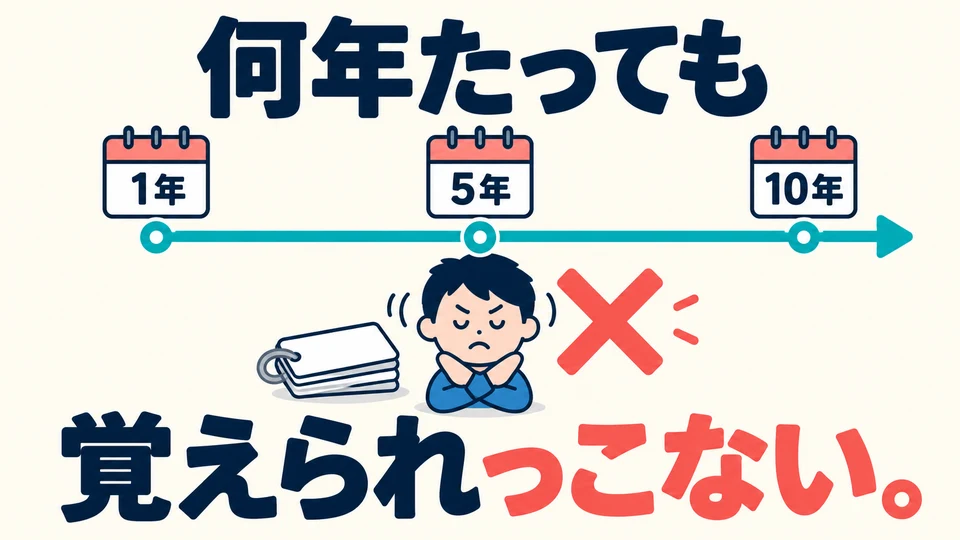
  • Saying 「何年たっても覚えられっこない」 firmly asserts that you could never memorize them, no matter how many years pass.

    Saying 「何年たっても覚えられっこない」 firmly asserts that you could never memorize them, no matter how many years pass.

  • Example sentences

    • 擬音ぎおんgion語ごgoをo一日いちにちichinichiでde全部ぜんぶzenbu覚えられっこないですおぼえられっこないですoboerarekkonaidesu

      There is no way you can memorize all the onomatopoeia in a single day.

    • 「さらさら」さらさらsarasaraと「とtoざらざら」ざらざらzarazaraのno違いちがいchigaiは、わ、wa、説明せつめいsetsumeiだけdakeでdeはわwa分かりっこわかりっこwakarikkoないnaiとto思います。おもいます。omoimasu。

      I think there is no way we can understand the difference between "sarasara" and "zarazara" just from an explanation.

    In a conversation

    • A
      「擬音ぎおん語ごと擬態ぎたい語ごって、全部ぜんぶ覚えられる?」おぼえられる

      A: "Can you memorize all the onomatopoeia and mimetic words?"

    • B
      「一いち週間しゅうかんで全部ぜんぶ覚えられっこないおぼえられっこないよ。多おおすぎる。」すぎる。

      B: "There is no way you can memorize all of them in a week. There are too many."

    • A
      「じゃあ、じゃあ、感覚かんかくで覚えるおぼえるしかないね。」ね。

      A: "Then we have no choice but to learn them by feel."

    Check yourself

    1. Level 1 · Recognise

      Which sentence is correct?

    2. Level 1 · Recognise

      Listen and choose the meaning

    3. Level 2 · Build

      Put the words in order

      There's no way I could memorize all the onomatopoeia in one day.

    4. Level 3 · Use

      What goes in the blank?

      擬音語を一日で全部覚えられ____です。

      There's no way you can memorize all onomatopoeia in one day.

    More grammar in this theme

    • 〜がたいsubjectively hard to do
    • 〜のようにlike; in the manner of
    • 〜とともにalong with; as … changes
    • 〜をもとに(して)・〜をもとにしたbased on; using as a basis
    • 〜でしょう?seeking agreement
    • 〜っけrecalling and checking
    • 〜というわけだthat explains why
    • 〜っこないabsolutely impossible
    • 〜もん・〜んだもんemotional reason or plea
    • 〜ほど・〜くらい・〜ぐらいdegree shown by an example
    • 〜ところだったsomething almost happened
    • 〜てたまらないoverwhelmingly intense feeling
    • 〜というわけではないthat does not mean
    • 〜くらい・〜ぐらいdegree shown by a situation
    Previous〜というわけだNext〜もん・〜んだもん

    Keep practising

    Test your Japanese vocabulary12 adaptive questions, freeCheck your pronunciationRead aloud and get a scorePractise verb forms10-question conjugation quizSee the whole courseGrammar, vocabulary and quizzes by theme
    See the whole course
    Intermediate 3
    Richness and Beauty of Japanese Expression