JPEDLAB iconJPEDLAB
Save history

Create an account and play

Explore first, then save your progress whenever you are ready. No email address is required.

Start free
Read as articleCards
See the whole course›Intermediate 2›Intergenerational Exchange and Broader Perspectives

Japanese grammar · ≈ JLPT N2 · Intermediate 2

〜からして~kara shite

inference from a clue

Use 「〜からして」 to infer an overall impression from a telling clue, such as someone’s expression or speech.

Start the interactive lessonIllustrated cards, audio and speaking practice

How it works

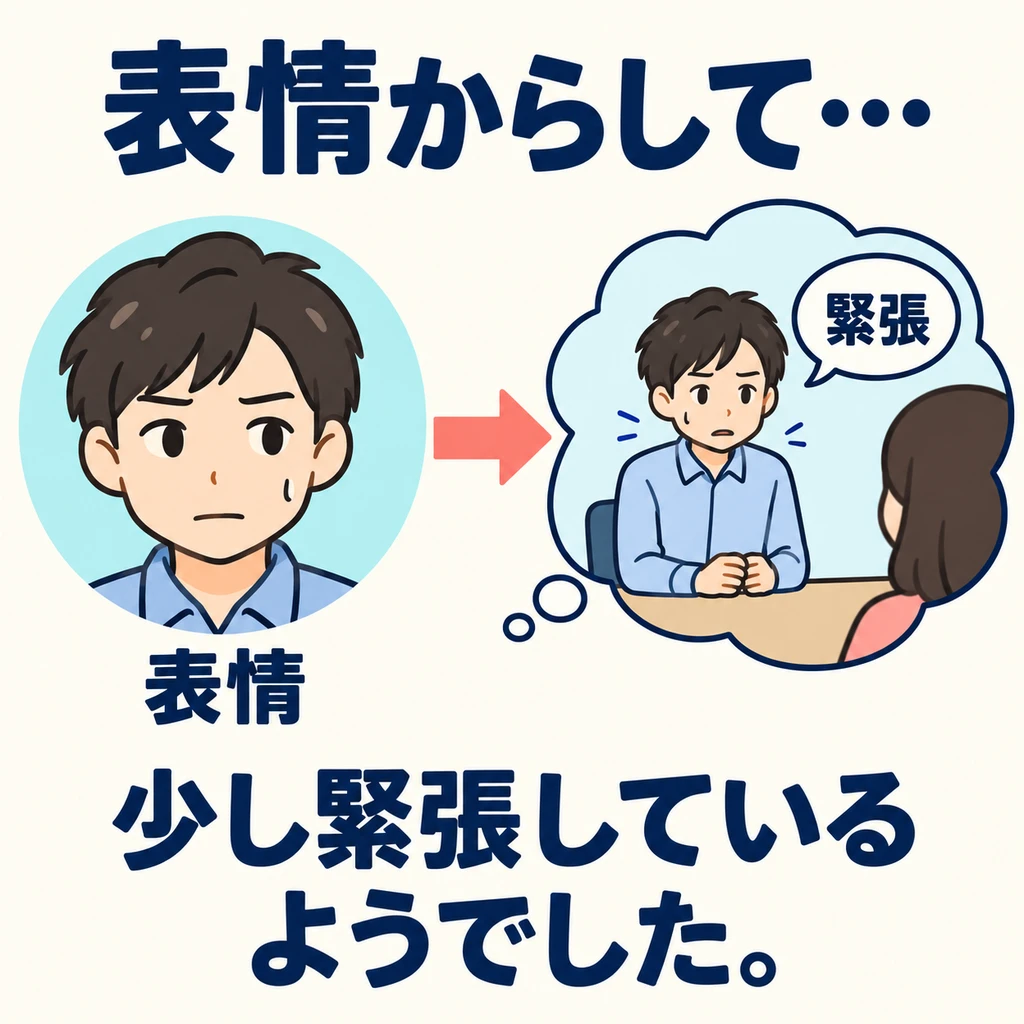
  1. Look at his expression. Do you think he is nervous? This pattern lets you infer someone’s state from a clue.
    Look at his expression. Do you think he is nervous? This pattern lets you infer someone’s state from a clue.

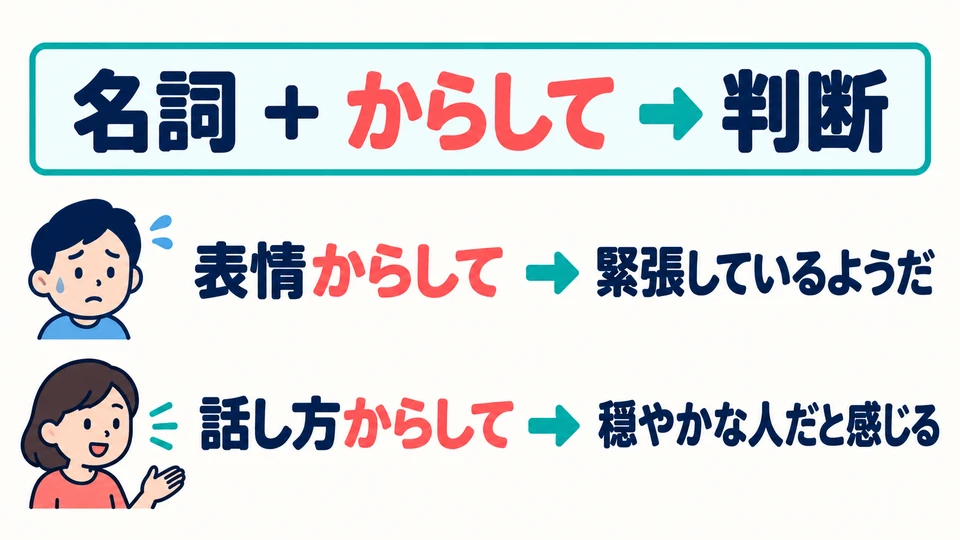
  2. Attach 「からして」 to a noun naming a clue, such as a facial expression or way of speaking, then give your judgment.
    Attach 「からして」 to a noun naming a clue, such as a facial expression or way of speaking, then give your judgment.

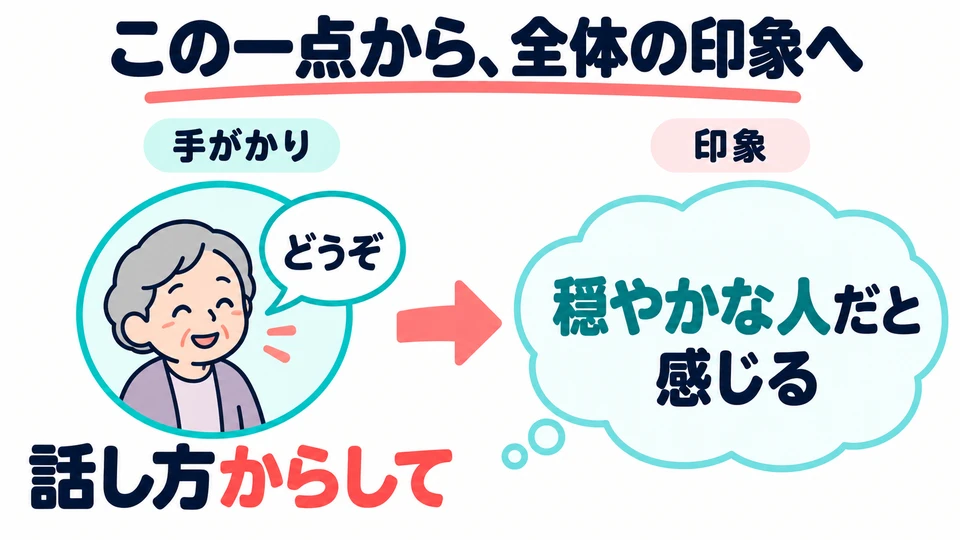
  3. This one detail alone gives an overall impression. Selecting a clue emphasizes how telling it is.
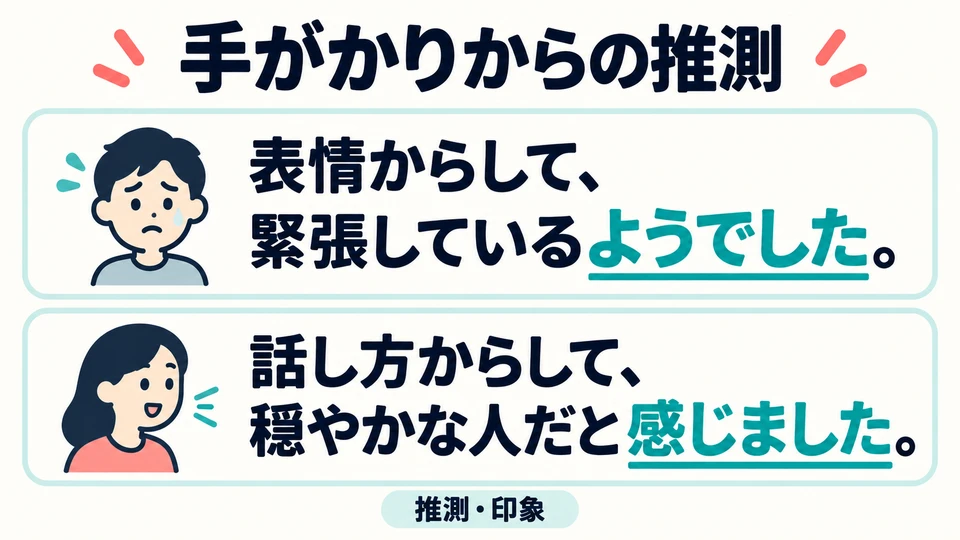
    This one detail alone gives an overall impression. Selecting a clue emphasizes how telling it is.

  4. The examples use 「ようでした」 (“seemed”) and 「感じました」 (“I felt”) for inferences: expressions and speech offer clues, not certain conclusions.

    The examples use 「ようでした」 (“seemed”) and 「感じました」 (“I felt”) for inferences: expressions and speech offer clues, not certain conclusions.

Example sentences

  • 表情ひょうじょうhyoujouからkaraしshiて、te、最初さいしょsaishoはわwa少しすこしsukoshi緊張きんちょうkinchouしshiてteいるiru

In a conversation

Check yourself

  1. Level 1 · Recognise

    Which sentence is correct?

  2. Level 1 · Recognise

    Listen and choose the meaning

  3. Level 2 · Build

    Put the words in order

    Judging from the warm smile at the initial greeting, I think she must have sensed my anxiety.

  4. Level 3 · Use

    What goes in the blank?

    表情____、最初は少し緊張しているようでした。

    Judging from the expression, they seemed a little nervous at first.

More grammar in this theme

  • 〜からしてinference from a clue

Keep practising

Test your Japanese vocabulary12 adaptive questions, freeCheck your pronunciationRead aloud and get a scorePractise verb forms10-question conjugation quizSee the whole courseGrammar, vocabulary and quizzes by theme
ようでした。
youdeshita。

Judging from their expression, they seemed to be a little nervous at first.

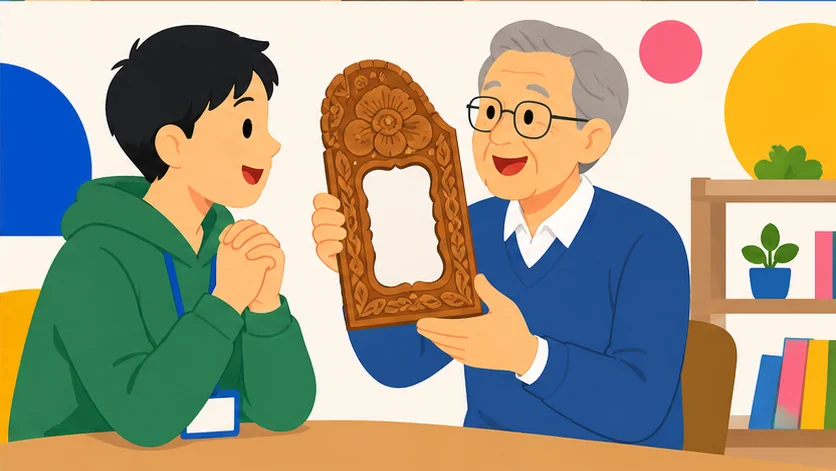
  • 今日きょうお話しおはなしした高齢者したこうれいしゃの方かたは、わ、どんな印象いんしょうでしたか。

    What was your impression of the elderly person you spoke with today?

  • 豊かな人生ゆたかなじんせい経験けいけんからくる穏やかな言葉遣いおだやかなことばづかいからして、とても視野しやが広くひろくて尊敬そんけいできる方かただと思いました。おもいました。

    Judging from their gentle words that come from rich life experience, I thought they were someone with a very broad perspective whom I can highly respect.

  • 話し方はなしかたhanashikataからkaraしshiて、te、すごくsugoku穏やかな人おだやかなひとodayakanahitoだdaとto感じました。かんじました。kanjimashita。

    Judging from the way they spoke, I felt that they were a very gentle person.

  • そうですか。素晴らしいすばらしい気づききづきを得るえることができて、今回こんかいの世代せだい交流こうりゅうはわ大成功だいせいこうでしたね。

    Is that so? Since you gained such wonderful insights, this intergenerational exchange was a huge success, wasn't it?

  • 〜どころではないin no position to; far from
    〜たところdid…and found that
    〜ことになったit has been decided
    〜に限り/〜限りはlimited to; as long as
    〜かなと思ってthinking maybe; so I
    〜にしてはfor; contrary to expectation
    〜につきper; for each
    〜たものだused to; fond recollection
    〜ながらもalthough; despite feeling
    〜につけ(て)whenever; at every opportunity
    〜さえ/さえ〜ばeven; as long as
    〜に反してcontrary to expectations
    〜ているうちにchange during an activity
    Previous〜ているうちに