JPEdLab iconJPEdLab
Save history

Create an account and play

Explore first, then save your progress whenever you are ready. No email address is required.

Start free
  1. Japanese grammar
  2. JLPT N3 grammar
  3. 〜たところ

〜たところ~ta tokoro

Ta tokoro (〜たところ) means “did…and found that”.

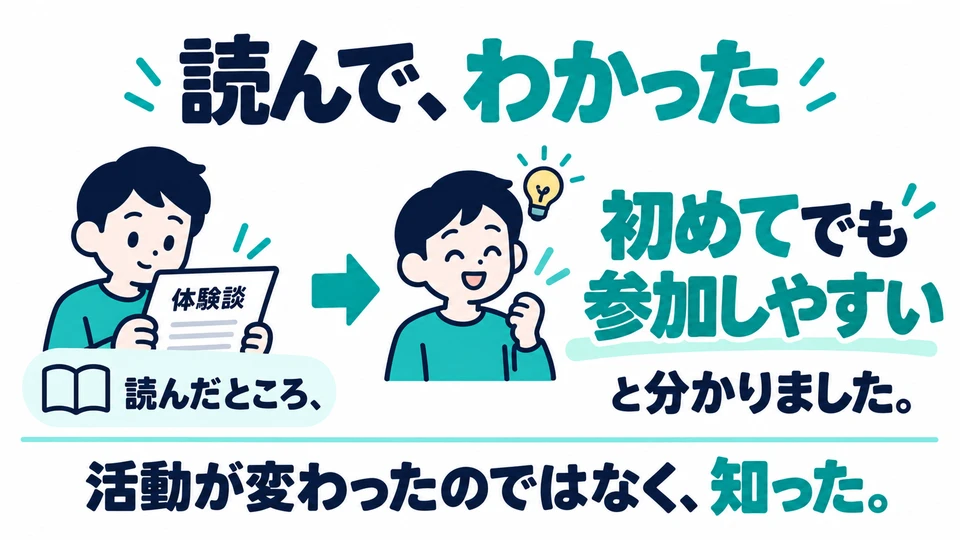
体験たいけんtaiken談だんdanをo読んだところ、よんだところ、yondatokoro、初めてはじめてhajimeteでdeもmo参加さんかsankaしやすいshiyasui活動かつどうkatsudouだdaとto分かりました。わかりました。wakarimashita。

When I read the personal experiences, I found that it was an activity easy to participate in even for the first time.

Use 〜たところ to report what you actually discovered or what result followed after doing something.

In the course›

How it works

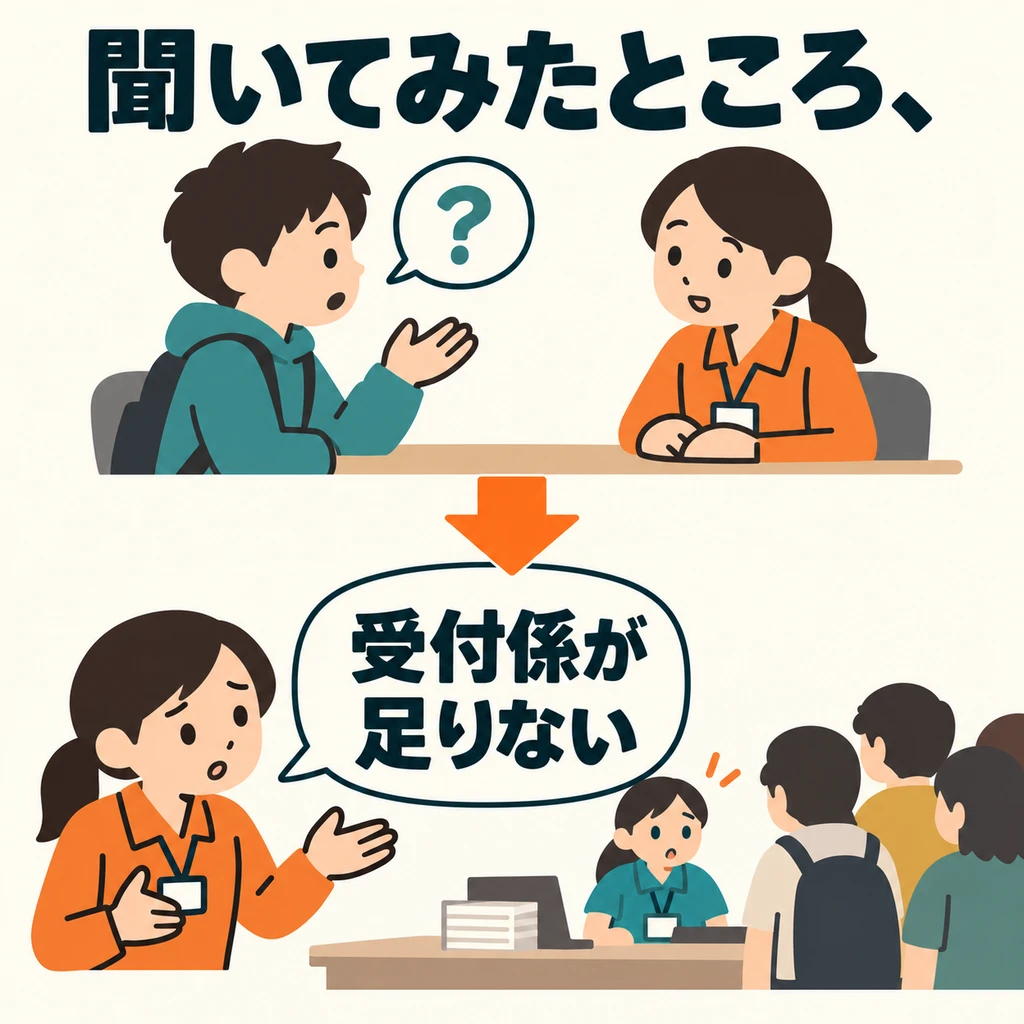
  1. After asking the organizer, you learn that there are too few reception staff. Below the arrow is the new information gained by asking.
    After asking the organizer, you learn that there are too few reception staff. Below the arrow is the new information gained by asking.

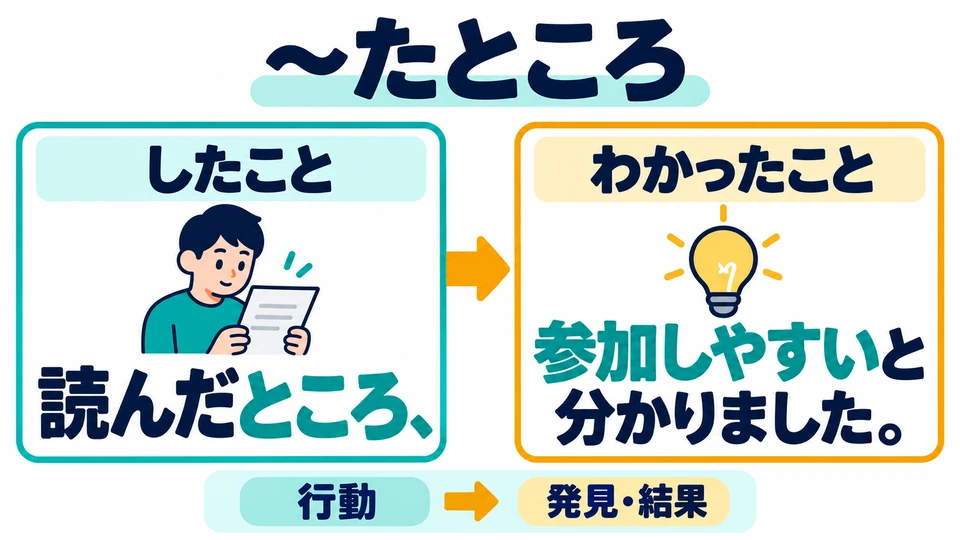
  2. 「~たところ」 first states what you did, then describes what you discovered or the result that actually followed.
    「~たところ」 first states what you did, then describes what you discovered or the result that actually followed.

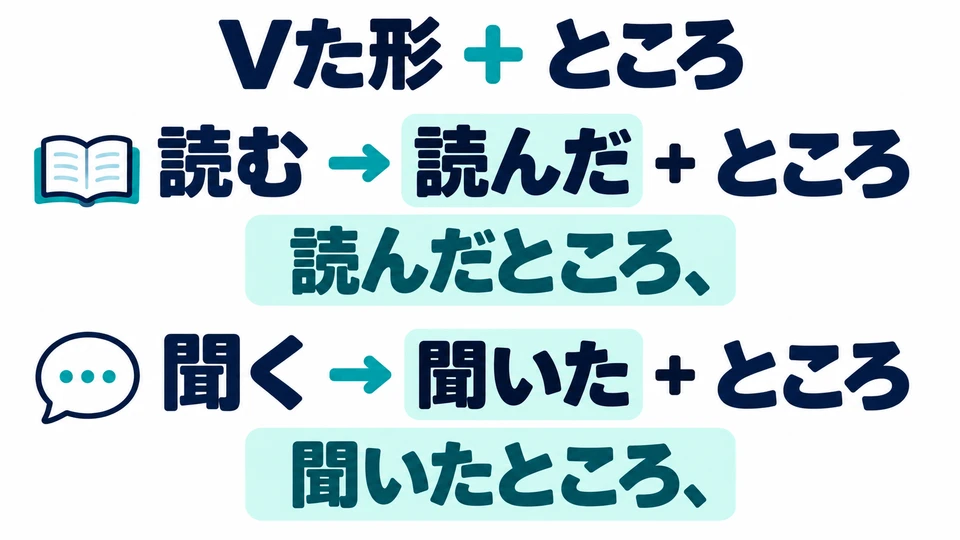
  3. Attach 「ところ」 to the verb’s た-form: 読む→読んだところ; 聞く→聞いたところ.
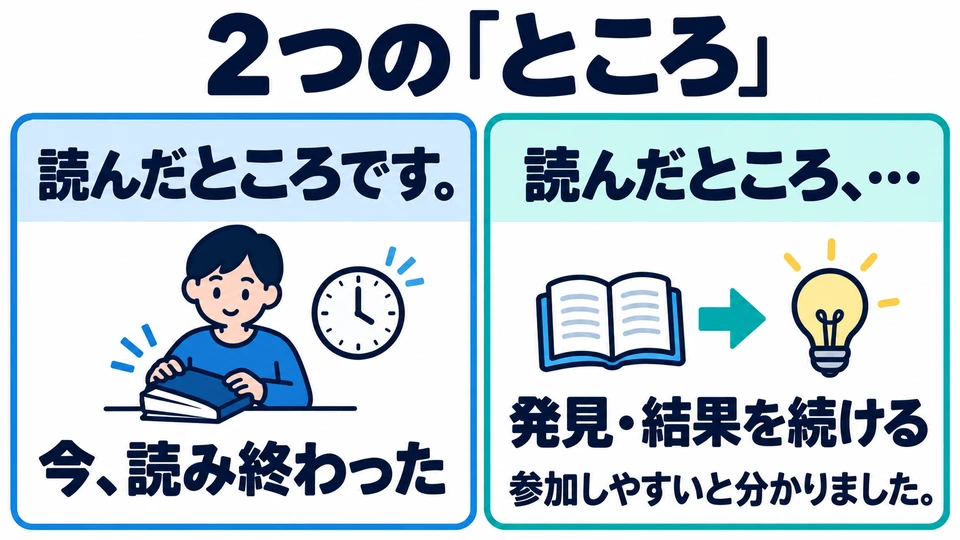
    Attach 「ところ」 to the verb’s た-form: 読む→読んだところ; 聞く→聞いたところ.

  4. 「読んだところです」 means you have just finished reading; 「読んだところ、…」 goes on to state a discovery or result.
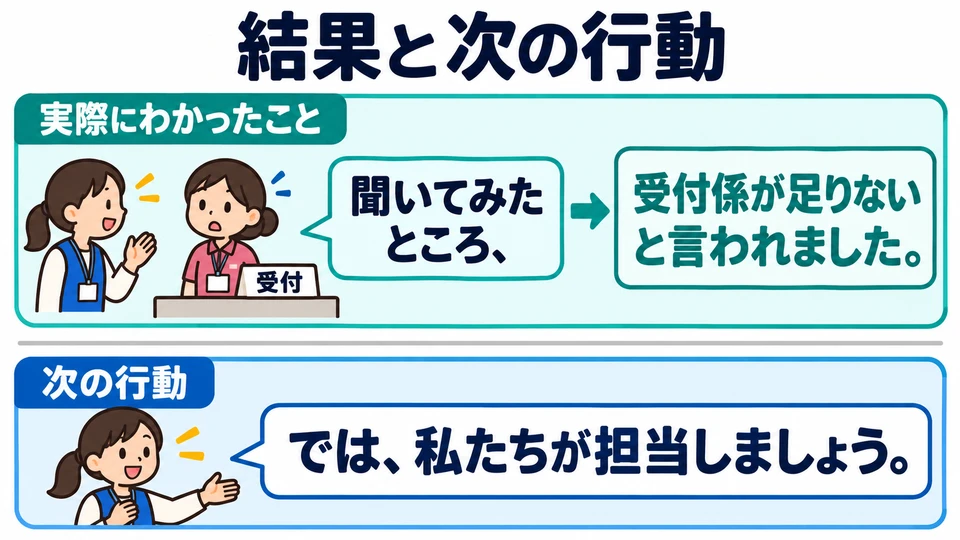
    「読んだところです」 means you have just finished reading; 「読んだところ、…」 goes on to state a discovery or result.

  5. After 「~たところ」, report a fact you actually learned or a result that occurred. Express plans for your next step separately.
    After 「~たところ」, report a fact you actually learned or a result that occurred. Express plans for your next step separately.

  6. In the example about reading personal accounts, the ease of joining the activity is something the reader learned. It did not become easier after the reading.
    In the example about reading personal accounts, the ease of joining the activity is something the reader learned. It did not become easier after the reading.

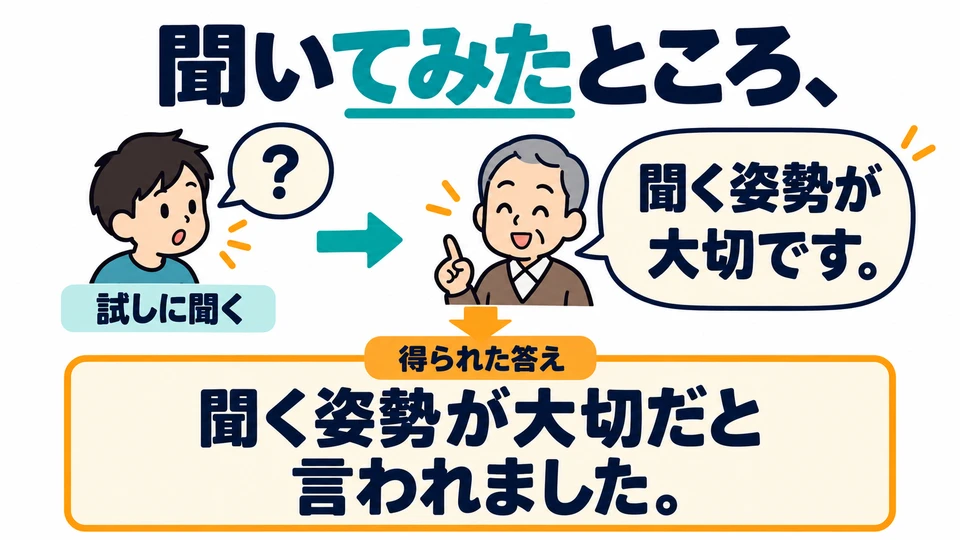
  7. In the example about asking a senior, the second half gives the answer received. 「てみた」 also emphasizes trying to ask.

    In the example about asking a senior, the second half gives the answer received. 「てみた」 also emphasizes trying to ask.

Example sentences

  • 体験たいけんtaiken談だんdanをo読んだところ、よんだところ、yondatokoro、初めてはじめてhajimeteでdeもmo参加さんかsankaしやすいshiyasui活動かつどうkatsudouだdaと

In a conversation

  • ボランティアぼらんてぃあ活動かつどうの募集ぼしゅう内容ないようについて、何なにか分かりましたわかりましたか。

    Do you know anything about the recruitment details for the volunteer activity?

  • はい、主催者

Check yourself

  1. Level 1 · Recognise

    Which sentence is correct?

  2. Level 1 · Recognise

    Listen and choose the meaning

  3. Level 2 · Build

    Put the words in order

    When I read the activity guide, I found that the participation conditions were written in detail.

  4. Level 3 · Use

    What goes in the blank?

    体験談を____、初めてでも参加しやすい活動だと分かりました。

    After reading the personal account, I found that this activity is easy to join even for first-timers.

More grammar in this theme

  • 〜たところdid…and found that

More JLPT N3 grammar

Keep practising

Test your Japanese vocabulary12 adaptive questions, freeCheck your pronunciationRead aloud and get a scorePractise verb forms10-question conjugation quizSee the whole courseGrammar, vocabulary and quizzes by theme
to
分かりました。わかりました。wakarimashita。

When I read the personal experiences, I found that it was an activity easy to participate in even for the first time.

  • 先輩せんぱいsenpaiにni聞いきいkiiてteみたところ、mitatokoro、高齢者こうれいしゃkoureishaとtoのno会話かいわkaiwaでdeはわwa聞くきくkiku姿勢しせいshiseiがga大切だたいせつだtaisetsudaとto言われました。いわれました。iwaremashita。

    When I asked a senior, they told me that a listening attitude is important when conversing with elderly people.

  • しゅさいしゃ
    に
    聞いきい
    て
    みたところ、
    今回こんかい
    はわ
    受付うけつけ
    係かかり
    が
    足りないたりない
    と
    言われました。いわれました。

    Yes, when I asked the organizer, I was told that there are not enough receptionists this time.

  • そうですか。では、わ、私たちわたしたちがその役割やくわり分担ぶんたんを担当たんとうしましょう。

    I see. Then let's take on that role ourselves.

  • Intermediate 2
    Intergenerational Exchange and Broader Perspectives
    More quizzesOpen this lesson’s quizzes in the course
    〜どころではないin no position to; far from
    〜ことになったit has been decided
    〜に限り/〜限りはlimited to; as long as
    〜かなと思ってthinking maybe; so I
    〜にしてはfor; contrary to expectation
    〜につきper; for each
    〜たものだused to; fond recollection
    〜ながらもalthough; despite feeling
    〜につけ(て)whenever; at every opportunity
    〜さえ/さえ〜ばeven; as long as
    〜に反してcontrary to expectations
    〜ているうちにchange during an activity
    〜からしてinference from a clue
    Previous〜どころではない
    Next〜ことになった
    See all 114
    〜を通して・〜を通じてthrough a means
    〜ことからbased on the fact
    〜といえばspeaking of
    〜というとspeaking of; brings to mind
    〜のことなんですがgently introduce a topic
    〜させていただけませんかpolitely ask permission
    〜の代わりに・〜に代わってinstead of; in place of
    〜おかげでthanks to; good result