
〜に限り/〜限りは~ni kagiri / ~kagiri wa
Ni kagiri (〜に限り) means “limited to; as long as”.
Only for this month's activity, people from outside the area can participate.
〜に限り restricts eligibility or an occasion; 〜限りは sets a condition that remains in force.
In the course
How it works
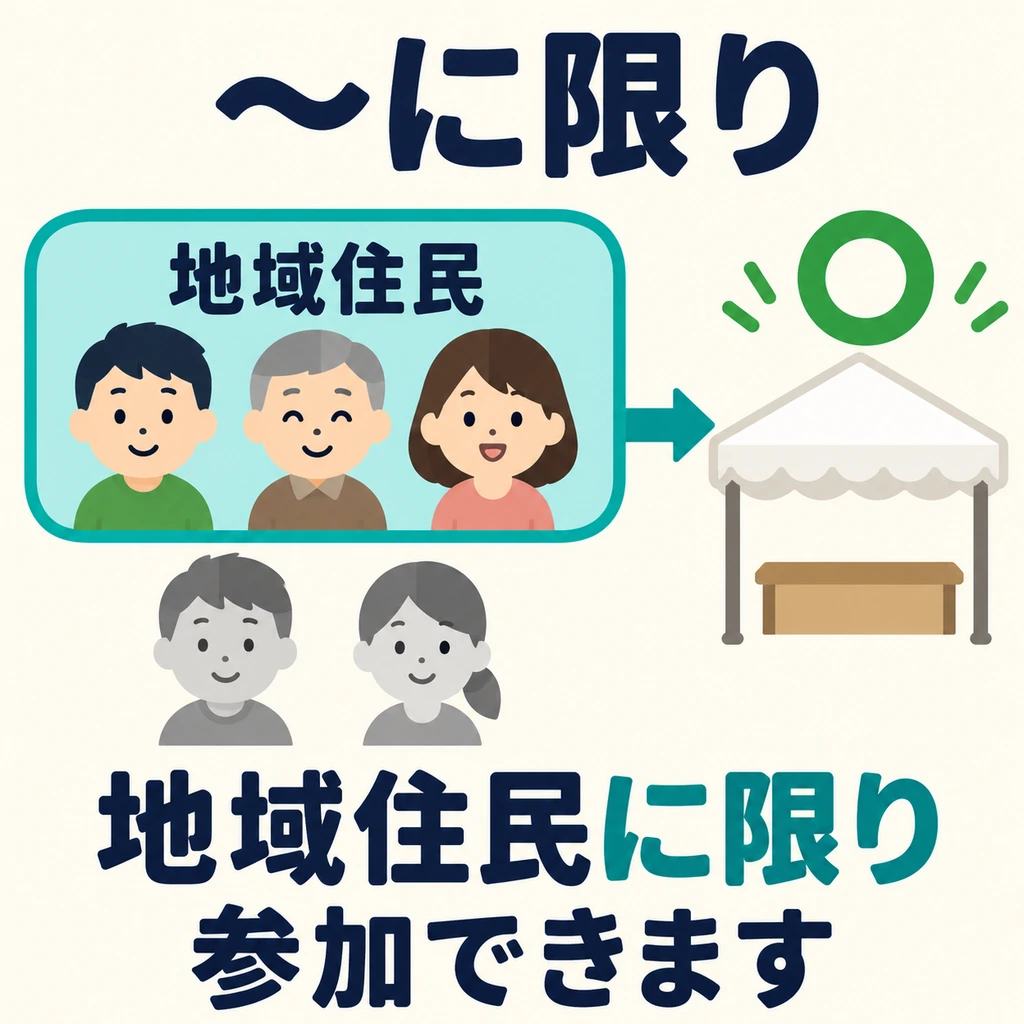
Only the local residents inside the frame can join. A noun +「に限り」formally limits who is eligible.
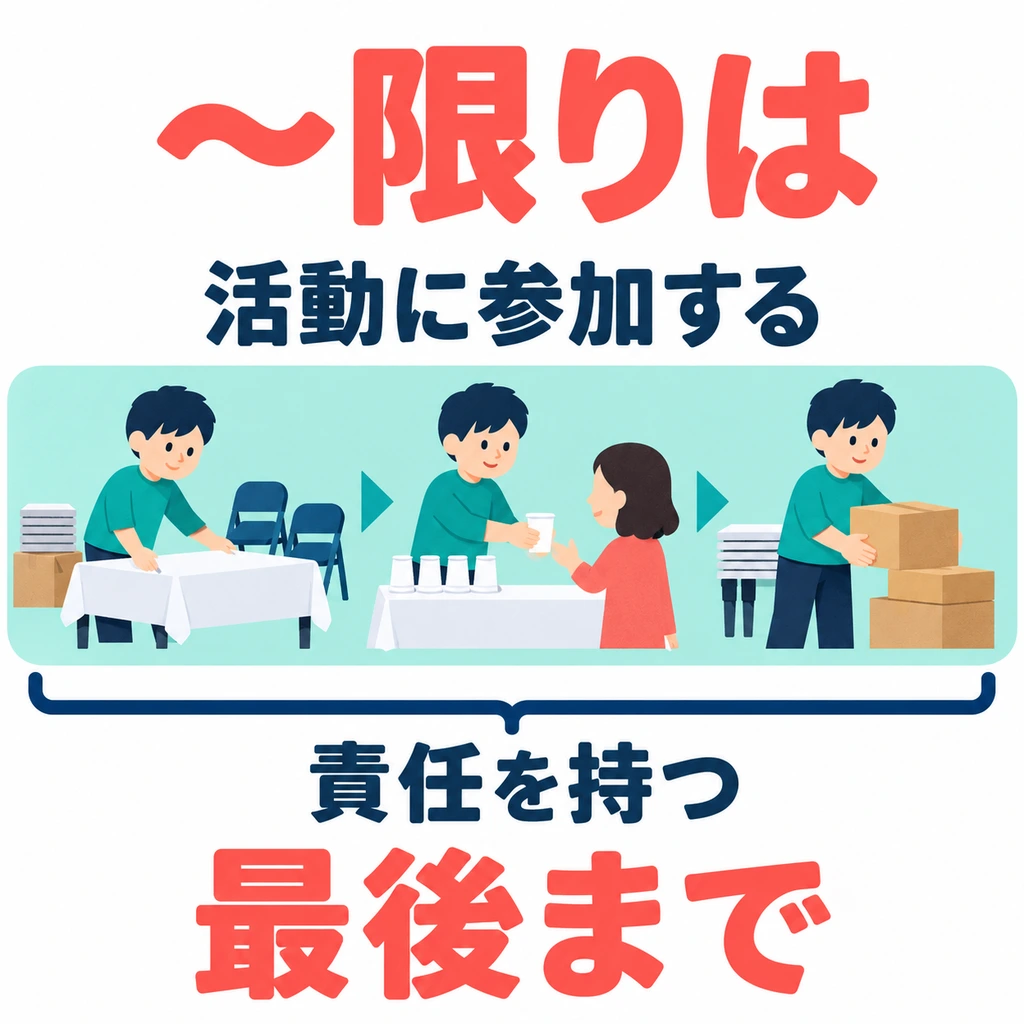
If you take part in the activity, you must stay responsible until the end. A dictionary-form verb +「限りは」sets a condition.
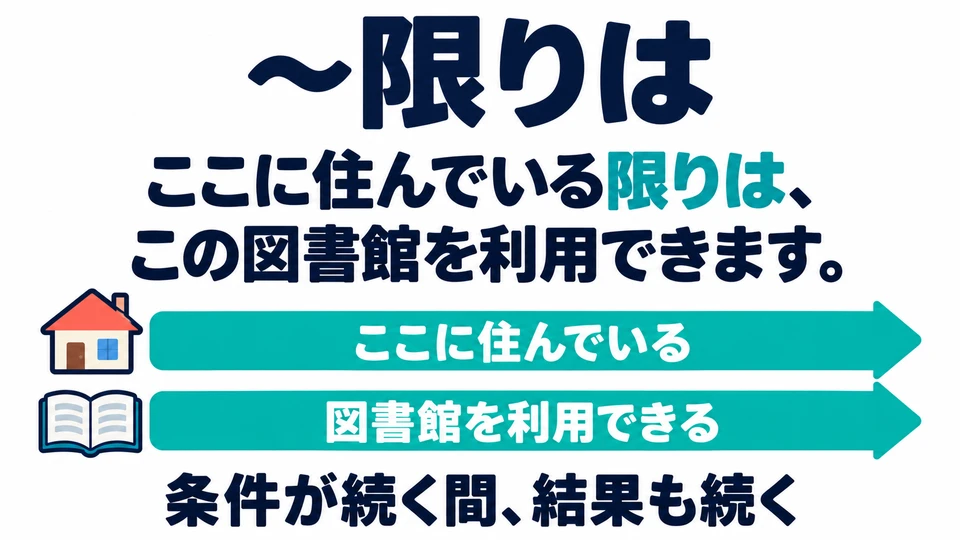
With「限りは」, the result in the following clause holds as long as the condition holds. The focus is on the condition continuing.
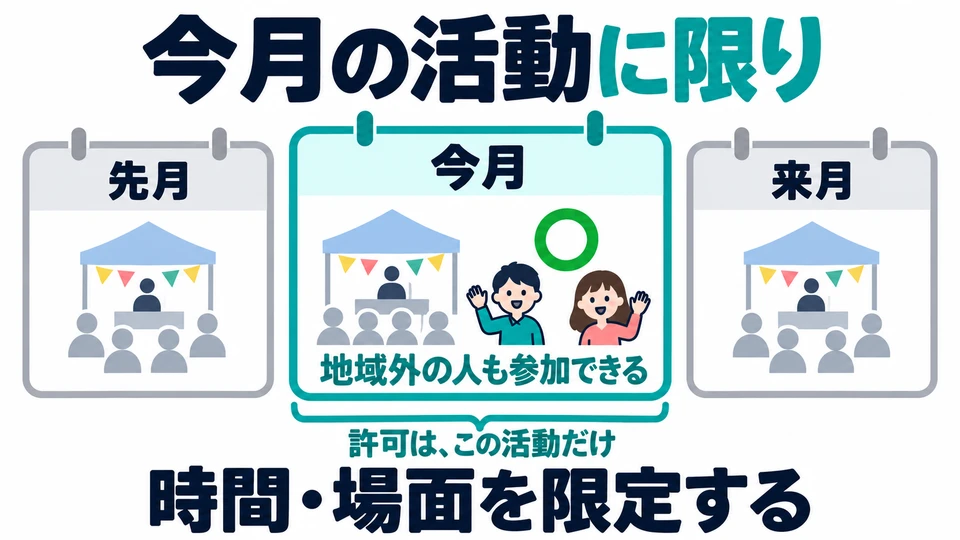
「今月の活動に限り」limits permission to this month’s activity.「に限り」can also limit a time or occasion.
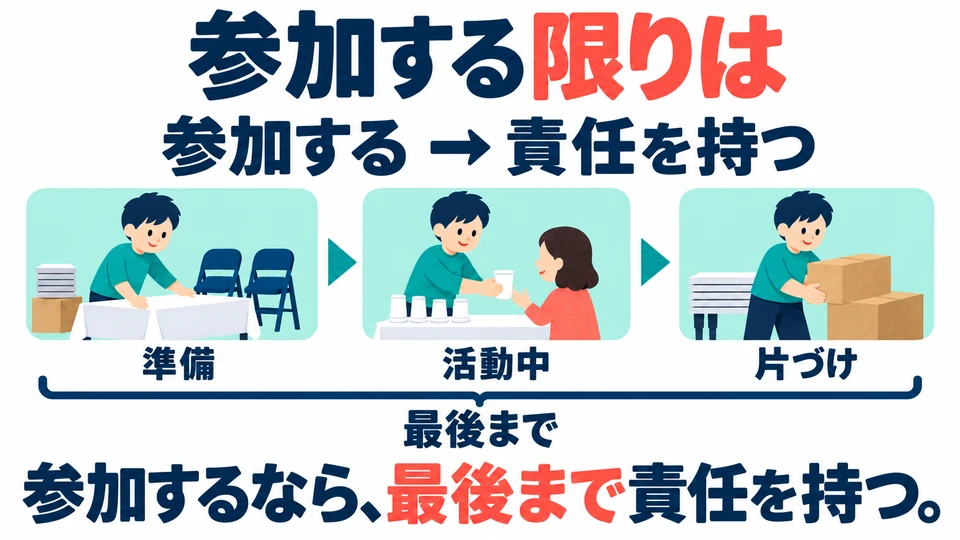
The second sentence requires you to take responsibility once you decide to participate. It does more than simply limit who can join.
Example sentences
- 今月kongetsuのno活動katsudouにni限り、kagiri、地域外chiikigaiのno人hitoもmo参加sankaできます。dekimasu。
In a conversation

- この世代交流イベントは、地域住民に限り参加できますか。
Is this intergenerational exchange event open only to local residents?
- いえ、
Check yourself
Level 1 · Recognise
Which sentence is correct?
Level 1 · Recognise
Listen and choose the meaning
Level 2 · Build
Put the words in order
The advance briefing for the volunteer activity is limited to those participating in this intergenerational exchange.
Level 3 · Use
What goes in the blank?
今月の活動____、地域外の人も参加できます。
Only for this month's activity, people from outside the area can also join.
More grammar in this theme
- 〜に限り/〜限りはlimited to; as long as