JPEDLAB iconJPEDLAB
Save history

Create an account and play

Explore first, then save your progress whenever you are ready. No email address is required.

Start free
Read as articleCards
See the whole course›Intermediate 2›Intergenerational Exchange and Broader Perspectives

Japanese grammar · ≈ JLPT N3 · Intermediate 2

〜さえ/さえ〜ば~sae / sae ~ba

even; as long as

Use 〜さえ to highlight an unexpected extreme example; さえ〜ば emphasizes one condition that is enough.

Start the interactive lessonIllustrated cards, audio and speaking practice

How it works

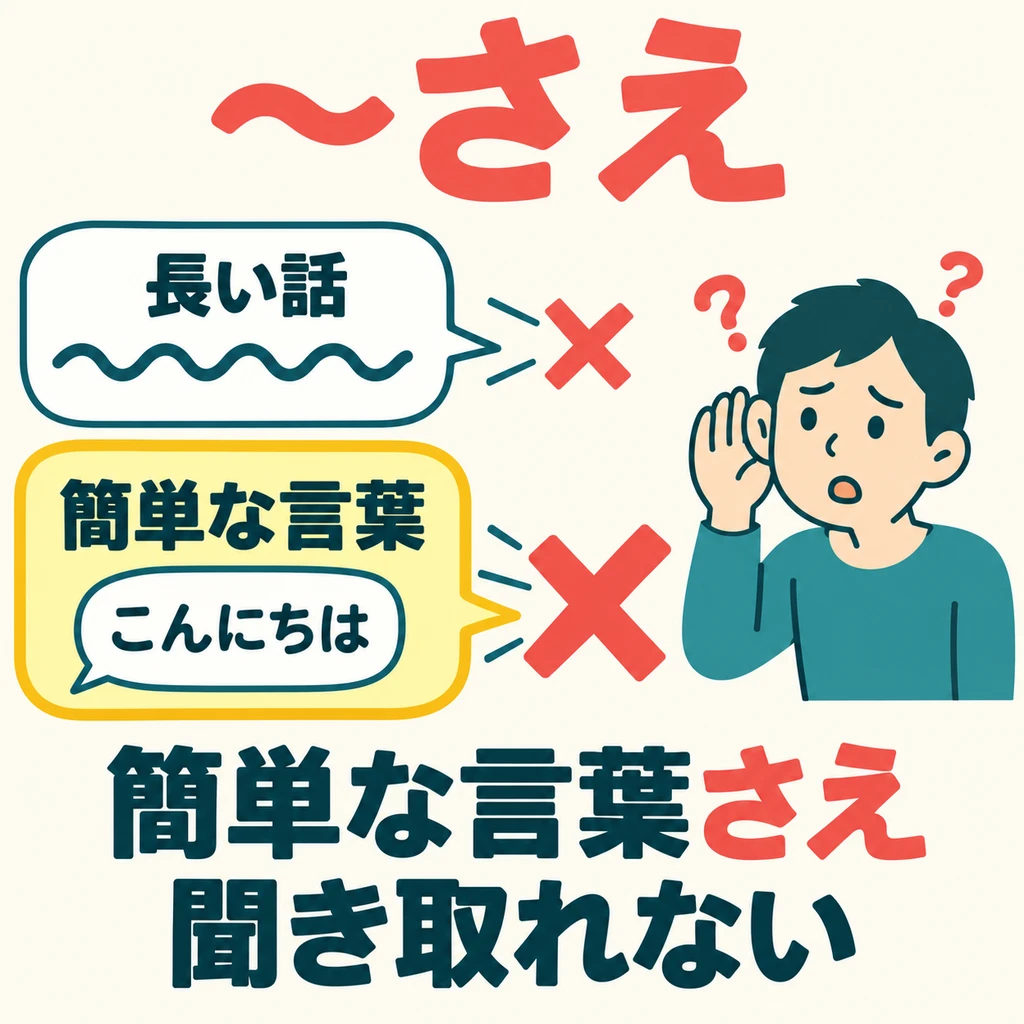
  1. You cannot understand even simple words? 「さえ」 highlights an extreme example to show how unexpected this is.
    You cannot understand even simple words? 「さえ」 highlights an extreme example to show how unexpected this is.

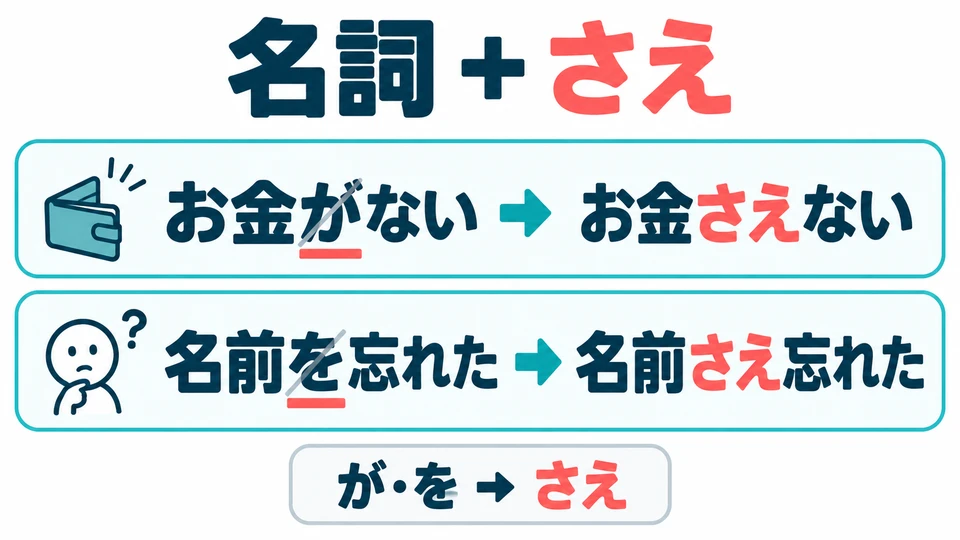
  2. Add 「さえ」 after a noun. The original が or を can be omitted, highlighting the example that the noun refers to.
    Add 「さえ」 after a noun. The original が or を can be omitted, highlighting the example that the noun refers to.

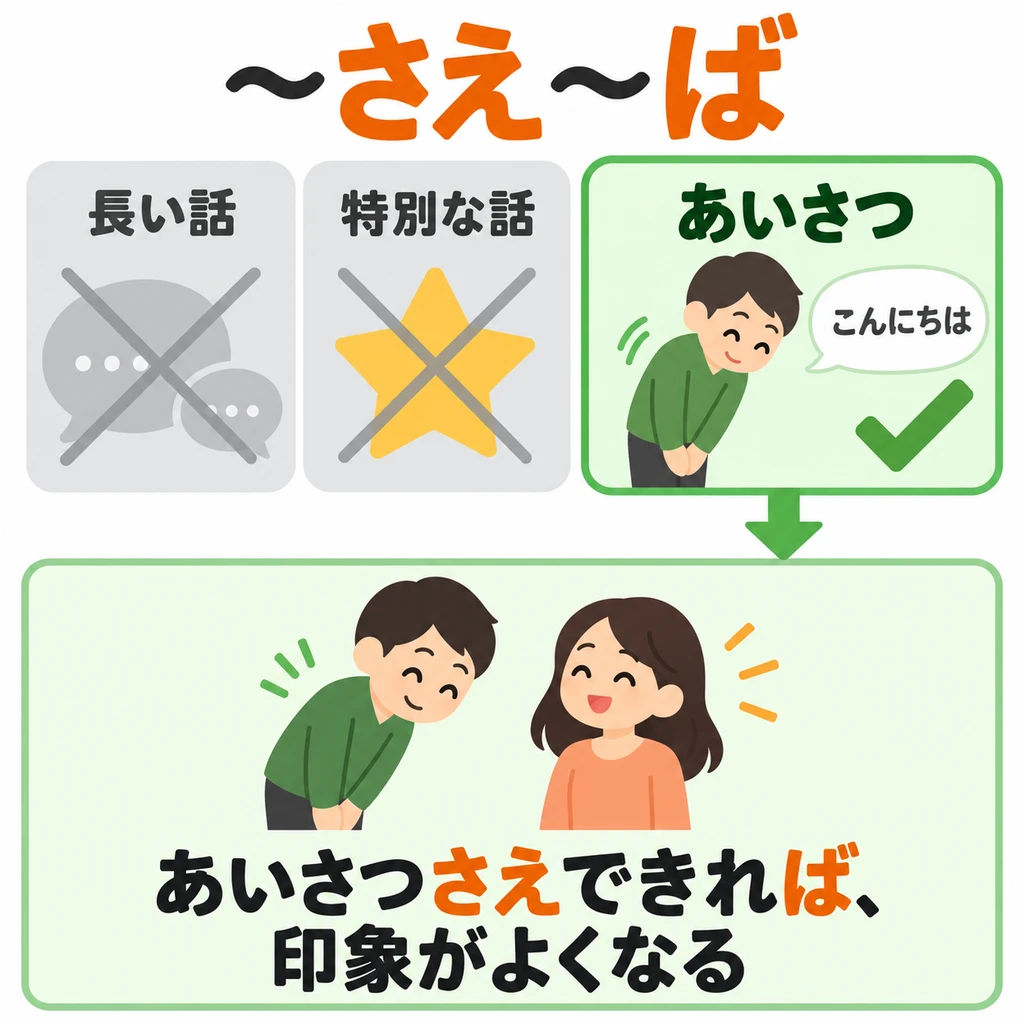
  3. You do not need to say much: greeting people properly is enough. 「さえ~ば」 emphasizes this one condition.
    You do not need to say much: greeting people properly is enough. 「さえ~ば」 emphasizes this one condition.

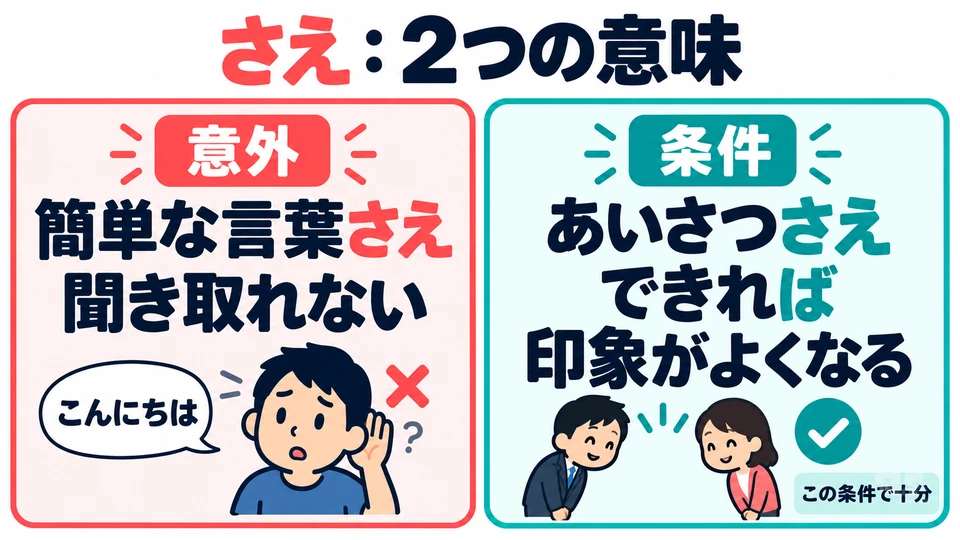
  4. In the examples, not understanding highlights something unexpected; 「できれば」 sets a condition. The two uses of さえ have different meanings.

    In the examples, not understanding highlights something unexpected; 「できれば」 sets a condition. The two uses of さえ have different meanings.

Example sentences

  • 方言ほうげんhougenがga強いつよいtsuyoiと、to、簡単な言葉かんたんなことばkantannakotobaさえsae聞きききkiki取れないこととれないことtorenaikotoがgaあります。arimasu。

    If the dialect is strong, you may not be able to understand even simple words.

In a conversation

Check yourself

  1. Level 1 · Recognise

    Which sentence is correct?

  2. Level 1 · Recognise

    Listen and choose the meaning

  3. Level 2 · Build

    Put the words in order

    If the dialect is strong, sometimes you can't even catch simple words.

  4. Level 3 · Use

    What goes in the blank?

    方言が強いと、簡単な言葉____聞き取れないことがあります。

    If the dialect is very strong, you may not even understand simple words.

More grammar in this theme

  • 〜さえ/さえ〜ばeven; as long as

Keep practising

Test your Japanese vocabulary12 adaptive questions, freeCheck your pronunciationRead aloud and get a scorePractise verb forms10-question conjugation quizSee the whole courseGrammar, vocabulary and quizzes by theme
  • A
    初めてはじめてのボランティアぼらんてぃあ活動かつどうなので、うまく人ひとと話せるはなせるかとても不安ふあんです。

    A: Since this is my first volunteer activity, I'm very anxious about whether I can talk with people well.

  • B
    大丈夫ですだいじょうぶですよ。相手あいてを尊重そんちょうする気持ちきもちさえあれば、簡単な挨拶かんたんなあいさつだけでも十分に気持ちじゅうぶんにきもちはわ伝わります。つたわります。

    B: That's fine. As long as you have respect for the other person, even a simple greeting will fully convey your feelings.

  • あいさつaisatsuさえsaeきちんとkichintoできれdekireば、ba、最初さいしょsaishoのno印象いんしょうinshouはわwaよくyokuなります。narimasu。

    As long as you can greet people properly, your first impression will be good.

  • A
    そうですね、まずはわ笑顔えがおでの挨拶あいさつさえ忘れずわすれずに頑張っがんばってみます。

    A: You're right. First, I'll do my best while making sure not to forget to greet people with a smile.

  • 〜どころではないin no position to; far from
    〜たところdid…and found that
    〜ことになったit has been decided
    〜に限り/〜限りはlimited to; as long as
    〜かなと思ってthinking maybe; so I
    〜にしてはfor; contrary to expectation
    〜につきper; for each
    〜たものだused to; fond recollection
    〜ながらもalthough; despite feeling
    〜につけ(て)whenever; at every opportunity
    〜に反してcontrary to expectations
    〜ているうちにchange during an activity
    〜からしてinference from a clue
    Previous〜につけ(て)
    Next〜に反して