
Japanese grammar · ≈ JLPT N2 · Intermediate 2
〜ながらも~nagara mo
although; despite feeling
Use 〜ながらも to contrast a continuing feeling or state with an action that still takes place.
How it works
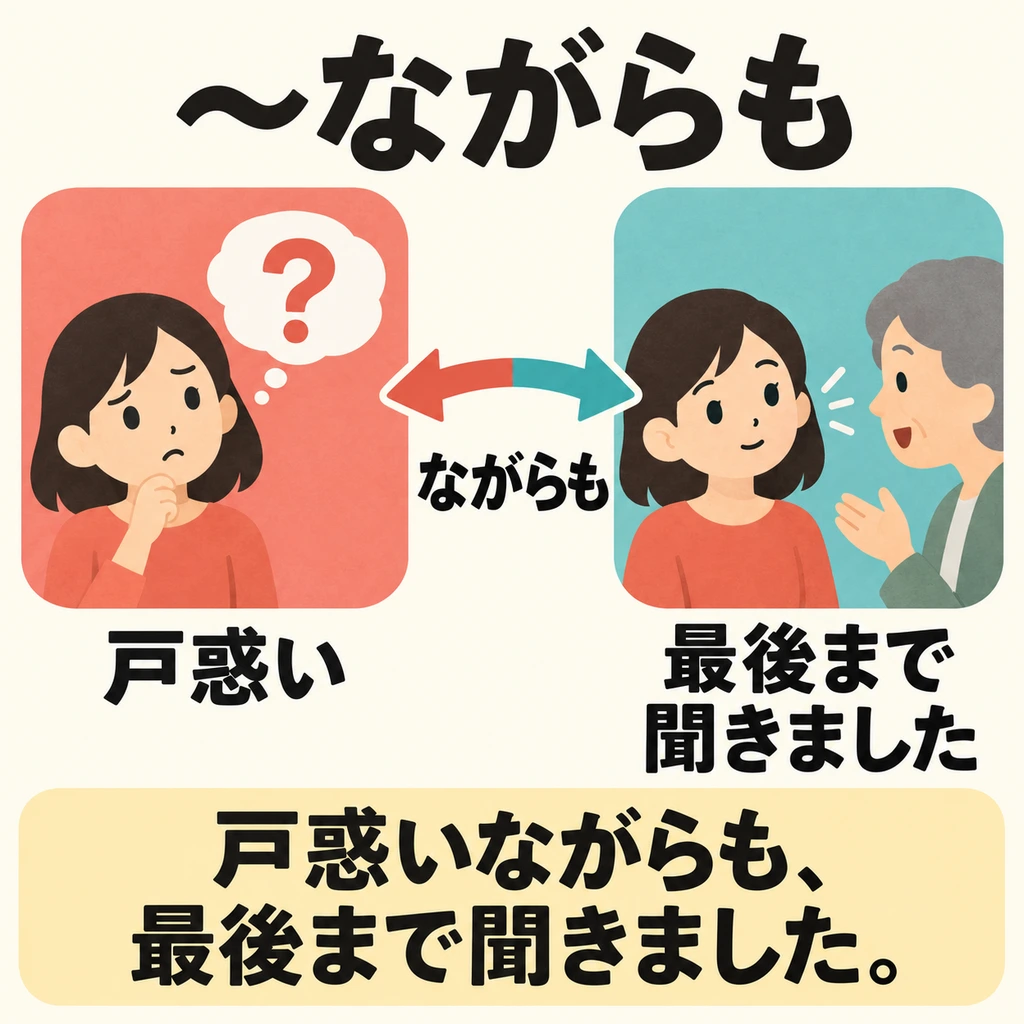
Feeling confused might make someone want to stop listening, yet they listen to the end. The focus is on the contrast between feeling and action.
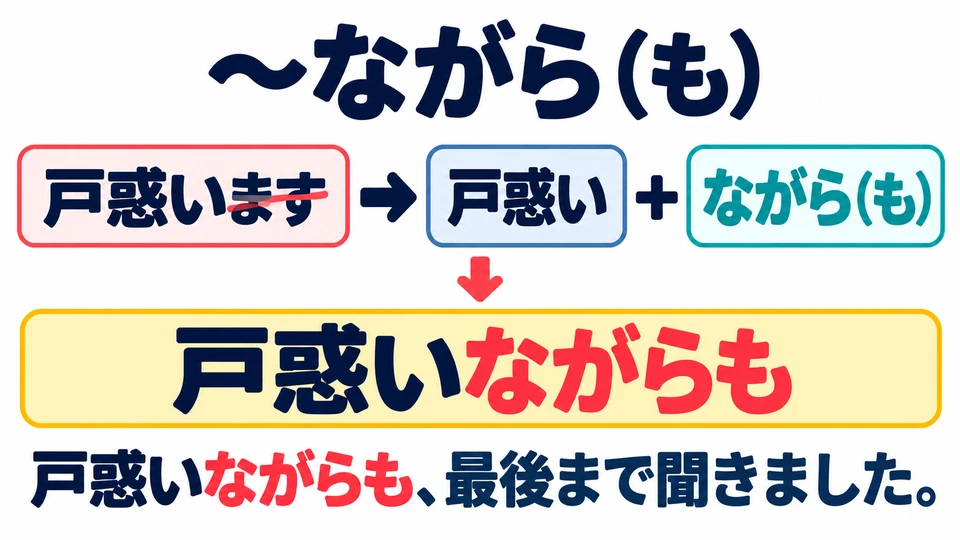
Remove 「ます」 from the verb and add 「ながら(も)」. For example, 「戸惑います」 becomes 「戸惑いながらも」.
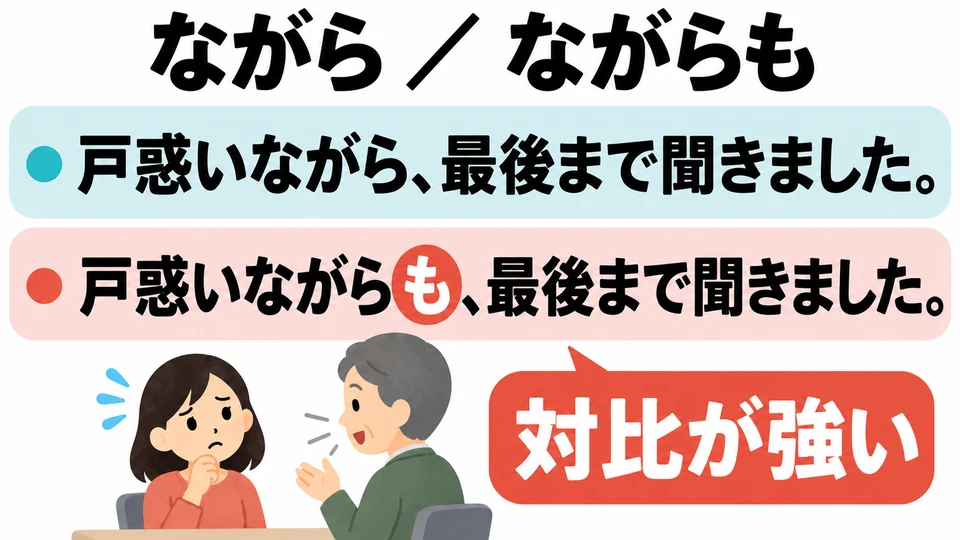
When the meaning is “although …, still …,” 「も」 can be omitted. Adding 「も」 makes the contrast stronger.
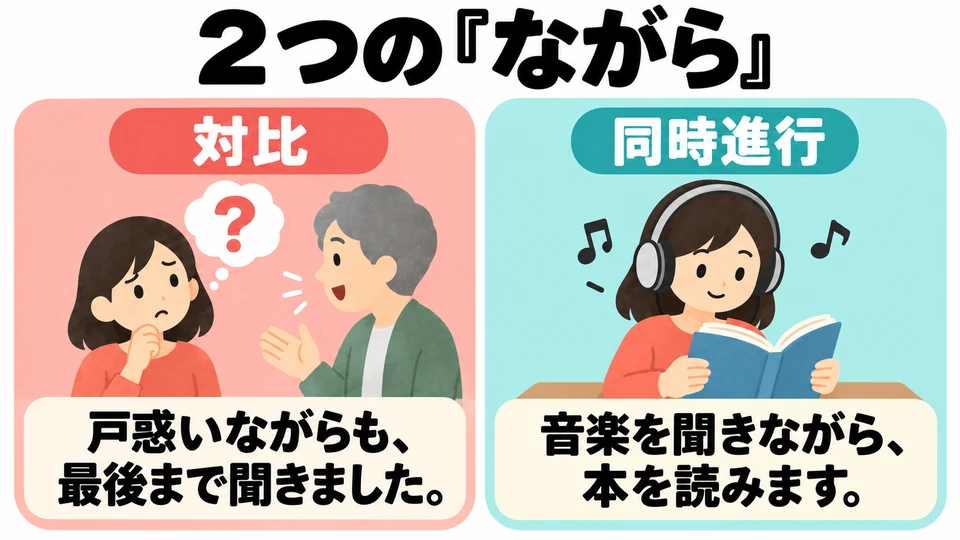
Here, the focus is on two contrasting sides. The previously learned “doing … while doing …” focuses on two actions happening at the same time.
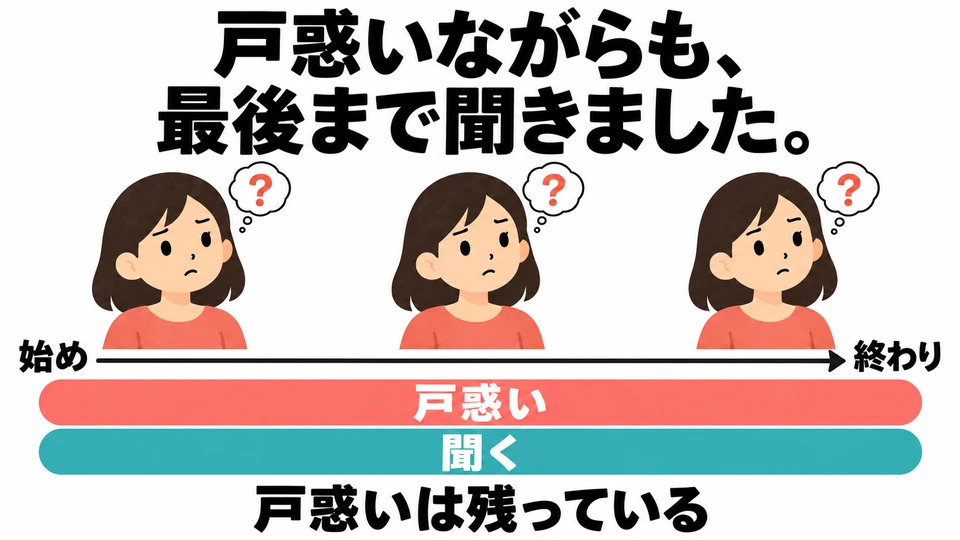
In the example, the same person keeps listening even though they still feel confused. They do not first resolve the confusion and then start listening.
Example sentences
- 相手aiteのno考え方kangaekataがga自分jibunとto違うchigauとto感じkanjiながらnagaraも、mo、
In a conversation

Check yourself
Level 1 · Recognise
Which sentence is correct?
Level 1 · Recognise
Listen and choose the meaning
Level 2 · Build
Put the words in order
Although I felt the other person's tone was a little cold, I listened calmly to the way they spoke.
Level 3 · Use
What goes in the blank?
相手の考え方が自分と違うと感じ____、否定せずに聞きました。
Although I felt the other person's way of thinking was different from mine, I listened without rejecting it.
More grammar in this theme
- 〜ながらもalthough; despite feeling