
Japanese grammar · ≈ JLPT N1 · Intermediate 2
〜につけ(て)~ni tsuke(te)
whenever; at every opportunity
Use 〜につけ(て) after an action for a feeling that recurs each time, or 何かにつけて for a frequent habit.
How it works
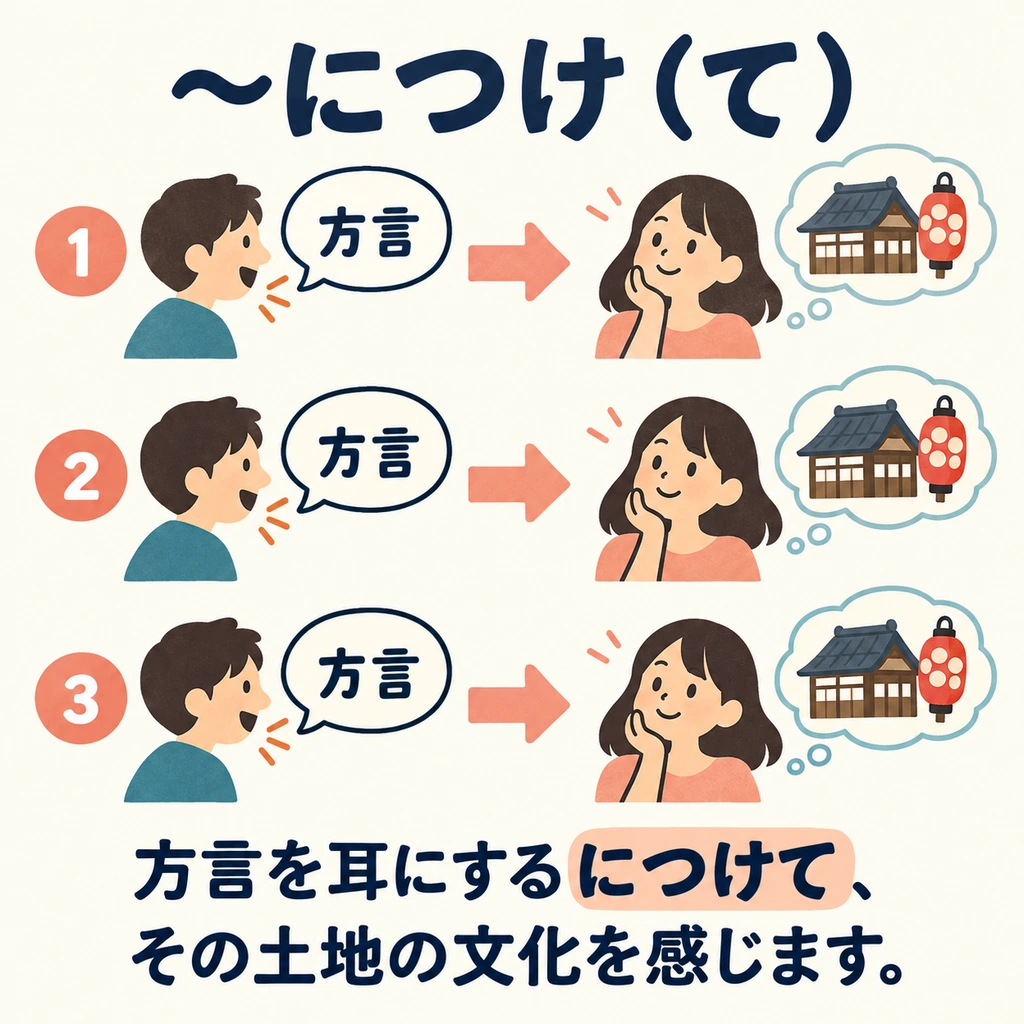
What feeling comes up each time you hear a dialect? This pattern emphasizes a feeling that keeps returning.
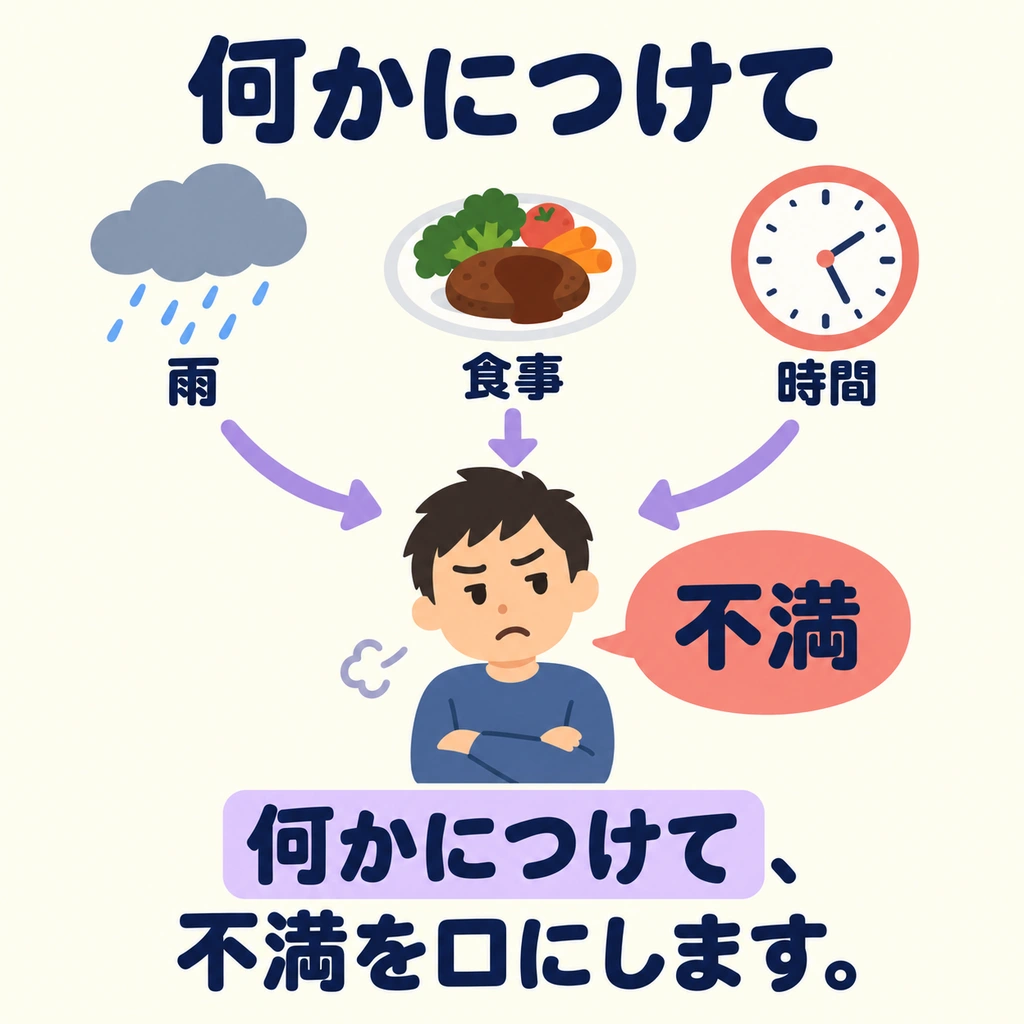
「何かにつけて」 means doing something at every opportunity. It often describes a habit.
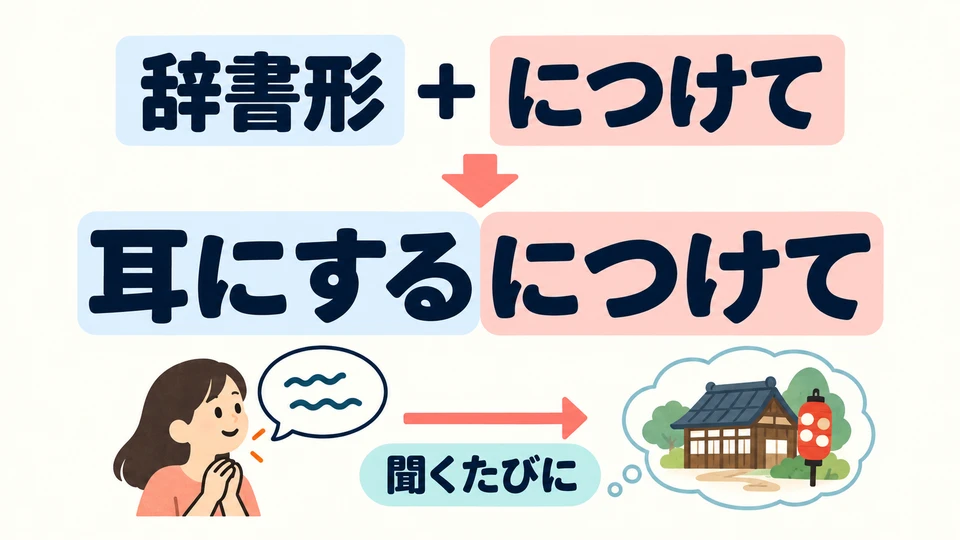
It follows a verb in dictionary form, such as 「耳にする」, and means “every time this action happens.”
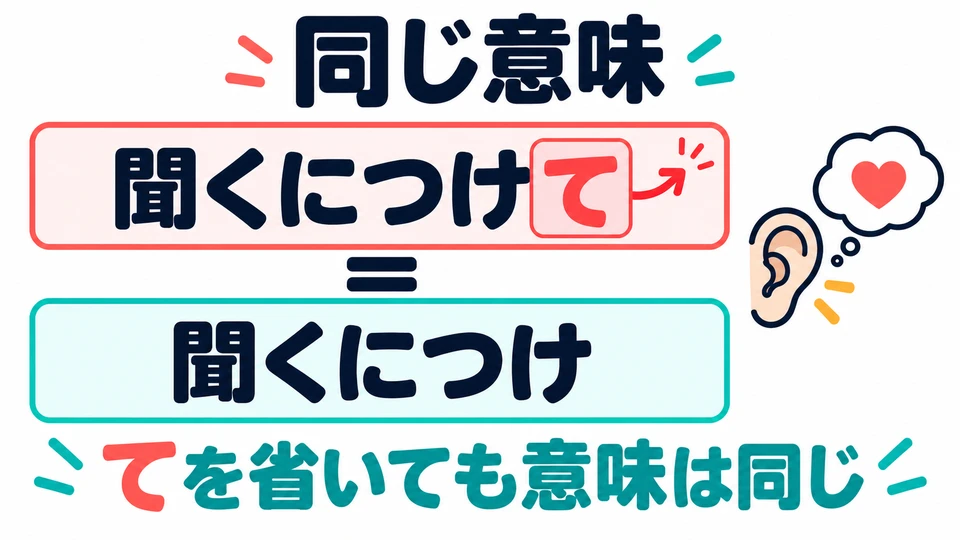
You can omit 「て」 from 「につけて」 and use 「につけ」. The meaning stays the same.
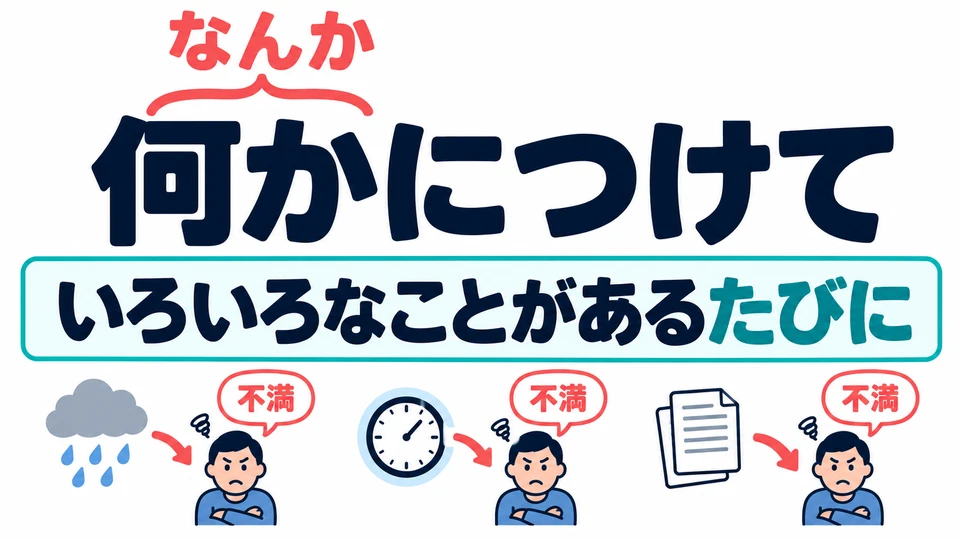
In the example, 「何か」 is read 「なんか」. Here, it means complaining whenever one thing or another comes up.
Example sentences
- 今imaのno若いwakai人hitoはwa何nanかkaにniつけtsukeて、te、不満fuman
In a conversation

Check yourself
Level 1 · Recognise
Which sentence is correct?
Level 1 · Recognise
Listen and choose the meaning
Level 2 · Build
Put the words in order
Whenever I reflect on the way I speak, I realize how important word choice is.
Level 3 · Use
What goes in the blank?
今の若い人は何か____、不満を口にします。
Young people these days complain at every opportunity.
More grammar in this theme
- 〜につけ(て)whenever; at every opportunity