JPEDLAB iconJPEDLAB
Save history

Create an account and play

Explore first, then save your progress whenever you are ready. No email address is required.

Start free
Read as articleCards
See the whole course›Intermediate 2›Intergenerational Exchange and Broader Perspectives

Japanese grammar · ≈ JLPT N1 · Intermediate 2

〜につけ(て)~ni tsuke(te)

whenever; at every opportunity

Use 〜につけ(て) after an action for a feeling that recurs each time, or 何かにつけて for a frequent habit.

Start the interactive lessonIllustrated cards, audio and speaking practice

How it works

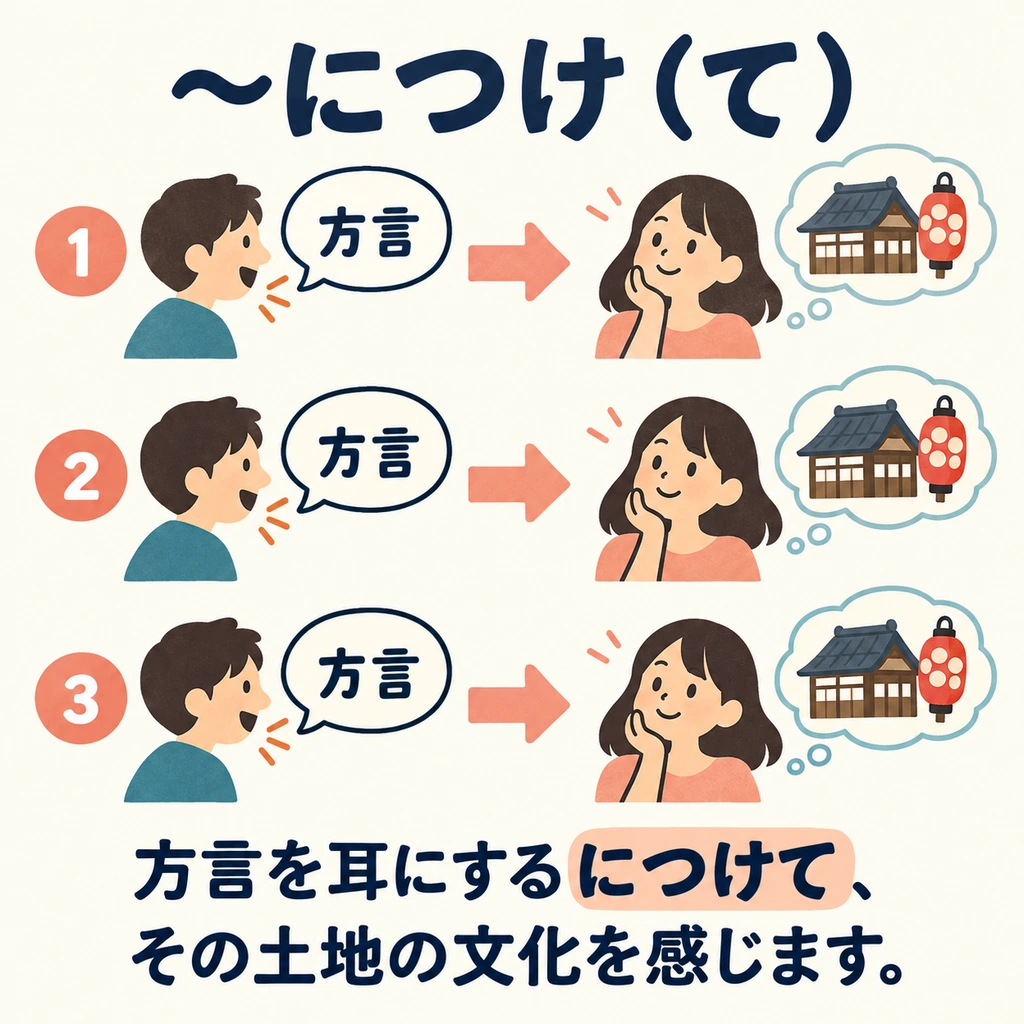
  1. What feeling comes up each time you hear a dialect? This pattern emphasizes a feeling that keeps returning.
    What feeling comes up each time you hear a dialect? This pattern emphasizes a feeling that keeps returning.

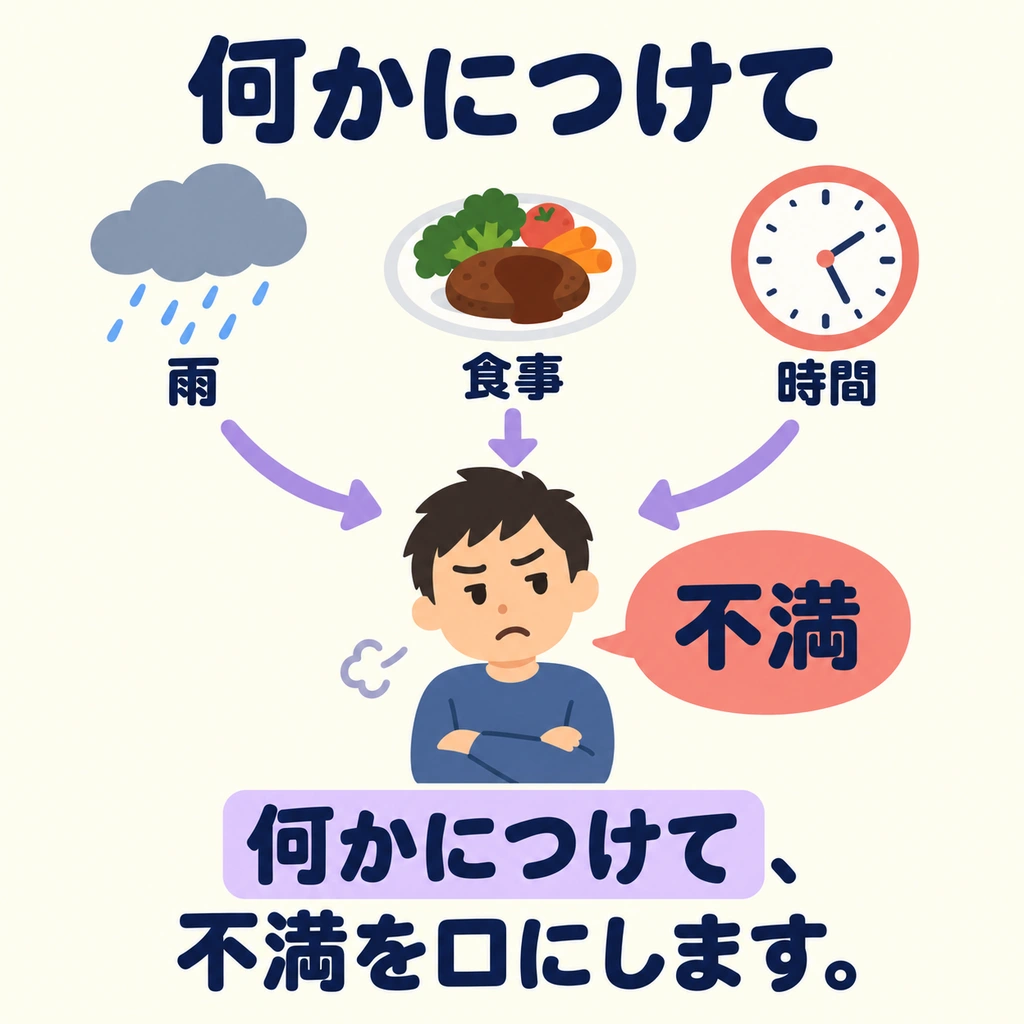
  2. 「何かにつけて」 means doing something at every opportunity. It often describes a habit.
    「何かにつけて」 means doing something at every opportunity. It often describes a habit.

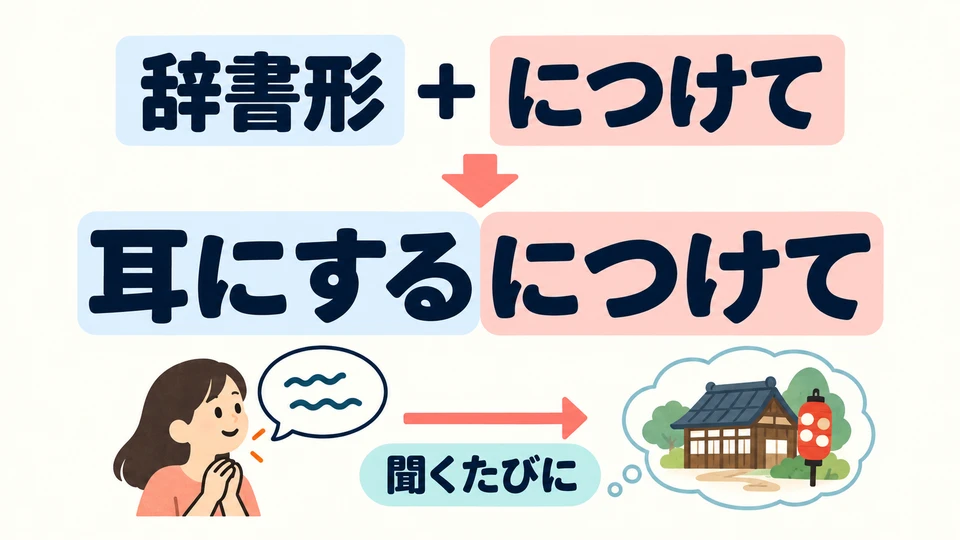
  3. It follows a verb in dictionary form, such as 「耳にする」, and means “every time this action happens.”
    It follows a verb in dictionary form, such as 「耳にする」, and means “every time this action happens.”

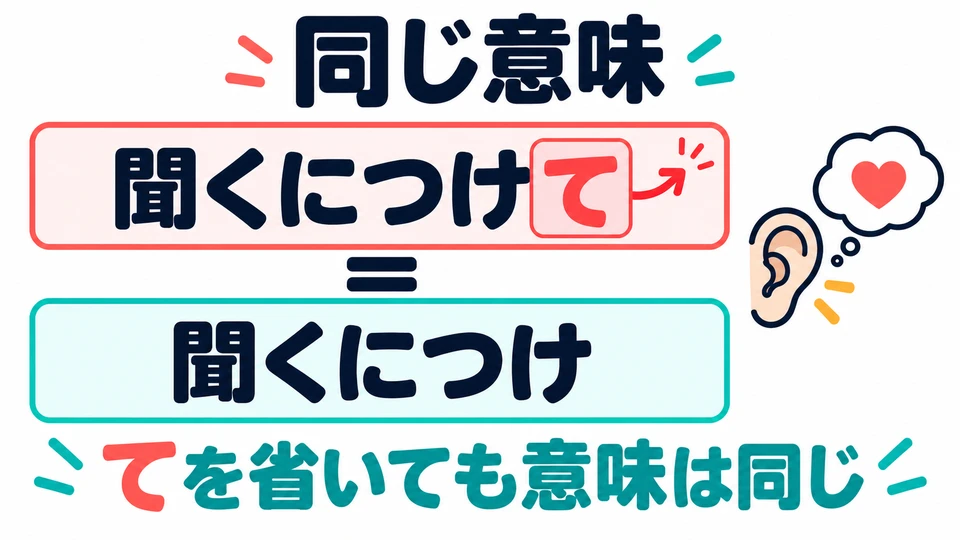
  4. You can omit 「て」 from 「につけて」 and use 「につけ」. The meaning stays the same.
    You can omit 「て」 from 「につけて」 and use 「につけ」. The meaning stays the same.

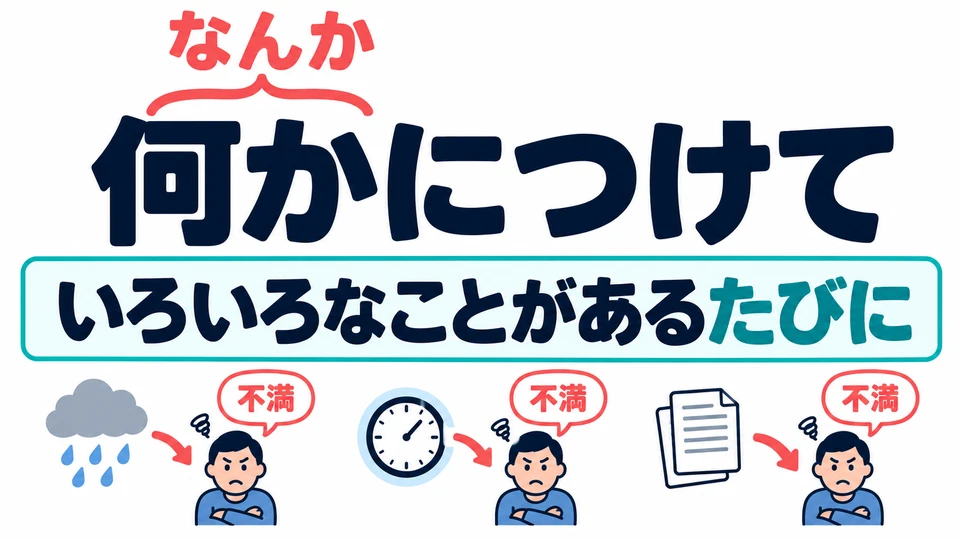
  5. In the example, 「何か」 is read 「なんか」. Here, it means complaining whenever one thing or another comes up.

    In the example, 「何か」 is read 「なんか」. Here, it means complaining whenever one thing or another comes up.

Example sentences

  • 今いまimaのno若いわかいwakai人ひとhitoはわwa何なんnanかkaにniつけtsukeて、te、不満ふまんfuman

In a conversation

Check yourself

  1. Level 1 · Recognise

    Which sentence is correct?

  2. Level 1 · Recognise

    Listen and choose the meaning

  3. Level 2 · Build

    Put the words in order

    Whenever I reflect on the way I speak, I realize how important word choice is.

  4. Level 3 · Use

    What goes in the blank?

    今の若い人は何か____、不満を口にします。

    Young people these days complain at every opportunity.

More grammar in this theme

  • 〜につけ(て)whenever; at every opportunity

Keep practising

Test your Japanese vocabulary12 adaptive questions, freeCheck your pronunciationRead aloud and get a scorePractise verb forms10-question conjugation quizSee the whole courseGrammar, vocabulary and quizzes by theme
を
o
口くちkuchi
にni
します。shimasu。

Young people nowadays complain about one thing or another.

  • A
    山田さんやまださんはわ何なんかにつけて、親しさしたしさをアピールあぴーるするためにくだけた表現くだけたひょうげんを使いますつかいますね。

    A: Mr. Yamada uses casual expressions at every opportunity to show friendliness.

  • 方言ほうげんhougenをo耳みみmimiにniするsuruにniつけtsukeて、te、そのsono土地とちtochiのno文化ぶんかbunkaをo感じます。かんじます。kanjimasu。

    Every time I hear a dialect, I feel the culture of that region.

  • B
    ええ。でも、彼かれの言葉遣いことばづかいを聞くきくにつけて、少しすこし丁寧さていねいさが足りないたりないのではわないかと心配しんぱいになります。

    B: Yes. But every time I hear his wording, I worry that it might be lacking in politeness.

  • A
    確かに、たしかに、場面ばめんに合うあう言葉遣いことばづかいを意識いしきすることはわ大切ですたいせつですね。

    A: Indeed, it is important to be mindful of using language appropriate to the situation.

  • 〜どころではないin no position to; far from
    〜たところdid…and found that
    〜ことになったit has been decided
    〜に限り/〜限りはlimited to; as long as
    〜かなと思ってthinking maybe; so I
    〜にしてはfor; contrary to expectation
    〜につきper; for each
    〜たものだused to; fond recollection
    〜ながらもalthough; despite feeling
    〜さえ/さえ〜ばeven; as long as
    〜に反してcontrary to expectations
    〜ているうちにchange during an activity
    〜からしてinference from a clue
    Previous〜ながらも
    Next〜さえ/さえ〜ば