
Japanese grammar · ≈ JLPT N3 · Intermediate 2
〜かなと思って~ka na to omotte
thinking maybe; so I
Use 〜かなと思って to explain an action you took based on a thought or guess you were still unsure about.
How it works
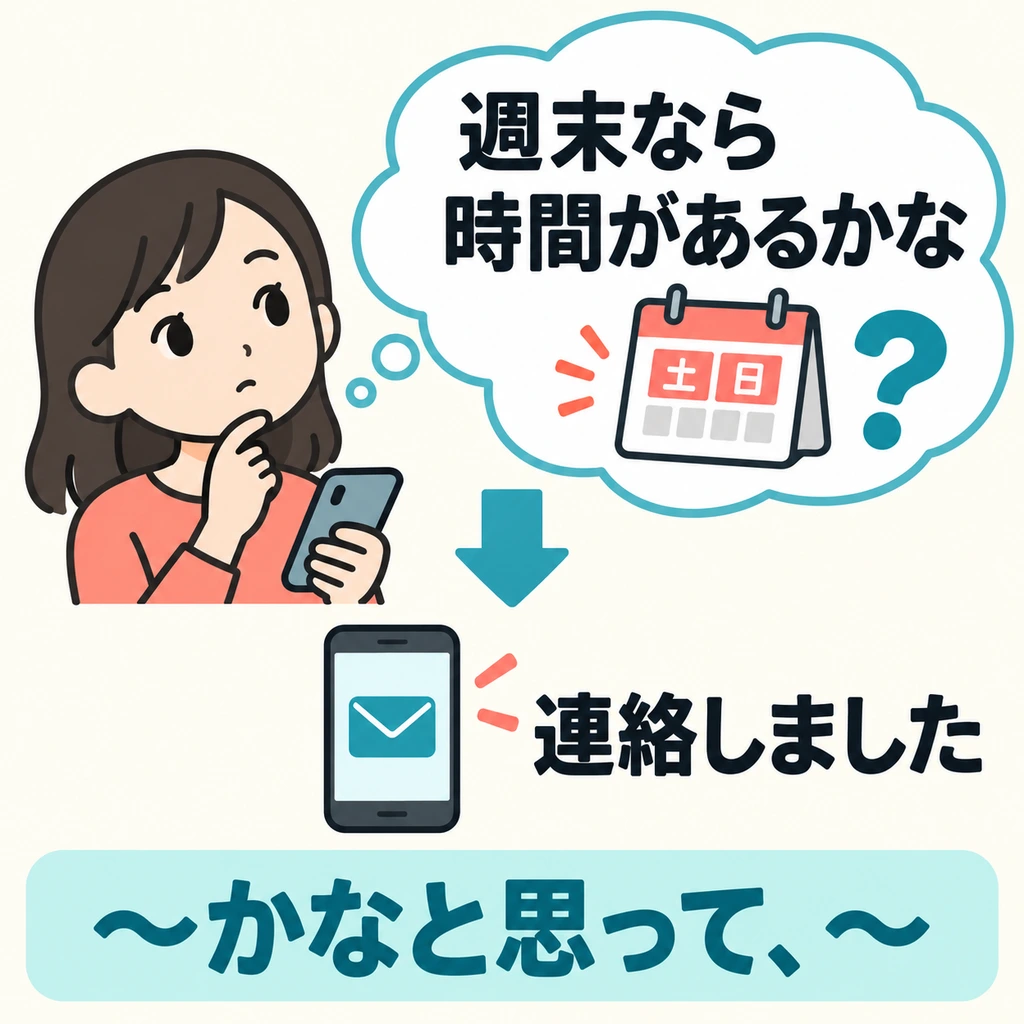
Unsure whether the other person was free, the speaker guessed they might be and tried contacting them.
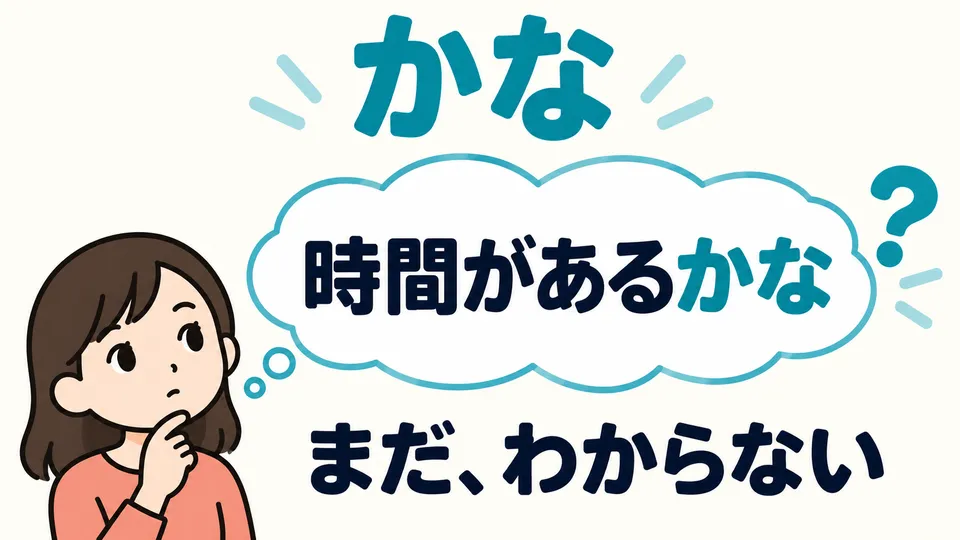
「かな」 expresses a thought you are still unsure about, leaving room for uncertainty when you say it.
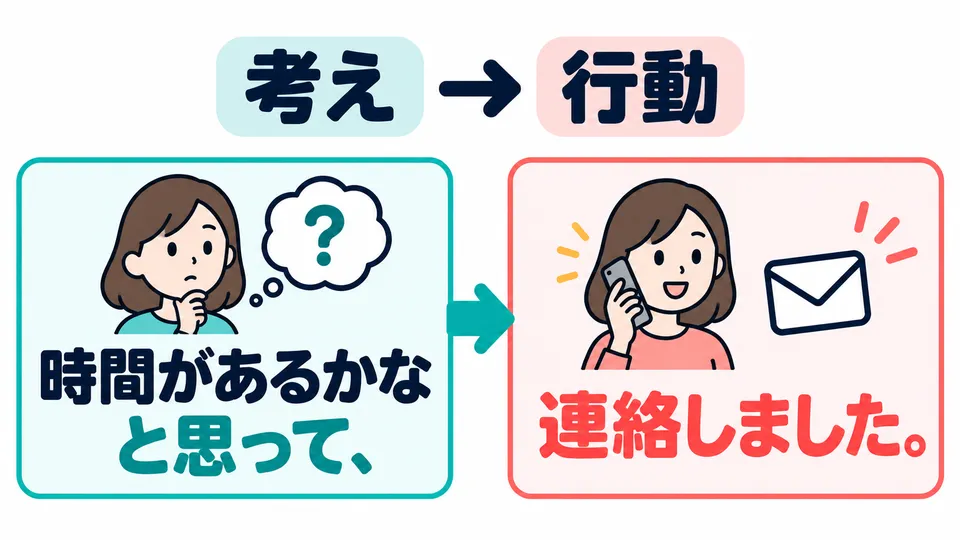
「と思って」 connects the thought to the action that follows, explaining why the speaker acted that way at the time.
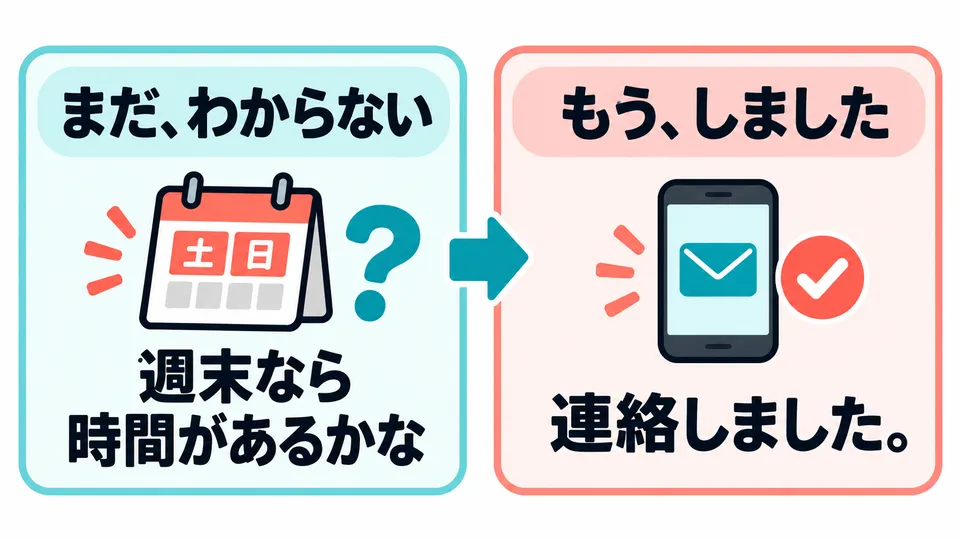
Having free time on the weekend is only a guess; 「連絡しました」 is an action already completed.
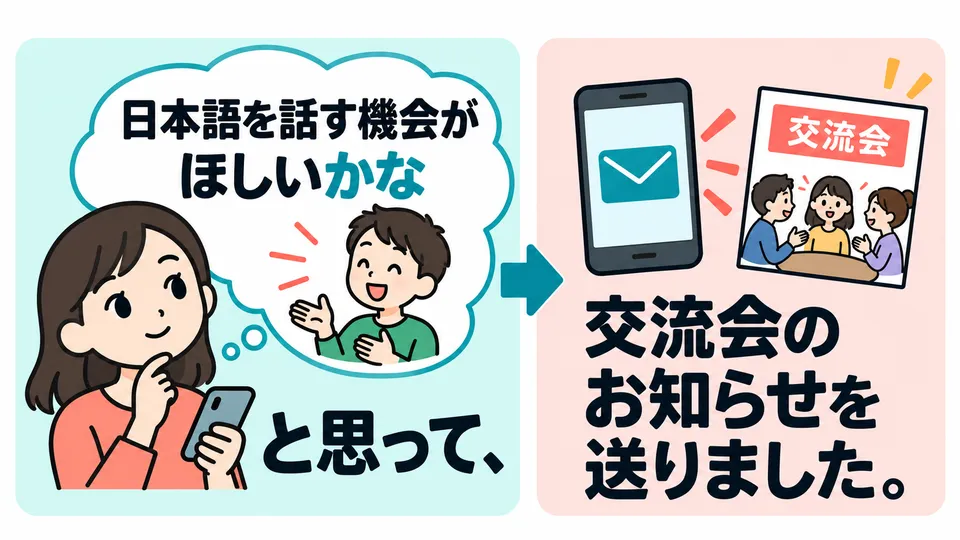
In the second sentence, the speaker guesses the other person might want to speak Japanese, so sends them information about an exchange meeting.
Example sentences
- 週末shuumatsuなら時間narajikanがgaあるaruかkaなnaとto思っomotて、te、連絡renrakuしました。shimashita。
In a conversation

Check yourself
Level 1 · Recognise
Which sentence is correct?
Level 1 · Recognise
Listen and choose the meaning
Level 2 · Build
Put the words in order
I thought you might have time on the weekend, so I contacted you.
Level 3 · Use
What goes in the blank?
週末なら時間がある____、連絡しました。
I contacted you because I thought you might have time on the weekend.
More grammar in this theme
- 〜かなと思ってthinking maybe; so I