JPEDLAB iconJPEDLAB
Save history

Create an account and play

Explore first, then save your progress whenever you are ready. No email address is required.

Start free
Read as articleCards
See the whole course›Intermediate 2›Intergenerational Exchange and Broader Perspectives

Japanese grammar · ≈ JLPT N3 · Intermediate 2

〜かなと思って~ka na to omotte

thinking maybe; so I

Use 〜かなと思って to explain an action you took based on a thought or guess you were still unsure about.

Start the interactive lessonIllustrated cards, audio and speaking practice

How it works

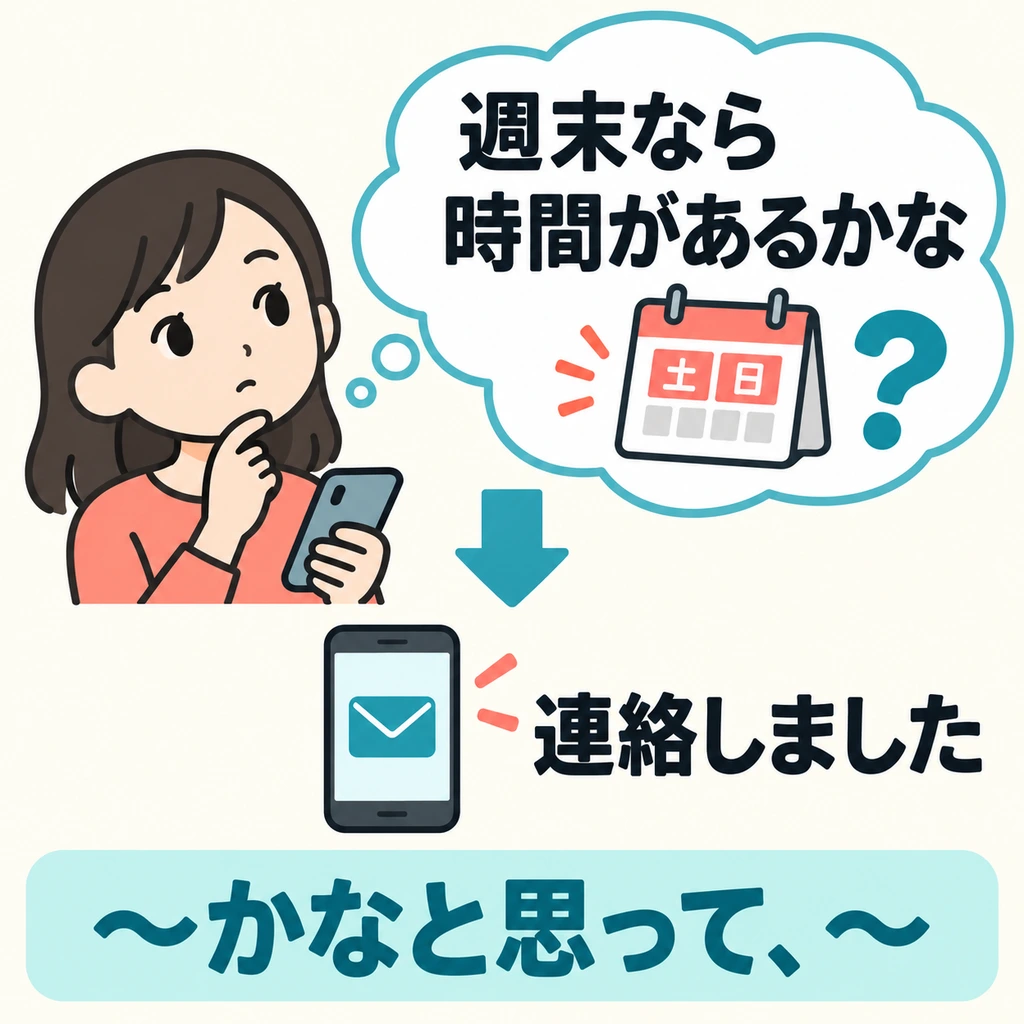
  1. Unsure whether the other person was free, the speaker guessed they might be and tried contacting them.
    Unsure whether the other person was free, the speaker guessed they might be and tried contacting them.

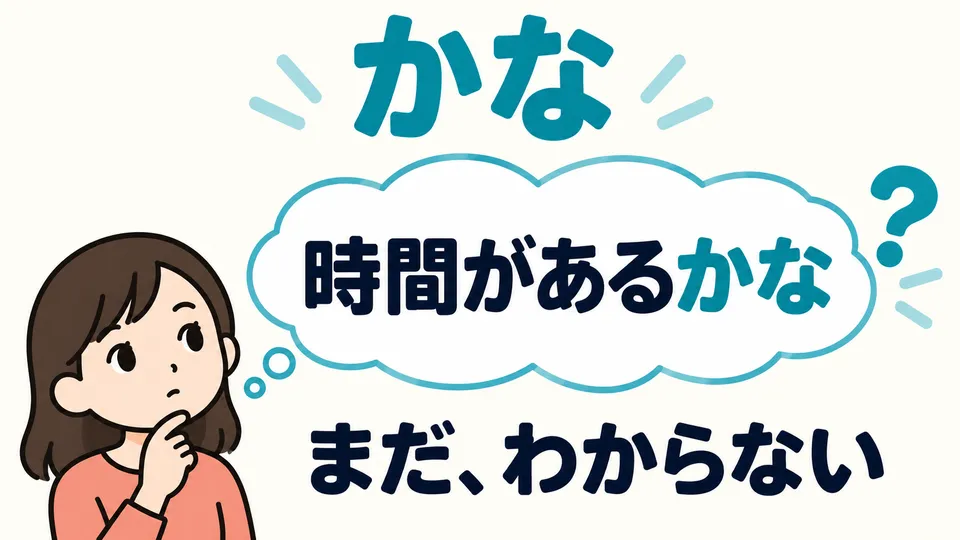
  2. 「かな」 expresses a thought you are still unsure about, leaving room for uncertainty when you say it.
    「かな」 expresses a thought you are still unsure about, leaving room for uncertainty when you say it.

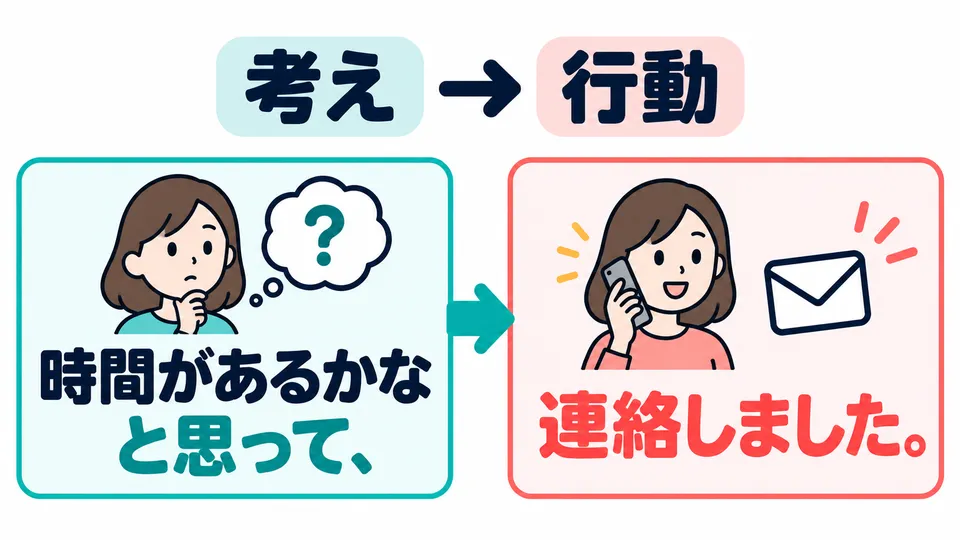
  3. 「と思って」 connects the thought to the action that follows, explaining why the speaker acted that way at the time.
    「と思って」 connects the thought to the action that follows, explaining why the speaker acted that way at the time.

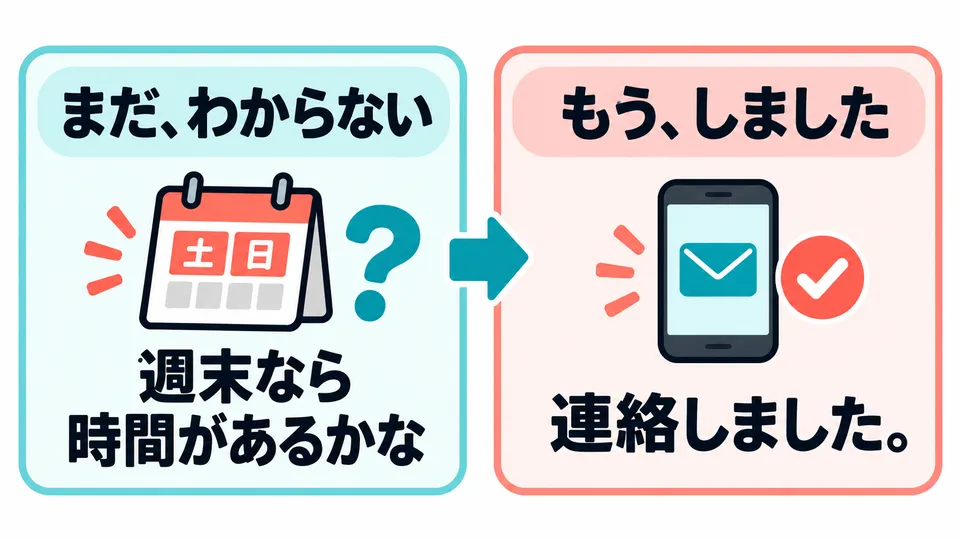
  4. Having free time on the weekend is only a guess; 「連絡しました」 is an action already completed.
    Having free time on the weekend is only a guess; 「連絡しました」 is an action already completed.

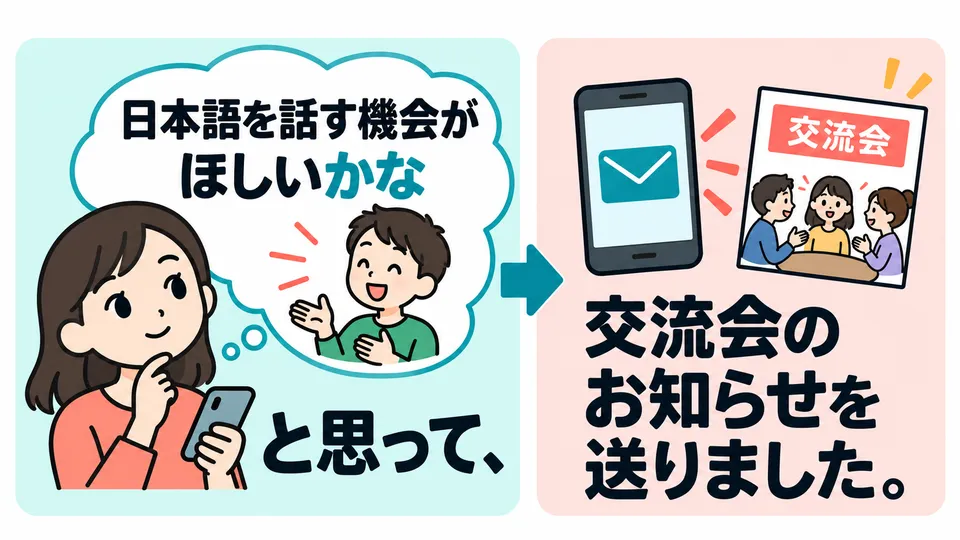
  5. In the second sentence, the speaker guesses the other person might want to speak Japanese, so sends them information about an exchange meeting.

    In the second sentence, the speaker guesses the other person might want to speak Japanese, so sends them information about an exchange meeting.

Example sentences

  • 週末しゅうまつshuumatsuなら時間ならじかんnarajikanがgaあるaruかkaなnaとto思っおもっomotて、te、連絡れんらくrenrakuしました。shimashita。

In a conversation

Check yourself

  1. Level 1 · Recognise

    Which sentence is correct?

  2. Level 1 · Recognise

    Listen and choose the meaning

  3. Level 2 · Build

    Put the words in order

    I thought you might have time on the weekend, so I contacted you.

  4. Level 3 · Use

    What goes in the blank?

    週末なら時間がある____、連絡しました。

    I contacted you because I thought you might have time on the weekend.

More grammar in this theme

  • 〜かなと思ってthinking maybe; so I

Keep practising

Test your Japanese vocabulary12 adaptive questions, freeCheck your pronunciationRead aloud and get a scorePractise verb forms10-question conjugation quizSee the whole courseGrammar, vocabulary and quizzes by theme

I contacted you thinking you might have some free time on the weekend.

  • A
    来週らいしゅうの交流こうりゅう会かいですが、都合つごうがつくかなと思っおもって連絡れんらくしました。

    A: Regarding next week's exchange meeting, I contacted you thinking you might be able to make it.

  • B
    ありがとうございます。ちょうど空きあき時間じかんがあるので、参加さんかできます。

    B: Thank you. I happen to have some free time, so I can join.

  • 日本にほんnihon語ごgoをo話すはなすhanasu機会きかいkikaiがgaほしいhoshiiかkaなnaとto思っおもっomotて、te、交流こうりゅうkouryuu会かいkaiのnoお知らせおしらせoshiraseをo送りました。おくりました。okurimashita。

    I sent you information about the exchange meeting, thinking you might want an opportunity to speak Japanese.

  • A
    よかったです、それならさっそく日程にってい調整ちょうせいをしましょう。

    A: That's great. Let's adjust our schedules right away.

  • 〜どころではないin no position to; far from
    〜たところdid…and found that
    〜ことになったit has been decided
    〜に限り/〜限りはlimited to; as long as
    〜にしてはfor; contrary to expectation
    〜につきper; for each
    〜たものだused to; fond recollection
    〜ながらもalthough; despite feeling
    〜につけ(て)whenever; at every opportunity
    〜さえ/さえ〜ばeven; as long as
    〜に反してcontrary to expectations
    〜ているうちにchange during an activity
    〜からしてinference from a clue
    Previous〜に限り/〜限りは
    Next〜にしては