
JPEDLAB iconJPEDLAB
Save history

Create an account and play

Explore first, then save your progress whenever you are ready. No email address is required.

Start free
Read as articleCards
1/8

Feeling confused might make someone want to stop listening, yet they listen to the end. The focus is on the contrast between feeling and action.

››

Lesson notes · ≈ JLPT N2 · Intermediate 2

〜ながらも~nagara mo

although; despite feeling

Use 〜ながらも to contrast a continuing feeling or state with an action that still takes place.

How it works
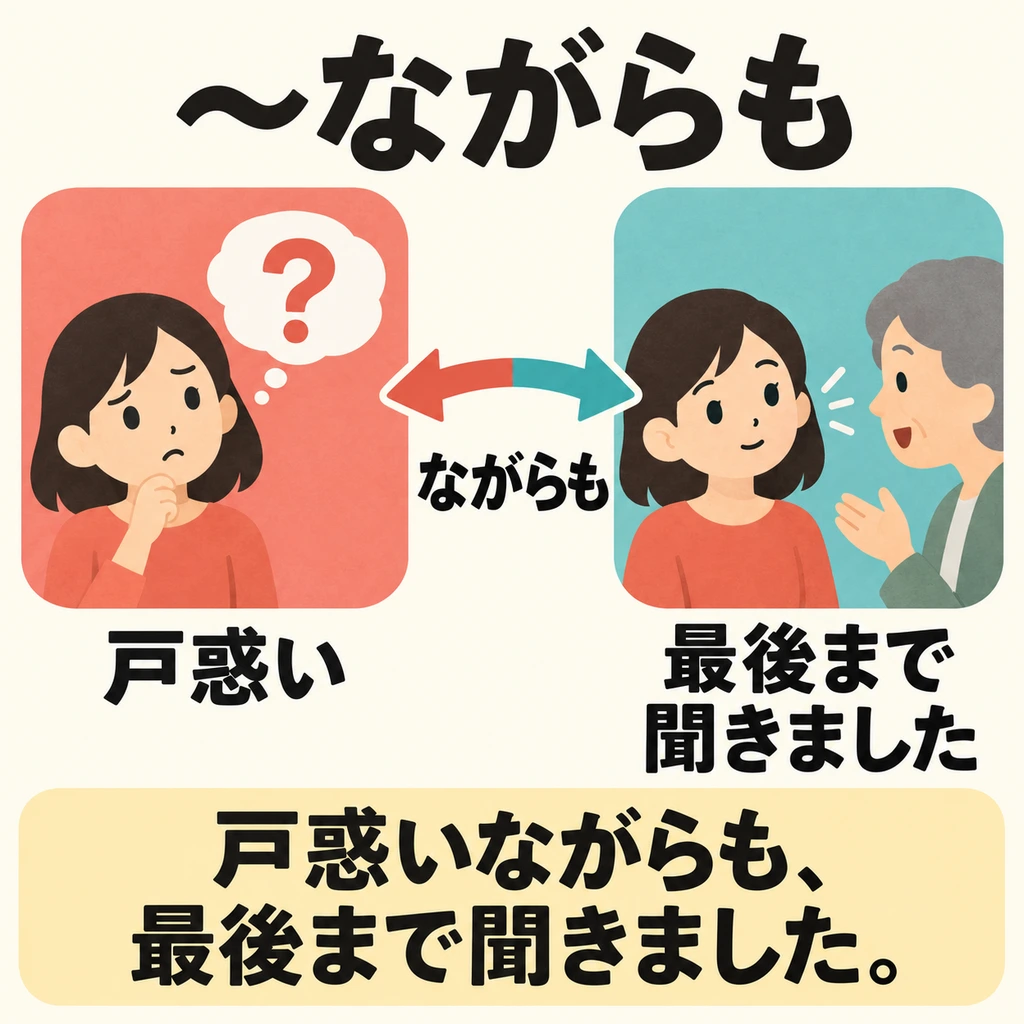
  1. Feeling confused might make someone want to stop listening, yet they listen to the end. The focus is on the contrast between feeling and action.
    Feeling confused might make someone want to stop listening, yet they listen to the end. The focus is on the contrast between feeling and action.

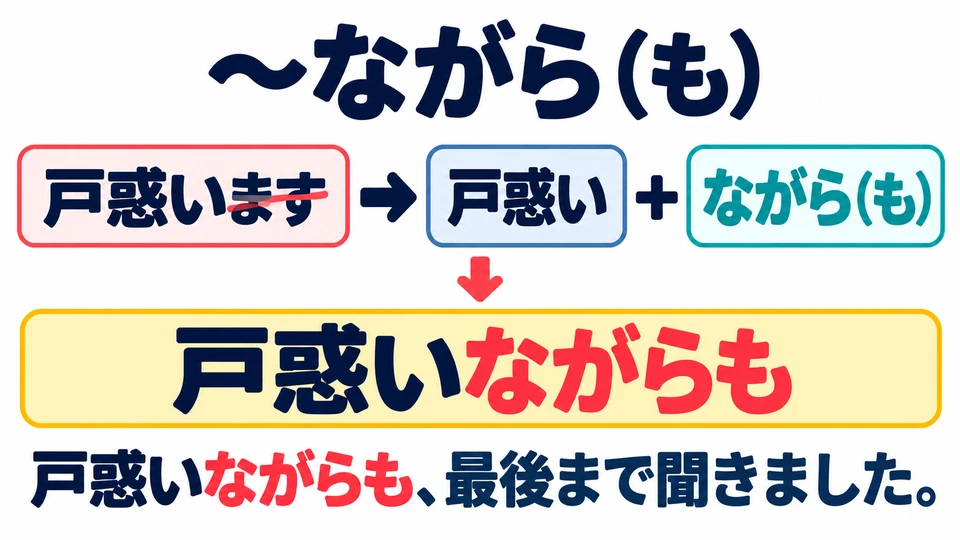
  2. Remove 「ます」 from the verb and add 「ながら(も)」. For example, 「戸惑います」 becomes 「戸惑いながらも」.
    Remove 「ます」 from the verb and add 「ながら(も)」. For example, 「戸惑います」 becomes 「戸惑いながらも」.

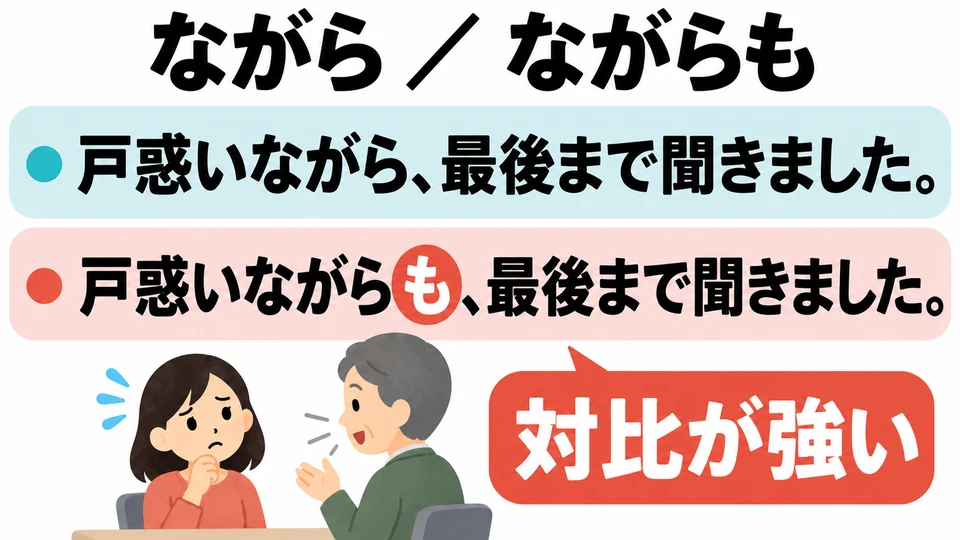
  3. When the meaning is “although …, still …,” 「も」 can be omitted. Adding 「も」 makes the contrast stronger.
    When the meaning is “although …, still …,” 「も」 can be omitted. Adding 「も」 makes the contrast stronger.

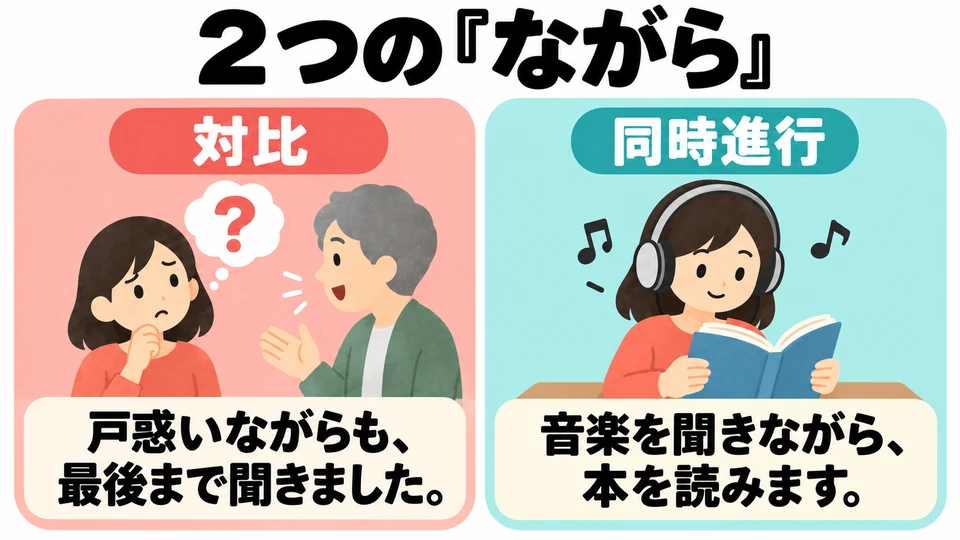
  4. Here, the focus is on two contrasting sides. The previously learned “doing … while doing …” focuses on two actions happening at the same time.
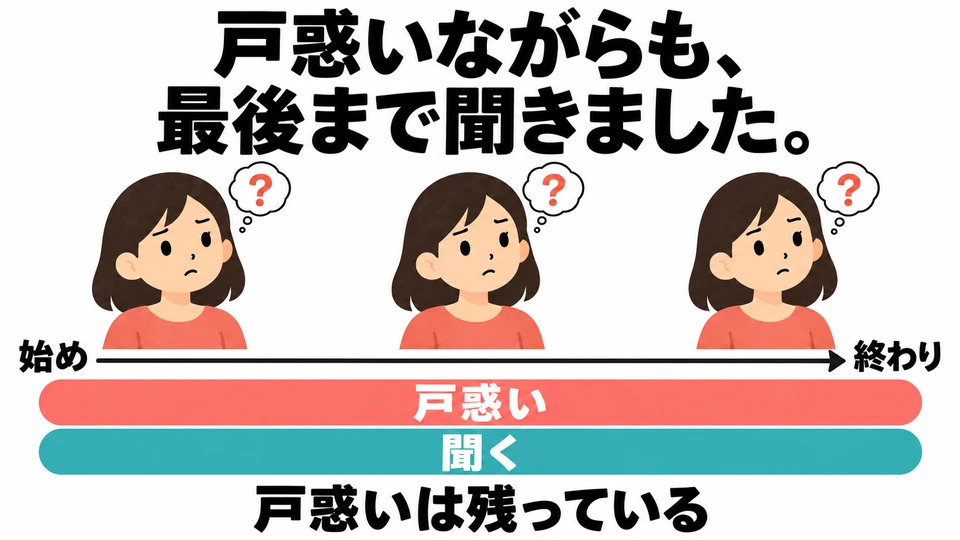
    Here, the focus is on two contrasting sides. The previously learned “doing … while doing …” focuses on two actions happening at the same time.

  5. In the example, the same person keeps listening even though they still feel confused. They do not first resolve the confusion and then start listening.
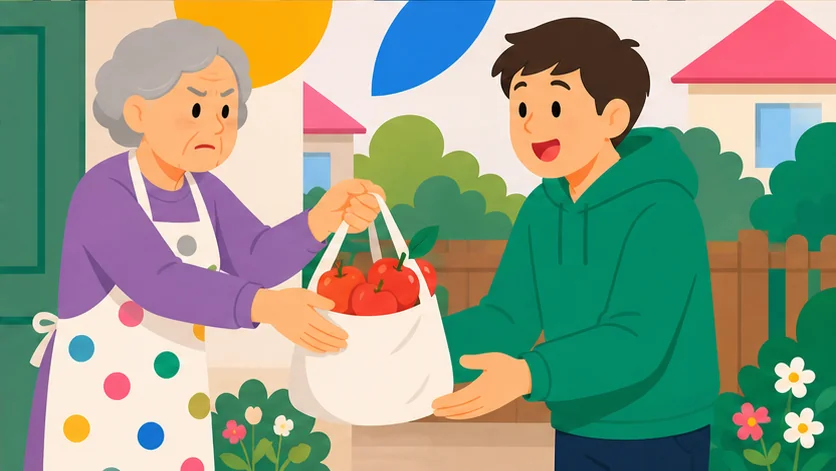
    In the example, the same person keeps listening even though they still feel confused. They do not first resolve the confusion and then start listening.

Example sentences

  • 相手あいてaiteのno考え方かんがえかたkangaekataがga自分じぶんjibunとto違うちがうchigauとto感じかんじkanjiながらnagaraも、mo、否定ひていhiteiせずsezuにni聞きました。ききました。kikimashita。

    Although I felt that the other person's way of thinking was different from mine, I listened without denying it.

  • 年上としうえtoshiueのno人ひとhitoのno話し方はなしかたhanashikataにni戸惑いとまどいtomadoiながらnagaraも、mo、最後さいごsaigoまでmade聞きました。ききました。kikimashita。

In a conversation

  • A
    お隣おとなりの鈴木さんすずきさんは、わ、時々ときどきとても厳しいきびしい口調くちょうで話しますはなしますね。

    A: Mr. Suzuki next door sometimes talks in a very harsh tone, doesn't he?

  • B
    ええ、少しすこし遠慮えんりょのない言い方いいかただと感じかんじながらも、悪気わるぎがないことはわ分かっわかっています。

    B: Yes, although I feel his way of speaking is a bit too direct, I know he means no harm.

  • A
    なるほど。相手あいての言葉ことばの裏うらにある気配りきくばりを、優しくやさしく受けうけ止めとめているのですね。

    A: I see. You are gently accepting the thoughtfulness behind the other person's words.

Check yourself

  1. Level 1 · Recognise

    Which sentence is correct?

  2. Level 1 · Recognise

    Listen and choose the meaning

  3. Level 2 · Build

    Put the words in order

    Although I felt the other person's tone was a little cold, I listened calmly to the way they spoke.

  4. Level 3 · Use

    What goes in the blank?

    相手の考え方が自分と違うと感じ____、否定せずに聞きました。

    Although I felt the other person's way of thinking was different from mine, I listened without rejecting it.

More grammar in this theme

  • 〜どころではないin no position to; far from
  • 〜たところdid…and found that
  • 〜ことになったit has been decided
  • 〜に限り/〜限りはlimited to; as long as
  • 〜かなと思ってthinking maybe; so I
  • 〜にしてはfor; contrary to expectation
  • 〜につきper; for each
  • 〜たものだused to; fond recollection
  • 〜ながらもalthough; despite feeling
  • 〜につけ(て)whenever; at every opportunity
  • 〜さえ/さえ〜ばeven; as long as
  • 〜に反してcontrary to expectations
  • 〜ているうちにchange during an activity
  • 〜からしてinference from a clue
Previous〜たものだNext〜につけ(て)

Keep practising

Test your Japanese vocabulary12 adaptive questions, freeCheck your pronunciationRead aloud and get a scorePractise verb forms10-question conjugation quizSee the whole courseGrammar, vocabulary and quizzes by theme
See the whole course
Intermediate 2
Intergenerational Exchange and Broader Perspectives

Although I was bewildered by the way the older person spoke, I listened to the end.