JPEdLab iconJPEdLab
Save history

Create an account and play

Explore first, then save your progress whenever you are ready. No email address is required.

Start free
  1. Japanese grammar
  2. JLPT N3 grammar
  3. 〜させていただけませんか

〜させていただけませんか~sasete itadakemasen ka

Sasete itadakemasen ka (〜させていただけませんか) means “politely ask permission”.

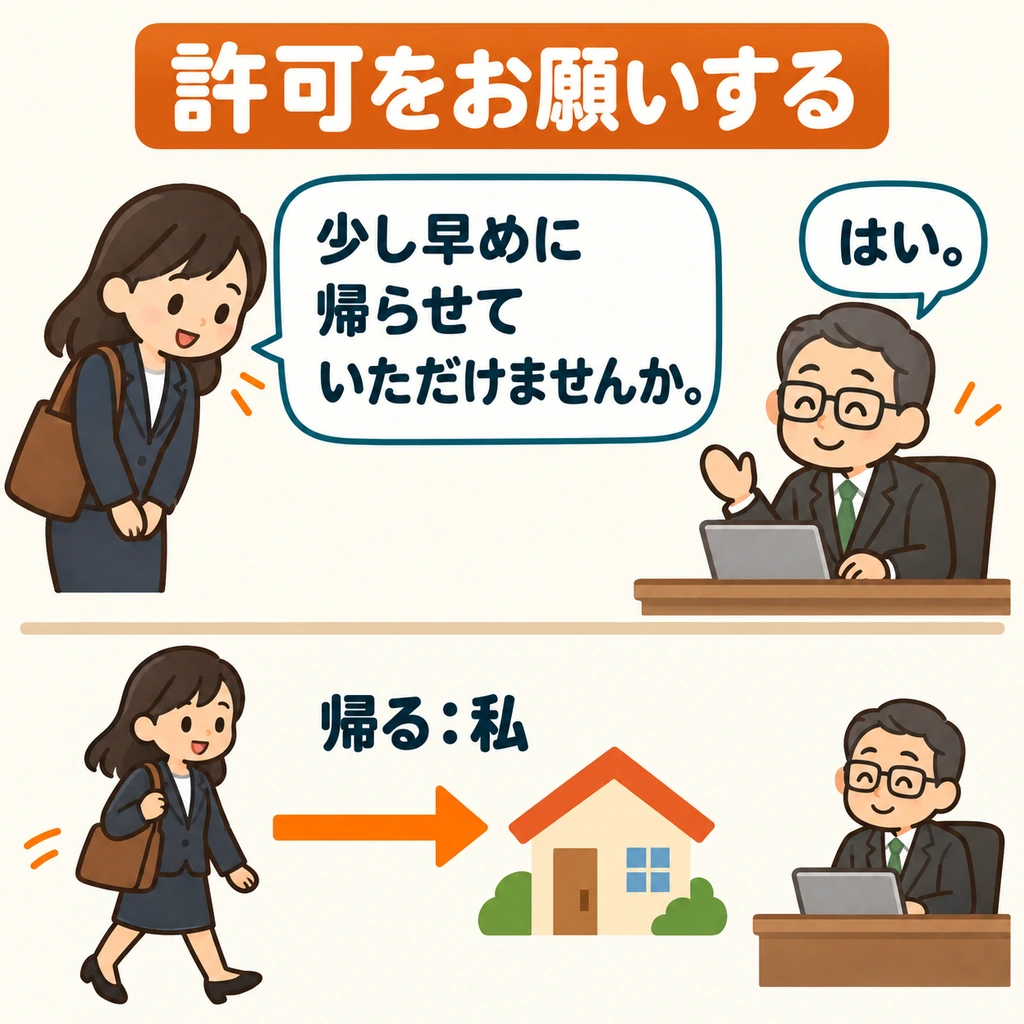
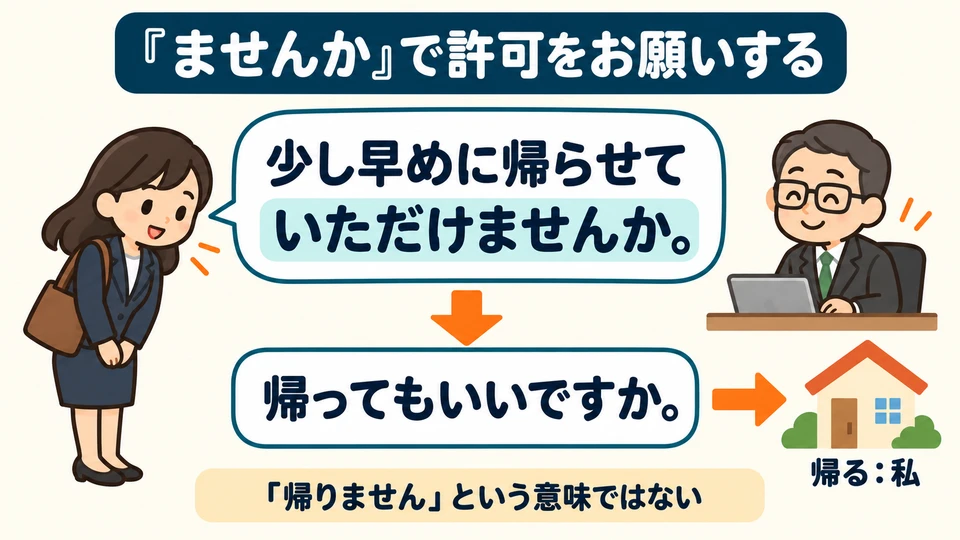
少しすこしsukoshi早めはやめhayameに帰らせにかえらせnikaeraseてteいただけませんitadakemasenか。ka。

Could you please let me go home a little early?

Use 「〜させていただけませんか」 to politely ask a teacher or manager for permission to do something.

In the course›

How it works

  1. Who is going home in the picture? The speaker is. They are asking their manager for permission to leave early.
    Who is going home in the picture? The speaker is. They are asking their manager for permission to leave early.

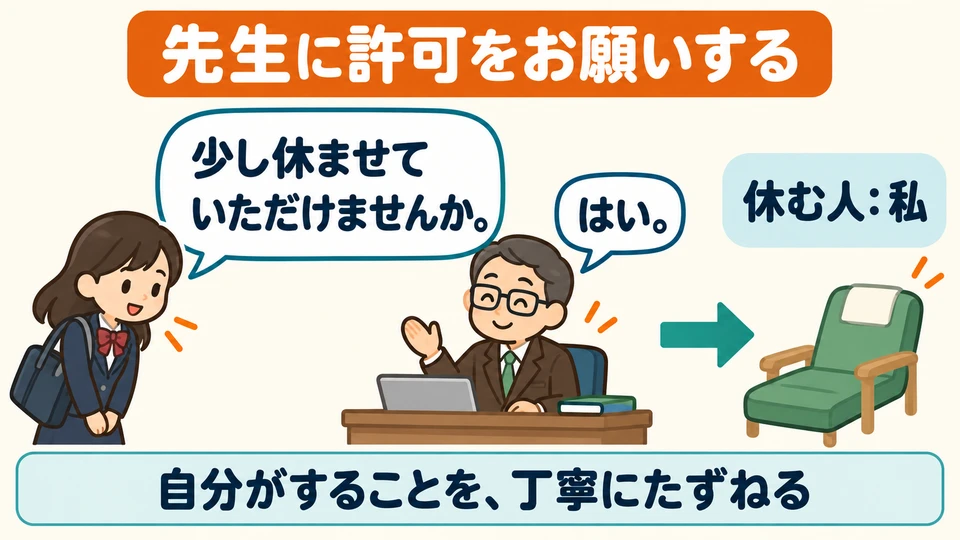
  2. Use this expression with a manager or teacher to politely ask whether you may do something.
    Use this expression with a manager or teacher to politely ask whether you may do something.

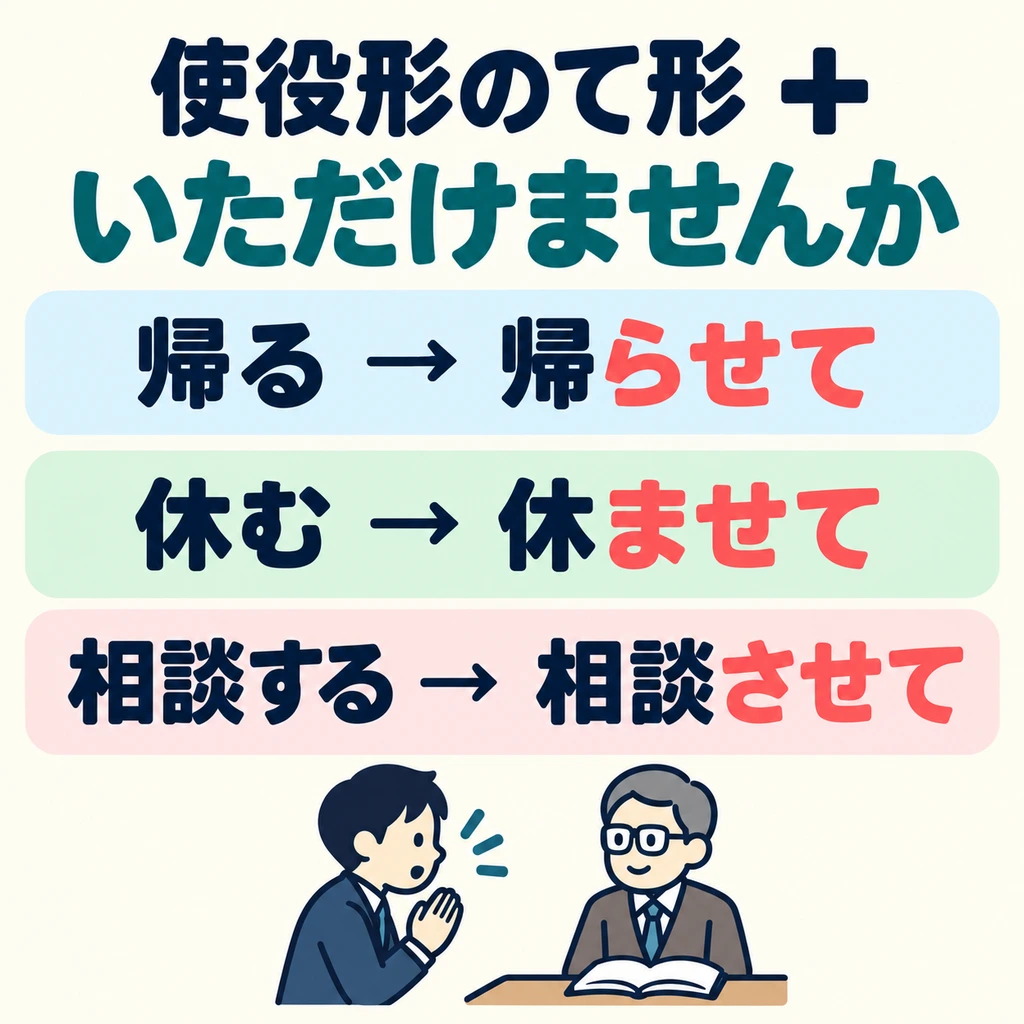
  3. Put the verb in the て-form of its causative form, then add いただけませんか to ask for permission.
    Put the verb in the て-form of its causative form, then add いただけませんか to ask for permission.

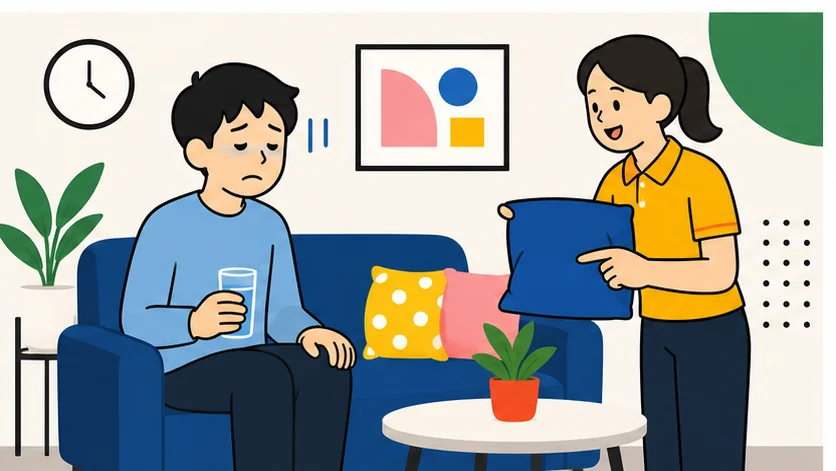
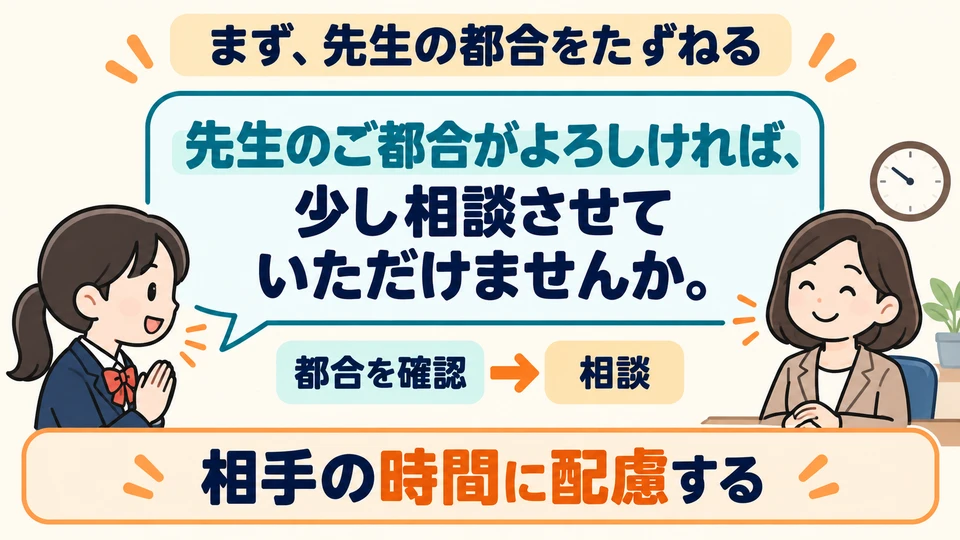
  4. The consultation example first checks whether the teacher is available. A conversation needs their participation, so consider their time first.
    The consultation example first checks whether the teacher is available. A conversation needs their participation, so consider their time first.

  5. In the example about leaving early, ませんか gently asks for permission. It does not mean the speaker will not go home.

    In the example about leaving early, ませんか gently asks for permission. It does not mean the speaker will not go home.

Example sentences

  • 少しすこしsukoshi早めはやめhayameに帰らせにかえらせnikaeraseてteいただけませんitadakemasenか。ka。

    Could you please let me go home a little early?

  • 先生せんせいsenseiのnoご都合ごつごうgotsugou

In a conversation

  • A
    体調たいちょう不良ふりょうで立ったっているのがつらいので、少しすこし横よこにならせていただけませんか。

    A: I'm not feeling well and it's hard to stand, so could you please let me lie down for a bit?

Check yourself

  1. Level 0 · Conjugate

    Use the causative te-form to ask permission to do it yourself. 使役のて形

    すみません、返事をする前に少し(考えるかんがえる)いただけませんか。

  2. Level 1 · Recognise

    Which sentence is correct?

  3. Level 1 · Recognise

    Listen and choose the meaning

  4. Level 2 · Build

    Put the words in order

    Would it be possible for me to leave a little early?

  5. Level 3 · Use

    What goes in the blank?

    少し早めに帰ら____。

    Could I leave a little early

More grammar in this theme

  • 〜させていただけませんかpolitely ask permission

More JLPT N3 grammar

Keep practising

Test your Japanese vocabulary12 adaptive questions, freeCheck your pronunciationRead aloud and get a scorePractise verb forms10-question conjugation quizSee the whole courseGrammar, vocabulary and quizzes by theme
がga
よろしけれyoroshikere
ば、ba、
少しすこしsukoshi
相談そうだんsoudan
させsase
てte
いただけませんitadakemasen
か。ka。

If it is convenient for you, teacher, could I consult with you for a moment?

  • B
    大丈夫ですだいじょうぶですか、こちらの部屋へやでゆっくり休んやすんでください。

    B: Are you okay? Please rest comfortably in this room.

  • A
    ありがとうございます、お言葉おことばに甘えあまえてそうさせていただきます。

    A: Thank you, I will take you up on your kind offer.

  • Intermediate 2
    Thoughtful Communication and Feelings
    〜のことなんですがgently introduce a topic
    〜ものですからgently explain a reason
    〜の代わりに・〜に代わってinstead of; in place of
    〜おかげでthanks to; good result
    〜おかげだcredit a good result
    〜くせにreproachful contradiction
    〜せいでblame for a bad result
    〜に決まっているstrong certainty; bound to
    人を〜にさせるtrigger someone’s feelings
    〜ことはないno need to
    〜のことになると・〜のこととなるとwhen it comes to
    人にしたら・人にすればfrom someone’s perspective
    人にしてみたら・人にしてみればfrom someone’s perspective
    〜たびにevery time
    〜ば・〜ならばif; on the condition that
    〜たら・〜ためにif; in order to
    Previous〜のことなんですが
    Next〜ものですから
    See all 114
    〜たものだused to; fond recollection
    〜さえ/さえ〜ばeven; as long as
    〜に反してcontrary to expectations
    〜ているうちにchange during an activity
    〜でしょう?seeking agreement
    〜っけrecalling and checking
    〜もん・〜んだもんemotional reason or plea
    〜ほど・〜くらい・〜ぐらいdegree shown by an example
    More quizzesOpen this lesson’s quizzes in the course