Japanese grammar · ≈ JLPT N4 · Intermediate 2
〜ば・〜ならば~ ba / ~ naraba
if; on the condition that
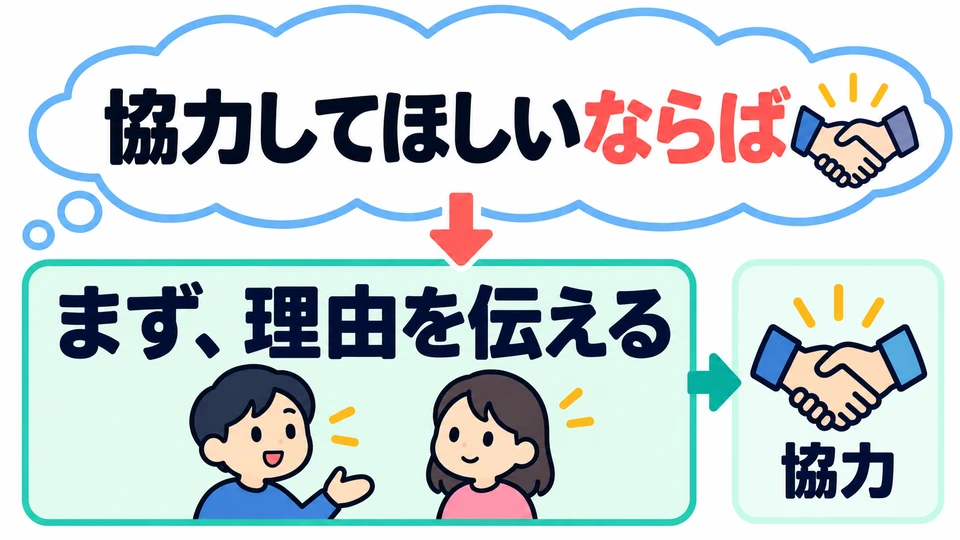
Use 「〜ば」 to connect a condition with an expected result, or 「〜ならば」 to make a premise for advice.
- Pattern
- 〜ば・〜ならば
- Romaji
- ~ ba / ~ naraba
- JLPT (approx.)
- ≈ N4
- Course level
- Intermediate 2
- Theme
- Thoughtful Communication and Feelings
How it works

How can misunderstandings be reduced? 「ば」 links the condition in the first part to the expected result.
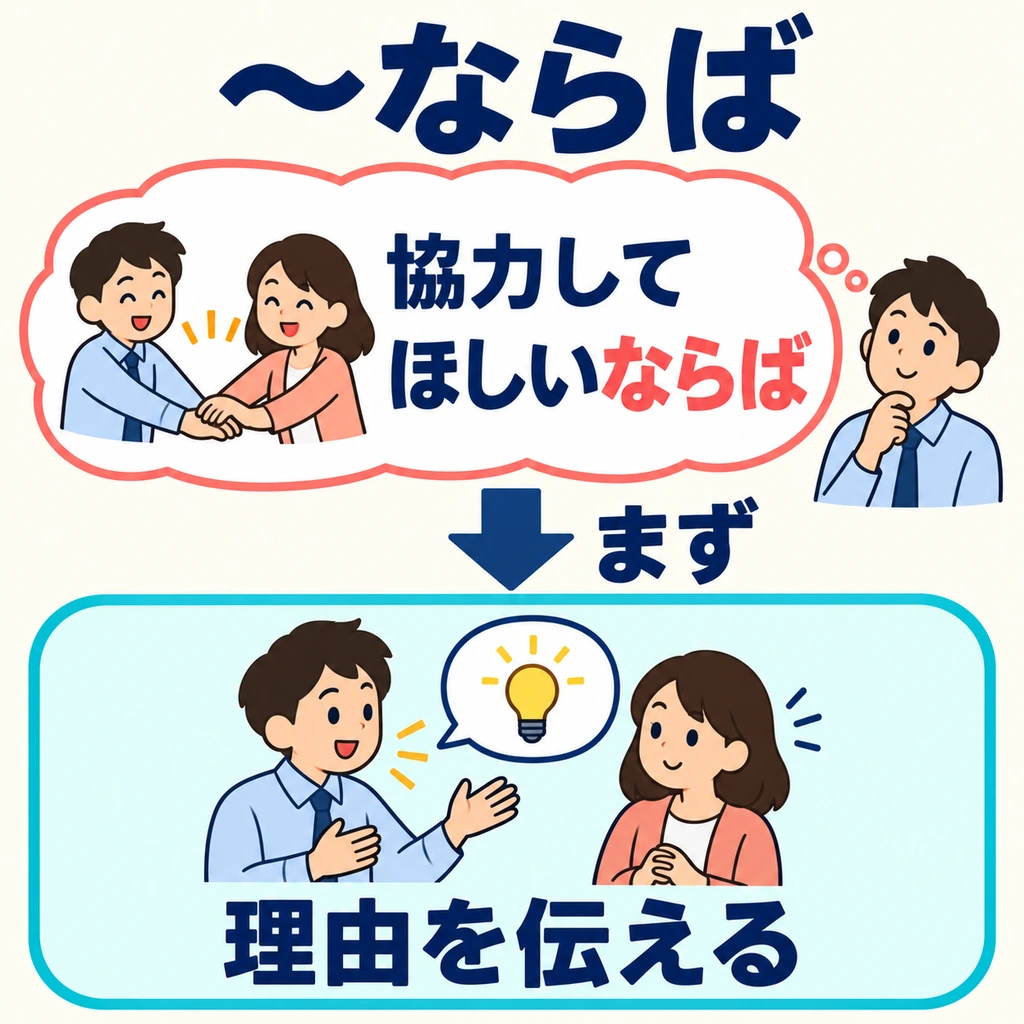
When you want someone to cooperate, 「ならば」 uses that wish as the premise for giving advice.
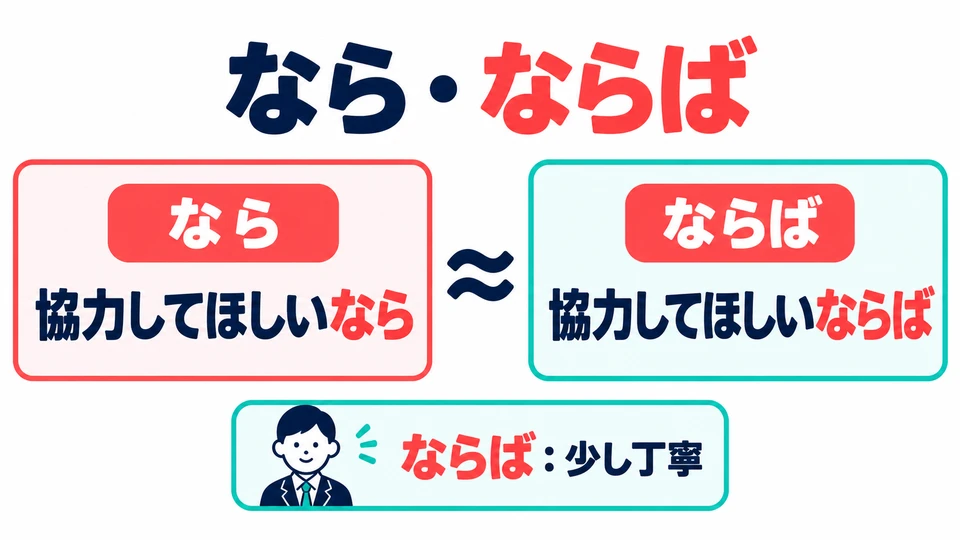
「ならば」 means much the same as 「なら」, but sounds slightly more formal. It can introduce a necessary premise.
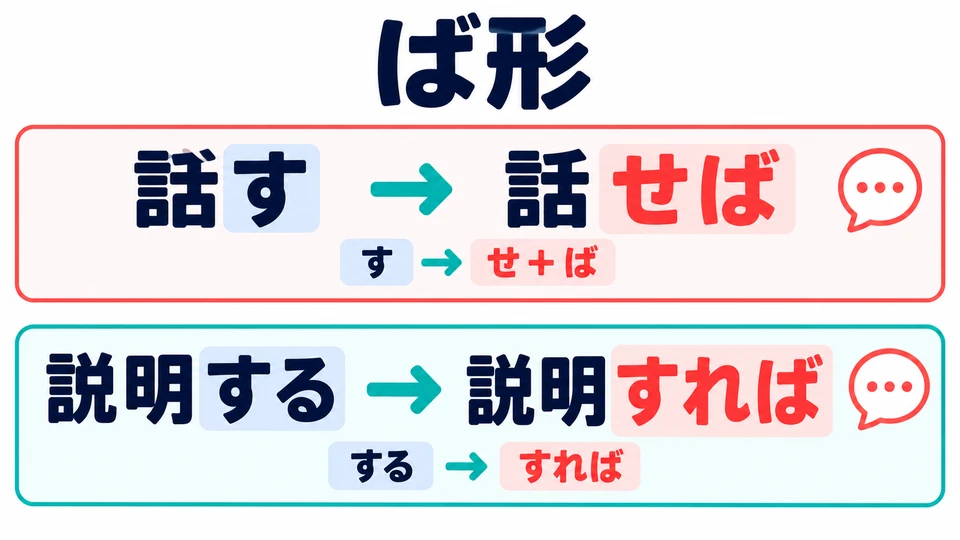
Notice how the verb changes: 説明する→説明すれば, 話す→話せば.
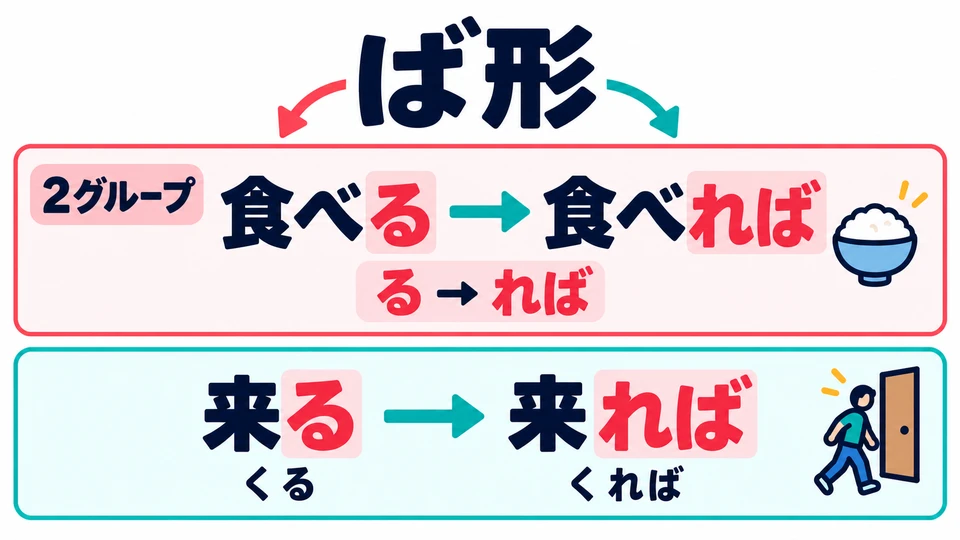
For ichidan verbs, replace the final 「る」 with 「れば」. 「来る」 becomes 「来れば」, pronounced 「くれば」.
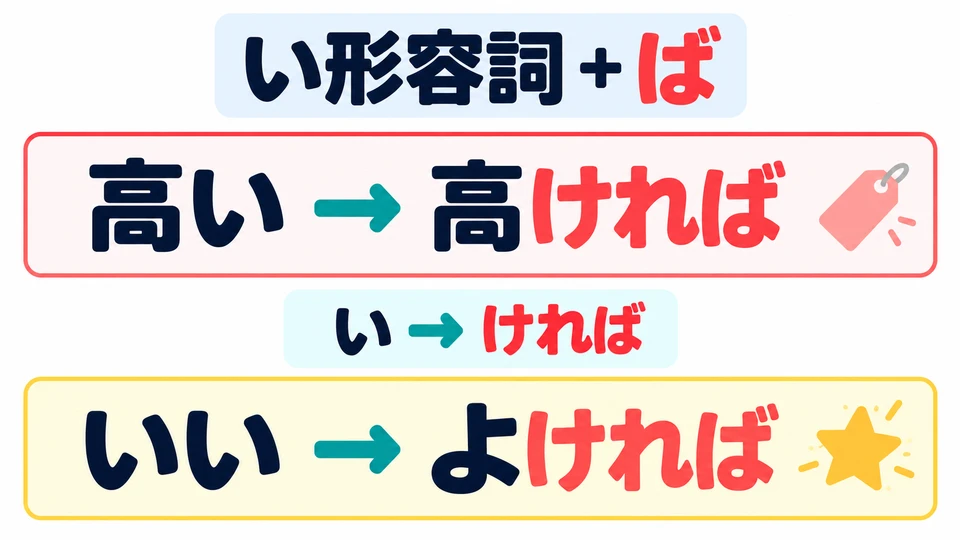
For i-adjectives, replace the final 「い」 with 「ければ」. 「いい」 is an exception: its conditional form is 「よければ」.
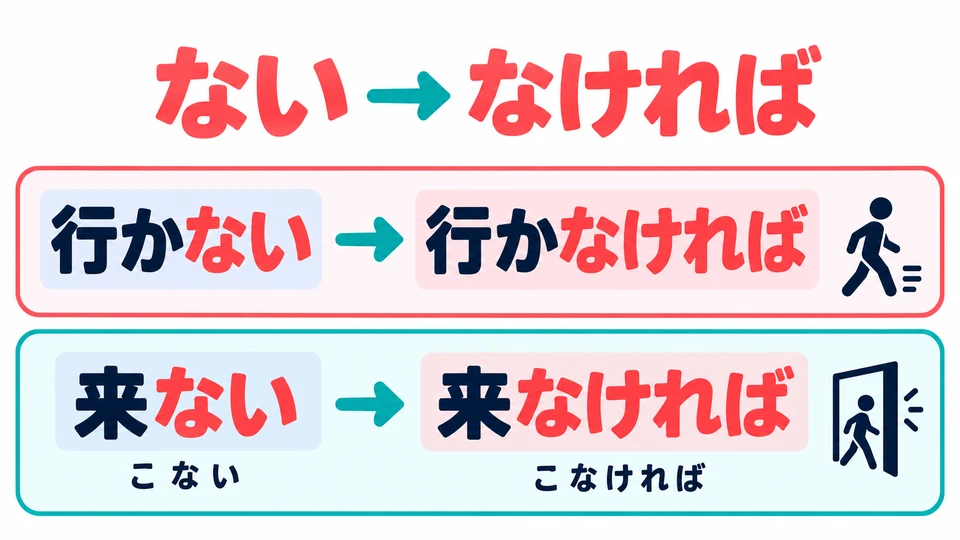
For negative forms, replace the final 「ない」 with 「なければ」. In 「来なければ」, 「来」 is pronounced 「こ」.
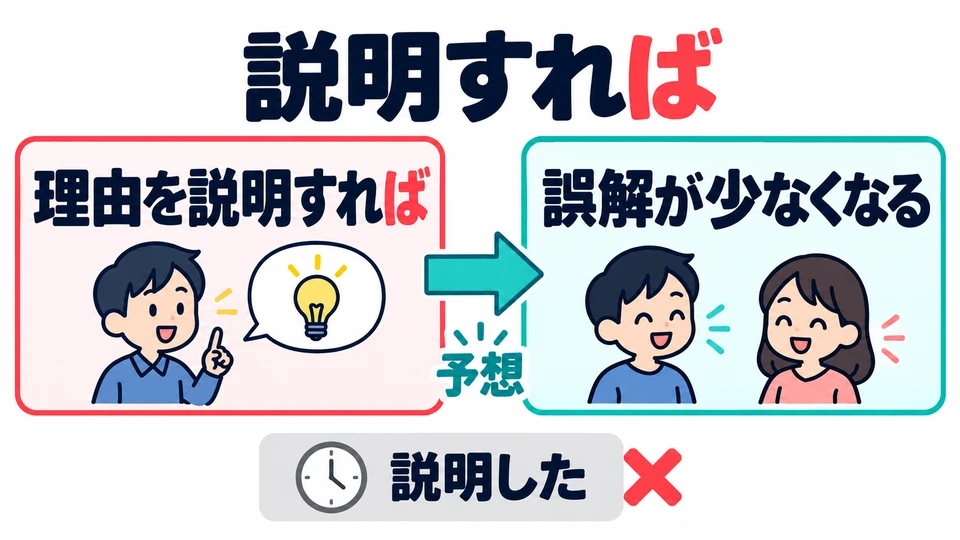
In the example, 「説明すれば」 supposes that explaining the reasons will reduce misunderstandings. It does not report something that has already happened.
Example sentences
- 理由riyuuをoきちんとkichinto説明setsumeiすれsureば、ba、誤解gokaiはwa少なくsukunakuなるnaruとto
In a conversation

- 会議で自分の意見をはっきり伝えるのが苦手です。
I am not good at clearly expressing my opinion at meetings.
- 順序
Check yourself
Which sentence is correct?
- 自分の伝え方が言葉足らずで相手を混乱させてしまったならば、すぐに誤解を解くために丁寧な言い回しで言い換えるべきです。
- 自分の伝え方が言葉足らずで相手を混乱させてしまったのに、すぐに誤解を解くために丁寧な言い回しで言い換えるべきです。
- 自分の伝え方が言葉足らずで相手を混乱させてしまっても、すぐに誤解を解くために丁寧な言い回しで言い換えるべきです。
- 自分の伝え方が言葉足らずで相手を混乱させてしまったので、すぐに誤解を解くために丁寧な言い回しで言い換えるべきです。
Show answer
Answer: A 自分の伝え方が言葉足らずで相手を混乱させてしまったならば、すぐに誤解を解くために丁寧な言い回しで言い換えるべきです。
Which sentence is correct?
- 相手の言葉選びや表現の仕方に配慮や思いやりがあれば、受け取る側も不快に感じることはありません。
- 相手の言葉選びや表現の仕方に配慮や思いやりがあるのに、受け取る側も不快に感じることはありません。
- 相手の言葉選びや表現の仕方に配慮や思いやりがあっても、受け取る側も不快に感じることはありません。
- 相手の言葉選びや表現の仕方に配慮や思いやりがあるので、受け取る側も不快に感じることはありません。
Show answer
Answer: A 相手の言葉選びや表現の仕方に配慮や思いやりがあれば、受け取る側も不快に感じることはありません。
Which sentence is correct?
- 感情的にならずに冷静になって話し合えば、きっとお互いに納得できる解決策が見つかります。
- 感情的にならずに冷静になって話し合うのに、きっとお互いに納得できる解決策が見つかります。
- 感情的にならずに冷静になって話し合っても、きっとお互いに納得できる解決策が見つかります。
- 感情的にならずに冷静になって話し合うので、きっとお互いに納得できる解決策が見つかります。
Show answer
Answer: A 感情的にならずに冷静になって話し合えば、きっとお互いに納得できる解決策が見つかります。
More grammar in this theme
- 〜ば・〜ならばif; on the condition that