
Japanese grammar · ≈ JLPT N4 · Intermediate 2
〜ば・〜ならば~ ba / ~ naraba
if; on the condition that
Use 「〜ば」 to connect a condition with an expected result, or 「〜ならば」 to make a premise for advice.
How it works

How can misunderstandings be reduced? 「ば」 links the condition in the first part to the expected result.
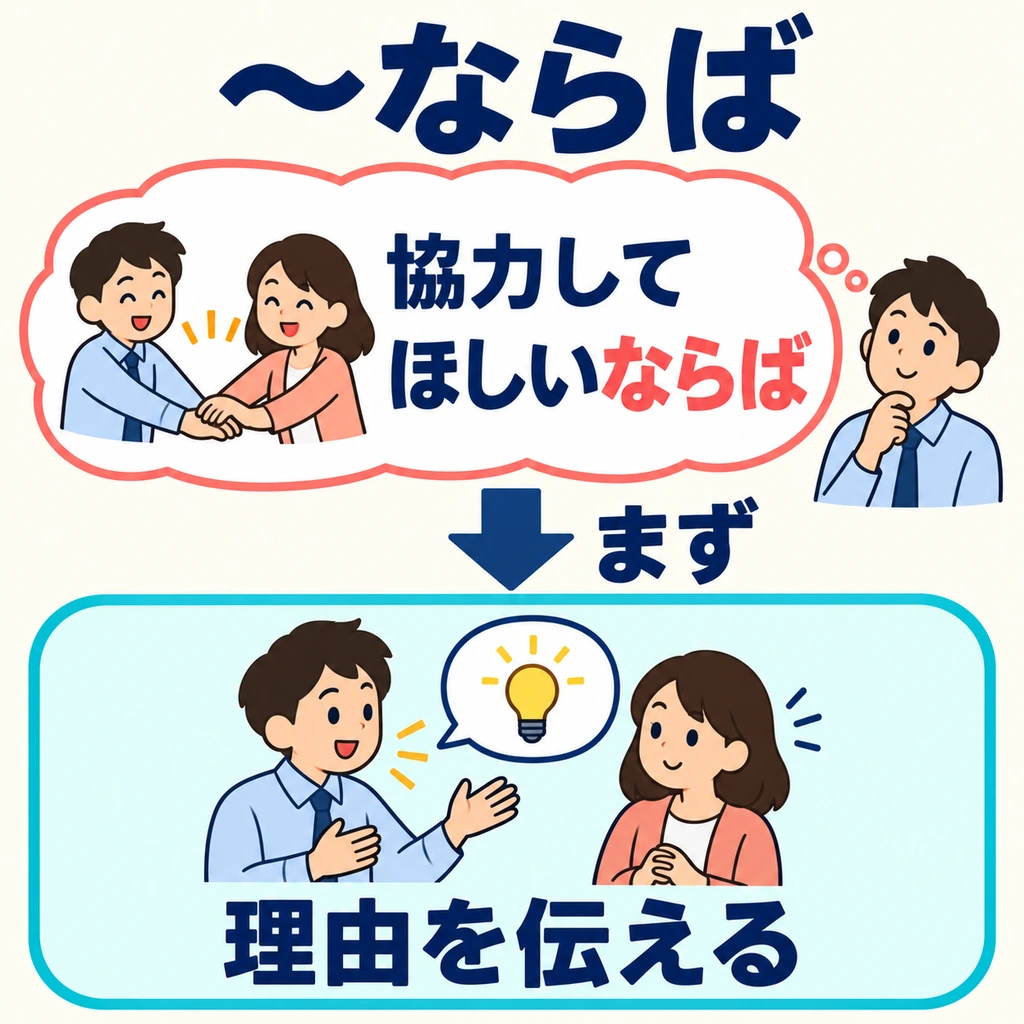
When you want someone to cooperate, 「ならば」 uses that wish as the premise for giving advice.
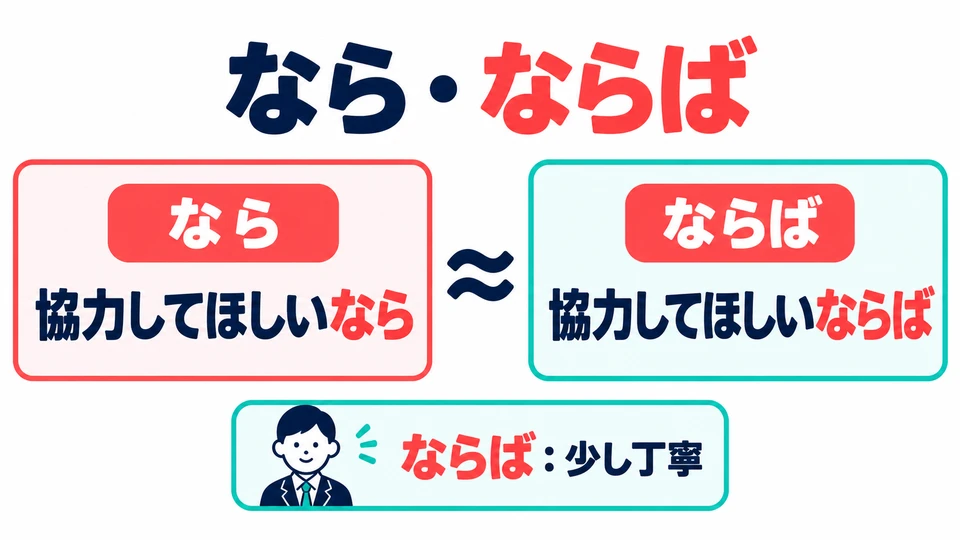
「ならば」 means much the same as 「なら」, but sounds slightly more formal. It can introduce a necessary premise.
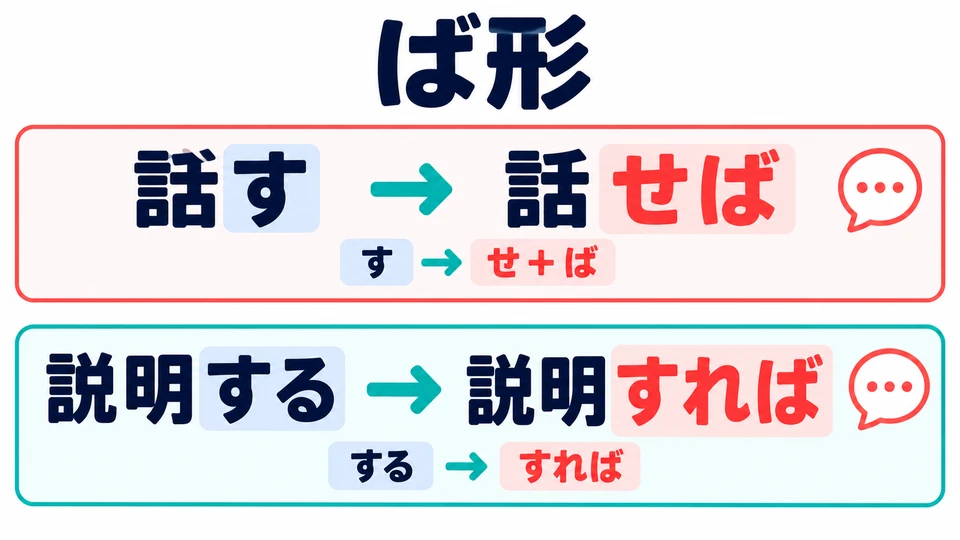
Notice how the verb changes: 説明する→説明すれば, 話す→話せば.
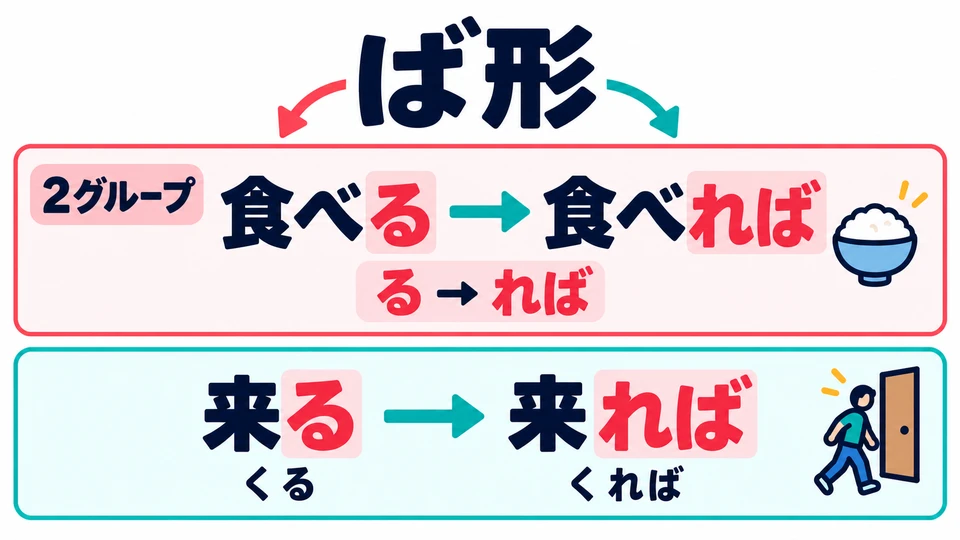
For ichidan verbs, replace the final 「る」 with 「れば」. 「来る」 becomes 「来れば」, pronounced 「くれば」.
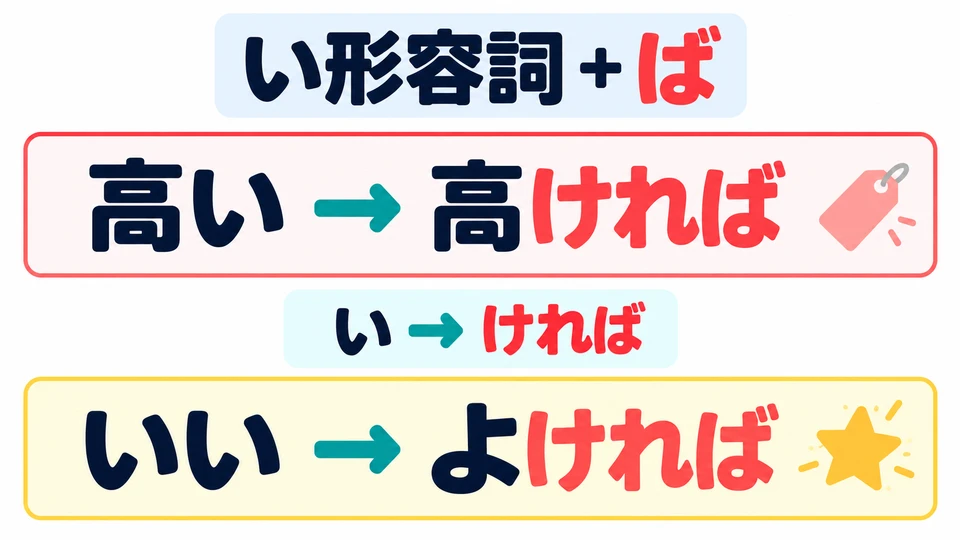
For i-adjectives, replace the final 「い」 with 「ければ」. 「いい」 is an exception: its conditional form is 「よければ」.
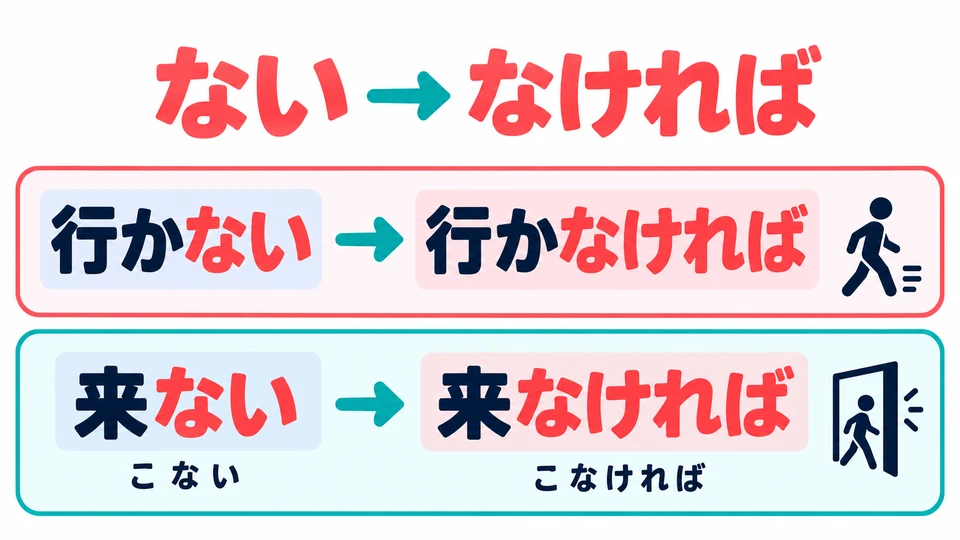
For negative forms, replace the final 「ない」 with 「なければ」. In 「来なければ」, 「来」 is pronounced 「こ」.
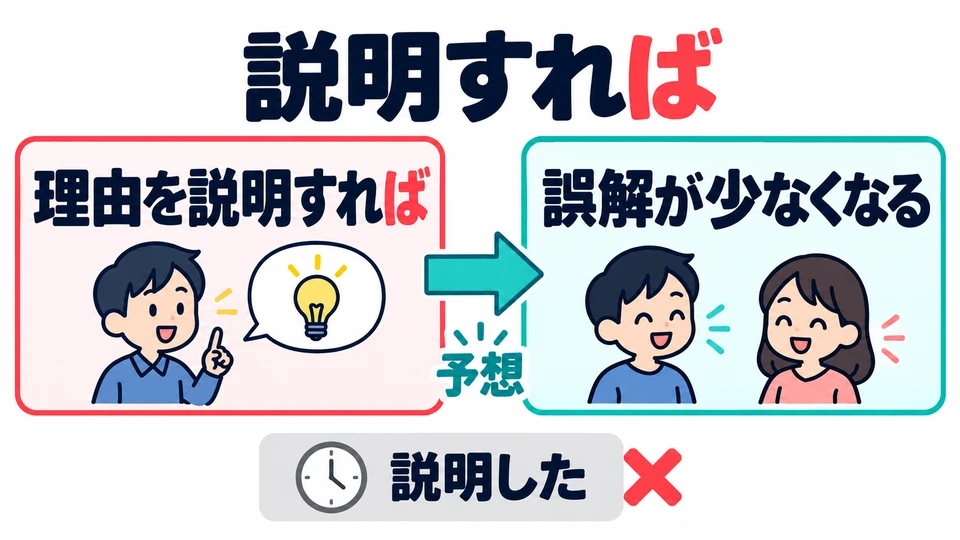
In the example, 「説明すれば」 supposes that explaining the reasons will reduce misunderstandings. It does not report something that has already happened.
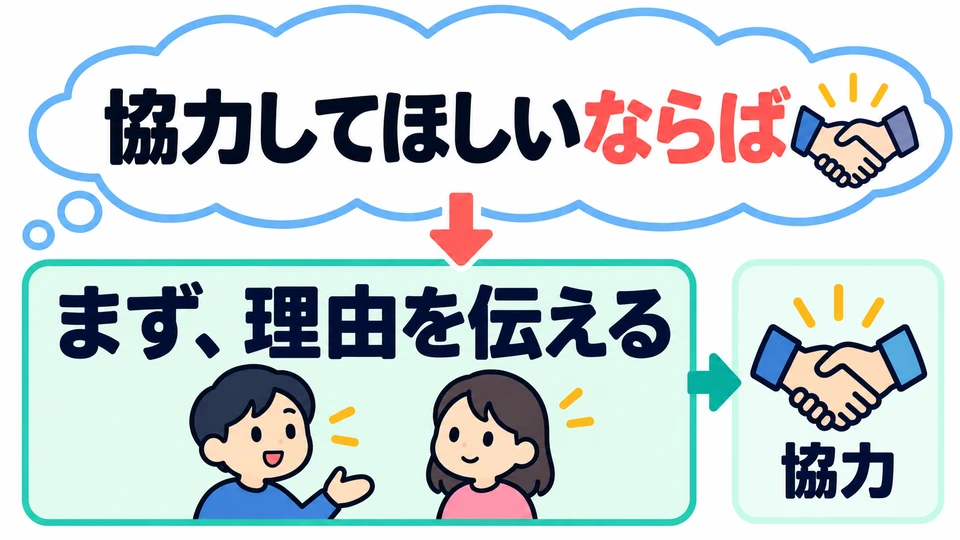
「ほしいならば」 takes the wish as its premise: explain the reasons first, rather than waiting until you have their cooperation.
Example sentences
- 理由riyuuをoきちんとkichinto説明setsumeiすれsureば、ba、誤解gokaiはwa少なくsukunakuなるnaruとto
In a conversation

Check yourself
Level 1 · Recognise
Which sentence is correct?
Level 1 · Recognise
Listen and choose the meaning
Level 2 · Build
Put the words in order
If you explain the reason properly, I think there will be fewer misunderstandings.
Level 3 · Use
What goes in the blank?
理由をきちんと説明____、誤解は少なくなると思います。
If you explain the reason properly, I think misunderstandings will decrease.
More grammar in this theme
- 〜ば・〜ならばif; on the condition that