JPEDLAB iconJPEDLAB
Save history

Create an account and play

Explore first, then save your progress whenever you are ready. No email address is required.

Start free
Read as articleCards
1/12

How can misunderstandings be reduced? 「ば」 links the condition in the first part to the expected result.

››

Lesson notes · ≈ JLPT N4 · Intermediate 2

〜ば・〜ならば~ ba / ~ naraba

if; on the condition that

Use 「〜ば」 to connect a condition with an expected result, or 「〜ならば」 to make a premise for advice.

How it works

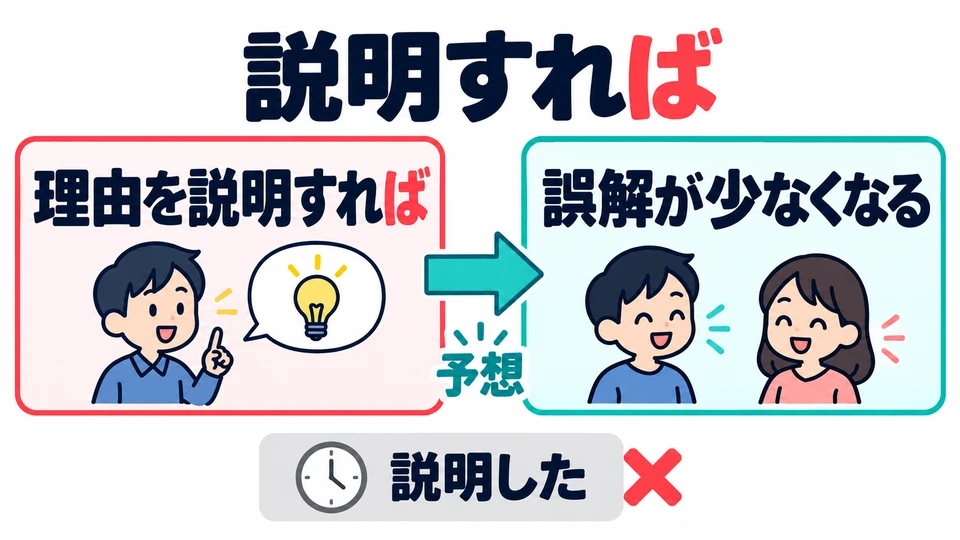
  1. How can misunderstandings be reduced? 「ば」 links the condition in the first part to the expected result.
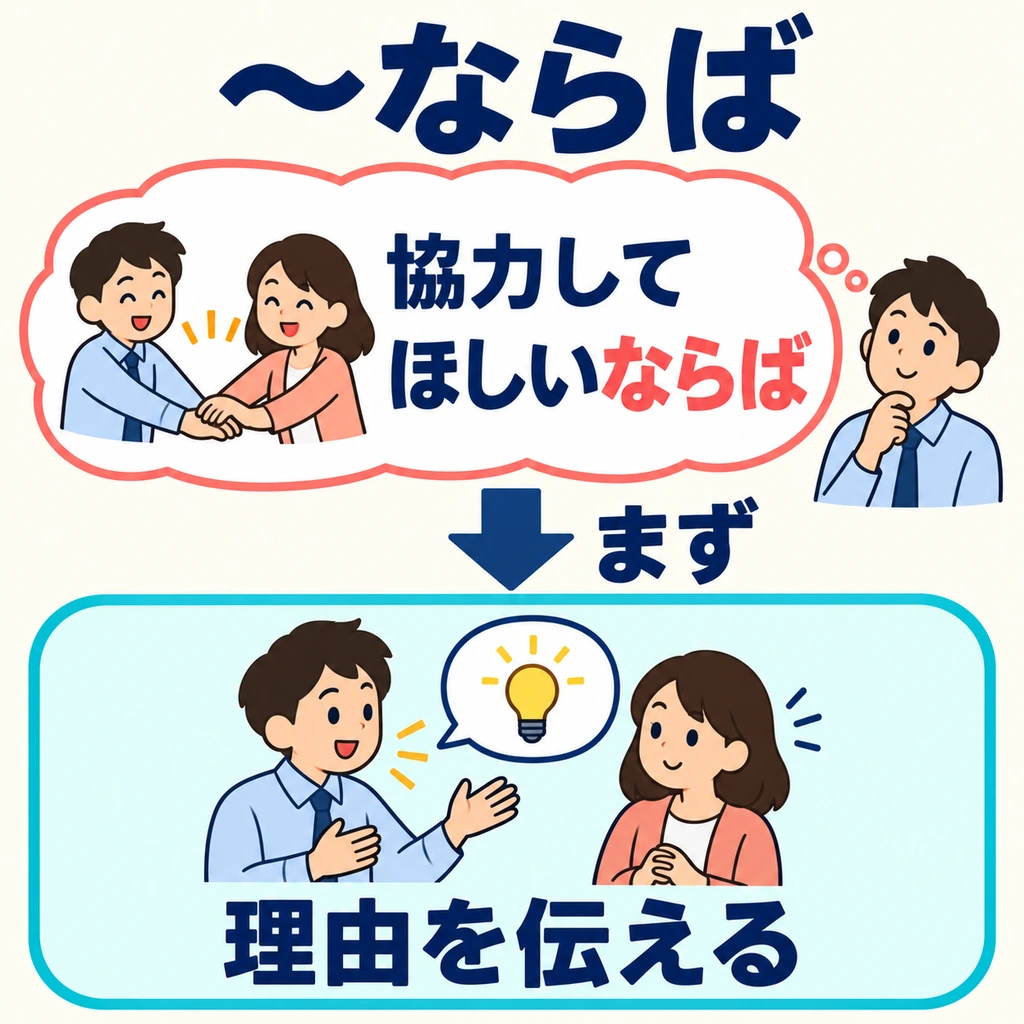
    How can misunderstandings be reduced? 「ば」 links the condition in the first part to the expected result.
  2. When you want someone to cooperate, 「ならば」 uses that wish as the premise for giving advice.

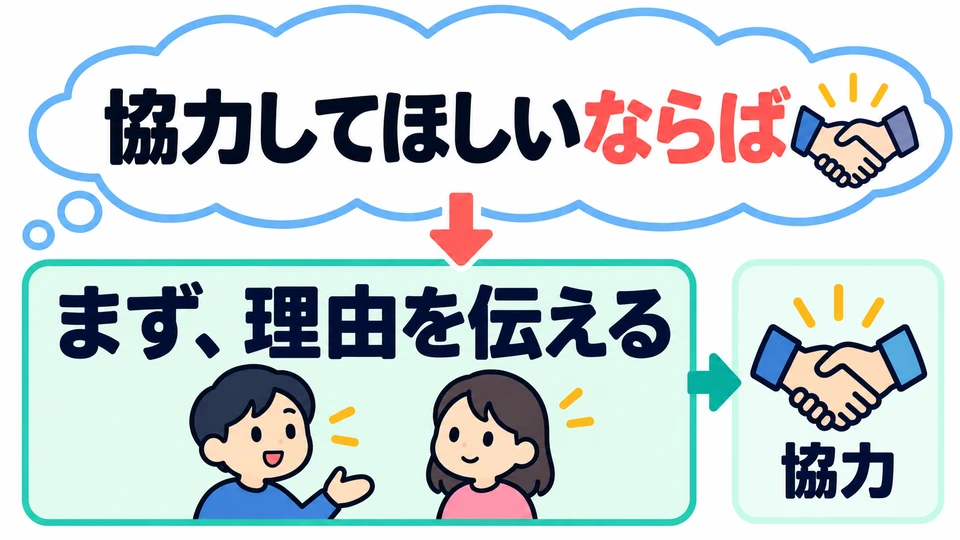
When you want someone to cooperate, 「ならば」 uses that wish as the premise for giving advice.

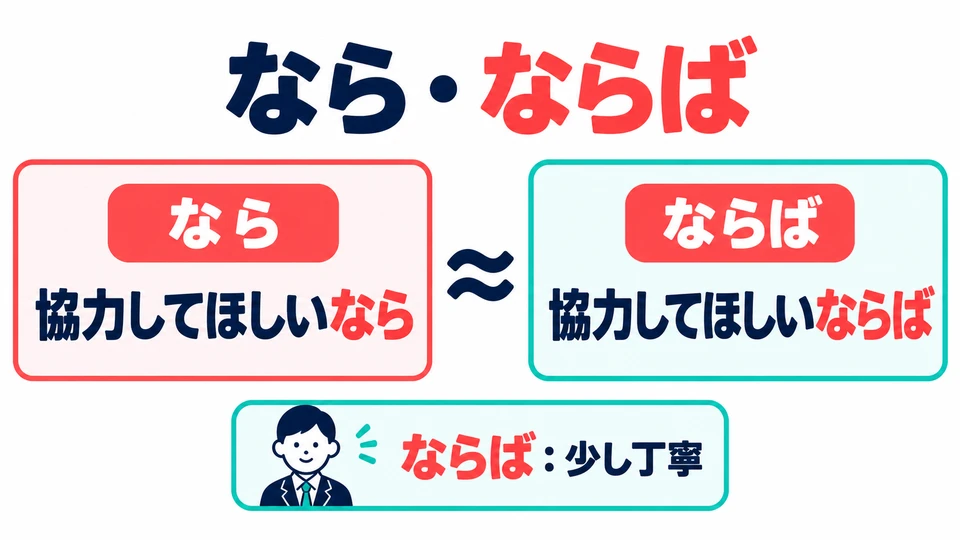
  • 「ならば」 means much the same as 「なら」, but sounds slightly more formal. It can introduce a necessary premise.

    「ならば」 means much the same as 「なら」, but sounds slightly more formal. It can introduce a necessary premise.

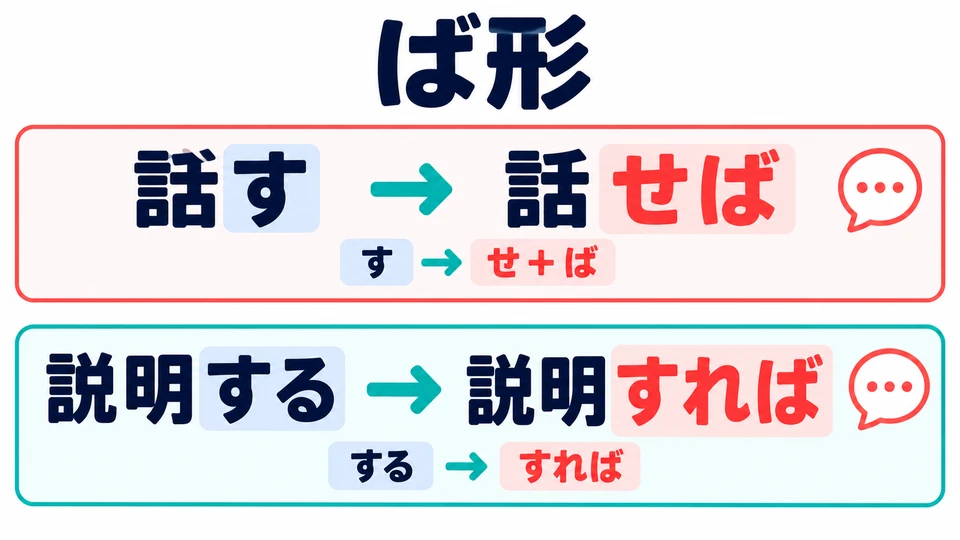
  • Notice how the verb changes: 説明する→説明すれば, 話す→話せば.

    Notice how the verb changes: 説明する→説明すれば, 話す→話せば.

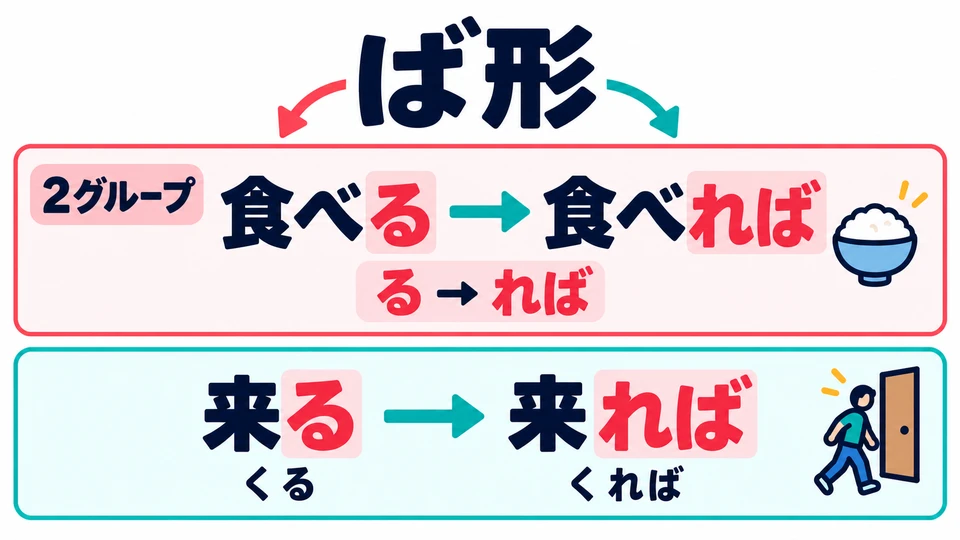
  • For ichidan verbs, replace the final 「る」 with 「れば」. 「来る」 becomes 「来れば」, pronounced 「くれば」.

    For ichidan verbs, replace the final 「る」 with 「れば」. 「来る」 becomes 「来れば」, pronounced 「くれば」.

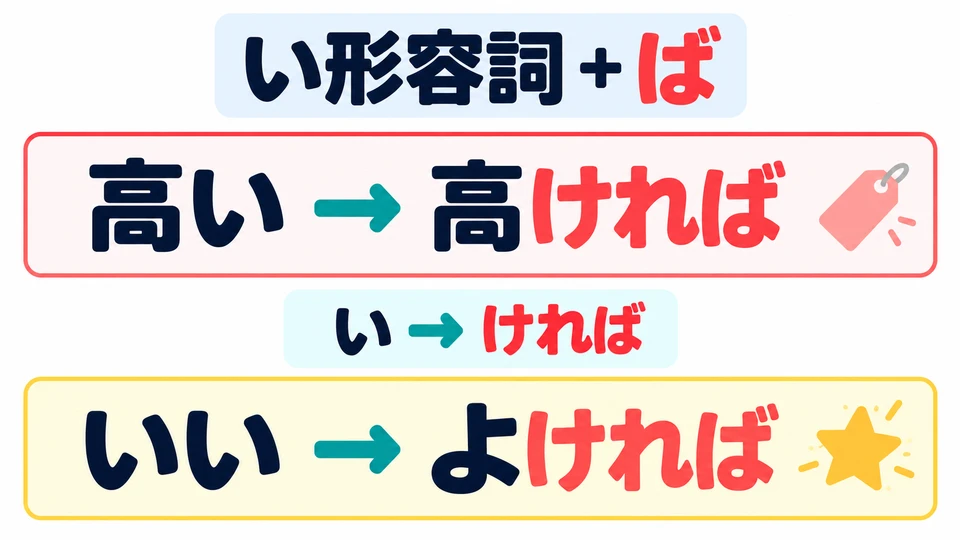
  • For i-adjectives, replace the final 「い」 with 「ければ」. 「いい」 is an exception: its conditional form is 「よければ」.

    For i-adjectives, replace the final 「い」 with 「ければ」. 「いい」 is an exception: its conditional form is 「よければ」.

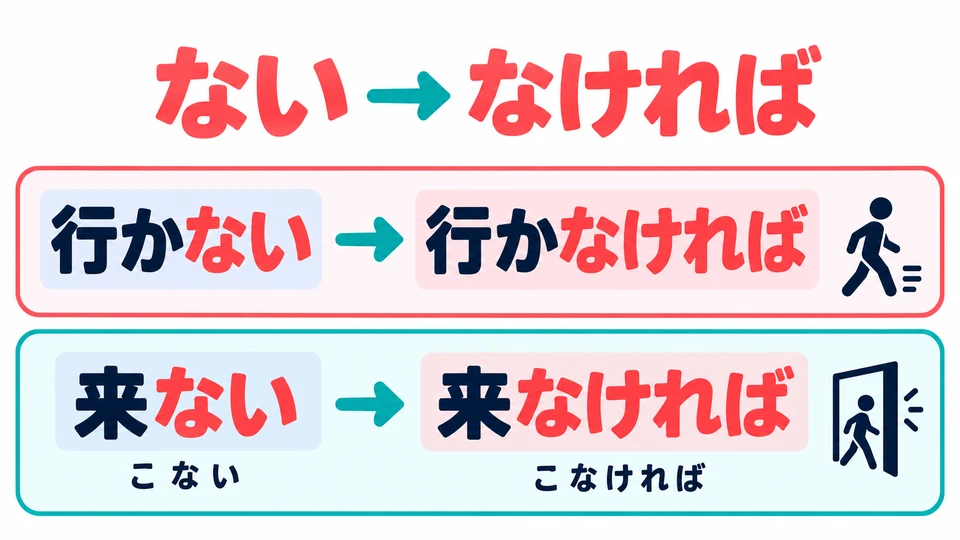
  • For negative forms, replace the final 「ない」 with 「なければ」. In 「来なければ」, 「来」 is pronounced 「こ」.

    For negative forms, replace the final 「ない」 with 「なければ」. In 「来なければ」, 「来」 is pronounced 「こ」.

  • In the example, 「説明すれば」 supposes that explaining the reasons will reduce misunderstandings. It does not report something that has already happened.

    In the example, 「説明すれば」 supposes that explaining the reasons will reduce misunderstandings. It does not report something that has already happened.

  • 「ほしいならば」 takes the wish as its premise: explain the reasons first, rather than waiting until you have their cooperation.

    「ほしいならば」 takes the wish as its premise: explain the reasons first, rather than waiting until you have their cooperation.

  • Example sentences

    • 理由りゆうriyuuをoきちんとkichinto説明せつめいsetsumeiすれsureば、ba、誤解ごかいgokaiはわwa少なくすくなくsukunakuなるnaruとto思います。おもいます。omoimasu。

      If you explain the reasons properly, I think misunderstandings will decrease.

    • 相手あいてaiteにni協力きょうりょくkyouryokuしshiてteほしいならhoshiinaraば、ba、まずmazu理由りゆうriyuuをo伝えるつたえるtsutaeru必要ひつようhitsuyou

    In a conversation

    • 会議かいぎで自分じぶんの意見いけんをはっきり伝えるつたえるのが苦手にがてです。

      I am not good at clearly expressing my opinion at meetings.

    • 順序じゅんじょ立てだてて話せはなせば、あなたの本心ほんしんや意図いとが周囲しゅういにしっかり伝わっつたわって納得なっとくしてもらえますよ。

      If you speak in an organized manner, your true feelings and intentions will be clearly communicated to those around you, and they will understand.

    • ありがとうございます。感情的かんじょうてきにならず、やわらかい言い方いいかたで伝えるつたえるように練習ようにれんしゅうしてみます。

      Thank you. I will practice trying to express myself in a gentle way without getting emotional.

    Check yourself

    1. Level 1 · Recognise

      Which sentence is correct?

    2. Level 1 · Recognise

      Listen and choose the meaning

    3. Level 2 · Build

      Put the words in order

      If you explain the reason properly, I think there will be fewer misunderstandings.

    4. Level 3 · Use

      What goes in the blank?

      理由をきちんと説明____、誤解は少なくなると思います。

      If you explain the reason properly, I think misunderstandings will decrease.

    More grammar in this theme

    • 〜のことなんですがgently introduce a topic
    • 〜させていただけませんかpolitely ask permission
    • 〜ものですからgently explain a reason
    • 〜の代わりに・〜に代わってinstead of; in place of
    • 〜おかげでthanks to; good result
    • 〜おかげだcredit a good result
    • 〜くせにreproachful contradiction
    • 〜せいでblame for a bad result
    • 〜に決まっているstrong certainty; bound to
    • 人を〜にさせるtrigger someone’s feelings
    • 〜ことはないno need to
    • 〜のことになると・〜のこととなるとwhen it comes to
    • 人にしたら・人にすればfrom someone’s perspective
    • 人にしてみたら・人にしてみればfrom someone’s perspective
    • 〜たびにevery time
    • 〜ば・〜ならばif; on the condition that
    • 〜たら・〜ためにif; in order to
    Previous〜たびにNext〜たら・〜ために

    Keep practising

    Test your Japanese vocabulary12 adaptive questions, freeCheck your pronunciationRead aloud and get a scorePractise verb forms10-question conjugation quizSee the whole courseGrammar, vocabulary and quizzes by theme
    See the whole course
    Intermediate 2
    Thoughtful Communication and Feelings
    がga
    あります。arimasu。

    If you want the other person to cooperate, you first need to convey the reason.