
Japanese grammar · ≈ JLPT N4 · Intermediate 2
〜たら・〜ために~ tara / ~ tame ni
if; in order to
Use 「〜たら」 to set a condition and 「〜ために」 to state a goal an action is meant to achieve.
How it works

Even if you are unsure whether your tone was too harsh, you can use 「たら」 to set a condition and apologize.

First look at the goal, then at the action taken to reach it. Why think before speaking?
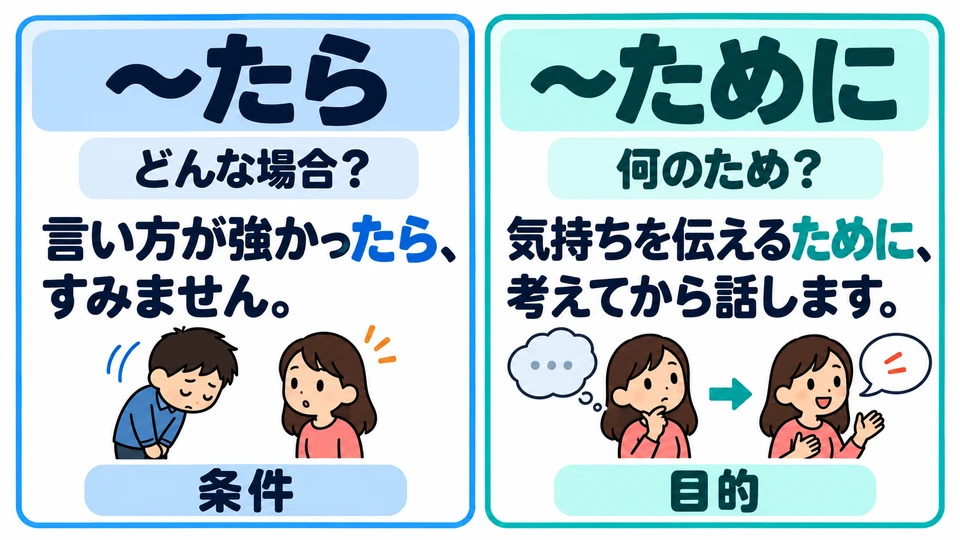
「たら」 answers “under what condition?”; 「ために」 answers “to achieve what goal?”
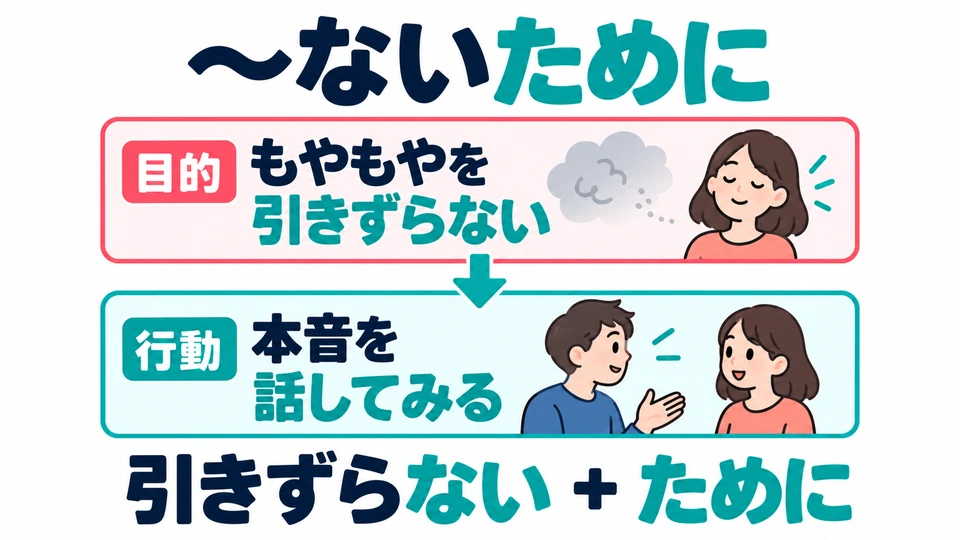
Wanting a situation to stop can also be a goal. The dialogue expresses this with 「ないために」.
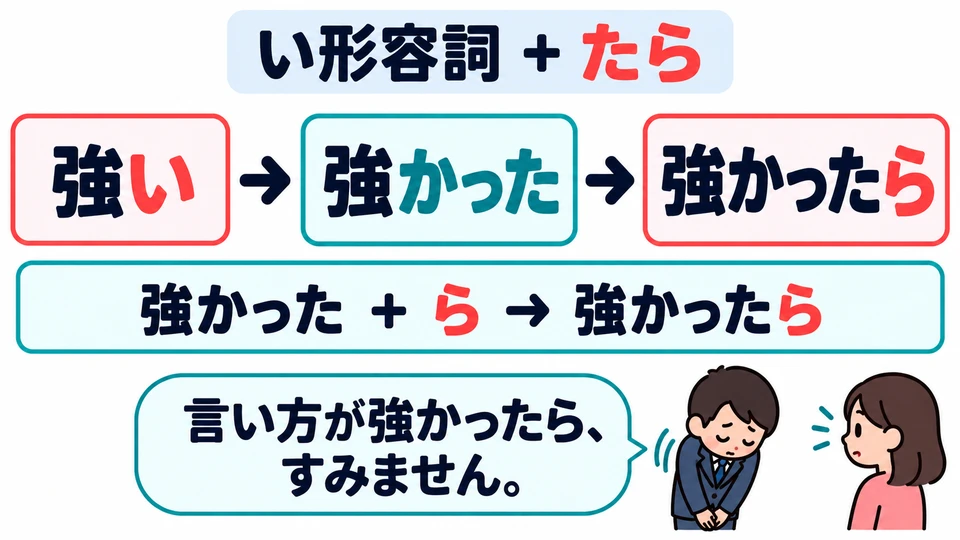
「強かった+ら」 becomes 「強かったら」. Adjectives can also take the 「たら」 form.
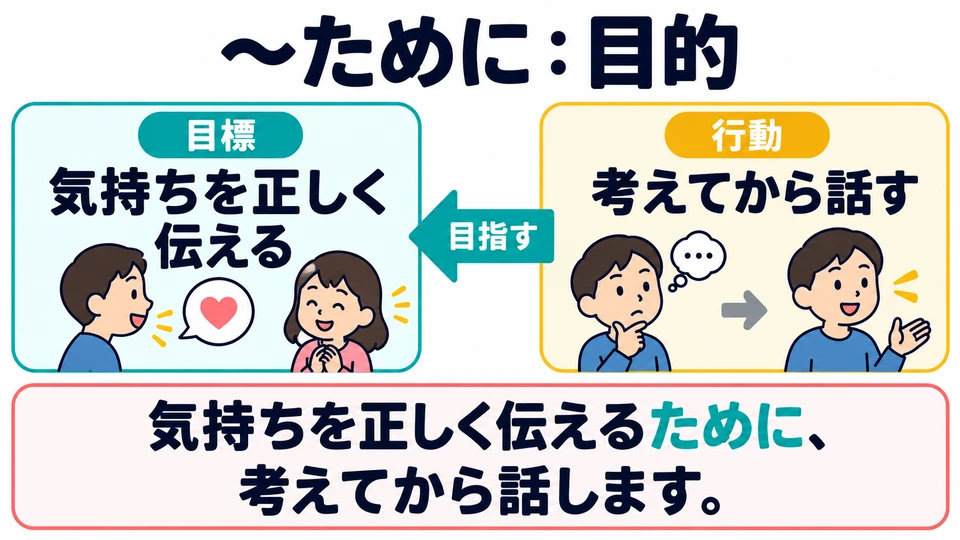
“Conveying your feelings accurately” is a goal you want to achieve, not a cause that has already occurred. Here the expression shows purpose.
Example sentences
- 私watashiのno言い方iikataがga強かったら、tsuyokattara、すみません。sumimasen。
I'm sorry if my way of speaking was too strong.
- 自分jibunの
In a conversation

- 同僚のきつい言い方に違和感があるのですが、どうすればいいでしょうか。
I feel a bit uncomfortable with my colleague's harsh way of speaking. What should I do?
Check yourself
Level 1 · Recognise
Which sentence is correct?
Level 1 · Recognise
Listen and choose the meaning
Level 2 · Build
Put the words in order
If my way of speaking was too harsh, I'm sorry.
Level 3 · Use
What goes in the blank?
私の言い方が____、すみません。
If my way of speaking was too harsh, I am sorry.
More grammar in this theme
- 〜たら・〜ためにif; in order to