
JPEDLAB iconJPEDLAB
Save history

Create an account and play

Explore first, then save your progress whenever you are ready. No email address is required.

Start free
Read as articleCards
1/9

Even if you are unsure whether your tone was too harsh, you can use 「たら」 to set a condition and apologize.

››

Lesson notes · ≈ JLPT N4 · Intermediate 2

〜たら・〜ために~ tara / ~ tame ni

if; in order to

Use 「〜たら」 to set a condition and 「〜ために」 to state a goal an action is meant to achieve.

How it works
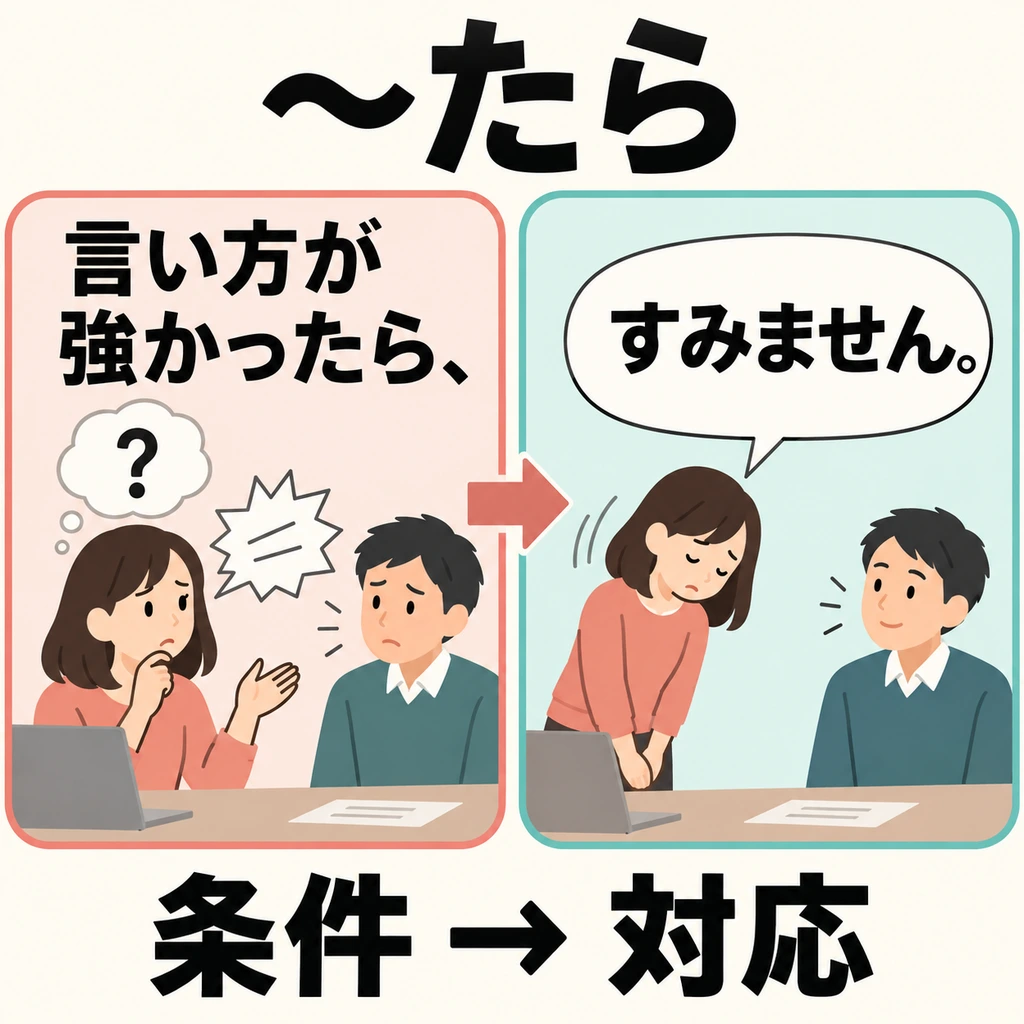
  1. Even if you are unsure whether your tone was too harsh, you can use 「たら」 to set a condition and apologize.

    Even if you are unsure whether your tone was too harsh, you can use 「たら」 to set a condition and apologize.

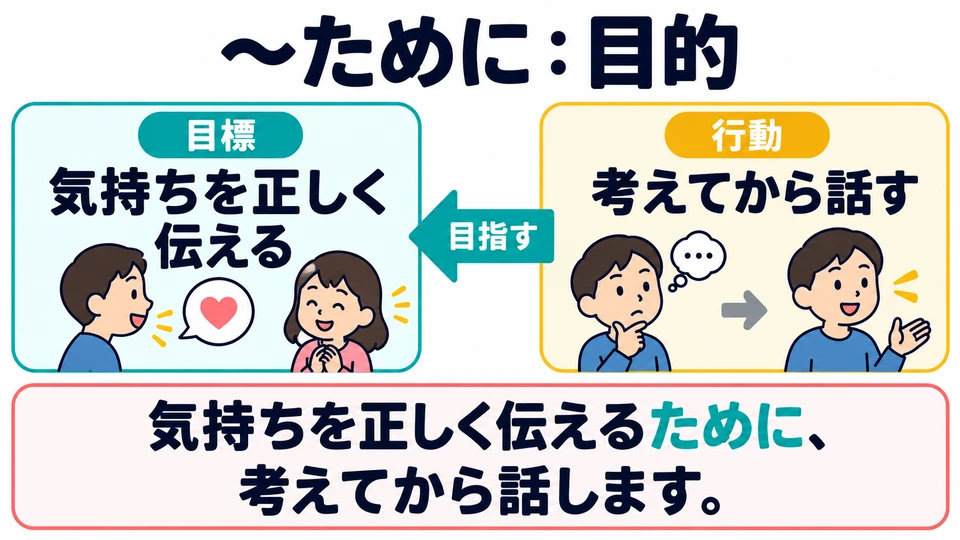
  2. First look at the goal, then at the action taken to reach it. Why think before speaking?
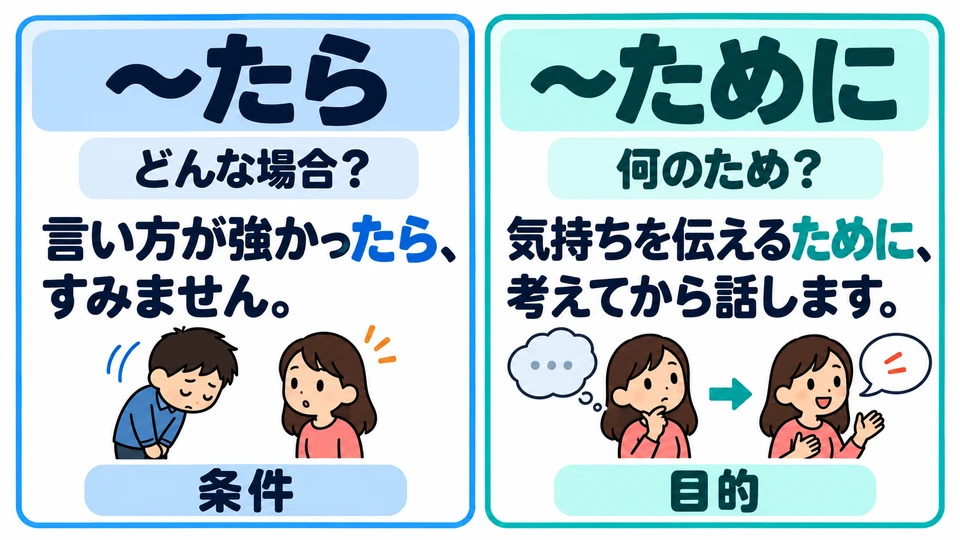
    First look at the goal, then at the action taken to reach it. Why think before speaking?

  3. 「たら」 answers “under what condition?”; 「ために」 answers “to achieve what goal?”
    「たら」 answers “under what condition?”; 「ために」 answers “to achieve what goal?”

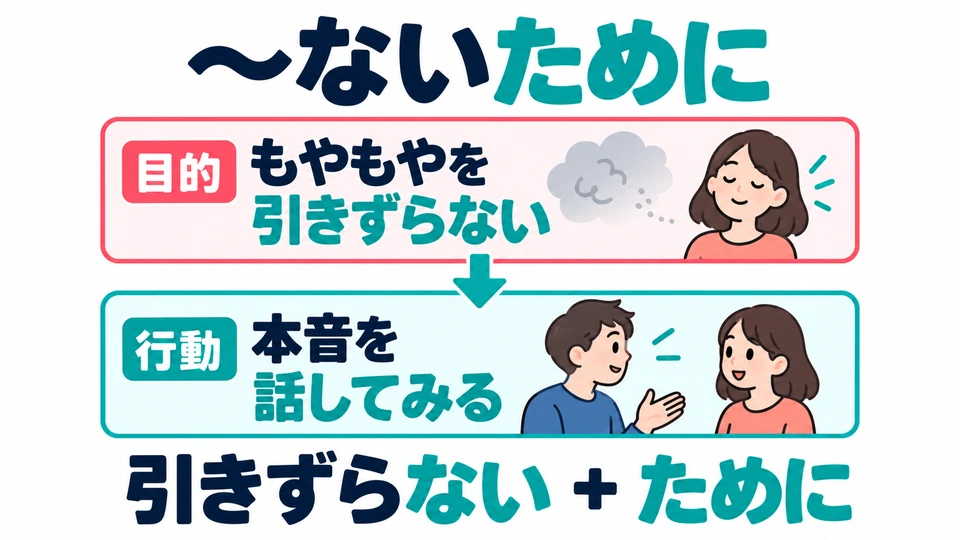
  4. Wanting a situation to stop can also be a goal. The dialogue expresses this with 「ないために」.
    Wanting a situation to stop can also be a goal. The dialogue expresses this with 「ないために」.

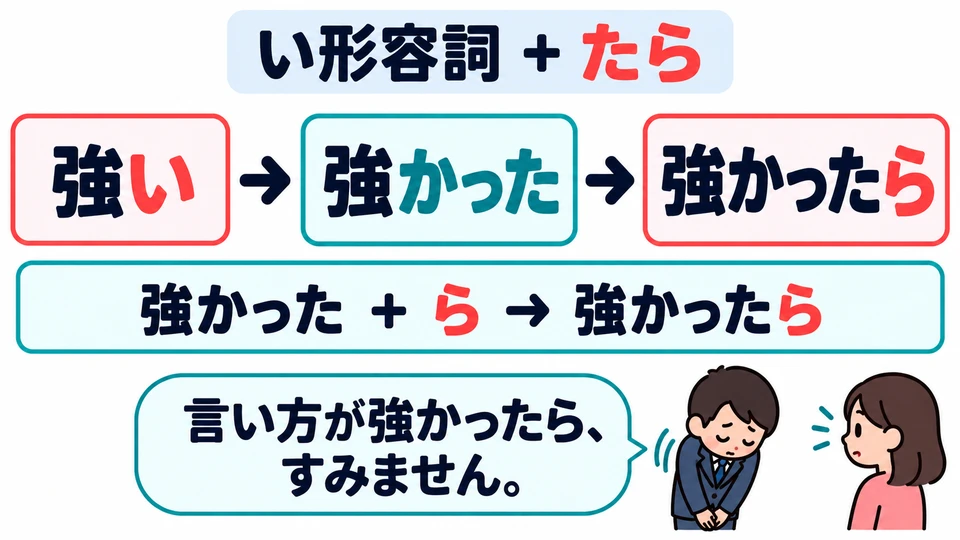
  5. 「強かった+ら」 becomes 「強かったら」. Adjectives can also take the 「たら」 form.
    「強かった+ら」 becomes 「強かったら」. Adjectives can also take the 「たら」 form.

  6. “Conveying your feelings accurately” is a goal you want to achieve, not a cause that has already occurred. Here the expression shows purpose.

“Conveying your feelings accurately” is a goal you want to achieve, not a cause that has already occurred. Here the expression shows purpose.

Example sentences

  • 私わたしwatashiのno言い方いいかたiikataがga強かったら、つよかったら、tsuyokattara、すみません。sumimasen。

    I'm sorry if my way of speaking was too strong.

  • 自分じぶんjibunのno気持ちきもちkimochiをo正しくただしくtadashiku伝えるつたえるtsutaeruためtameに、ni、一度いちどichido考えかんがえkangaeてteからkara話します。はなします。hanashimasu。

    In order to convey my feelings correctly, I will think before speaking.

In a conversation

  • 同僚どうりょうのきつい言い方いいかたに違和いわ感かんがあるのですが、どうすればいいでしょうか。

    I feel a bit uncomfortable with my colleague's harsh way of speaking. What should I do?

  • もやもやする気持ちきもちを引きひきずらないために、一度いちど正直しょうじきに自分にじぶんの本音ほんねを話しはなしてみたらどうですか。

    To avoid dragging out those gloomy feelings, why don't you try speaking your true mind honestly for once?

  • そうですね。お互いおたがいに分かりわかり合うあうために、感情的かんじょうてきにならず冷静にならずれいせいに向きにむき合っあってみます。

    You're right. To understand each other, I will try to face them calmly without getting emotional.

Check yourself

  1. Level 1 · Recognise

    Which sentence is correct?

  2. Level 1 · Recognise

    Listen and choose the meaning

  3. Level 2 · Build

    Put the words in order

    If my way of speaking was too harsh, I'm sorry.

  4. Level 3 · Use

    What goes in the blank?

    私の言い方が____、すみません。

    If my way of speaking was too harsh, I am sorry.

More grammar in this theme

  • 〜のことなんですがgently introduce a topic
  • 〜させていただけませんかpolitely ask permission
  • 〜ものですからgently explain a reason
  • 〜の代わりに・〜に代わってinstead of; in place of
  • 〜おかげでthanks to; good result
  • 〜おかげだcredit a good result
  • 〜くせにreproachful contradiction
  • 〜せいでblame for a bad result
  • 〜に決まっているstrong certainty; bound to
  • 人を〜にさせるtrigger someone’s feelings
  • 〜ことはないno need to
  • 〜のことになると・〜のこととなるとwhen it comes to
  • 人にしたら・人にすればfrom someone’s perspective
  • 人にしてみたら・人にしてみればfrom someone’s perspective
  • 〜たびにevery time
  • 〜ば・〜ならばif; on the condition that
  • 〜たら・〜ためにif; in order to
Previous〜ば・〜ならば

Keep practising

Test your Japanese vocabulary12 adaptive questions, freeCheck your pronunciationRead aloud and get a scorePractise verb forms10-question conjugation quizSee the whole courseGrammar, vocabulary and quizzes by theme
See the whole course
Intermediate 2
Thoughtful Communication and Feelings