
Japanese grammar · ≈ JLPT N2 · Intermediate 2
〜からして~kara shite
inference from a clue
Use 「〜からして」 to infer an overall impression from a telling clue, such as someone’s expression or speech.
How it works
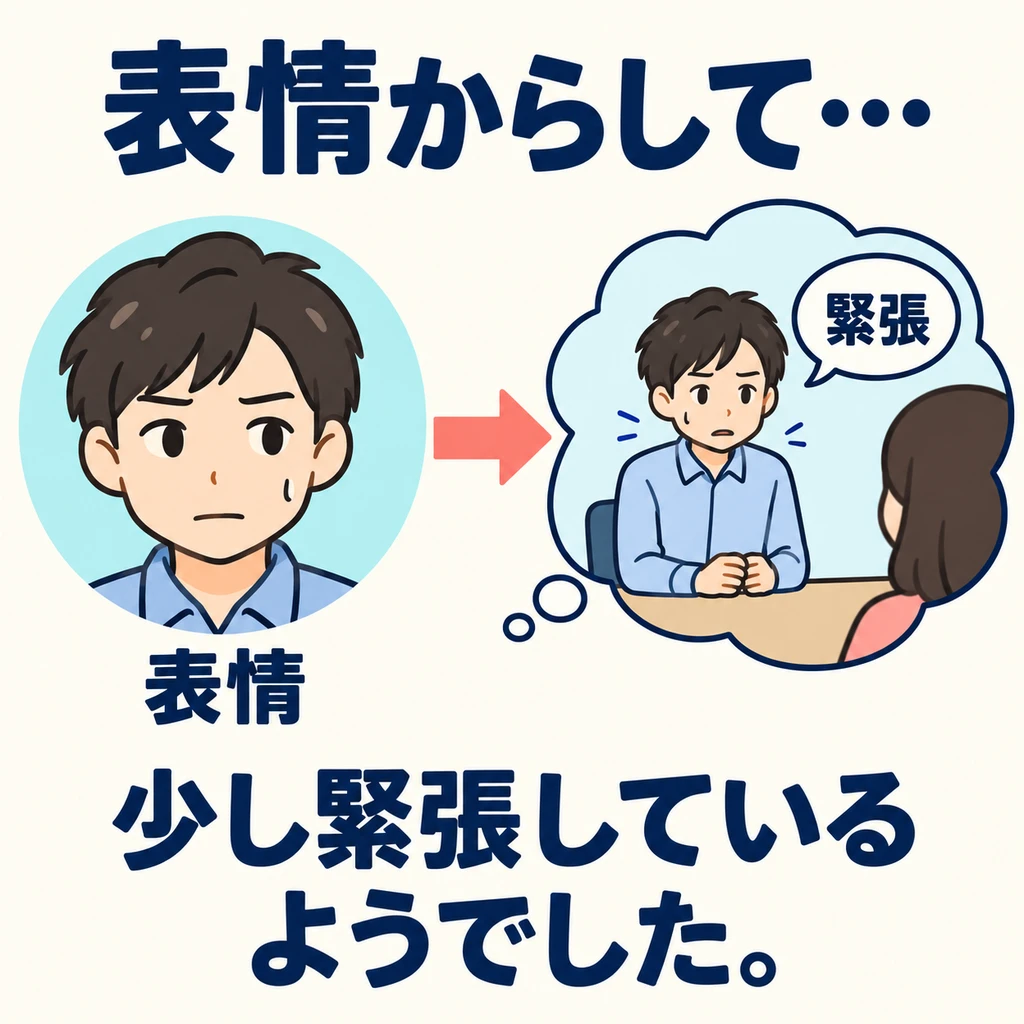
Look at his expression. Do you think he is nervous? This pattern lets you infer someone’s state from a clue.
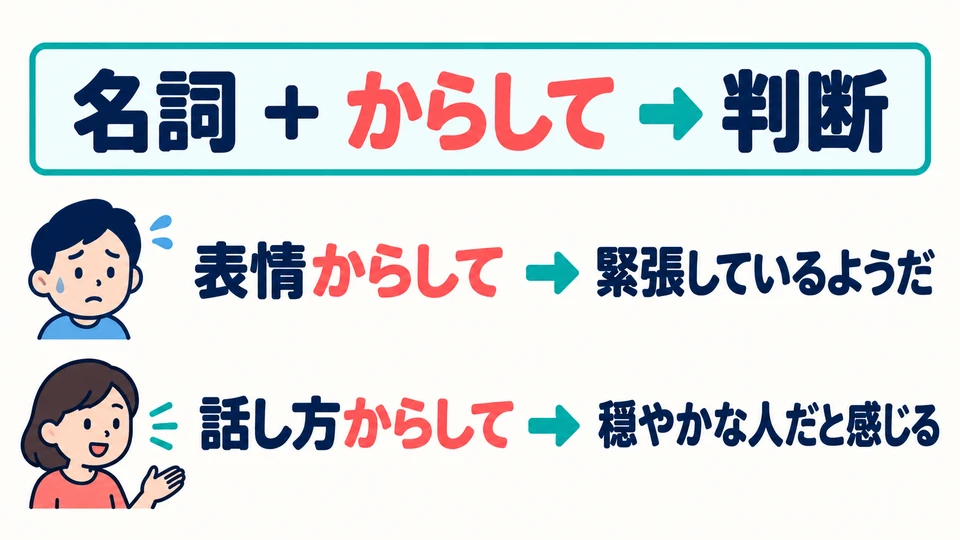
Attach 「からして」 to a noun naming a clue, such as a facial expression or way of speaking, then give your judgment.
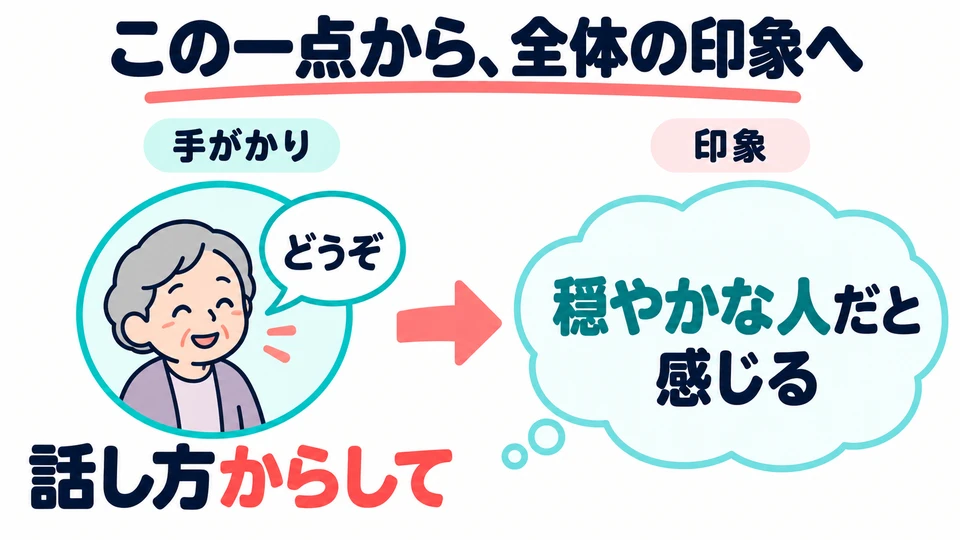
This one detail alone gives an overall impression. Selecting a clue emphasizes how telling it is.
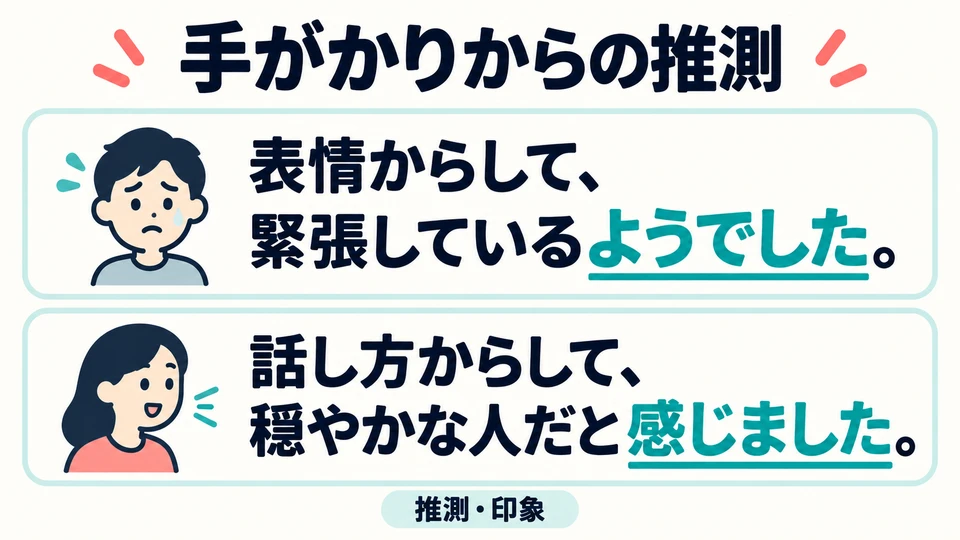
The examples use 「ようでした」 (“seemed”) and 「感じました」 (“I felt”) for inferences: expressions and speech offer clues, not certain conclusions.
Example sentences
- 表情hyoujouからkaraしshiて、te、最初saishoはwa少しsukoshi緊張kinchouしshiてteいるiru
In a conversation
Check yourself
Level 1 · Recognise
Which sentence is correct?
Level 1 · Recognise
Listen and choose the meaning
Level 2 · Build
Put the words in order
Judging from the warm smile at the initial greeting, I think she must have sensed my anxiety.
Level 3 · Use
What goes in the blank?
表情____、最初は少し緊張しているようでした。
Judging from the expression, they seemed a little nervous at first.
More grammar in this theme
- 〜からしてinference from a clue