JPEDLAB iconJPEDLAB
Save history

Create an account and play

Explore first, then save your progress whenever you are ready. No email address is required.

Start free
Read as articleCards
1/10

He missed a notification and forgot an important appointment. 「せいで」 links a cause to a result the speaker sees as bad.

››

Lesson notes · ≈ JLPT N3 · Intermediate 2

〜せいで~sei de

blame for a bad result

Use 「〜せいで」 to blame a cause for a bad result; 「〜せいか」 leaves the cause uncertain.

How it works
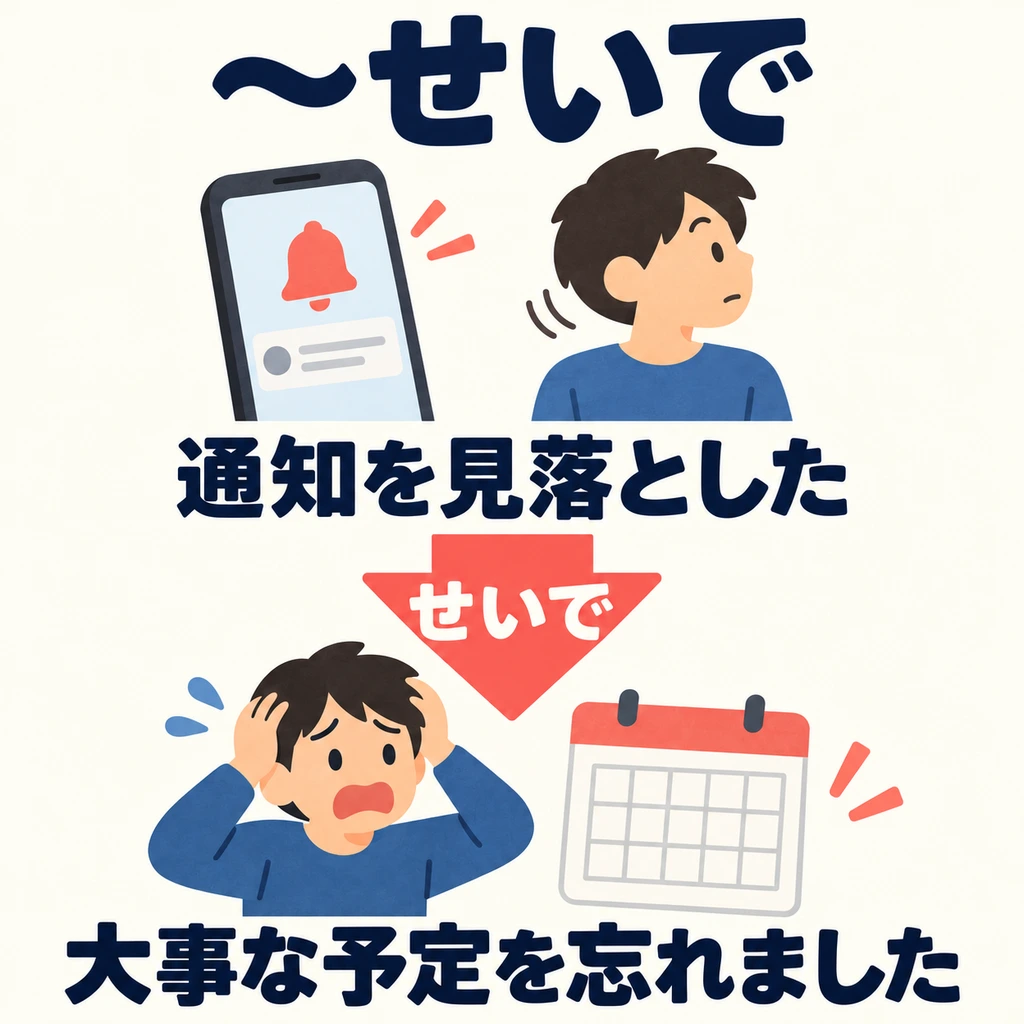
  1. He missed a notification and forgot an important appointment. 「せいで」 links a cause to a result the speaker sees as bad.
    He missed a notification and forgot an important appointment. 「せいで」 links a cause to a result the speaker sees as bad.
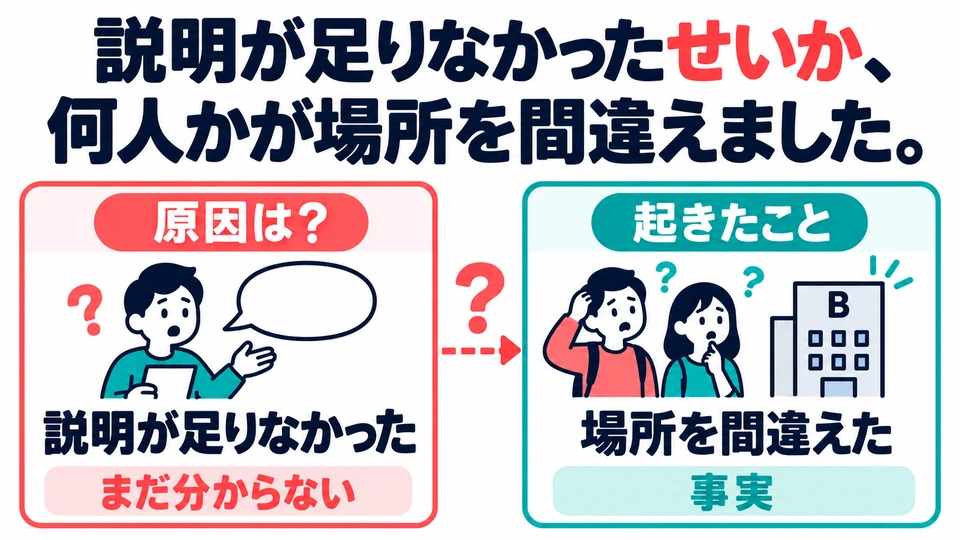
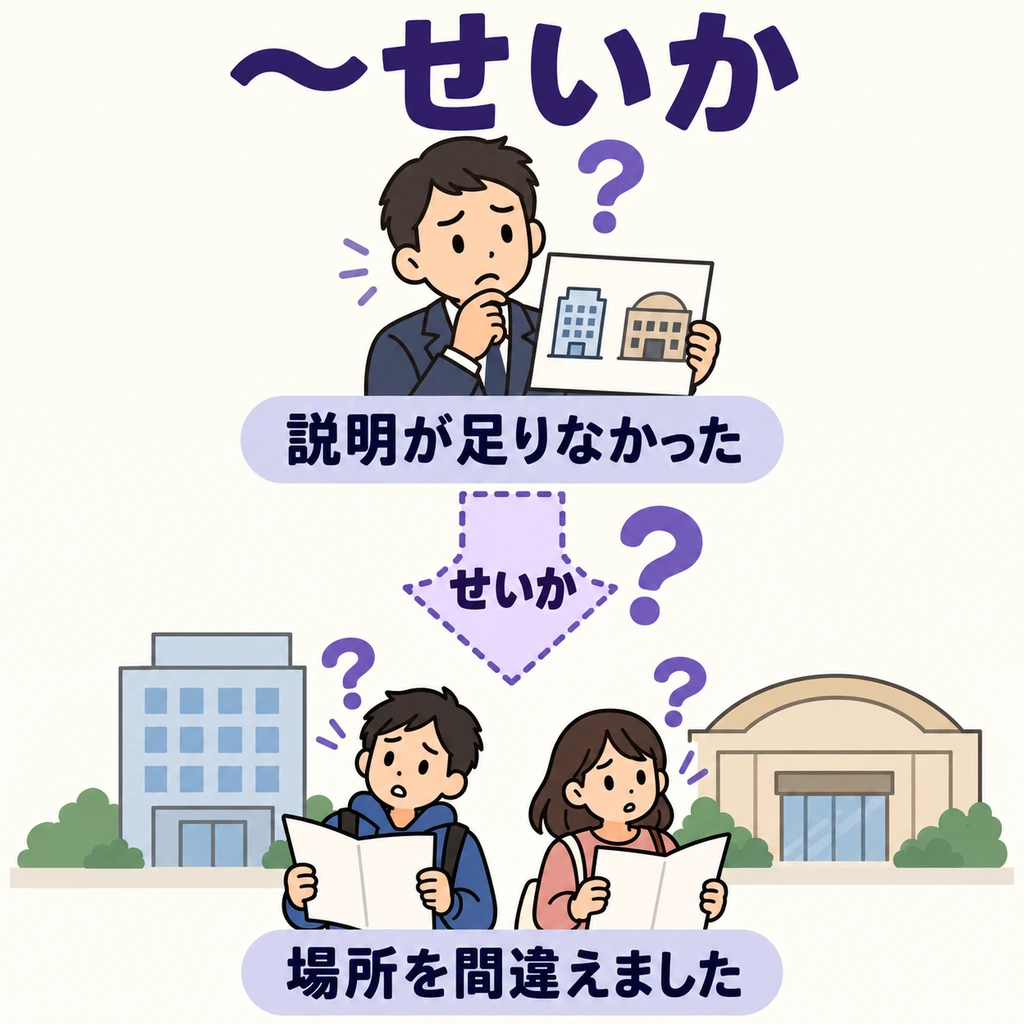
  2. Was the explanation insufficient? 「せいか」 suggests this may be the cause, but it is still uncertain.

Was the explanation insufficient? 「せいか」 suggests this may be the cause, but it is still uncertain.
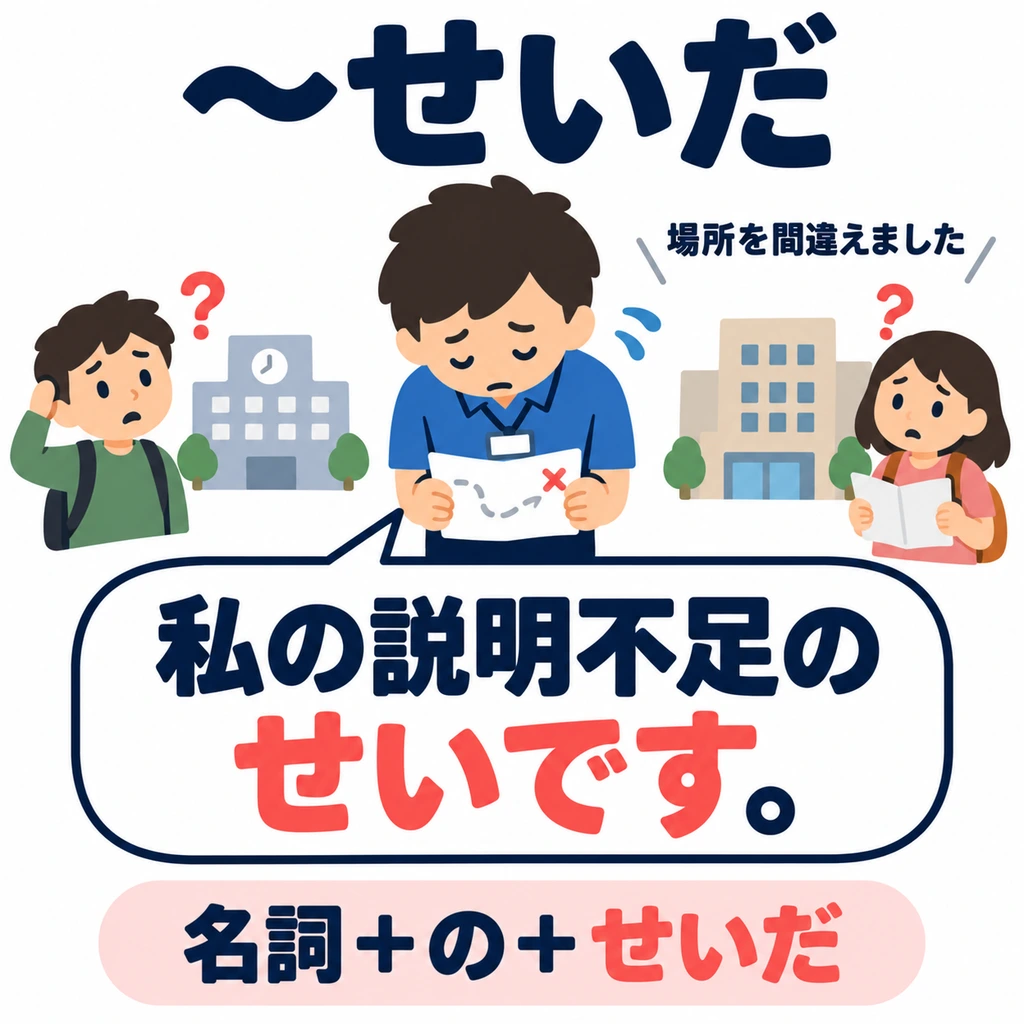
  • He identifies his own explanation as the cause. 「せいだ」 states the cause at the end of a sentence; its polite form is 「せいです」.

    He identifies his own explanation as the cause. 「せいだ」 states the cause at the end of a sentence; its polite form is 「せいです」.

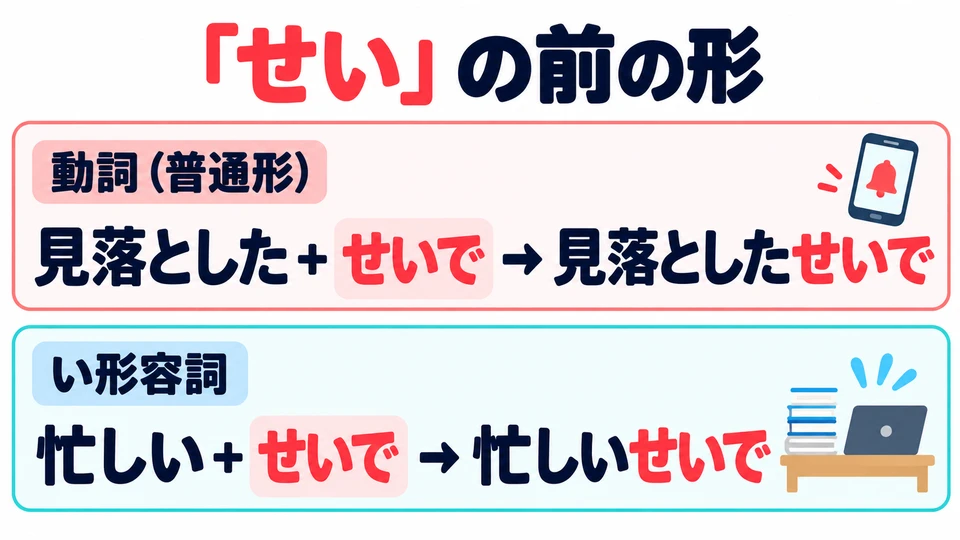
  • Verbs in the plain form and い-adjectives attach directly to 「せい」, as in 「見落としたせいで」 in the picture.

    Verbs in the plain form and い-adjectives attach directly to 「せい」, as in 「見落としたせいで」 in the picture.

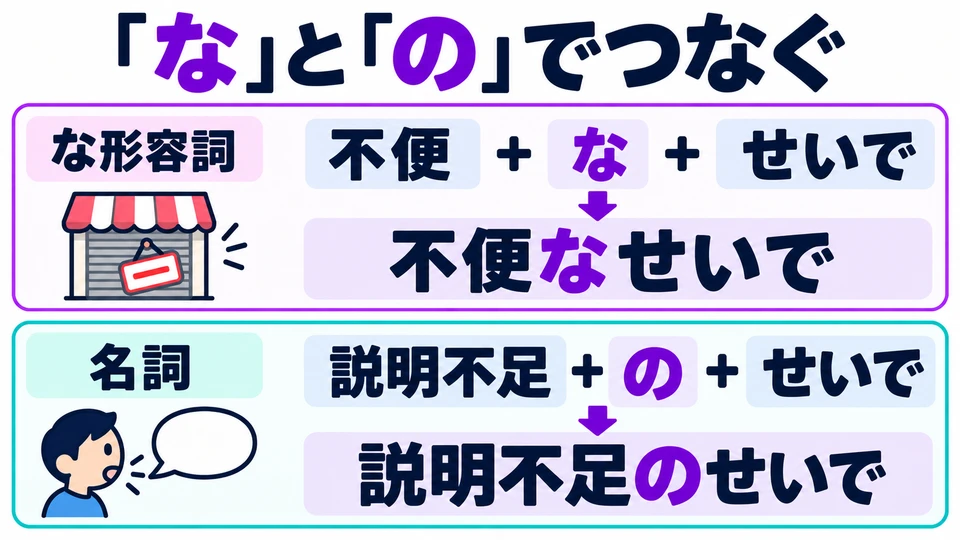
  • な-adjectives connect with 「な」 and nouns with 「の」. 「説明不足」 in the picture is a noun.

    な-adjectives connect with 「な」 and nouns with 「の」. 「説明不足」 in the picture is a noun.

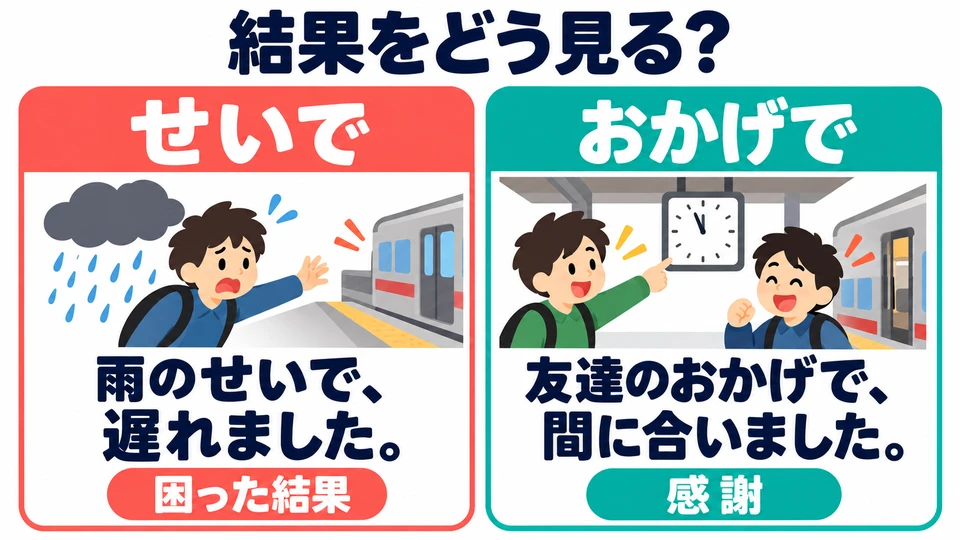
  • Use 「せい」 when the speaker sees the result as bad. Use 「おかげ」 to express gratitude for a cause that brought a good result.

    Use 「せい」 when the speaker sees the result as bad. Use 「おかげ」 to express gratitude for a cause that brought a good result.

  • In the example, getting the location wrong is an established fact. 「せいか」 leaves uncertain whether the insufficient explanation was the cause.

    In the example, getting the location wrong is an established fact. 「せいか」 leaves uncertain whether the insufficient explanation was the cause.

  • Example sentences

    • 通知つうちtsuuchiをo見みmi落としたせいおとしたせいotoshitaseiで、de、大事な予定だいじなよていdaijinayoteiをo忘れました。わすれました。wasuremashita。

      Because I overlooked the notification, I forgot an important schedule.

    • 説明せつめいsetsumeiがga足りなかったせいたりなかったせいtarinakattaseiか、ka、何人なんにんnanninかkaがga場所ばしょbashoをo間違えました。まちがえました。machigaemashita。

      Perhaps due to a lack of explanation, several people got the location wrong.

    In a conversation

    • A
      私わたしの説明せつめい不足ふそくのせいで、イベントいべんとの集合しゅうごう場所ばしょがみんなにうまく伝わりませんでした。つたわりませんでした。

      A: Due to my lack of explanation, the meeting place for the event was not communicated well to everyone. (E2602)

    • B
      そうだったのですね。確認かくにん漏れもれがないように、次つぎからはわ事前じぜんに再確認さいかくにんしましょう。

      B: I see. To avoid any oversights, let's double-check in advance next time.

    • A
      はい、これからはわ案内あんない文ぶんを作成さくせいした後したあとに必ずかならず読みよみ直すなおすようにします。

      A: Yes, from now on, I will make sure to re-read the notice after creating it.

    Check yourself

    1. Level 1 · Recognise

      Which sentence is correct?

    2. Level 1 · Recognise

      Listen and choose the meaning

    3. Level 2 · Build

      Put the words in order

      Because I overlooked the notice, I forgot an important appointment.

    4. Level 3 · Use

      What goes in the blank?

      通知を見落とした____、大事な予定を忘れました。

      Because I missed the notice, I forgot an important plan.

    More grammar in this theme

    • 〜のことなんですがgently introduce a topic
    • 〜させていただけませんかpolitely ask permission
    • 〜ものですからgently explain a reason
    • 〜の代わりに・〜に代わってinstead of; in place of
    • 〜おかげでthanks to; good result
    • 〜おかげだcredit a good result
    • 〜くせにreproachful contradiction
    • 〜せいでblame for a bad result
    • 〜に決まっているstrong certainty; bound to
    • 人を〜にさせるtrigger someone’s feelings
    • 〜ことはないno need to
    • 〜のことになると・〜のこととなるとwhen it comes to
    • 人にしたら・人にすればfrom someone’s perspective
    • 人にしてみたら・人にしてみればfrom someone’s perspective
    • 〜たびにevery time
    • 〜ば・〜ならばif; on the condition that
    • 〜たら・〜ためにif; in order to
    Previous〜くせにNext〜に決まっている

    Keep practising

    Test your Japanese vocabulary12 adaptive questions, freeCheck your pronunciationRead aloud and get a scorePractise verb forms10-question conjugation quizSee the whole courseGrammar, vocabulary and quizzes by theme
    See the whole course
    Intermediate 2
    Thoughtful Communication and Feelings