JPEDLAB iconJPEDLAB
Save history

Create an account and play

Explore first, then save your progress whenever you are ready. No email address is required.

Start free
Read as articleCards
See the whole course›Intermediate 2›Thoughtful Communication and Feelings

Japanese grammar · ≈ JLPT N3 · Intermediate 2

〜に決まっている~ni kimatte iru

strong certainty; bound to

Use 「〜に決まっている」 to state a strong conviction, without implying that the facts were checked.

Start the interactive lessonIllustrated cards, audio and speaking practice

How it works

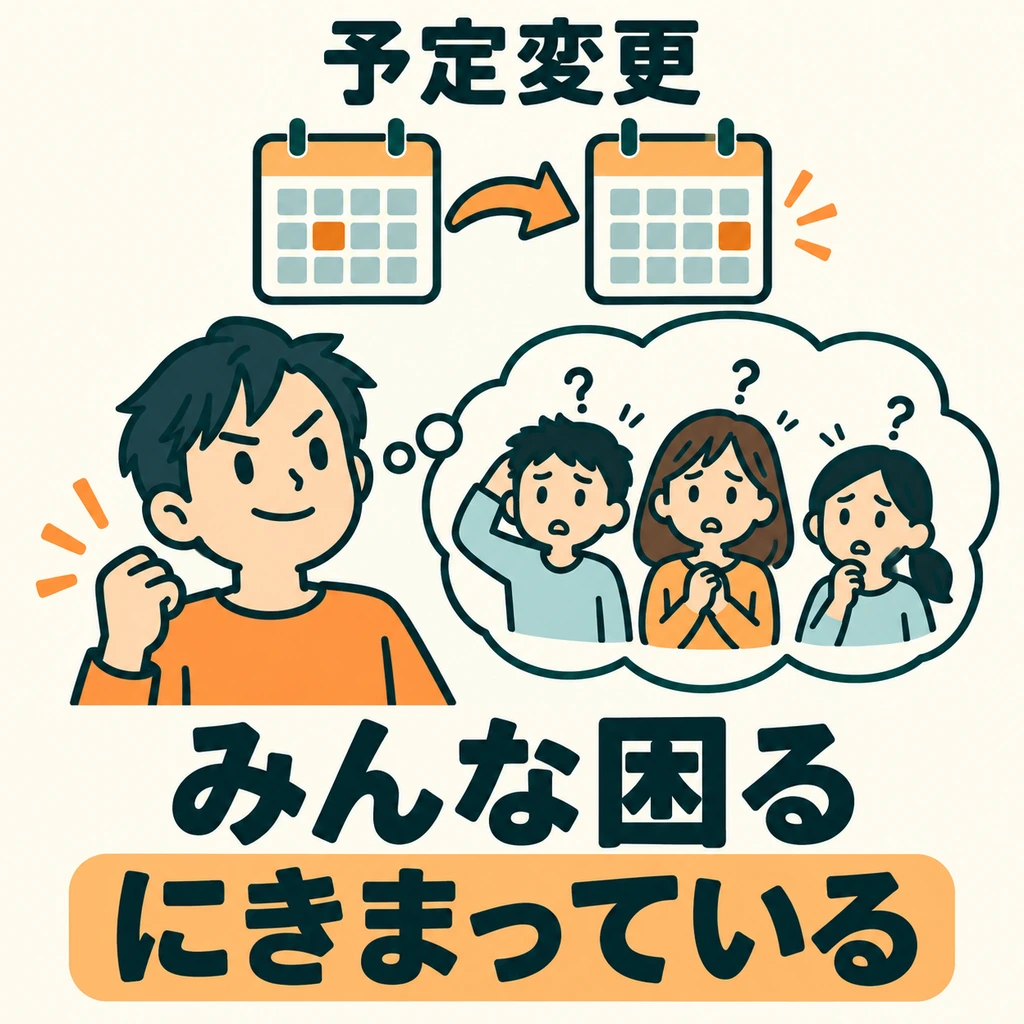
  1. What happens if the plans change suddenly? The speaker is very sure: everyone is bound to be troubled.
    What happens if the plans change suddenly? The speaker is very sure: everyone is bound to be troubled.

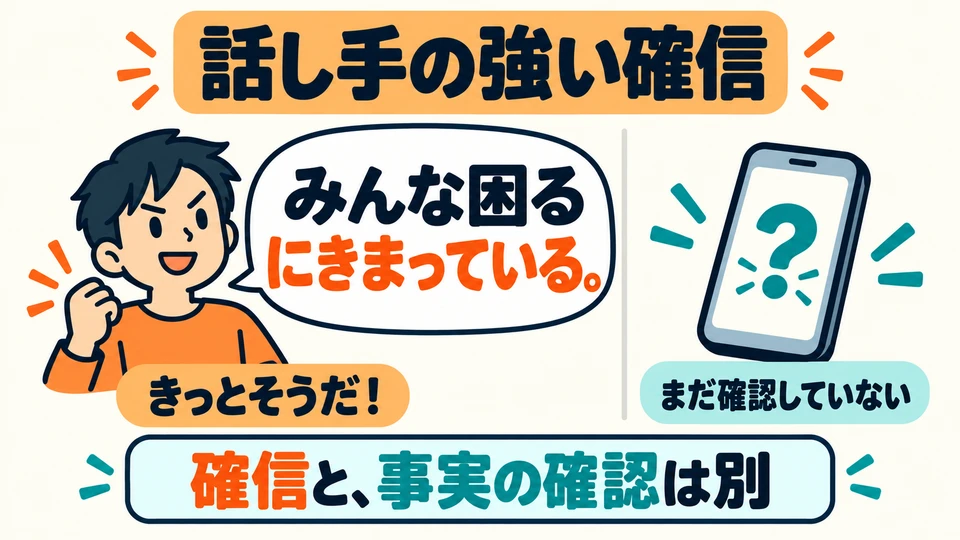
  2. It expresses the speaker’s strong conviction; it does not mean the facts have already been checked.
    It expresses the speaker’s strong conviction; it does not mean the facts have already been checked.

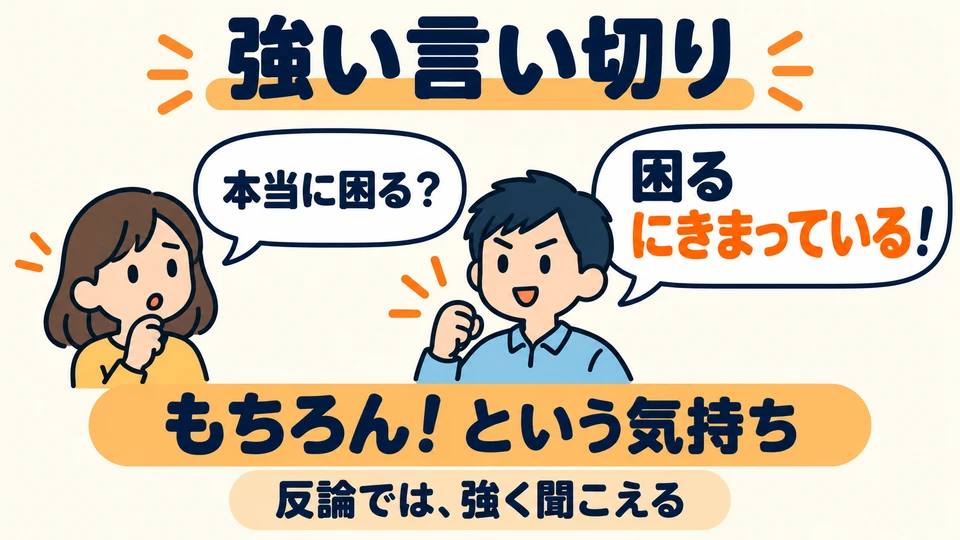
  3. The tone is like “That goes without saying, of course.” When contradicting someone, it can sound forceful.
    The tone is like “That goes without saying, of course.” When contradicting someone, it can sound forceful.

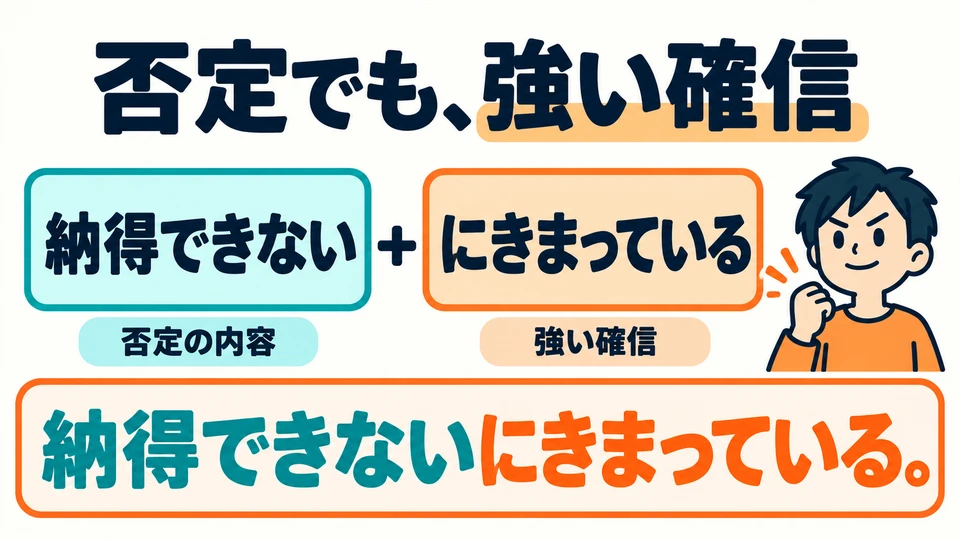
  4. In the example, the speaker is sure that people “will not be convinced.” The negative form before the pattern does not make that conviction uncertain.

    In the example, the speaker is sure that people “will not be convinced.” The negative form before the pattern does not make that conviction uncertain.

Example sentences

  • いきなりikinari予定よていyoteiをo変えたら、かえたら、kaetara、みんなminna困るこまるkomaruにni決まっきまっkimatてteいます。imasu。

    If you suddenly change the schedule, everyone is bound to be troubled.

In a conversation

  • A
    メールめーるで補足ほそく説明せつめいをせずに省略しょうりゃくしたら、相手あいてはわ不安ふあんに思うにおもうに決まっきまって

Check yourself

  1. Level 1 · Recognise

    Which sentence is correct?

  2. Level 1 · Recognise

    Listen and choose the meaning

  3. Level 2 · Build

    Put the words in order

    If you keep making one-sided demands without giving any reasons, you are bound to make the other person angry.

  4. Level 3 · Use

    What goes in the blank?

    いきなり予定を変えたら、みんな困る____。

    If you suddenly change the plan, everyone is bound to be troubled.

More grammar in this theme

  • 〜に決まっているstrong certainty; bound to

Keep practising

Test your Japanese vocabulary12 adaptive questions, freeCheck your pronunciationRead aloud and get a scorePractise verb forms10-question conjugation quizSee the whole courseGrammar, vocabulary and quizzes by theme
  • 理由りゆうriyuuをo説明せつめいsetsumeiしなけれshinakereば、ba、みんなminna納得なっとくnattokuできないdekinaiにni決まっきまっkimatてteいます。imasu。

    If you don't explain the reason, everyone is bound to be unconvinced.

  • います。

    A: If you omit details without providing a supplementary explanation in the email, the other person is bound to feel anxious. (E2603)

  • B
    そうですね。誤解ごかいを避けるさけるためにも、具体的ぐたいてきに書くにかくことが大切ですたいせつですね。

    B: That's true. It's important to write specifically to avoid misunderstandings, isn't it?

  • A
    はい、これからはわ相手あいてを心配しんぱいさせないように、表現ひょうげんの仕方しかたを工夫くふうします。

    A: Yes, I will try to improve my expression in the future so as not to make the other person worry.

  • 〜のことなんですがgently introduce a topic
    〜させていただけませんかpolitely ask permission
    〜ものですからgently explain a reason
    〜の代わりに・〜に代わってinstead of; in place of
    〜おかげでthanks to; good result
    〜おかげだcredit a good result
    〜くせにreproachful contradiction
    〜せいでblame for a bad result
    人を〜にさせるtrigger someone’s feelings
    〜ことはないno need to
    〜のことになると・〜のこととなるとwhen it comes to
    人にしたら・人にすればfrom someone’s perspective
    人にしてみたら・人にしてみればfrom someone’s perspective
    〜たびにevery time
    〜ば・〜ならばif; on the condition that
    〜たら・〜ためにif; in order to
    Previous〜せいで
    Next人を〜にさせる