
Japanese grammar · ≈ JLPT N3 · Intermediate 2
〜とおりに・〜どおりに~toori ni / ~doori ni
according to; just as
Use 〜とおりに or 〜どおりに when an action follows a reference, such as instructions, a method, or a model.
How it works
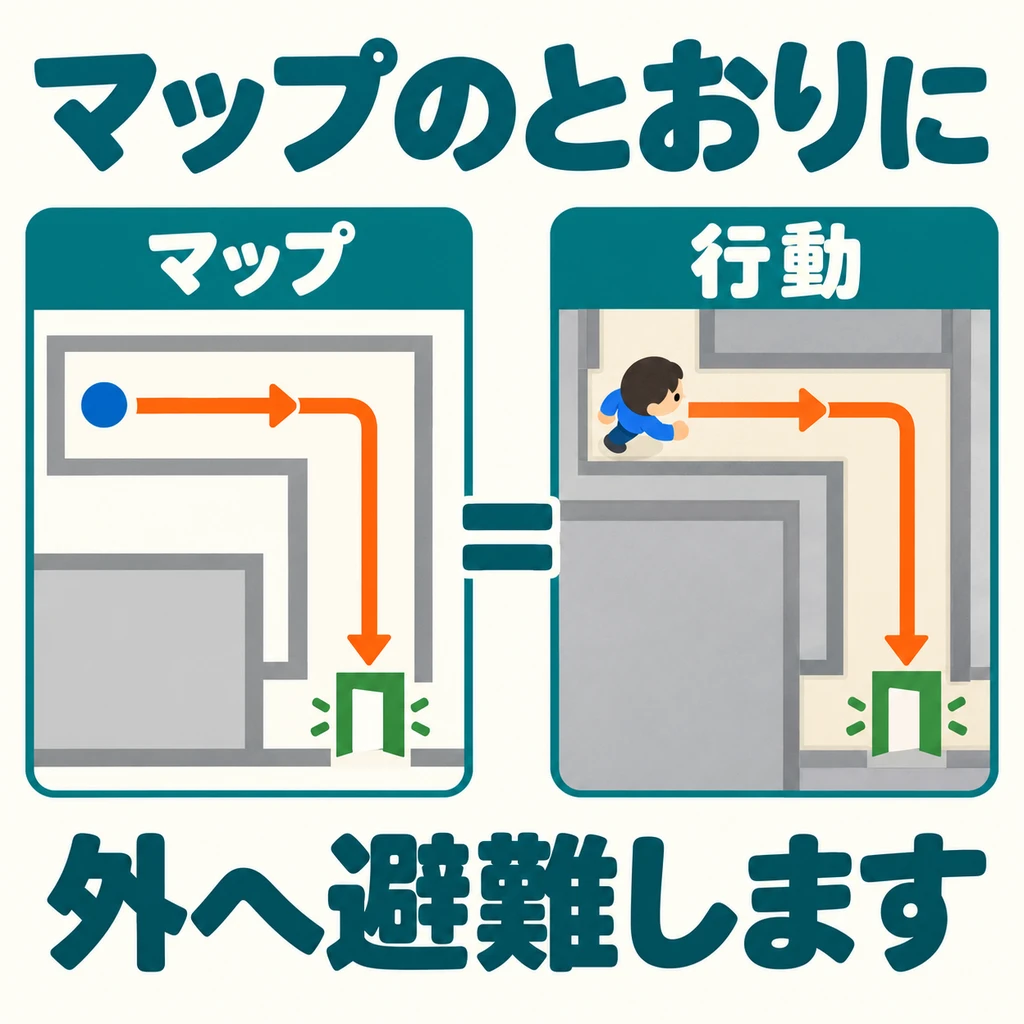
Look at the map and the actual route: they match exactly. This means following the route shown on the map.

The meaning is the same, but the form depends on the preceding word: verbs take 「とおり」; nouns have two patterns.
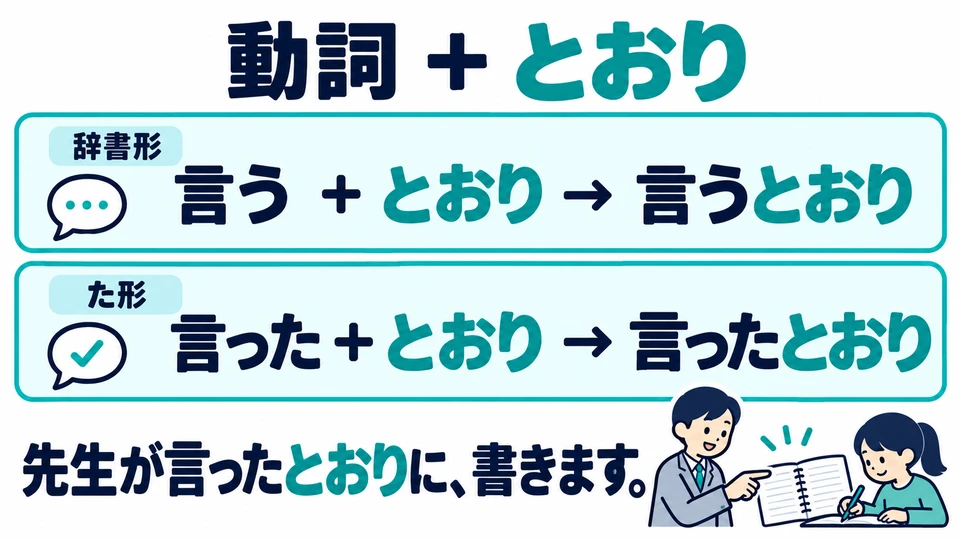
Add 「とおり」 to a verb in its dictionary or past form, as in 「言うとおり」 and 「言ったとおり」.
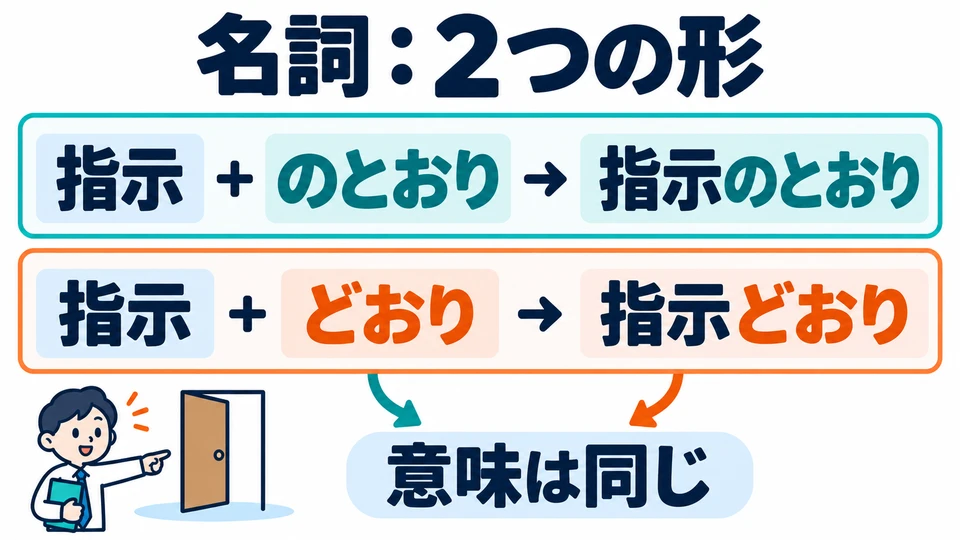
After a noun, use 「のとおり」 or attach 「どおり」 directly, as in 「指示のとおり」 and 「指示どおり」.
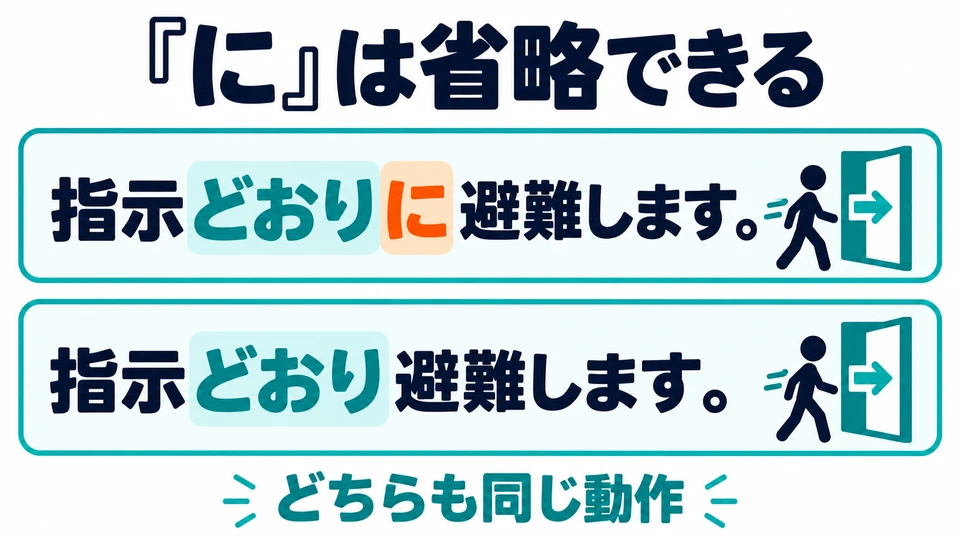
When describing how the following action is done, 「に」 can be omitted, as in 「指示どおり(に)避難します」.
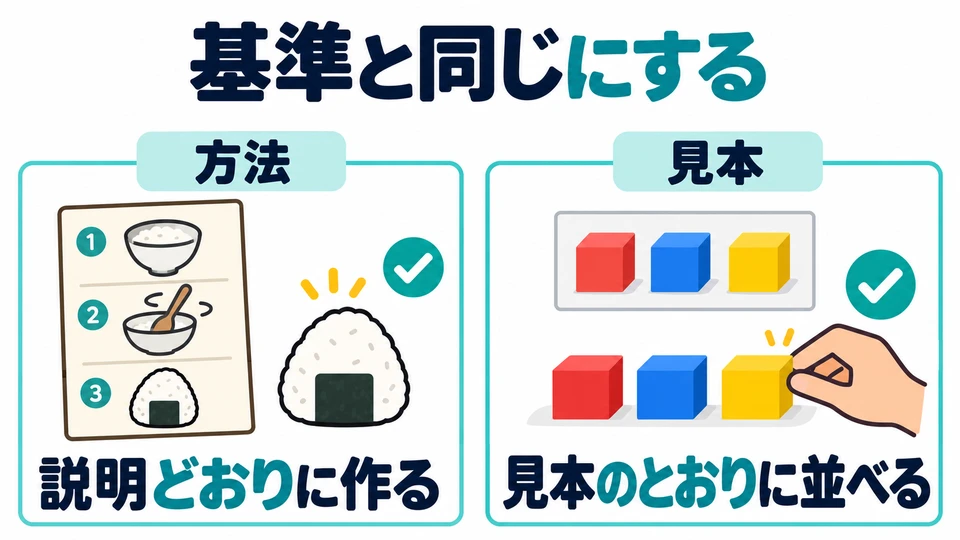
It also applies to following a method or matching a particular state, beyond obeying instructions. The key is matching a reference.
Example sentences
- 係員kakariinのno指示shijiどおりdooriにni避難hinanしshiてteください。kudasai。
Please evacuate according to the instructions of the staff.
In a conversation

- A地震が起きた時、私はどのように動けばいいですか。
A: What should I do when an earthquake occurs?
- B壁に貼っ
Check yourself
Level 1 · Recognise
Which sentence is correct?
Level 1 · Recognise
Listen and choose the meaning
Level 2 · Build
Put the words in order
Please follow the evacuation route according to the hazard map for your area.
Level 3 · Use
What goes in the blank?
係員の指示____に避難してください。
Please evacuate according to the staff's instructions.
More grammar in this theme
- 〜とおりに・〜どおりにaccording to; just as